



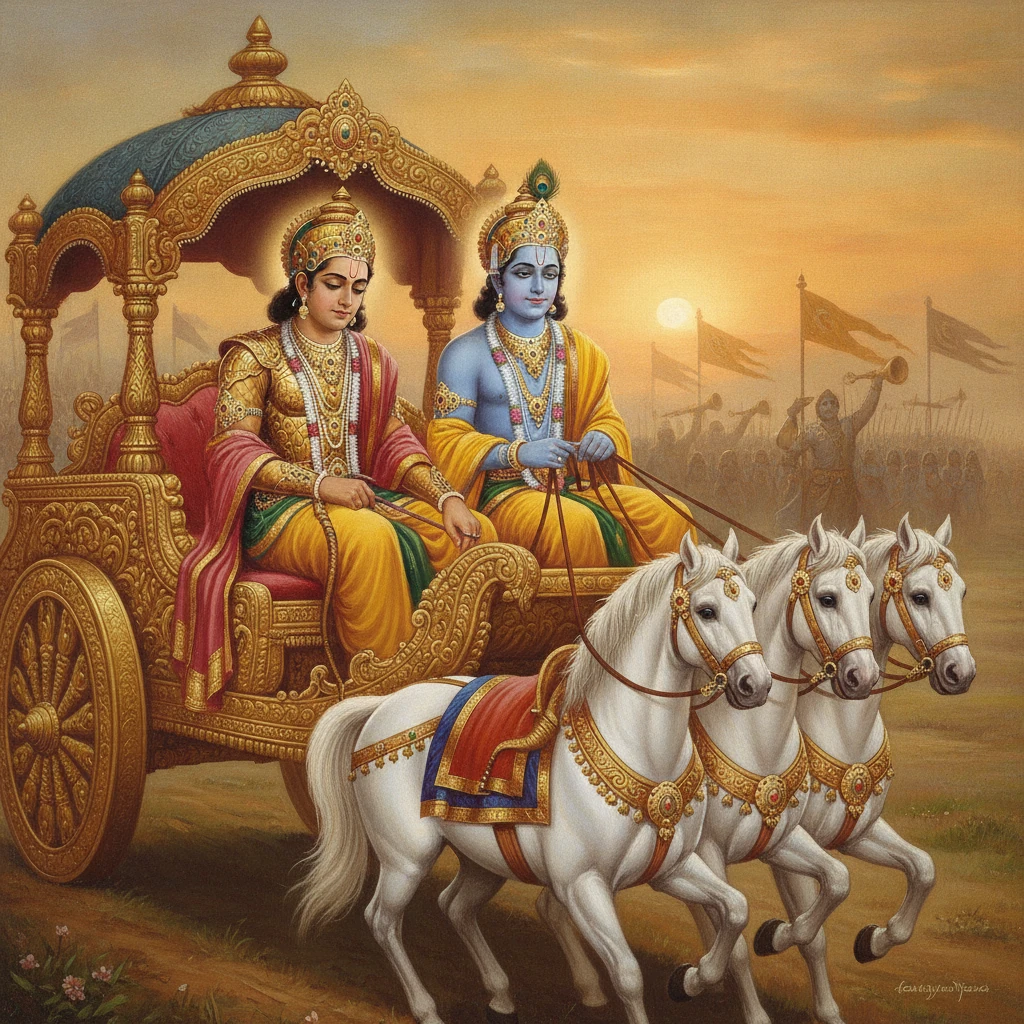
 Mahabharata · Parva 14
About the Ashvamedhika Parva
Yudhishthira’s Ashvamedha sacrifice to atone for the war — Arjuna following the sacrificial horse and his many battles, the Anugita (Krishna’s further teaching to Arjuna), and the birth of Parikshit.
How it is read
The Ashvamedhika Parva is given below in its original Sanskrit (Devanagari), numbered by chapter (adhyaya) and shloka. Read verse by verse; the Mahabharata is traditionally heard as itihasa-shravana, for dharma and discernment.
Original Text
Verses & Meaning
[व] कृतॊदकं तु राजानं धृतराष्ट्रं युधिष्ठिरः पुरस्कृत्य महाबाहुर उत्तताराकुलेन्द्रियः
Vaishampayana said: After King Dhritarashtra had performed the water-offerings for the dead, the mighty-armed Yudhishthira, placing him in front, came up out of the Ganga, his senses in turmoil.
उत्तीर्य च महीपालॊ बाष्पव्याकुललॊचनः पपात तीरे गङ्गाया वयाधविद्ध इव दविपः
Coming out of the water, the king, his eyes clouded with tears, fell on the bank of the Ganga like an elephant struck down by a hunter.
तं सीदमानं जग्राह भीमः कृष्णेन चॊदितः मैवम इत्य अब्रवीच चैनं कृष्णः परबलार्दनः
As he sank down, Bhima, urged on by Krishna, caught hold of him; and Krishna, the destroyer of enemy armies, said to him, "Do not do this."
तम आर्तं पतितं भूमौ निश्वसन्तं पुनः पुनः ददृशुः पाण्डवा राजन धर्मात्मानं युधिष्ठिरम
O King, the Pandavas saw the righteous Yudhishthira, stricken with grief and fallen on the ground, sighing again and again.
तं दृष्ट्वा दीनमनसं गतसत्त्वं जनेश्वरम भूयः शॊकसमाविष्टाः पाण्डवाः समुपाविशन
Seeing the lord of men so despondent and drained of strength, the Pandavas, again overwhelmed with sorrow, sat down beside him.
राजा च धृतराष्ट्रस तम उपासीनॊ महाभुजः वाक्यम आह महाप्राज्ञॊ महाशॊकप्रपीडितम
Then the mighty-armed and highly wise King Dhritarashtra, sitting near him, spoke to Yudhishthira, who was tormented by great grief.
उत्तिष्ठ कुरुशार्दूल कुरु कार्यम अनन्तरम कषत्रधर्मेण कौरव्य जितेयम अवनिस तवया
"Rise, tiger among the Kurus, and attend to the tasks that now await you; O Kaurava, by the duty of a Kshatriya you have conquered this earth."
तां भुङ्क्ष्व भरातृभिः सार्धं सुहृद्भिश च जनेश्वर न शॊचितव्यं पश्यामि तवया धर्मभृतां वर
"Enjoy it together with your brothers and friends, O lord of men; I see nothing here for you to grieve over, best of the upholders of dharma."
शॊचितव्यं मया चैव गान्धार्या च विशां पते पुत्रैर विहीनॊ राज्येन सवप्नलब्धधनॊ यथा
"It is I and Gandhari who ought to grieve, O lord of the people — bereft of our sons, with a kingdom that is like wealth gained only in a dream."
अश्रुत्वा हितकामस्य विदुरस्य महात्मनः वाक्यानि सुमहार्थानि परितप्यामि दुर्मतिः
"Not having heeded the deeply meaningful words of the great-souled Vidura, who wished me well, I, foolish as I was, now burn with remorse."
उक्तवान एष मां पूर्वं धर्मात्मा दिव्यदर्शनः दुर्यॊधनापराधेन कुलं ते विनशिष्यति
"This righteous sage of divine vision had once told me: 'Through Duryodhana's fault, your family will be destroyed.'"
सवस्ति चेद इच्छसे राजन कुलस्यात्मन एव च वध्यताम एष दुष्टात्मा मन्दॊ राजसुयॊधनः
"'If you wish well-being for your family and for yourself, O king, let this wicked, foolish Suyodhana (Duryodhana) be put to death.'"
कर्णश च शकुनिश चैव मैनं पश्यतु कर्हि चित दयूतसंपातम अप्य एषाम अप्रमत्तॊ निवारय
"'And let Karna and Shakuni never again be near him; be vigilant and prevent even the gathering for the game of dice.'"
अभिषेचय राजानं धर्मात्मानं युधिष्ठिरम स पालयिष्यति वशीधर्मेण पृथिवीम इमाम
"'Consecrate the righteous Yudhishthira as king; self-controlled, he will protect this earth according to dharma.'"
अथ नेच्छसि राजानं कुन्तीपुत्रं युधिष्ठिरम मेढी भूतः सवयं राज्यं परतिगृह्णीष्व पार्थिव
"'But if you do not wish Kunti's son Yudhishthira to be king, then, O king, become yourself the pillar of support and take the kingdom for yourself.'"
समं सर्वेषु भूतेषु वर्तमानं नराधिप अनुजीवन्तु सर्वे तवां जञातयॊ जञातिवर्धन
"'Treating all beings equally, O lord of men, let all your kinsmen live under you, O you who increase your family's welfare.'"
एवं बरुवति कौन्तेय विदुरे दीर्घदर्शिनि दुर्यॊधनम अहं पापम अन्ववर्तं वृथा मतिः
"O son of Kunti, though the far-sighted Vidura spoke thus, I, of vain understanding, still followed the sinful Duryodhana."
अश्रुत्वा हय अस्य वीरस्य वाक्यानि मधुराण्य अहम फलं पराप्य महद दुःखं निमग्नः शॊकसागरे
"Not heeding this hero's sweet, wholesome words, I have reaped great sorrow as their fruit, and now lie sunk in an ocean of grief."
वृद्धौ हि ते सवः पितरौ पश्यावां दुःखितौ नृप न शॊचितव्यं भवता पश्यामीह जनाधिप
"We two, your aged parents, are grieving, O king; but I see no reason for you yourself to grieve, O lord of men."
[व] एवम उक्तस तु राज्ञा स धृतराष्ट्रेण धीमता तूष्णीं बभूव मेधावी तम उवाचाथ केशवः
Vaishampayana said: Thus addressed by the wise King Dhritarashtra, the sagacious Yudhishthira fell silent; then Keshava (Krishna) spoke to him.
अतीव मनसा शॊकः करियमाणॊ जनाधिप संतापयति वैतस्य पूर्वप्रेतान पितामहान
"O lord of men, grief nursed too intensely in the mind torments the departed ancestors who have already gone before."
यजस्व विविधैर यज्ञैर बहुभिः सवाप्तदक्षिणैः देवांस तर्पय सॊमेन सवधया च पितॄन अपि
"Perform many kinds of sacrifices with rich sacrificial fees; satisfy the gods with soma offerings and the ancestors with svadha offerings."
तवद्विधस्य महाबुद्धे नैतद अद्यॊपपद्यते विदितं वेदितव्यं ते कर्तव्यम अपि ते कृतम
"O highly intelligent one, such grief does not befit a man like you today — you know all that needs knowing, and you have already done what needed to be done."
शरुताश च राजधर्मास ते भीष्माद भागीरथी सुतात कृष्णद्वैपायनाच चैव नारदाद विदुरात तथा
"You have heard the duties of kings from Bhishma, son of the Ganga, from Krishna-Dvaipayana, from Narada, and from Vidura too."
नेमाम अर्हसि मूढानां वृत्तिं तवम अनुवर्तितुम पितृपैतामहीं वृत्तिम आस्थाय धुरम उद्वह
"It is not fitting for you to follow the conduct of fools; take up instead the way of your fathers and forefathers, and bear the burden of rule."
युक्तं हि यशसा कषत्रं सवर्गं पराप्तुम असंशयम न हि कश चन शूराणां निहतॊ ऽतर पराङ्मुखः
"It is fitting for Kshatriyas endowed with glory to attain heaven without doubt; not one of these brave men slain here turned his back in battle."
तयज शॊकं महाराज भवितव्यं हि तत तथा न शक्यास ते पुनर दरष्टुं तवया हय अस्मिन रणे हताः
"Give up your grief, great king, for what was destined has come to pass; those slain in this war can never again be seen by you."
एतावद उक्त्वा गॊविन्दॊ धर्मराजं युधिष्ठिरम विरराम महातेजास तम उवाच युधिष्ठिरः
Having said this much to King Yudhishthira, the great and radiant Govinda fell silent; then Yudhishthira spoke to him.
गॊविन्द मयि या परीतिस तव सा विदिता मम सौहृदेन तथा परेम्णा सदा माम अनुकम्पसे
"Govinda, I know well the affection you bear for me; out of friendship and love you always show me compassion."
परियं तु मे सयात सुमहत कृतं चक्रगदाधर शरीमन परीतेन मनसा सर्वं यावदनन्दन
"But it would please me greatly, O wielder of the discus and mace, glorious one, delighter of all, if with a loving heart you would grant me this."
यदि माम अनुजानीयाद भवान गन्तुं तपॊवनम न हि शान्तिं परपश्यामि घातयित्वा पितामहम कर्णं च पुरुषव्याघ्रं संग्रामेष्व अपलायिनम
"If you would allow me to go to the penance-forest — for I see no peace for myself after having caused the deaths of grandsire Bhishma and of Karna, that tiger among men who never fled in battle."
कर्मणा येन मुच्येयम अस्मात करूराद अरिंदम कर्मणस तद विधत्स्वेह येन शुध्यति मे मनः
"O subduer of foes, ordain for me some act by which I may be freed from this cruel deed, some act by which my mind may be purified."
तम एवं वादिनं वयासस ततः परॊवाच धर्मवित सान्त्वयन सुमहातेजाः शुभं वचनम अर्थवत
To Yudhishthira speaking thus, the great and splendid Vyasa, knower of dharma, then spoke comforting words, auspicious and full of meaning.
अकृता ते मतिस तात पुनर बाल्येन मुह्यसे किम आकाशे वयं सर्वे परलपाम मुहुर मुहुः
"Your understanding, my child, is not yet mature; you are again confused by childishness. Why do we all keep speaking uselessly, again and again?"
विदिताः कषत्रधर्मास ते येषां युद्धेन जीविका यथा परवृत्तॊ नृपतिर नाधिबन्धेन युज्यते
"You know the duties of Kshatriyas whose very livelihood is war; a king who has acted according to that duty is not bound by sin for it."
मॊक्षधर्माश च निखिला याथातथ्येन ते शरुताः असकृच चैव संदेहाच छिन्नास ते कामजा मया
"You have heard, fully and rightly, all the teachings on liberation; and I myself have repeatedly cut away your doubts born of attachment."
अश्रद्दधानॊ दुर्मेधा लुप्तस्मृतिर असि धरुवम मैवं भव न ते युक्तम इदम अज्ञानम ईदृशम
"You must surely be lacking faith, dull of understanding, and have lost your memory of all this — do not be so; such ignorance is unworthy of you."
परायश्चित्तानि सर्वाणि विदितानि च ते ऽनघ युद्धधर्माश च ते सर्वे दानधर्माश च ते शरुताः
"O sinless one, you know all the rites of atonement, and you have heard all the duties of war and all the duties of giving."
स कथं सर्वधर्मज्ञः सर्वागम विशारदः परिमुह्यसि भूयस तवम अज्ञानाद इव भारत
"How is it then, Bharata, that you, who know all dharma and are versed in all scriptures, are once more bewildered as though from ignorance?"
[व] युधिष्ठिर तव परज्ञा न सम्यग इति मे मतिः न हि कश चित सवयं मर्त्यः सववशः कुरुते करियाः
"Yudhishthira, in my view your understanding here is not sound; for no mortal ever acts entirely of his own free will."
ईश्वरेण नियुक्तॊ ऽयं साध्व असाधु च मानवः करॊति पुरुषः कर्म तत्र का परिदेवना
"Appointed by the Lord, man performs both good and evil deeds; what is there in this to lament?"
आत्मानं मन्यसे चाथ पापकर्माणम अन्ततः शृणु तत्र यथा पापम अपाकृष्येत भारत
"If in the end you think yourself the doer of a sinful deed, then listen, O Bharata, how that sin may be removed."
तपॊभिः करतुभिश चैव दानेन च युधिष्ठिर तरन्ति नित्यं पुरुषा ये सम पापानि कुर्वते
"O Yudhishthira, men who commit sins always cross beyond them through austerities, sacrifices, and gifts."
यज्ञेन तपसा चैव दानेन च नराधिप पूयन्ते राजशार्दूल नरा दुष्कृतकर्मिणः
"O tiger among kings, men of evil deeds are purified through sacrifice, austerity, and giving."
असुराश च सुराश चैव पुण्यहेतॊर मखक्रियाम परयतन्ते महात्मानस तस्माद यज्ञाः परायणम
"Both Asuras and gods, great souls all, strive after the performance of sacrifice as the cause of merit; therefore sacrifice is the supreme resort."
यज्ञैर एव महात्मानॊ बभूवुर अधिकाः सुराः ततॊ देवाः करियावन्तॊ दानवान अभ्यधर्षयन
"It was through sacrifices alone that the great gods rose to superiority; thereafter the gods, thus empowered by ritual, overpowered the Danavas."
राजसूयाश्वमेधौ च सर्वमेधं च भारत नरमेधं च नृपते तवम आहर युधिष्ठिर
"O Bharata, O King Yudhishthira, perform the Rajasuya, the Ashvamedha, the Sarvamedha, and the Naramedha."
यजस्व वाजिमेधेन विधिवद दक्षिणावता बहु कामान्न वित्तेन रामॊ दाशरथिर यथा
"Perform the horse-sacrifice duly, with rich sacrificial gifts, giving much wealth freely, as Rama son of Dasharatha once did."
यथा च भरतॊ राजा दौःषन्तिः पृथिवीपतिः शाकुन्तलॊ महावीर्यस तव पूर्वपितामहः
"And as King Bharata, son of Dushyanta, lord of the earth, the mighty son of Shakuntala, your ancient forefather, once did."
[य] असंशयं वाजिमेधः पावयेत पृथिवीम अपि अभिप्रायस तु मे कश चित तं तवं शरॊतुम इहार्हसि
Yudhishthira said: "Without doubt the horse-sacrifice can purify even the whole earth; but I have a certain thought — please hear it from me."
इमं जञातिबधं कृत्वा सुमहान्तं दविजॊत्तम दानम अल्पं न शक्यामि दातुं वित्तं च नास्ति मे
"O best of Brahmanas, having caused this great slaughter of kinsmen, I cannot bring myself to give even a small gift, and I have no wealth left."
न च बालान इमान दीनान उत्सहे वसु याचितुम तथैवार्द्र वरणान कृच्छ्रे वर्तमानान नृपात्मजान
"Nor can I bring myself to beg wealth from these poor children and from these tender princes who are already in distress."
सवयं विनाश्य पृथिवीं यज्ञार्थे दविजसत्तम करम आहारयिष्यामि कथं शॊकपरायणान
"O best of Brahmanas, having myself laid the earth waste, how could I now levy taxes on people sunk in grief, for the sake of a sacrifice?"
दुर्यॊधनापराधेन वसुधा वसुधाधिपाः परनष्टा यॊजयित्वास्मान अकीर्त्या मुनिसत्तम
"O best of sages, through Duryodhana's fault the earth and its rulers have been ruined, and we too have been branded with infamy along with them."
दुर्यॊधनेन पृथिवी कषयिता वित्तकारणात कॊशश चापि विशीर्णॊ ऽसौ धार्तराष्ट्रस्य दुर्मतेः
"For the sake of wealth Duryodhana laid the earth waste, and the treasury of that evil-minded son of Dhritarashtra was also emptied."
पृथिवी दक्षिणा चात्र विधिः परथमकल्पिकः विद्वद्भिः परिदृष्टॊ ऽयं शिष्टॊ विधिविपर्ययः
"The earth itself as sacrificial fee is the rule first laid down for this sacrifice; but the learned have also observed that an alternative rule remains available."
न च परतिनिधिं कर्तुं चिकीर्षामि तपॊधन अत्र मे भगवन सम्यक साचिव्यं कर्तुम अर्हसि
"O rich in austerities, I have no wish to use a substitute for it; O lord, you should give me proper counsel in this matter."
[व] एवम उक्तस तु पार्थेन कृष्णद्वैपायनस तदा मुहूर्तम अनुसंचिन्त्य धर्मराजानम अब्रवीत
Vaishampayana said: Thus addressed by Partha (Yudhishthira), Krishna-Dvaipayana reflected for a moment and then spoke to the King of Dharma.
विद्यते दरविणं पार्थ गिरौ हिमवति सथितम उत्सृष्टं बराह्मणैर यज्ञे मरुत्तस्य महीपतेः तद आनयस्व कौन्तेय पर्याप्तं तद भविष्यति
"O Partha, there is wealth lying on Mount Himalaya, left there unclaimed by the Brahmanas at King Marutta's sacrifice; bring that, O son of Kunti — it will be sufficient."
[य] कथं यज्ञे मरुत्तस्य दरविणं तत समाचितम कस्मिंश च काले स नृपॊ बभूव वदतां वर
Yudhishthira said: "How did that wealth come to be gathered at Marutta's sacrifice, and in what age did that king live, O best of speakers?"
[व] यदि शुश्रूषसे पार्थ शृणु कारंधमं नृपम यस्मिन काले महावीर्यः स राजासीन महाधनः
Vyasa said: "If you wish to hear, O Partha, listen about King Karandhama, in whose time this mighty and immensely wealthy king lived."
[य] शुश्रूषे तस्य धर्मज्ञ राजर्षेः परिकीर्तनम दवैपायन मरुत्तस्य कथां परब्रूहि मे ऽनघ
Yudhishthira said: "O knower of dharma, sinless Dvaipayana, I wish to hear about that royal sage; tell me the story of Marutta."
[व] आसीत कृतयुगे पूर्वं मनुर दण्डधरः परभुः तस्य पुत्रॊ महेष्वासः परजातिर इति विश्रुतः
Vyasa said: "In the Krita Yuga of old there lived the mighty lord Manu, wielder of the rod of justice; his son, a great archer, was renowned as Prajati."
परजातेर अभवत पुत्रः कषुप इत्य अभिविश्रुतः कषुपस्य पुत्रस तव इक्ष्वाकुर महीपालॊ ऽभवत परभुः
"From Prajati was born a son famed as Kshupa; and Kshupa's son was the mighty lord Ikshvaku, ruler of the earth."
तस्य पुत्रशतं राजन्न आसीत परमधार्मिकम तांस्त तु सर्वान महीपालान इक्ष्वाकुर अकरॊत परभुः
"O king, he had a hundred sons, all supremely righteous, and Ikshvaku made every one of them a ruler over the earth."
तेषां जयेष्ठस तु विंशॊ ऽभूत परतिमानं धनुष्मताम विंशस्य पुत्रः कल्याणॊ विविंशॊ नाम भारत
"The eldest of them was Vimsha, a model among archers; Vimsha's son, O Bharata, was the auspicious Vivimsha."
विविंशस्य सुता राजन बभूवुर दश पञ्च च सर्वे धनुषि विक्रान्ता बरह्मण्याः सत्यवादिनः
"O king, Vivimsha had fifteen sons, all mighty with the bow, devoted to Brahmanas, and truthful in speech."
दानधर्मरताः सन्तः सततं परियवादिनः तेषां जयेष्ठः खनी नेत्रः स तान सर्वान अपीडयत
"They were devoted to the duty of giving and always spoke pleasantly; the eldest among them, Khaninetra, oppressed all the others."
सवनीनेत्रस तु विक्रान्तॊ जित्वा राज्यम अकण्टकम नाशक्नॊद रक्षितुं राज्यं नान्वरज्यन्त तं परजाः
"Khaninetra, though valiant and having conquered a kingdom free of rivals, was unable to protect it well, and the subjects did not love him."
तम अपास्य च तद राष्ट्रं तस्य पुत्रं सुवर्चसम अभ्यषिञ्चत राजेन्द्र मुदितं चाभवत तदा
"O foremost of kings, setting him aside they anointed his son Suvarchas as king over that kingdom, and everyone rejoiced then."
स पितुर विक्रियां दृष्ट्वा राज्यान निरसनं तथा नियतॊ वर्तयाम आस परजाहितचिकीर्षया
"Having seen his father's misconduct and his consequent removal from the throne, he ruled with self-restraint, seeking the welfare of his subjects."
बरह्मण्यः सत्यवादी च शुचिः शम दमान्वितः परजास तं चान्वरज्यन्त धर्मनित्यं मनस्विनम
"He was devoted to Brahmanas, truthful, pure, endowed with calmness and self-control; and the people loved that wise king, ever devoted to dharma."
तस्य धर्मप्रवृत्तस्य वयशीर्यत कॊशवाहनम तं कषीणकॊशं सामन्ताः समन्तात पर्यपीडयन
"But even as he devoted himself to dharma, his treasury and army wasted away; and with his treasury exhausted, the neighboring chieftains harassed him from every side."
स पीड्यमानॊ बहुभिः कषीणकॊशस तव अवाहनः आर्तिम आर्छत परां राजा सह भृत्यैः पुरेण च
"Oppressed by many enemies, his treasury and army spent, the king fell into extreme distress, along with his servants and his city."
न चैनं परिहर्तुं ते ऽशक्नुवन परिसंक्षये सम्यग्वृत्तॊ हि राजा स धर्मनित्यॊ युधिष्ठिर
"Yet even in his decline they could not bring themselves to abandon him, O Yudhishthira, for that king had always conducted himself rightly, ever devoted to dharma."
यदा तु परमाम आर्तिं गतॊ ऽसौ स पुरॊ नृपः ततः परदध्मौ स करं परादुरासीत ततॊ बलम
"When that king and his city had reached the extremity of distress, he levied a tax, and thereby an army came into being."
ततस तान अजयत सर्वान परातिसीमान नराधिपान एतस्मात कारणाद राजन विश्रुतः स करंधमः
"Then he conquered all the neighboring border-kings; and for this reason, O king, he became famed as Karandhama."
तस्य कारंधमः पुत्रस तरेतायुगमुखे ऽभवत इन्द्राद अनवरः शरीमान देवैर अपि सुदुर्जयः
"His son Karandhama lived at the dawn of the Treta Yuga — glorious, second only to Indra, and hard to conquer even for the gods."
तस्य सर्वे महीपाला वर्तन्ते सम वशे तदा स हि सम्राड अभूत तेषां वृत्तेन च बलेन च
"All the kings of the earth then lived under his sway, for by his conduct and by his might he became their emperor."
अविक्षिन नाम धर्मात्मा शौर्येणेन्द्र समॊ ऽभवत यज्ञशीलः कर्म रतिर धृतिमान संयतेन्द्रियः
"[His son] named Avikshit was righteous, equal to Indra in valor, devoted to sacrifice, delighting in action, steadfast, and of controlled senses."
तेजसादित्यसदृशः कषमया पृथिवीसमः बृहस्पतिसमॊ बुद्ध्या हिमवान इव सुस्थिरः
In splendor he was like the sun, in patience like the earth, in wisdom equal to Brihaspati, and as steadfast as the Himalaya.
कर्मणा मनसा वाचा दमेन परशमेन च मनांस्य आराधयाम आस परजानां स महीपतिः
Through his deeds, mind, speech, self-restraint and tranquility, that king won the hearts of his subjects.
य ईजे हयमेधानां शतेन विधिवत परभुः याजयाम आस यं विद्वान सवयम एवाङ्गिराः परभुः
That mighty lord duly performed a hundred horse-sacrifices, for which the learned Angiras himself acted as officiating priest.
तस्य पुत्रॊ ऽतिचक्राम पितरं गुणवत्तया मरुत्तॊ नाम धर्मज्ञश चक्रवर्ती महायशाः
His son, named Marutta, surpassed his father in virtue — a righteous, universally sovereign king of great fame.
नागायुत समप्राणः साक्षाद विष्णुर इवापरः स यक्ष्यमाणॊ धर्मात्मा शातकुम्भमयान्य उत कारयाम आस शुभ्राणि भाजनानि सहस्रशः
Possessed of the strength of ten thousand elephants, like a second Vishnu in person, that righteous soul, preparing for the sacrifice, had thousands of bright golden vessels made.
मेरुं पर्वतम आसाद्य हिमवत्पार्श्व उत्तरे काञ्चनः सुमहान पादस तत्र कर्म चकार सः
Reaching Mount Meru on the northern side of the Himalaya, he performed his sacrifice there upon a great golden platform.
ततः कुण्डानि पात्रीश च पिठराण्य आसनानि च चक्रुः सुवर्णकर्तारॊ येषां संख्या न विद्यते
Then countless goldsmiths fashioned sacrificial pits, plates, cauldrons and seats, all of gold, in numbers beyond counting.
तस्यैव च समीपे स यज्ञवाटॊ बभूव ह ईजे तत्र स धर्मात्मा विधिवत पृथिवीपतिः मरुत्तः सहितैः सर्वैः परजा पालैर नराधिपः
Near that very spot the sacrificial enclosure was set up, and there the righteous king Marutta, together with all the protectors of his people, duly performed the sacrifice.
[य] कथंवीर्यः समभवत स राजा वदतां वरः कथं च जातरूपेण समयुज्यत स दविज
Janamejaya asked: O best of speakers, O brahmin, of what valor was that king, and how did he come to acquire so much gold?
कव च तत सांप्रतं दरव्यं भगवन्न अवतिष्ठते कथं च शक्यम अस्माभिस तद अवाप्तुं तपॊधन
And where, O venerable one, does that wealth now remain, and how, O ascetic, might we obtain it?
[व] असुराश चैव देवाश च दक्षस्यासन परजापतेः अपत्यं बहुलं तात ते ऽसपर्धन्त परस्परम
Vaishampayana said: The Asuras and the Devas, my child, were both the numerous offspring of the Prajapati Daksha, and they were ever rivals of one another.
तथैवाङ्गिरसः पुत्रौ वरततुल्यौ बभूवतुः बृहस्पतिर बृहत तेजाः संवर्तश च तपॊधनः
So too Angiras had two sons equal in austerity to each other — the greatly radiant Brihaspati and the ascetic Samvarta.
ताव अपि सपर्धिनौ राजन पृथग आस्तां परस्परम बृहस्पतिश च संवर्तं बाधते सम पुनः पुनः
Those two also rivaled one another, O king, and lived apart, with Brihaspati repeatedly troubling Samvarta.
स बाध्यमानः सततं भरात्रा जयेष्ठेन भारत अर्थान उत्सृज्य दिग्वासा वनवासम अरॊचयत
Constantly harassed by his elder brother, O Bharata, Samvarta gave up his possessions, went about clad only in the directions, and chose to live in the forest.
वासवॊ ऽपय असुरान सर्वान निर्जित्य च निहत्य च इन्द्रत्वं पराप्य लॊकेषु ततॊ वव्रे पुरॊहितम पुत्रम अङ्गिरसॊ जयेष्ठं विप्र शरेष्ठं बृहस्पतिम
Indra, having conquered and slain all the Asuras and won the sovereignty of Indra over the worlds, then chose as his priest Brihaspati, the eldest son of Angiras and the foremost of brahmins.
याज्यस तव अङ्गिरसः पूर्वम आसीद राजा करंधमः वीर्येणाप्रतिमॊ लॊके वृत्तेन च बलेन च शतक्रतुर इवौजस्वी धर्मात्मा संशितव्रतः
Now Angiras's earlier patron had been King Karandhama — unmatched in valor, conduct and strength in the world, mighty like Indra, righteous and firm in his vows.
वाहनं यस्य यॊधाश च दरव्याणि विविधानि च धयानाद एवाभवद राजन मुखवातेन सर्वशः
His mounts, warriors and manifold possessions came into being, O king, purely through his meditation, at the very breath of his mouth.
स गुणैः पार्थिवान सर्वान वशे चक्रे नराधिपः संजीव्य कालमिष्टं च स शरीरॊ दिवं गतः
That king brought all other kings under his sway through his virtues, and after living out his full life he ascended to heaven in his own body.
बभूव तस्य पुत्रस तु ययातिर इव धर्मवित अविक्षिन नाम शत्रुक्षित स वशे कृतवान महीम विक्रमेण गुणैश चैव पितेवासीत स पार्थिवः
His son, named Avikshit, destroyer of foes, was as versed in righteousness as Yayati; he brought the earth under his control and, in prowess and virtue, was just like his father.
तस्य वासवतुल्यॊ ऽभून मरुत्तॊ नाम वीर्यवान पुत्रस तम अनुरक्ताभूत पृथिवी सागराम्बरा
He had a valiant son named Marutta, equal to Indra, to whom the sea-girt earth was devoted.
Quick guide
Before you begin
Bhav
Benefits devotees pray for
FAQ
Common questions
What is the Ashvamedhika Parva of the Mahabharata about?
Yudhishthira’s Ashvamedha sacrifice to atone for the war — Arjuna following the sacrificial horse and his many battles, the Anugita (Krishna’s further teaching to Arjuna), and the birth of Parikshit.
What is the Mahabharata?
The Mahabharata is the great Sanskrit itihasa (epic) composed by Maharishi Vyasa, telling of the Kuru dynasty and the war between the Pandavas and the Kauravas at Kurukshetra. In its eighteen parvas (books) it contains the Bhagavad Gita, the Vishnu Sahasranama and a vast treasury of dharma, and is revered as the fifth Veda.
Offer a path or seva in your name
Have a Gita paath or seva performed in your naam-gotra for peace and clarity. Book a seva, or read on in Sanatan Sahitya.