



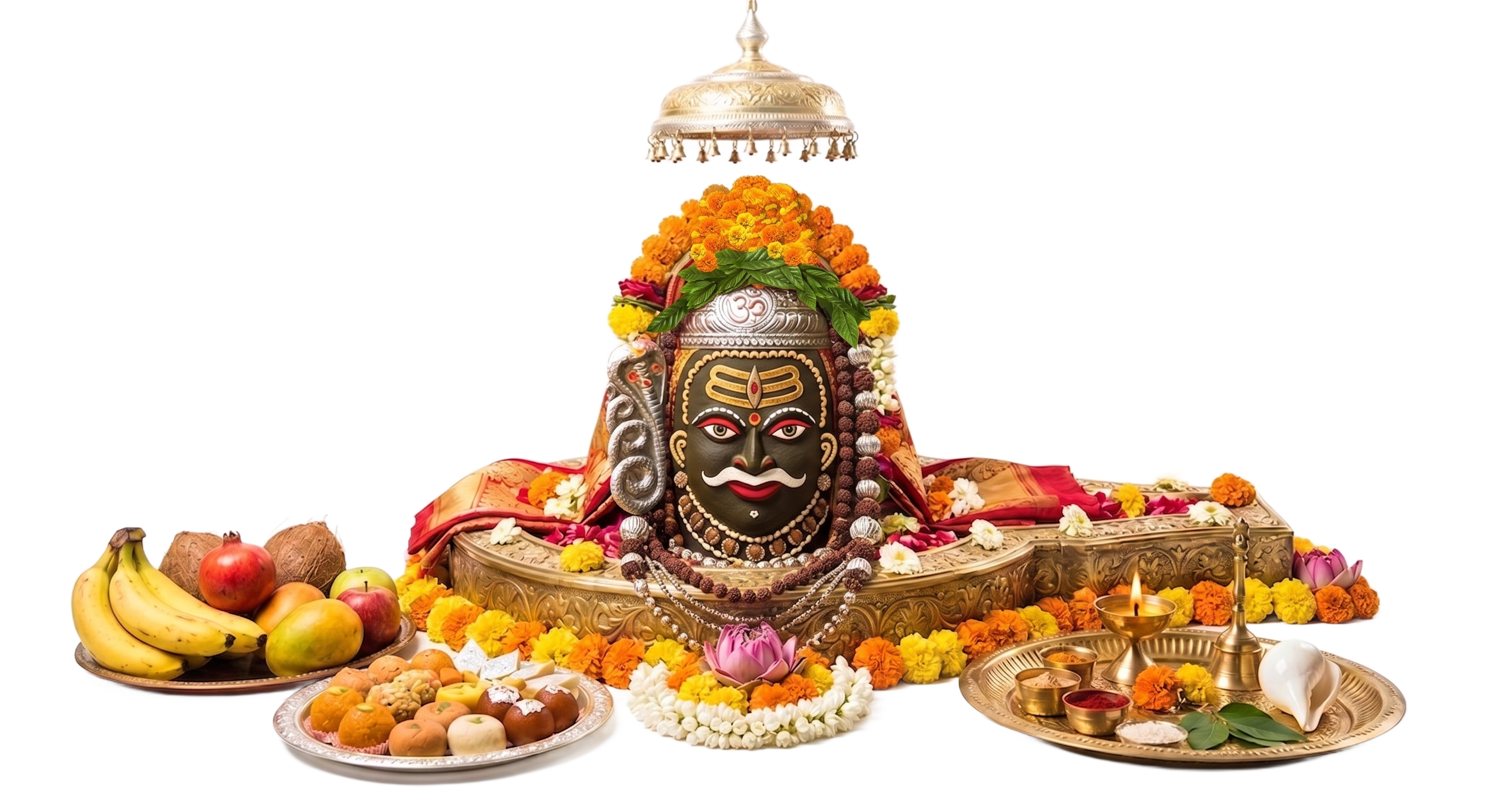
 काशी काल भैरव स्तोत्रम्
The complete Kalabhairav Ashtakam, attributed to Adi Shankaracharya, with meaning, benefits and the correct way to chant it for protection and fearlessness.
Who is Kaal Bhairav
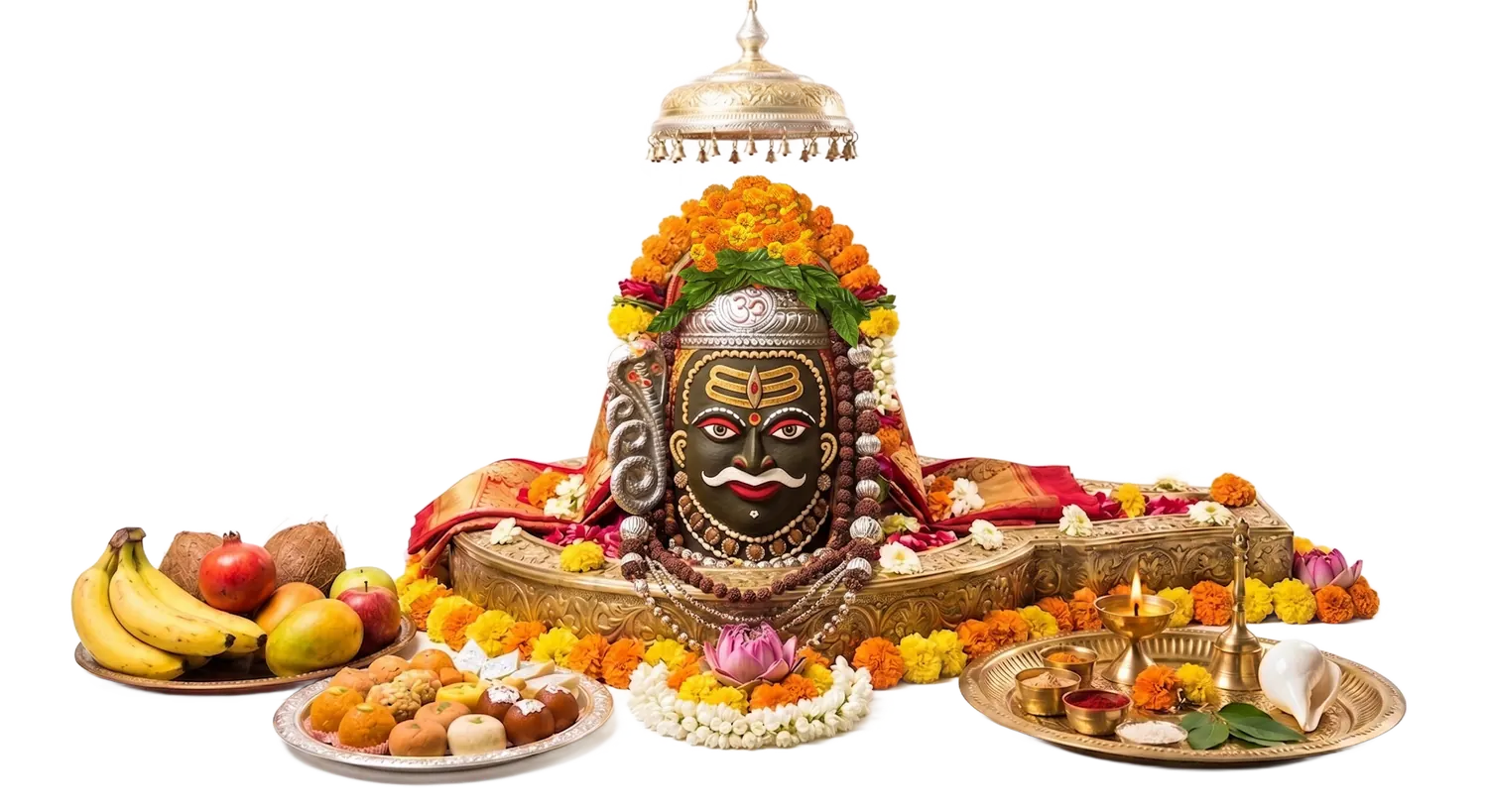
Kaal Bhairav is the fierce, protective form of Lord Shiva — the guardian deity (Kotwal) of Kashi and, by extension, of every sacred place and every sincere devotee. He is worshipped as the destroyer of ego, fear, negativity and untimely death (akaal mrityu). The Kalabhairav Ashtakam is a powerful eight-verse hymn traditionally attributed to Adi Shankaracharya, sung in praise of this form of Shiva who rides a dog, holds a trident, a noose, a skull-bowl and a drum, and wears a garland of skulls symbolising mastery over time and death itself.
Each verse of the Ashtakam ends with the refrain "Kashikapuradhinatha Kalabhairavam Bhaje" — I worship Kaal Bhairav, the Lord of the city of Kashi. Chanting this stotra with devotion is believed to remove deep-rooted fear, protect from black magic and evil influences, resolve legal and property disputes, and grant courage to face life's hardest situations.
Complete Kalabhairav Ashtakam (Devanagari)
देवराजसेव्यमानपावनांघ्रिपंकजं व्यालयज्ञसूत्रमिन्दुशेखरं कृपाकरम्। नारदादियोगिवृन्दवन्दितं दिगंबरं काशिकापुराधिनाथकालभैरवं भजे॥१॥
भानुकोटिभास्वरं भवाब्धितारकं परं नीलकण्ठमीप्सितार्थदायकं त्रिलोचनम्। कालकालमंबुजाक्षमक्षशूलमक्षरं काशिकापुराधिनाथकालभैरवं भजे॥२॥
शूलटंकपाशदंडपाणिमादिकारणं श्यामकायमादिदेवमक्षरं निरामयम्। भीमविक्रमं प्रभुं विचित्रताण्डवप्रियं काशिकापुराधिनाथकालभैरवं भजे॥३॥
भुक्तिमुक्तिदायकं प्रशस्तचारुविग्रहं भक्तवत्सलं स्थितं समस्तलोकविग्रहम्। विनिक्वणन्मनोज्ञहेमकिंकिणीलसत्कटिं काशिकापुराधिनाथकालभैरवं भजे॥४॥
धर्मसेतुपालकं त्वधर्ममार्गनाशकं कर्मपाशमोचकं सुशर्मदायकं विभुम्। स्वर्णवर्णशेषपाशशोभिताङ्गमण्डलं काशिकापुराधिनाथकालभैरवं भजे॥५॥
रत्नपादुकाप्रभाभिरामपादयुग्मकं नित्यमद्वितीयमिष्टदैवतं निरंजनम्। मृत्युदर्पनाशनं करालदंष्ट्रमोक्षणं काशिकापुराधिनाथकालभैरवं भजे॥६॥
अट्टहासभिन्नपद्मजाण्डकोशसंततिं दृष्टिपातनष्टपापजालमुग्रशासनम्। अष्टसिद्धिदायकं कपालमालिकाधरं काशिकापुराधिनाथकालभैरवं भजे॥७॥
भूतसंघनायकं विशालकीर्तिदायकं काशिवासलोकपुण्यपापशोधकं विभुम्। नीतिमार्गकोविदं पुरातनं जगत्पतिं काशिकापुराधिनाथकालभैरवं भजे॥८॥
कालभैरवाष्टकं पठन्ति ये मनोहरं ज्ञानमुक्तिसाधनं विचित्रपुण्यवर्धनम्। शोकमोहदैन्यलोभकोपतापनाशनं ते प्रयान्ति कालभैरवांघ्रिसन्निधिं ध्रुवम्॥
Meaning
Verse 1: I worship Kaal Bhairav, whose holy lotus feet are served by Indra and the celestial gods, who wears a garland made of serpents, has the crescent moon on his head, is an ocean of grace, is worshipped by great sages like Narada, and roams the sky-clad (digambara) form as the Lord of Kashi.
Verse 2: I worship Kaal Bhairav, who shines with the brilliance of a crore suns, who ferries souls across the ocean of worldly existence, who has a blue throat, three eyes, grants desired boons, and is the very death of death (Kaal ka bhi Kaal), imperishable and lotus-eyed.
Verse 3: I worship Kaal Bhairav, who holds the trident, axe, noose and staff in his hands, who is the original cause of creation, whose body is dark, who is the primordial deity, imperishable, free of disease, of fearsome valour, and who delights in the wondrous cosmic dance.
Verse 4: I worship Kaal Bhairav, the giver of both worldly enjoyment and liberation, of beautiful and auspicious form, ever affectionate towards devotees, the embodiment of all the worlds, whose waist is adorned with a resonant golden girdle of tiny bells.
Verse 5: I worship Kaal Bhairav, the protector of dharma's bridge, the destroyer of the path of adharma, the one who releases souls from the bondage of karma, the giver of true well-being, the all-pervading lord whose form is adorned with a golden serpent as a garland.
Verse 6: I worship Kaal Bhairav, whose pair of feet shine with the radiance of jewelled sandals, who is eternal and without a second, the chosen deity, spotless, the destroyer of the pride of death, and who liberates from the terrible jaws of death.
Why chant the Kalabhairav Ashtakam
The Ashtakam is chanted to invoke protection from unnatural fear, nightmares, black magic, court cases, property disputes and the malefic effects of enemies. It is also chanted for courage in the face of major life decisions, for removing obstacles caused by past karma, and for spiritual seekers wishing to progress on the path of knowledge and eventual liberation (moksha). Devotees of Shiva especially recite it on Bhairav Ashtami, on Sundays, and during the month of Kartik.
How and when to chant
Bathe and sit facing east or north in a clean, quiet place, ideally after sunset since Bhairav is especially worshipped at dusk and at night. Light a mustard-oil lamp before a picture or idol of Kaal Bhairav or Shiva, offer black sesame seeds, mustard oil, and if possible urad dal, and chant the Ashtakam once or in multiples of eight or eleven. Tuesdays, Sundays and especially Bhairav Ashtami (the ashtami of Krishna Paksha in Margashirsha/Kartik) are considered most auspicious. Some devotees prefer chanting it during the pradosh kaal (twilight hours). Keep the mind calm, pronounce each verse clearly, and conclude with the phala shruti verse.
Benefits
The Ashtakam is regarded as a powerful shield against fear, evil eye, black magic and the negative effects of enemies. It is said to help resolve stubborn legal and property matters, remove obstacles arising from past karma, grant courage and mental strength during crises, and, for sincere seekers, open the path towards spiritual knowledge and liberation.
Dos and don'ts
Maintain purity of body and mind before chanting; avoid non-vegetarian food and alcohol on the day you chant. Do not chant it casually or for harming another person — it is meant purely for protection and spiritual upliftment. If you are new to the stotra, listening to a correct audio rendition a few times helps with pronunciation before chanting it yourself.
FAQ
Q: Who wrote the Kalabhairav Ashtakam? It is traditionally attributed to the great philosopher-saint Adi Shankaracharya, though some regional traditions attribute similar Bhairav stotras to other saints as well.
Q: Can women and non-Shaivites chant it? Yes. Kaal Bhairav is a protective, benevolent form of Shiva for every sincere devotee regardless of gender or sect; the usual precautions of cleanliness and respectful intent apply.
Q: What is the best day to start chanting it? Bhairav Ashtami is considered the most powerful day to begin, but Sundays and Tuesdays are also excellent, and it can be started on any day with sincere intent.
Q: Is a guru's permission required? No formal initiation is required for this stotra; it is openly recited by devotees everywhere. Chanting with faith and correct pronunciation is what matters most.
Quick guide
Before you begin
Mantra
Shiva mantra
Om Namah Shivaya
Chant with a quiet mind, especially on Monday, Pradosh, or during Shiva puja.
Bhav
Benefits devotees pray for
FAQ
Common questions
Who wrote the Kalabhairav Ashtakam?
It is traditionally attributed to Adi Shankaracharya.
Can women and non-Shaivites chant it?
Yes, it is open to every sincere devotee with clean intent and cleanliness.
What is the best day to start chanting it?
Bhairav Ashtami is ideal, but Sundays and Tuesdays are also excellent.
Is a guru's permission required?
No formal initiation is needed; sincere faith and correct pronunciation matter most.
Seek Kaal Bhairav's protection through a proper puja
Let our pandits perform an authentic Kaal Bhairav puja and chadhava on your behalf for protection, courage and removal of obstacles.