 जय आद्य शक्ति, माँ जय आद्य शक्ति
The complete Jai Adya Shakti aarti dedicated to the Primordial Mother Goddess, with meaning, vidhi and the blessings her worship brings.
Jai Adya Shakti is one of the most beloved and powerful aartis dedicated to the Adi Shakti — the Primordial Mother Goddess, the source energy from which Mahakali, Mahalakshmi and Mahasaraswati manifest, and who ultimately is one with Durga, Amba and every form of the Divine Mother. Composed centuries ago and sung with equal devotion across Gujarat, Rajasthan and throughout North India, it is one of the most widely sung Devi aartis during Navratri, on Fridays, and at every Shakti temple. Its verses describe the Mother's cosmic power, her many forms, and her boundless compassion for her children.
Complete Jai Adya Shakti Aarti (Devanagari)
जय आद्य शक्ति, माँ जय आद्य शक्ति। अखंड ब्रह्मांड दीपावो, ज्योत तुम्हारी जगती॥ जय आद्य शक्ति॥
त्रिगुण शक्ति महामाया, तुम ही जगत की रचनाहारी। पालन पोषण करती हो माँ, संहार भी तुम्हीं करती॥ जय आद्य शक्ति॥
महाकाली महालक्ष्मी, महासरस्वती रूप तुम्हारा। तीनों गुण की स्वामिनी माँ, सृष्टि तुम्हीं से सारा॥ जय आद्य शक्ति॥
ब्रह्माणी रुद्राणी माता, वैष्णवी नाम तुम्हारा। शक्ति रूप में जग में विचरो, दुष्टों का करती संहारा॥ जय आद्य शक्ति॥
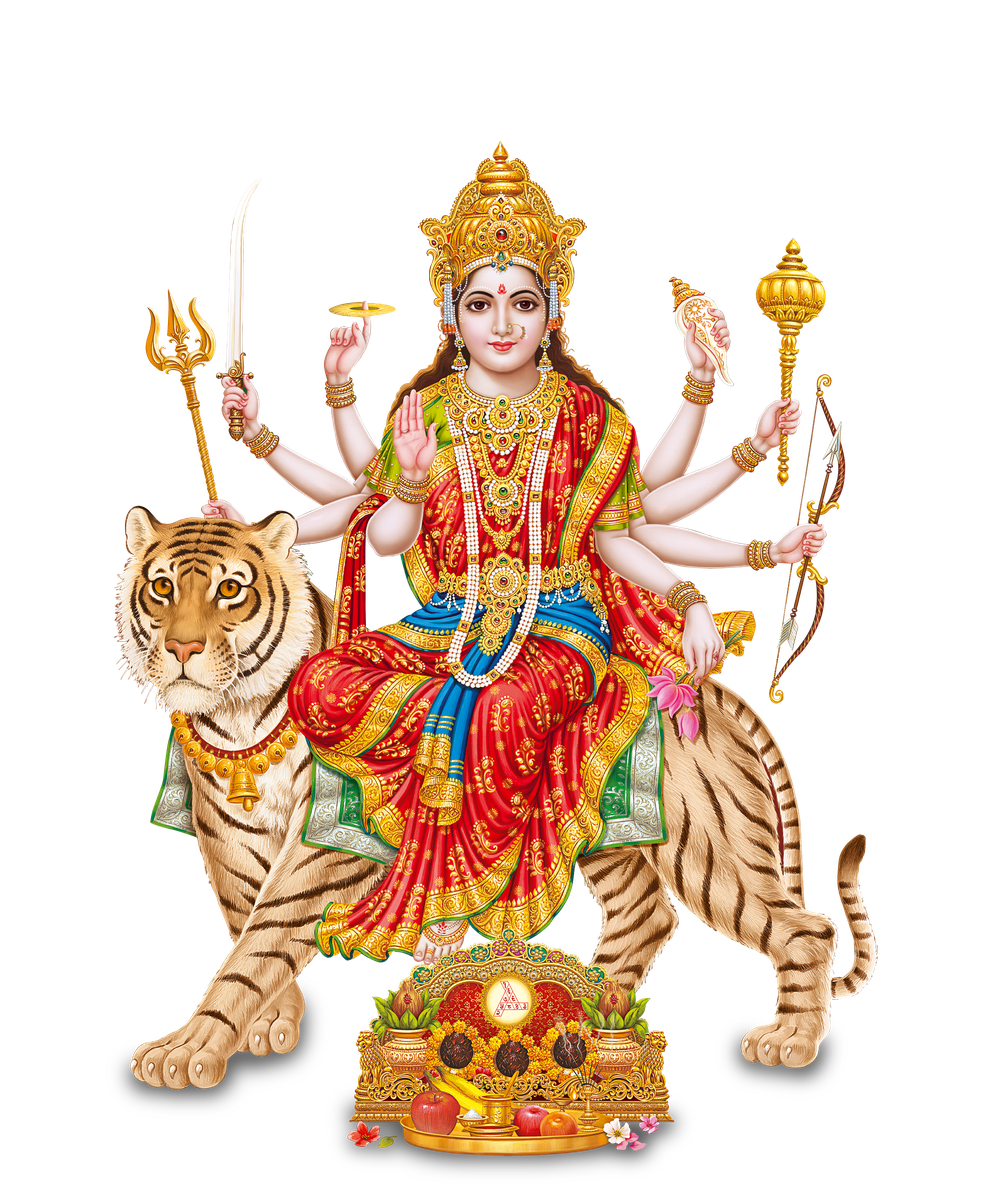
सिंह वाहन पर सवार हो माँ, त्रिशूल हाथ तुम्हारे। भक्तन के सब कष्ट मिटातीं, विपत्ति के हो निवारे॥ जय आद्य शक्ति॥
मधु कैटभ को मार गिराया, महिषासुर का किया संहार। शुम्भ निशुम्भ का नाश कर माता, देवों को दिया उद्धार॥ जय आद्य शक्ति॥
नवरात्रि में तेरा पूजन, घर घर होता माता। जो श्रद्धा से भक्ति करे, वो सुख संपत्ति पाता॥ जय आद्य शक्ति॥
अम्बे माँ जगदम्बे तेरी, महिमा अपरम्पार। जो यह आरती नित गावे, उसका हो बेड़ा पार॥ जय आद्य शक्ति॥
Meaning
Victory to the Primordial Power, O Mother, victory to Adya Shakti; you illuminate the entire boundless universe with your radiant light.
O Mahamaya, power of the three gunas, you alone are the creator of this world; you sustain and nurture it, and you alone bring about its dissolution.
Your forms are Mahakali, Mahalakshmi and Mahasaraswati; you are the mistress of the three gunas, and all creation emerges from you.
You are known as Brahmani, Rudrani and Vaishnavi, O Mother; you move through the world in the form of Shakti, destroying the wicked.
Seated upon your lion vahana, O Mother, with trident in hand, you remove every hardship of your devotees and dispel every calamity.
You slew Madhu and Kaitabh, you destroyed Mahishasura; you annihilated Shumbha and Nishumbha, O Mother, and delivered the gods.
During Navratri your worship is performed in every home, O Mother; whoever worships you with faith attains happiness and prosperity.
O Amba, O Jagadamba, your glory knows no bounds; whoever sings this aarti daily, their journey through life reaches safe shores.
Why We Worship Adi Shakti
Adi Shakti is the source of all cosmic energy — before Brahma, Vishnu and Mahesh could perform their functions of creation, sustenance and dissolution, they first drew their power from her. She is worshipped as the Mother who protects her children from every hardship, grants courage in the face of fear, and removes obstacles that no other force can overcome. This aarti in particular is beloved because it names her many forms directly, reminding devotees that Durga, Kali, Lakshmi, Saraswati and Amba are not separate goddesses but different faces of the one Mother.
How and When to Perform the Aarti
Jai Adya Shakti is traditionally sung in the evening, especially on Fridays and throughout the nine nights of Navratri (both Chaitra and Sharad Navratri). Light a ghee lamp before an image of the Devi, offer a red flower, kumkum and a sweet, and sing the aarti with a bell in hand, moving the lamp in gentle clockwise circles. Many families sing it as the concluding aarti after Durga puja, Lakshmi puja or any Devi worship, since it honours the Mother in her most complete and universal form.
Dos and Don'ts
Approach the Mother with humility and an open heart; she is said to respond most quickly to sincere devotion rather than elaborate ritual. Wear red or a bright colour if performing formal worship, as it is considered auspicious for Devi puja. Keep the space clean and avoid non-vegetarian food or alcohol on the day of worship. Do not sing the aarti mechanically or in haste — pause to feel the meaning of each verse. Include the whole family where possible, as the aarti is traditionally a household, communal practice.
The Glory (Mahatmya) of Adi Shakti
The Devi Mahatmya and other Shakta scriptures describe how Adi Shakti manifested to defeat demons like Madhu-Kaitabh, Mahishasura, and Shumbha-Nishumbha when even the gods could not overcome them, restoring dharma and balance to the universe each time. This aarti recounts those very victories, reminding devotees that the Mother's power is not distant history but a living force available to anyone who calls upon her with sincerity today.
Quick guide
Before you begin
Mantra
Devi mantra
Om Dum Durgaye Namah
Chant 11, 21, or 108 times according to your time and capacity.
Bhav
Benefits devotees pray for
FAQ
Common questions
Who is Adi Shakti in this aarti?
Adi Shakti is the Primordial Mother Goddess, the source power from which Mahakali, Mahalakshmi and Mahasaraswati manifest, and who is one with Durga, Kali, Lakshmi and Amba.
When should Jai Adya Shakti be sung?
It is traditionally sung in the evening, especially on Fridays and during the nine nights of Navratri, though it can be sung any day with devotion.
Can this aarti be sung after other Devi pujas?
Yes, many families sing it as a concluding aarti after Durga, Lakshmi or Saraswati puja, since it honours the Mother in her complete, universal form.
What offerings are made during this aarti?
A ghee lamp, red flowers, kumkum and a simple sweet are traditional offerings, along with sincere devotion.
Seek the Divine Mother's Blessings
Offer a puja to Adi Shakti / Durga Ma for protection, courage and the fulfilment of your heartfelt wishes.