
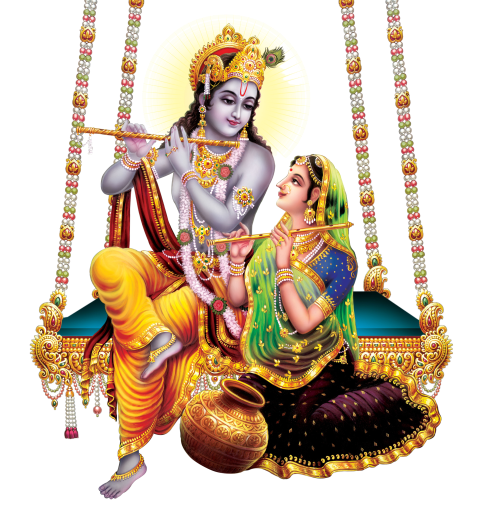
 जय जगन्नाथ स्वामी
The complete aarti of Lord Jagannath of Puri, Lord of the Universe and a form of Krishna, with meaning, vidhi and the blessings of his worship.
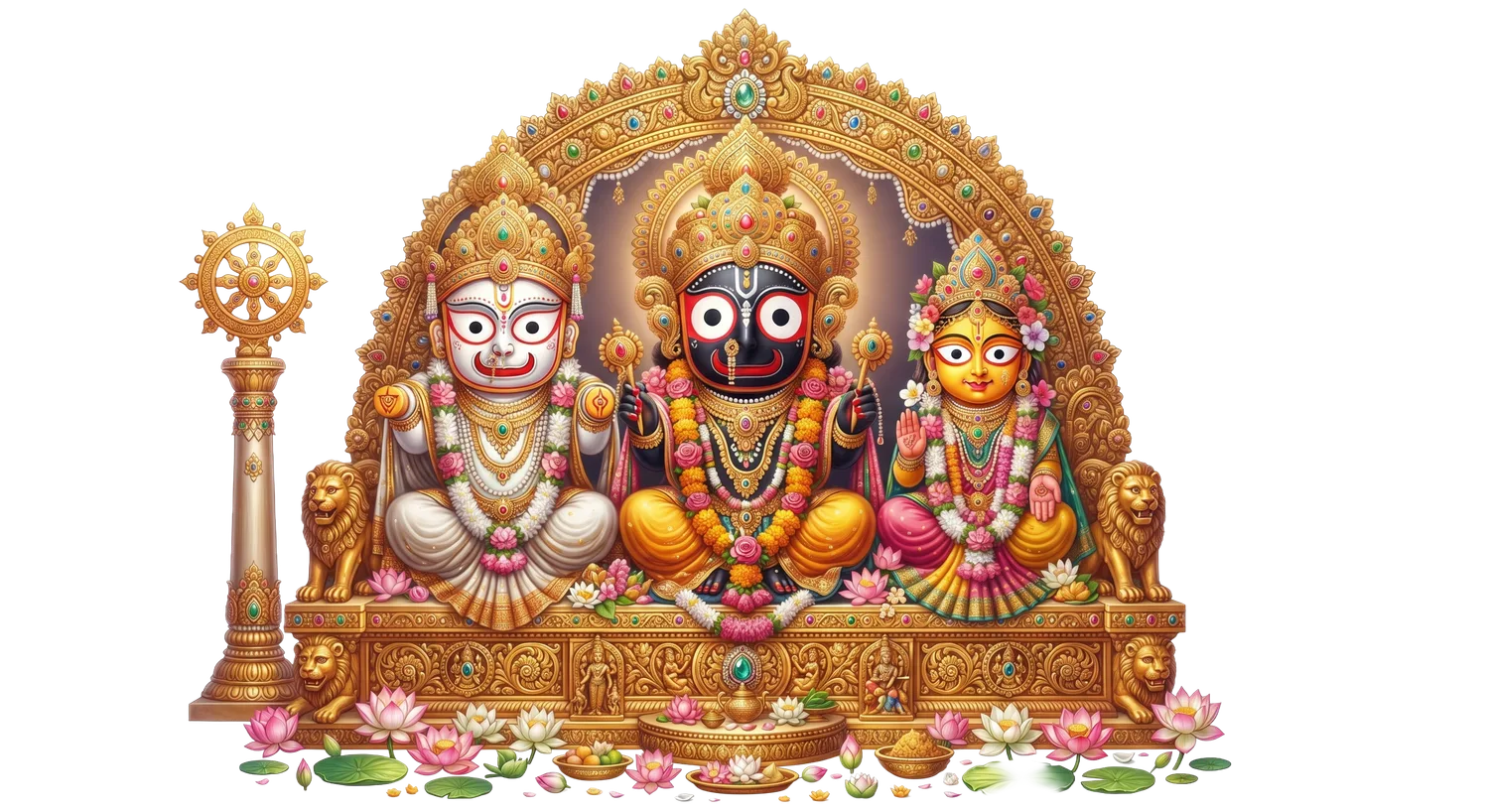
Lord Jagannath, "Lord of the Universe," is worshipped in his iconic form at the great temple of Puri in Odisha alongside his siblings Balabhadra and Subhadra. He is regarded as a complete form of Lord Krishna and Vishnu, uniquely represented not in a conventional human shape but in a simple, powerful wooden form with large round eyes that are said to gaze upon every devotee with equal, boundless love — a symbol that before the Lord, all are equal, regardless of caste, class or status. His aarti is sung with joyful devotion, especially during his famous Rath Yatra, and in homes and temples across India that revere him as Krishna's most universal form.
Complete Jagannath Ji Ki Aarti (Devanagari)
जय जगन्नाथ स्वामी, जय जगन्नाथ स्वामी। जगत के पालनहारे, दीनन के विश्रामी॥ जय जगन्नाथ स्वामी॥
नयन बड़े बड़े तेरे, करुणा से भरपूर। भक्तन को निहारत हो, दूर करो सब दूर॥ जय जगन्नाथ स्वामी॥
बलभद्र सुभद्रा सँग, विराजो रथ पर आप। पुरी नगरी धन्य भई, मिटे भक्तन के ताप॥ जय जगन्नाथ स्वामी॥
काष्ठ रूप में प्रकटे प्रभु, दारु ब्रह्म कहलाए। जो भी शरण तिहारी आवे, भवसागर तर जाए॥ जय जगन्नाथ स्वामी॥
रथ यात्रा में झूमत भक्त, हरि हरि गान सुनावें। छप्पन भोग लगावें तुमको, आरती नित गावें॥ जय जगन्नाथ स्वामी॥
नीलाचल के वासी प्रभु, जगत के तुम आधार। जो यह आरती नित गावे, उसका हो बेड़ा पार॥ जय जगन्नाथ स्वामी॥
Meaning
Victory to Lord Jagannath, victory to the Lord Swami; you are the sustainer of the entire universe and the refuge of the humble and the helpless.
Your large eyes are filled with boundless compassion; you gaze upon your devotees with love and remove all their distress.
Seated upon the chariot with Balabhadra and Subhadra beside you, the city of Puri has become blessed, and the suffering of your devotees is dispelled.
O Lord, you manifested in wooden form, known as Daru Brahma; whoever takes your shelter crosses safely over the ocean of worldly existence.
During Rath Yatra your devotees dance in joy, singing "Hari, Hari"; the fifty-six varieties of bhog are offered to you, and your aarti is sung every day.
O resident of Nilachal, you are the foundation of the entire universe; whoever sings this aarti daily, their life's journey reaches safe shores.
Why Lord Jagannath Is Worshipped
Lord Jagannath is unique among all deities in Sanatan Dharma for the radical equality his worship represents — before him, kings and commoners, Brahmins and outcastes, all stand as equal devotees, and the temple's mahaprasad (the famous chappan bhog) is shared without any distinction of caste or status. He is worshipped as Purushottam, the Supreme Being, who is also Krishna in his most universal, world-embracing form — not confined to a single narrative of his life, but present as the very Lord of Time and the Universe itself.
How and When to Perform the Aarti
The aarti of Jagannath is traditionally sung in the morning and evening before his image, and with special fervour during the nine-day Rath Yatra festival in the month of Ashadha, when the deities are taken out in a grand chariot procession. Light a lamp of ghee before an image or idol, offer fruit, coconut or a sweet as bhog, and sing the aarti while gently waving the lamp in clockwise motion, remembering that Jagannath accepts devotion above all formal ritual.
Dos and Don'ts
Approach Lord Jagannath with a joyful, open heart rather than rigid formality — devotion, dance and song are traditional at his worship. Offer prasad that is simple and pure, and share it freely with others as an expression of equality, echoing the temple's own tradition. Avoid making distinctions of caste, class or status when performing worship or distributing prasad in his name, as this contradicts the very spirit of Jagannath worship. Keep the mind free of pride while chanting, since Jagannath's gaze is said to fall equally on every devotee, however humble.
The Glory (Mahatmya) of Lord Jagannath
According to tradition, King Indradyumna of Puri, guided by a divine vision, commissioned the sacred wooden images of Jagannath, Balabhadra and Subhadra, which were carved by the divine architect Vishwakarma himself in the guise of an old carpenter, on the condition that he not be disturbed while working. When the queen grew impatient and opened the door too soon, the images were left with unfinished limbs and large round eyes — a form the Lord chose to keep forever, as a reminder that his love does not depend on outward perfection, only on the sincerity of the devotee's heart.
Quick guide
Before you begin
Mantra
Khatu Shyam mantra
Om Shri Shyam Devaya Namah
Chant with love and surrender, especially before Shyam Baba katha, aarti, or bhog.
Bhav
Benefits devotees pray for
FAQ
Common questions
Who is Lord Jagannath?
Lord Jagannath, meaning 'Lord of the Universe', is a complete form of Krishna and Vishnu worshipped at Puri, Odisha, in a unique wooden form alongside Balabhadra and Subhadra.
When is Jagannath's aarti especially significant?
It holds special significance during the nine-day Rath Yatra in the month of Ashadha, when the deities are taken through the streets in a grand chariot procession.
What is chappan bhog?
Chappan bhog refers to the fifty-six varieties of food offered to Lord Jagannath as mahaprasad, which is shared with all devotees regardless of caste or status.
Why does Jagannath have large round eyes and unfinished limbs?
According to tradition, the divine sculptor Vishwakarma was disturbed before completing the images, leaving them in this form permanently — a reminder that the Lord's love does not depend on outward perfection.
Seek Lord Jagannath's Blessings
Offer a puja to Lord Jagannath for universal blessing, joy and the removal of life's hardships.