
 वेदमाता गायत्री
The Gayatri Mantra is the most revered Vedic hymn, invoking the divine light of Savitri Devi for wisdom, purity and spiritual awakening.
The Gayatri Mantra is considered the most sacred and powerful mantra in the entire Vedic tradition. It is called "Ved Mata" - the mother of all the Vedas - because it is believed to contain the essence of all Vedic knowledge in its twenty-four syllables. This mantra is dedicated to Goddess Gayatri, who is worshipped as the personification of the Vedas and also identified with the radiant solar deity Savitri, the giver of light, life and intellect.
The Complete Gayatri Mantra (Sanskrit)
Om Bhur Bhuva Swaha Tat Savitur Varenyam Bhargo Devasya Dheemahi Dhiyo Yo Nah Prachodayat
Devanagari Text
ॐ भूर्भुवः स्वः तत्सवितुर्वरेण्यं भर्गो देवस्य धीमहि धियो यो नः प्रचोदयात्
Word-by-Word Meaning
Om: the primordial sound, the sound of the universe Bhur: the physical realm, the earth Bhuvah: the mental/astral realm, the space between earth and sky Swaha: the celestial realm, the heavens Tat: that (referring to the Supreme, Savitri Devi) Savitur: of the Sun, the source of all light Varenyam: worthy of worship, most excellent Bhargo: the divine radiance, the light that removes sin and ignorance Devasya: of the divine, of God Dheemahi: we meditate upon, we contemplate Dhiyo: the intellect, understanding Yo: who, that which Nah: our Prachodayat: may inspire, may illuminate, may direct
Overall Meaning
We meditate on the glory of that divine Being who has created the earth, the atmosphere and the heavens, and who is the source of all light. May that divine radiance illuminate and inspire our intellect towards righteousness and truth. In essence, the mantra is a prayer for enlightenment - it asks the Supreme Creator to awaken and guide our inner intelligence so that we may see clearly, think rightly, and act righteously.
Origin of the Gayatri Mantra
The Gayatri Mantra first appears in the Rigveda, one of the oldest scriptures known to humanity, composed in the Gayatri chhanda (a Vedic meter of twenty-four syllables arranged in three lines of eight syllables each). Sage Vishwamitra is credited as the rishi who received and codified this mantra through deep tapasya. Because the mantra is composed in the Gayatri meter, the mantra itself came to be called the Gayatri Mantra, and the meter was later personified as Goddess Gayatri, one of the forms of Adi Shakti, often depicted with five faces representing the five pranas and the five elements.
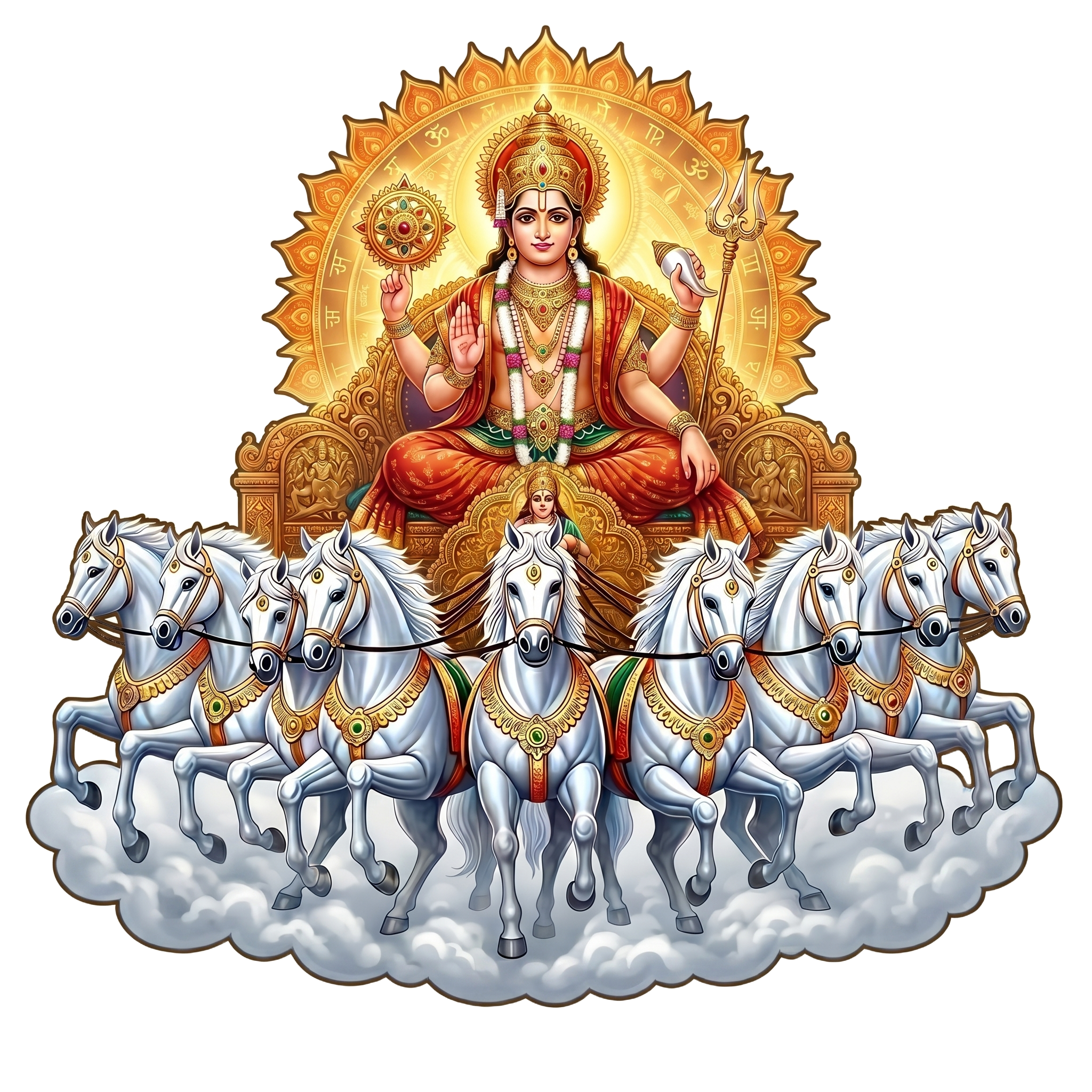
The deity invoked in the mantra is Savitri, an aspect of Surya Dev representing the life-giving, illuminating power of the sun before sunrise. For this reason, the Gayatri Mantra is traditionally chanted facing the rising sun.
Why the Gayatri Mantra Is So Revered
This mantra is unique because it does not ask for wealth, health or worldly favours. Instead, it is a pure prayer for wisdom and clarity of mind. Our sages believed that once the intellect is purified and illuminated, all other blessings - peace, prosperity and well-being - follow naturally. This is why the Gayatri Mantra is considered the seed of all spiritual growth and is given the highest place among all mantras in Sanatan Dharma.
Benefits of Chanting the Gayatri Mantra
Regular and sincere chanting of the Gayatri Mantra is believed to purify the mind, sharpen concentration and memory, and calm the nervous system through its rhythmic Sanskrit sounds. It is said to remove negative thoughts and instil courage, patience and inner discipline. Many students and seekers of knowledge chant it before study or important work, believing it awakens buddhi (intellect) and viveka (discernment). It is also chanted for overall spiritual protection and to align oneself with dharma.
How and When to Chant
The most auspicious times to chant the Gayatri Mantra are the three sandhya periods - Brahma Muhurta or sunrise, midday, and sunset - when the transition of light is believed to carry special spiritual energy. Sit facing east in the morning, ideally after a bath, in a clean and quiet place. A Rudraksha or Tulsi mala of 108 beads is traditionally used to keep count. One full round of 108 repetitions is considered ideal, though even 11 or 21 repetitions performed with devotion and correct pronunciation carry great benefit. Practitioners are encouraged to chant with a calm mind, correct pronunciation, and a spirit of humility rather than mechanical repetition.
Who Can Chant the Gayatri Mantra
While traditionally learned under a guru with the sacred thread ceremony (Upanayana) for certain communities, in modern practice the Gayatri Mantra is widely chanted by devotees of all backgrounds, men and women alike, as a universal prayer for wisdom and inner light. What matters most is sincerity, respect for the sacred sound, and regularity of practice.
A Gentle Note
The Gayatri Mantra is a spiritual practice rooted in devotion and self-purification. It is not a magical formula for instant results, nor a substitute for effort, ethical living or professional medical, legal or financial advice. Its benefits unfold gradually with faith, patience and consistent, respectful practice.
Frequently Asked Questions
Is a special initiation required to chant the Gayatri Mantra? Traditionally a guru-given initiation was recommended, but today many devotees chant it as an open, universal prayer. Learning correct pronunciation from a reliable source is more important than any formal requirement.
Can women chant the Gayatri Mantra? Yes. In present-day practice, the Gayatri Mantra is chanted by devotees of all genders as a universal prayer for wisdom and purity.
What is the best posture and direction for chanting? Sitting cross-legged facing east at sunrise, with a straight spine and calm breath, is considered ideal, though sincere chanting in any clean, quiet setting is beneficial.
How many times should it be chanted daily? A mala of 108 repetitions is traditional, but starting with even 11 repetitions with full attention and gradually increasing is a good approach for beginners.
Quick guide
Before you begin
Mantra
Surya mantra
Om Ghrinih Suryaya Namah
Chant at sunrise or during Surya arghya for energy, clarity, and discipline.
Bhav
Benefits devotees pray for
FAQ
Common questions
Is a special initiation required to chant the Gayatri Mantra?
Traditionally a guru-given initiation was recommended, but today many devotees chant it as an open, universal prayer. Learning correct pronunciation from a reliable source is more important than any formal requirement.
Can women chant the Gayatri Mantra?
Yes. In present-day practice, the Gayatri Mantra is chanted by devotees of all genders as a universal prayer for wisdom and purity.
What is the best posture and direction for chanting?
Sitting cross-legged facing east at sunrise, with a straight spine and calm breath, is considered ideal, though sincere chanting in any clean, quiet setting is beneficial.
How many times should it be chanted daily?
A mala of 108 repetitions is traditional, but starting with even 11 repetitions with full attention and gradually increasing is a good approach for beginners.
Seek Divine Blessings for Wisdom and Peace
Let a dedicated puja invoke divine grace for clarity, wisdom and well-being in your life.