



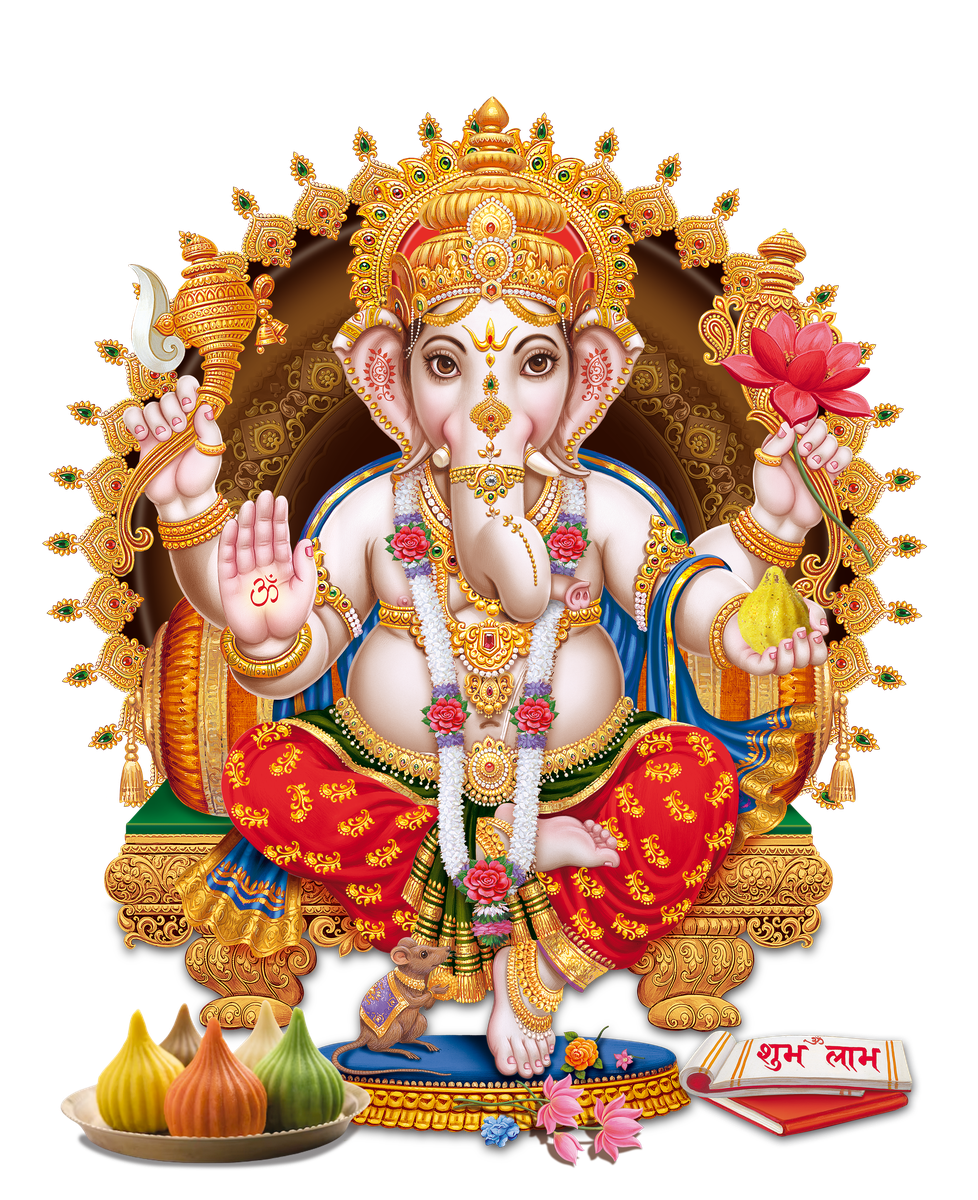
 विघ्नहर्ता वंदना
The complete Ganesh Chalisa in Devanagari with full English meaning, chanting vidhi, benefits and FAQs for removing obstacles.
Lord Ganesha, the elephant-headed son of Shiva and Parvati, is worshipped first in every ritual as Vighnaharta — the remover of obstacles — and as the god of wisdom, prosperity and good beginnings. The Ganesh Chalisa is one of the most widely recited devotional texts in Hindu homes, praising his form, his birth story and his power to clear every hurdle in a devotee's path.
Complete Ganesh Chalisa (Devanagari)
दोहा जय गणपति सद्गुण सदन, कविवर बदन कृपाल। विघ्न हरण मंगल करण, जय जय गिरिजालाल॥
चौपाई
जय जय जय गणपति गणराजू। मंगल भरण करण शुभ काजू॥ जय गजबदन सदन सुखदाता। विश्व विनायक बुद्धि विधाता॥ वक्रतुण्ड शुचि शुण्ड सुहावन। तिलक त्रिपुण्ड भाल मन भावन॥ राजत मणि मुक्तन उर माला। स्वर्ण मुकुट शिर नयन विशाला॥ पुस्तक पाणि कुठार त्रिशूलं। मोदक भोग सुगन्ध सुफूलं॥ सुन्दर पीताम्बर तन साजित। चरण पादुका मुनि मन राजित॥ धनि शिव सुवन षडानन भ्राता। गौरी ललन विश्व विख्याता॥ ऋद्धि सिद्धि तव चंवर सुधारे। मूषक वाहन सोहत द्वारे॥ कहौं जन्म शुभ कथा तुम्हारी। अति शुचि पावन मंगलकारी॥ एक समय गिरिराज कुमारी। पुत्र हेतु तप कीन्हो भारी॥ भयो यज्ञ जब पूर्ण अनूपा। तब पहुंच्यो तुम धरि द्विज रूपा॥ अतिथि जानि कै गौरी सुखारी। बहु विधि सेवा करी तुम्हारी॥ अति प्रसन्न है तुम वर दीन्हा। मातु पुत्र हित जो तप कीन्हा॥ मिलहि पुत्र तुहि बुद्धि विशाला। बिना गर्भ धारण यहि काला॥ गणेश जन्म की कथा सुहाई। कहत सुनत अघ दूर पराई॥ एक समय शिव अंतर्धाना। चली गौरी संग सखी सुजाना॥ मैल देह के डारि सुहायो। तेहि ते बालक रूप उपायो॥ नाम गणेश गौरि तब कीन्हा। द्वार बैठाय गमन तब लीन्हा॥ तबहिं शिव आवत तहँ भयऊ। बालक देखि अति चकित होयऊ॥ रोक्यो शिव को बालक ज्ञानी। महादेव क्रोधित तब मानी॥ पश्छित काटि सिर सुत घातयो। गौरी विलख करी बहु त्रासयो॥ तुरत गजानन शीश चढ़ायो। प्राण मंत्र पढ़ि शिव जियायो॥ नाम गजानन शम्भु धरायो। प्रथम पूज्य बुद्धि निधि पायो॥ बुद्धि परीक्षा जबहिं भई। गणपति तुम सब भांति ठई॥ चारो ओर लगि भूमि परिक्रम्मा। तुम बैठे केवल मात-पिता प्रति नमन कीन्हा॥ तुम्हरो नाम सकल जग गावै। ताते तुरत प्रथम पूज्य कहावै॥ अस मूषक वाहन तुम राजा। करत उपाय सकल तुम काजा॥ मोदक फल तुम अति ही भावा। तिनको भोग तुरन्त लगावा॥ सकल भूमि पर छत्र तुम्हारा। सब पर करहु कृपा तुम भारा॥ मूषक वाहन सुन्दर लागे। जग में गणपति नाम प्रताप जागे॥ जय जय जय गणपति गुण गावे। बुद्धि प्रदायक ताहि बतावे॥ जय जय जय गजबदन सुनंदा। सुत गणराज करत सब वंदा॥ तुम बिनु सृष्टि सफल नहिं होई। तुम बिनु शुभ काज न होई कोई॥ तुम बिनु सिद्धि न ऋद्धि पावै। तुम बिनु शुभ मुहूर्त न आवै॥ नवग्रह ग्रह बाधा जब होई। तुम्हरे भजन ते नासे सोई॥ जो कोई सम्मुख यह चालीसा। पढ़े प्रेम सहित रस भरी॥ तिनकी सकल कामना पूरन। हो सो प्रथम पूज्य गणराजा॥ मोहि विशेष कृपा जो कीजै। तिनको यह चालीसा दीजै॥ नित नियम कर प्रातः जो गावे। मन वांछित ताहि फल पावे॥ अस गणेश सब भक्तन प्यारा। सबकी सुनि करते हैं सारा॥ जयति जयति जय गणपति देवा। जय जय जय शिव सुत सुखदेवा॥
दोहा श्री गणेश यह चालीसा, पाठ करे धरि ध्यान। नित नव मंगल गृह बसे, लहै जगत सम्मान॥
Meaning
The opening doha bows to Ganapati as the abode of good qualities, best of poets, and merciful lord, the remover of obstacles and doer of auspicious things, son of Girija (Parvati).
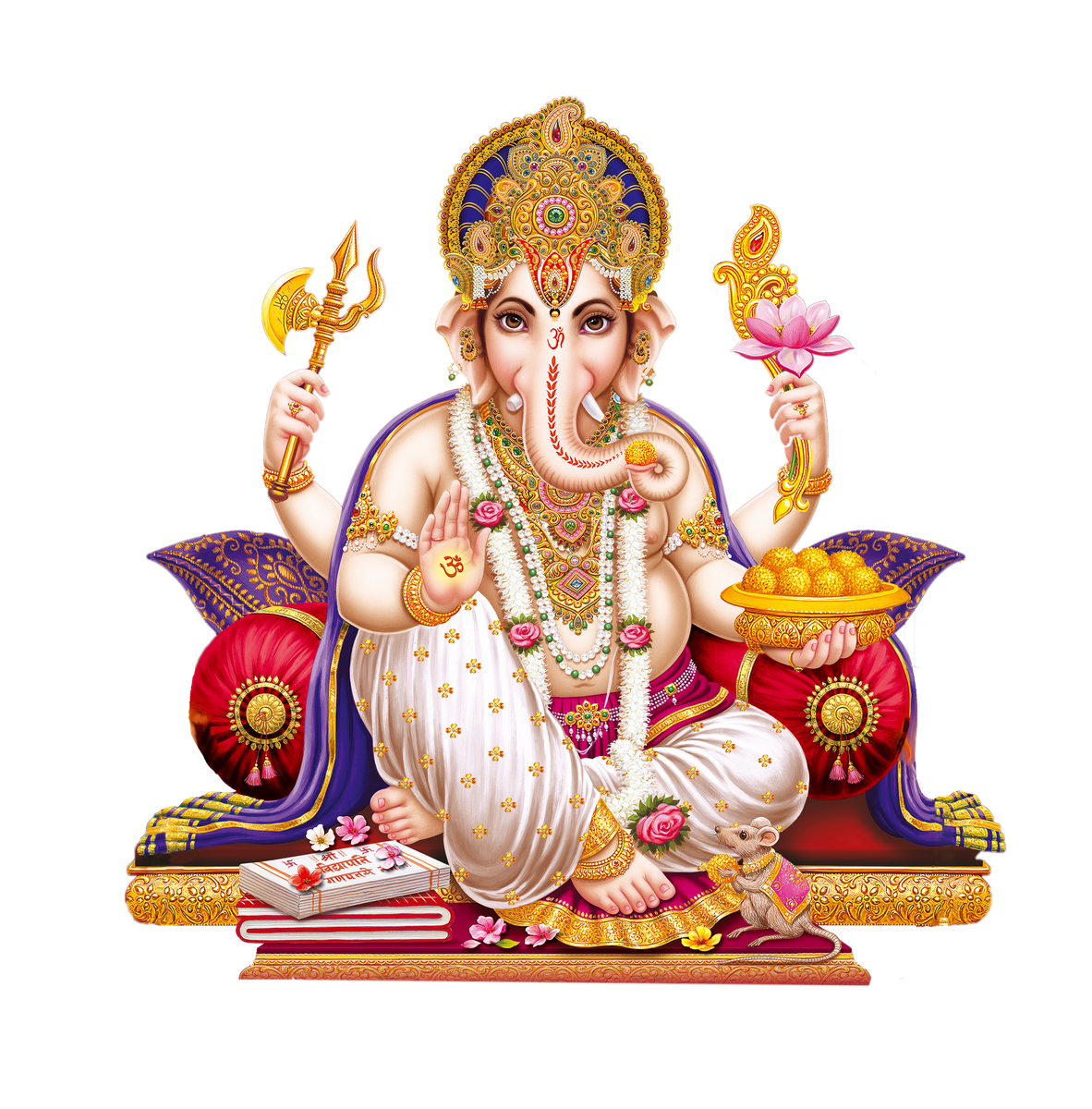
The first verses describe his radiant form — the elephant face, curved trunk, the tilak on his forehead, the string of jewels and pearls, the golden crown, wide eyes, and his four hands holding a book, an axe, a trident and modaka sweets. He wears yellow silk cloth and his feet are worshipped even by sages. He is Shiva's son, brother of Kartikeya, beloved of Gauri (Parvati), attended by Riddhi and Siddhi, and rides upon his mouse vahana.
The middle section narrates his birth story — how Parvati performed severe penance for a son, how Ganesha was created from the sacred impurities of her body and set to guard her door, how Shiva, not recognizing him, struck off his head in anger, and how, seeing Gauri's grief, Shiva restored him to life with the head of an elephant, making him Gajanan, foremost among the gods to be worshipped.
The following verses celebrate how, in the contest of wisdom between the divine brothers, Ganesha won by simply circling his parents — showing that reverence for one's parents equals circling the whole creation — and thus earned the title of Pratham Pujya, the one worshipped first in every ritual, before any auspicious work is begun.
The closing verses declare that without his grace no creation succeeds, no auspicious work is completed, no prosperity (Riddhi-Siddhi) is attained, and no muhurta (auspicious moment) arrives rightly. Chanting this Chalisa with devotion removes planetary afflictions (graha-badha) and fulfills every righteous wish of the devotee who reads it daily each morning. The final doha promises that one who reads this Chalisa with focused attention finds ever-fresh auspiciousness at home and honor in the world.
Why Chant the Ganesh Chalisa
Ganesha is invoked at the start of every new venture — a new home, business, journey, wedding, exam or puja — to clear obstacles (vighnas) before they arise. The Chalisa is especially chanted for success in new beginnings, removal of delays and hurdles, improvement of intellect and decision-making, and general household harmony and prosperity.
How and When to Chant
Wednesday (Budhwar) is considered especially auspicious for Ganesha worship, as is the fourth day of the lunar fortnight (Chaturthi). Sit facing east or north after a bath, light a ghee lamp, offer durva grass, red flowers and modak or ladoo, and recite the Chalisa with a calm mind, ideally in the morning before starting any important work.
Dos and Don'ts
Avoid offering tulsi leaves to Ganesha, as tradition holds this is not favoured by him (unlike most other deities). Keep the recitation space clean, and it is best to complete the full Chalisa in one sitting rather than interrupting midway.
Benefits
Regular recitation is believed to remove obstacles in career, business, education and family matters; sharpen intellect, memory and decision-making; bring auspiciousness to new beginnings; and invite the twin blessings of Riddhi (prosperity) and Siddhi (accomplishment) into the home.
Frequently Asked Questions
Which day is best for the Ganesh Chalisa? Wednesday and Chaturthi (fourth lunar day) are considered especially auspicious, though it can be chanted daily, ideally each morning.
How many times should it be read? Once with devotion daily is enough; before major undertakings many devotees read it three, seven or eleven times.
Why is Ganesha worshipped first in every puja? Because of the wisdom contest with his brother Kartikeya, where circling his parents (representing the entire creation) won him the title Pratham Pujya — first to be worshipped.
Can the Ganesh Chalisa be read for children's studies? Yes, since Ganesha is the deity of wisdom and intellect, students commonly recite it before exams and important academic milestones for clarity and confidence.
Quick guide
Before you begin
Mantra
Ganesh mantra
Om Gam Ganapataye Namah
Chant before beginning the puja, aarti, study, business, or any new work.
Bhav
Benefits devotees pray for
FAQ
Common questions
Which day is best for the Ganesh Chalisa?
Wednesday and Chaturthi (fourth lunar day) are considered especially auspicious, though it can be chanted daily.
How many times should it be read?
Once with devotion daily is enough; before major undertakings many devotees read it three, seven or eleven times.
Why is Ganesha worshipped first in every puja?
Because circling his parents (representing the entire creation) won him the wisdom contest and the title Pratham Pujya — first to be worshipped.
Can the Ganesh Chalisa be read for children's studies?
Yes, since Ganesha is the deity of wisdom and intellect, students commonly recite it before exams for clarity and confidence.
Begin with Ganesh Ji's Blessings
Book a Ganesh puja to clear obstacles and bring auspiciousness to your new beginning.