

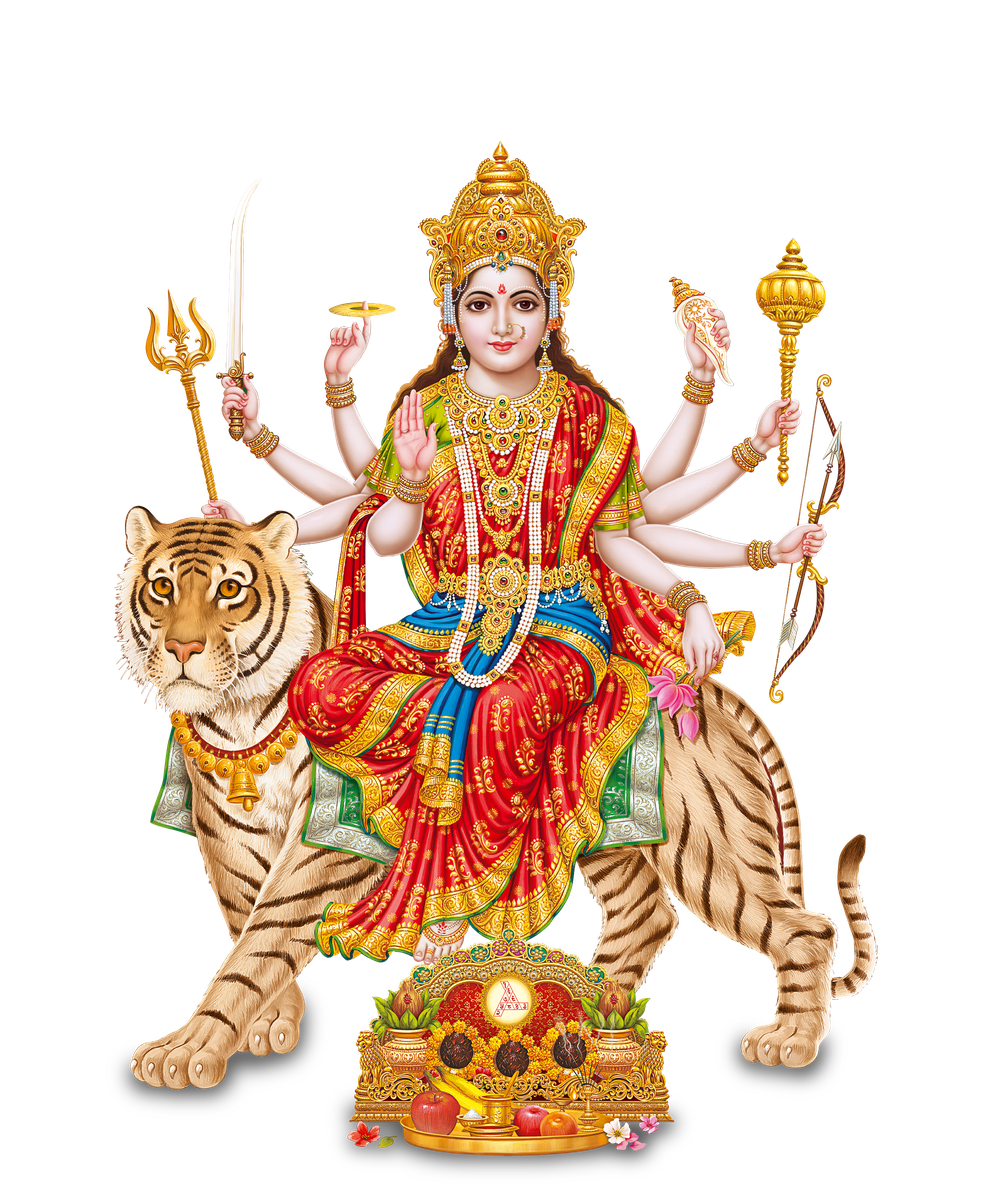
 या देवी सर्वभूतेषु शक्तिरूपेण संस्थिता
Devi Kavach is the sacred armour-stotra from the Durga Saptashati in which Maa Durga's nine forms and their weapon-bearing aspects are invoked to protect every part of the body and every direction from harm.
Devi Kavach, meaning "the armour of the Goddess", is one of the three angas (limbs) of the Durga Saptashati, recited before the main text along with Kilak and Argala Stotra. It is presented as a dialogue between sage Markandeya and Brahma, in which Brahma reveals to the sage this most secret and auspicious hymn that grants complete protection to a devotee in every situation - in battle, in danger, in illness, and in daily life.
The uniqueness of Devi Kavach lies in its structure. After describing the nine forms of Durga (Navadurga) and the various weapon-wielding forms of the Goddess such as Chamunda, Varahi, Vaishnavi, Aindri, Maheshwari, Kaumari and Brahmani, the stotra proceeds, limb by limb, to invoke a specific form of the Devi to guard each part of the sadhak's body - the head, forehead, eyes, ears, nose, throat, heart, hands, feet, and even the inner faculties of mind, intellect and breath. It also invokes the Goddess to guard all ten directions. This is why it is called a "kavach" or armour - reciting it is believed to wrap the devotee's entire being, inside and out, in the protective embrace of Shakti.
Complete Devi Kavach (Devanagari)
ॐ अस्य श्रीचण्डीकवचस्य ब्रह्मा ऋषिः, अनुष्टुप् छन्दः, चामुण्डा देवता, अङ्गन्यासोक्तमातरो बीजं, दिग्बन्धदेवतास्तत्त्वं, श्रीजगदम्बाप्रीत्यर्थे सप्तशतीपाठाङ्गत्वेन जपे विनियोगः।
मार्कण्डेय उवाच ॐ यद्गुह्यं परमं लोके सर्वरक्षाकरं नृणाम्। यन्न कस्यचिदाख्यातं तन्मे ब्रूहि पितामह॥१॥
ब्रह्मोवाच अस्ति गुह्यतमं विप्र सर्वभूतोपकारकम्। देव्यास्तु कवचं पुण्यं तच्छृणुष्व महामुने॥२॥
प्रथमं शैलपुत्री च द्वितीयं ब्रह्मचारिणी। तृतीयं चन्द्रघण्टेति कूष्माण्डेति चतुर्थकम्॥३॥
पञ्चमं स्कन्दमातेति षष्ठं कात्यायनीति च। सप्तमं कालरात्रीति महागौरीति चाष्टमम्॥४॥
नवमं सिद्धिदात्री च नवदुर्गाः प्रकीर्तिताः। उक्तान्येतानि नामानि ब्रह्मणैव महात्मना॥५॥
अग्निना दह्यमानास्तु शत्रुमध्यगता रणे। विषमे दुर्गमे चैव भयार्ताः शरणं गताः॥६॥
न तेषां जायते किञ्चिदशुभं रणसंकटे। नापदं तस्य पश्यामि शोकदुःखभयं न हि॥७॥
यैस्तु भक्त्या स्मृता नूनं तेषां वृद्धिः प्रजायते। ये त्वां स्मरन्ति देवेशि रक्षसे तान्न संशयः॥८॥
प्रेतसंस्था तु चामुण्डा वाराही महिषासना। ऐन्द्री गजसमारूढा वैष्णवी गरुडासना॥९॥
माहेश्वरी वृषारूढा कौमारी शिखिवाहना। लक्ष्मीः पद्मासना देवी पद्महस्ता हरिप्रिया॥१०॥
श्वेतरूपधरा देवी ईश्वरी वृषवाहना। ब्राह्मी हंससमारूढा सर्वाभरणभूषिता॥११॥
इत्येता मातरः सर्वाः सर्वयोगसमन्विताः। नानाभरणशोभाढ्या नानारत्नोपशोभिताः॥१२॥
दृश्यन्ते रथमारूढा देव्यः क्रोधसमाकुलाः। शङ्खं चक्रं गदां शक्तिं हलं च मुसलायुधम्॥१३॥
खेटकं तोमरं चैव परशुं पाशमेव च। कुन्तायुधं त्रिशूलं च शार्ङ्गमायुधमुत्तमम्॥१४॥
दैत्यानां देहनाशाय भक्तानामभयाय च। धारयन्त्यायुधानीत्थं देवानां च हिताय वै॥१५॥
नमस्तेऽस्तु महारौद्रे महाघोरपराक्रमे। महाबले महोत्साहे महाभयविनाशिनि॥१६॥
त्राहि मां देवि दुष्प्रेक्ष्ये शत्रूणां भयवर्धिनि। प्राच्यां रक्षतु मामैन्द्री आग्नेय्यामग्निदेवता॥१७॥
दक्षिणेऽवतु वाराही नैऋत्यां खड्गधारिणी। प्रतीच्यां वारुणी रक्षेद्वायव्यां मृगवाहिनी॥१८॥
उदीच्यां पातु कौमारी ऐशान्यां शूलधारिणी। ऊर्ध्वं ब्रह्माणि मे रक्षेदधस्ताद्वैष्णवी तथा॥१९॥
एवं दश दिशो रक्षेच्चामुण्डा शववाहना। जया मे चाग्रतः पातु विजया पातु पृष्ठतः॥२०॥
अजिता वामपार्श्वे तु दक्षिणे चापराजिता। शिखामुद्योतिनी रक्षेदुमा मूर्ध्नि व्यवस्थिता॥२१॥
मालाधरी ललाटे च भ्रुवौ रक्षेद्यशस्विनी। त्रिनेत्रा च भ्रुवोर्मध्ये यमघण्टा च नासिके॥२२॥
शङ्खिनी चक्षुषोर्मध्ये श्रोत्रयोर्द्वारवासिनी। कपोलौ कालिका रक्षेत्कर्णमूले तु शाङ्करी॥२३॥
नासिकायां सुगन्धा च उत्तरोष्ठे च चर्चिका। अधरे चामृतकला जिह्वायां च सरस्वती॥२४॥
दन्तान् रक्षतु कौमारी कण्ठदेशे तु चण्डिका। घण्टिकां चित्रघण्टा च महामाया च तालुके॥२५॥
कामाक्षी चिबुकं रक्षेद्वाचं मे सर्वमङ्गला। ग्रीवायां भद्रकाली च पृष्ठवंशे धनुर्धरी॥२६॥
नीलग्रीवा बहिः कण्ठे नलिकां नलकूबरी। स्कन्धयोः खड्गिनी रक्षेद्बाहू मे वज्रधारिणी॥२७॥
हस्तयोर्दण्डिनी रक्षेदम्बिका चाङ्गुलीषु च। नखाञ्छूलेश्वरी रक्षेत्कुक्षौ रक्षेत्कुलेश्वरी॥२८॥
स्तनौ रक्षेन्महादेवी मनःशोकविनाशिनी। हृदये ललिता देवी उदरे शूलधारिणी॥२९॥
नाभौ च कामिनी रक्षेद्गुह्यं गुह्येश्वरी तथा। पूतना कामिका मेढ्रं गुदे महिषवाहिनी॥३०॥
कट्यां भगवती रक्षेज्जानुनी विन्ध्यवासिनी। जङ्घे महाबला रक्षेज्जानुदेशे तु धारिणी॥३१॥
गुल्फयोर्नारसिंही च पादपृष्ठे तु तैजसी। पादाङ्गुलीषु श्री रक्षेत्पादाधस्तलवासिनी॥३२॥
नखान् दंष्ट्राकराली च केशांश्चैवोर्ध्वकेशिनी। रोमकूपेषु कौबेरी त्वचं वागीश्वरी तथा॥३३॥
रक्तमज्जावसामांसान्यस्थिमेदांसि पार्वती। अन्त्राणि कालरात्रिश्च पित्तं च मुकुटेश्वरी॥३४॥
पद्मावती पद्मकोशे कफे चूडामणिस्तथा। ज्वालामुखी नखज्वालामभेद्या सर्वसन्धिषु॥३५॥
शुक्रं ब्रह्माणि मे रक्षेच्छायां छत्रेश्वरी तथा। अहंकारं मनो बुद्धिं रक्षेन्मे धर्मधारिणी॥३६॥
प्राणापानौ तथा व्यानमुदानं च समानकम्। वज्रहस्ता च मे रक्षेत्प्राणं कल्याणशोभना॥३७॥
रसे रूपे च गन्धे च शब्दे स्पर्शे च योगिनी। सत्त्वं रजस्तमश्चैव रक्षेन्नारायणी सदा॥३८॥
आयू रक्षतु वाराही धर्मं रक्षतु वैष्णवी। यशः कीर्तिं च लक्ष्मीं च धनं विद्यां च चक्रिणी॥३९॥
गोत्रमिन्द्राणि मे रक्षेत्पशून्मे रक्ष चण्डिके। पुत्रान् रक्षेन्महालक्ष्मीर्भार्यां रक्षतु भैरवी॥४०॥
पन्थानं सुपथा रक्षेन्मार्गं क्षेमकरी तथा। राजद्वारे महालक्ष्मीर्विजया सर्वतः स्थिता॥४१॥
रक्षाहीनं तु यत्स्थानं वर्जितं कवचेन तु। तत्सर्वं रक्ष मे देवि जयन्ती पापनाशिनि॥४२॥
पदमेकं न गच्छेत्तु यदीच्छेच्छुभमात्मनः। कवचेनावृतो नित्यं यत्र यत्रैव गच्छति॥४३॥
तत्र तत्रार्थलाभश्च विजयः सार्वकालिकः। यं यं चिन्तयते कामं तं तं प्राप्नोति निश्चितम्॥४४॥
परमैश्वर्यमतुलं प्राप्स्यते भूतले पुमान्। निर्भयो जायते मर्त्यः संग्रामेष्वपराजितः॥४५॥
त्रैलोक्ये तु भवेत्पूज्यः कवचेनावृतः पुमान्। इदं तु देव्याः कवचं देवानामपि दुर्लभम्॥४६॥
यः पठेत्प्रयतो नित्यं त्रिसन्ध्यं श्रद्धयान्वितः। दैवीकला भवेत्तस्य त्रैलोक्येष्वपराजितः॥४७॥
जीवेद्वर्षशतं साग्रमपमृत्युविवर्जितः। नश्यन्ति व्याधयः सर्वे लूताविस्फोटकादयः॥४८॥
स्थावरं जङ्गमं चैव कृत्रिमं चापि यद्विषम्। अभिचाराणि सर्वाणि मन्त्रयन्त्राणि भूतले॥४९॥
भूचराः खेचराश्चैव जलजाश्चोपदेशिकाः। सहजा कुलजा माला डाकिनी शाकिनी तथा॥५०॥
अन्तरिक्षचरा घोरा डाकिन्यश्च महाबलाः। ग्रहभूतपिशाचाश्च यक्षगन्धर्वराक्षसाः॥५१॥
ब्रह्मराक्षसवेतालाः कूष्माण्डा भैरवादयः। नश्यन्ति दर्शनात्तस्य कवचे हृदि संस्थिते॥५२॥
मानोन्नतिर्भवेद्राज्ञस्तेजोवृद्धिकरं परम्। यशसा वर्धते सोऽपि कीर्तिमण्डितभूतले॥५३॥
जपेत्सप्तशतीं चण्डीं कृत्वा तु कवचं पुरा। यावद्भूमण्डलं धत्ते सशैलवनकाननम्॥५४॥
तावत्तिष्ठति मेदिन्यां संततिः पुत्रपौत्रिकी। देहान्ते परमं स्थानं यत्सुरैरपि दुर्लभम्॥५५॥
प्राप्नोति पुरुषो नित्यं महामायाप्रसादतः। लभते परमं रूपं शिवेन सह मोदते॥५६॥
इति देवी कवचं सम्पूर्णम्।
Meaning
Sage Markandeya asks Brahma to reveal the most secret hymn in the world, one that grants protection to human beings in every circumstance. Brahma answers that this Devi Kavach is that supreme secret, beneficial to all beings, and asks the sage to listen with full attention.
Brahma then names the nine forms of the Goddess - Shailaputri, Brahmacharini, Chandraghanta, Kushmanda, Skandamata, Katyayani, Kalaratri, Mahagauri and Siddhidatri - and declares that those who take refuge in her, whether burning in fire, surrounded by enemies in battle, or lost in a dangerous and impassable place, come to no harm. Whoever remembers the Devi with devotion prospers, and whoever remembers her in fear is protected without doubt.
The stotra then describes the various forms of the Mother seated on their vahanas - Chamunda on a corpse, Varahi on a buffalo, Aindri on an elephant, Vaishnavi on Garuda, Maheshwari on a bull, Kaumari on a peacock, Lakshmi on a lotus, Ishwari on a bull and Brahmani on a swan - each fully adorned and armed with conch, discus, mace, spear, plough, mace-club, shield, javelin, axe, noose, trident and the great Sharnga bow, wielded both for the destruction of demons and for the fearlessness of devotees.
Markandeya then salutes the fierce and terrifying form of the Devi and prays for protection in every direction: Aindri in the east, Agnidevata in the south-east, Varahi in the south, the sword-bearing form in the south-west, Varuni in the west, the deer-riding form in the north-west, Kaumari in the north, the trident-bearing form in the north-east, Brahmani above and Vaishnavi below - and Chamunda, riding a corpse, guarding all ten directions together. Jaya guards the front, Vijaya the back, Ajita the left side, Aparajita the right.
Why Devi Kavach Is Recited
Devi Kavach is chanted primarily as a protective shield before undertaking any important task, journey, examination, legal matter, illness, or the recitation of the Durga Saptashati itself. Traditionally it is read along with Kilak Stotra and Argala Stotra as the three angas that precede the main Saptashati text, especially during Navratri. Because it invokes a form of the Devi for literally every organ and faculty, it is considered the most comprehensive protective stotra in the Shakta tradition - guarding the body from disease and accident, the mind from fear and confusion, and the household from negative energies.
How and When to Chant
Devi Kavach is best recited early in the morning after bathing, facing east or north, before an image or picture of Durga Mata, ideally during Navratri or on any Tuesday, Friday, or Ashtami/Navami tithi. Light a ghee lamp and incense, sit with a calm mind, and read the text with clear pronunciation and full attention rather than in haste. It may be recited daily, or at three sandhyas (dawn, noon, dusk) as mentioned in the phalashruti, for those seeking its complete protective effect. It is traditionally read before beginning any recitation of the Durga Saptashati and again after completing it, along with Argala Stotra and Kilak Stotra.
Dos and Don'ts
Maintain physical and mental cleanliness before reciting - bathe, wear clean clothes, and keep the mind free of anger or ill will towards anyone. Do not begin the Saptashati without first reciting the Kavach if that is your chosen practice, as it is meant to precede the main text. Avoid reciting during periods of ritual impurity, and avoid reciting for the purpose of harming another - the stotra is meant purely for protection, never for causing fear or injury to others.
FAQ
Question: What is the main purpose of Devi Kavach? Answer: Devi Kavach is recited to invoke Durga Mata's protection over every part of the body, the ten directions, and every aspect of daily life - guarding the devotee from accidents, illness, negative energies, and untimely difficulties.
Question: Is Devi Kavach the same as Durga Saptashati? Answer: No. Devi Kavach is one of the three preliminary stotras (Kavach, Argala, Kilak) recited before the main 700-verse Durga Saptashati text, though it can also be recited independently as a daily protective prayer.
Question: Can Devi Kavach be recited daily by anyone? Answer: Yes, it can be recited daily by any sincere devotee, though it holds special significance during Navratri and on days sacred to the Goddess such as Tuesday and Friday.
Question: Does one need Sanskrit fluency to benefit from this path? Answer: No. What matters most is shraddha (faith) and clear, attentive recitation. Reading the meaning alongside the Sanskrit text helps deepen understanding and devotion over time.
Quick guide
Before you begin
Mantra
Devi mantra
Om Dum Durgaye Namah
Chant 11, 21, or 108 times according to your time and capacity.
Bhav
Benefits devotees pray for
FAQ
Common questions
What is the main purpose of Devi Kavach?
Devi Kavach is recited to invoke Durga Mata's protection over every part of the body, the ten directions, and every aspect of daily life - guarding the devotee from accidents, illness, negative energies, and untimely difficulties.
Is Devi Kavach the same as Durga Saptashati?
No. Devi Kavach is one of the three preliminary stotras (Kavach, Argala, Kilak) recited before the main 700-verse Durga Saptashati text, though it can also be recited independently as a daily protective prayer.
Can Devi Kavach be recited daily by anyone?
Yes, it can be recited daily by any sincere devotee, though it holds special significance during Navratri and on days sacred to the Goddess such as Tuesday and Friday.
Does one need Sanskrit fluency to benefit from this path?
No. What matters most is shraddha (faith) and clear, attentive recitation. Reading the meaning alongside the Sanskrit text helps deepen understanding and devotion over time.
Seek Maa Durga's Protection Through Puja
If you wish to invoke Durga Mata's blessings for protection and strength through a dedicated puja performed with full vidhi, explore our puja offerings.