

 नवग्रह शांति साधन
Daan, or sincere donation, is one of the oldest and gentlest dharmic upay in Vedic tradition — a complete planet-wise guide to what to donate, when, and why.
In Sanatan Dharma, daan (सच्चे मन से दिया गया दान) is considered one of the purest and most accessible spiritual practices — a way to reduce ego, cultivate compassion, and gently balance the influence of the nine grahas (Navgraha) on one's life. Unlike mantra or fasting, which require discipline, daan is simple: it asks only for a giving heart and a sincere intention, given without expectation of return.
Why daan works as a graha shanti upay
Classical jyotish holds that each planet governs certain qualities, colours, metals and grains, and that offering these items to those in genuine need — with humility and without pride — helps soften a planet's harsher influence while strengthening its beneficial qualities. Daan is considered effective precisely because it moves attention away from the self and towards service, which is itself considered spiritually purifying.
Planet-wise daan guide
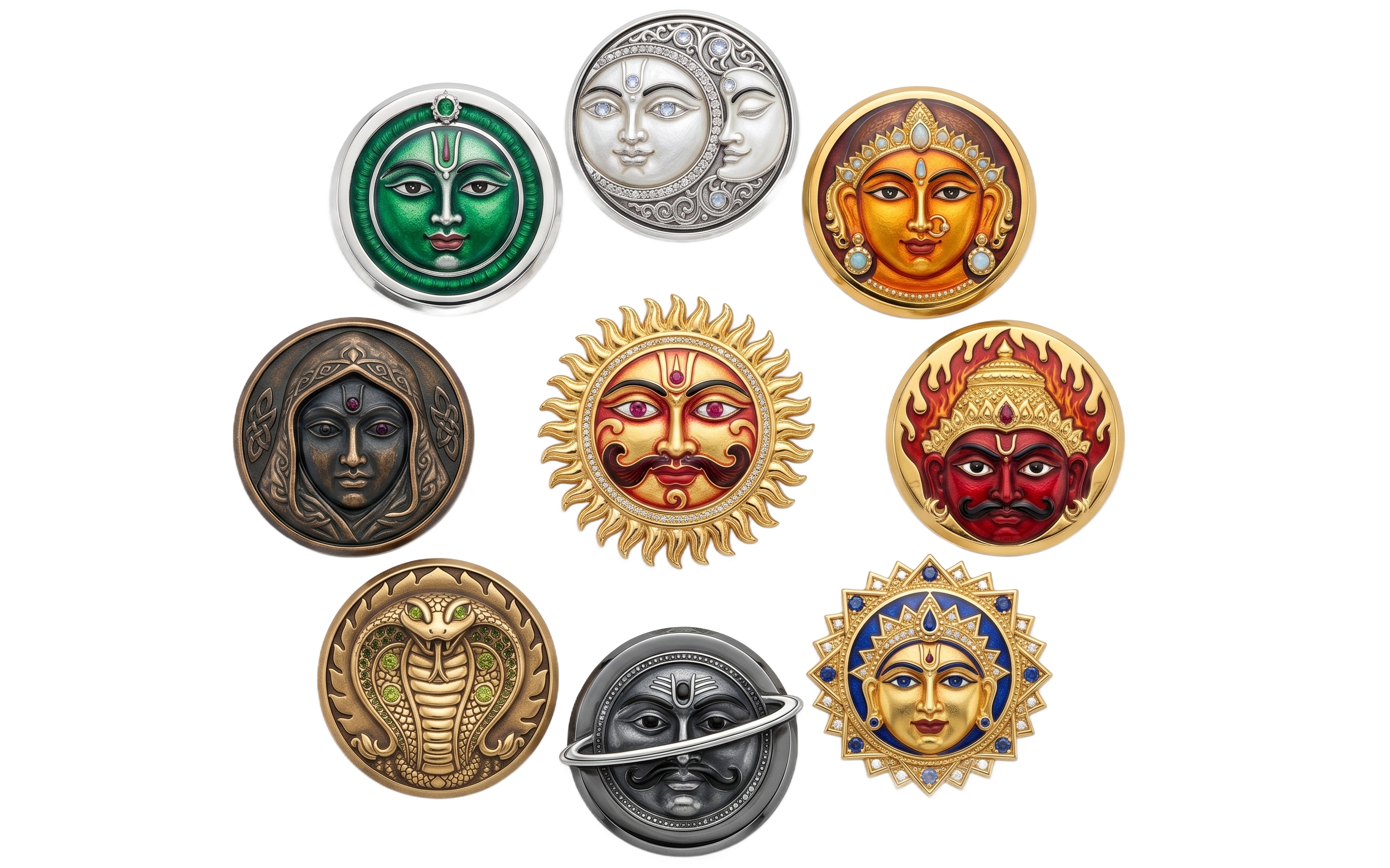
Surya (Sun) — Sunday: Wheat, jaggery (gur), copper items, red cloth, and daan to one's father or father figure. Best given at sunrise.
Chandra (Moon) — Monday: Rice, milk, white cloth, sugar, silver, curd — given especially to mothers, elder women or the needy.
Mangal (Mars) — Tuesday: Red lentils (masoor dal), jaggery, red cloth, copper, and daan related to physical strength such as sports items for children — given with courage and without anger.
Budh (Mercury) — Wednesday: Green moong dal, green cloth, bronze items, books or stationery — especially meaningful when given to students or teachers.
Brihaspati (Jupiter) — Thursday: Turmeric, chana dal, yellow cloth, bananas, gold (if possible) or books — given to teachers, priests or those pursuing education.
Shukra (Venus) — Friday: White or light-coloured items, sugar, ghee, perfume, silver, and daan related to comfort or beauty items — given especially to women in need.
Shani (Saturn) — Saturday: Black til (sesame), mustard oil, black cloth, iron items, and food or care given to the poor, elderly, or those with disabilities — given with humility and without any sense of superiority.
Rahu — Saturday or during Rahu Kaal: Mustard oil, blue or black cloth, coconut, and daan given to the underprivileged or to those on the margins of society.
Ketu — Saturday or Wednesday: Sesame seeds, blankets, multi-coloured cloth, and care shown to dogs or animal shelters.
How to give daan correctly
Give with a calm and humble heart, ideally at sunrise or during the planet's associated day. Give directly if possible, to someone genuinely in need, a temple, or a recognised charitable institution — avoid giving merely for show or public recognition. Traditionally, daan is considered most powerful when given quietly, without the left hand knowing what the right hand has offered, so to speak — humility is central to its spiritual value.
Daan on Amavasya and Purnima
Many devotees observe that daan given on Amavasya (new moon) — especially for Pitru Shanti or Shani related remedies — and on Purnima (full moon) — especially for Chandra and general graha shanti — carries additional significance in tradition.
Dos and don'ts
Do give what you can genuinely afford — daan is measured by sincerity, not size. Do give with respect to the receiver's dignity. Avoid giving old, damaged, or unusable items as daan, and avoid announcing or publicising your daan for praise, as this is believed to diminish its spiritual benefit.
A gentle note
Daan is a beautiful, time-honoured act of faith and compassion. It is offered here as spiritual practice rooted in tradition, not as a guarantee of any specific material outcome, and not as a substitute for professional financial, legal or medical advice where such guidance is needed.
Quick guide
Before you begin
Mantra
Devi mantra
Om Dum Durgaye Namah
Chant 11, 21, or 108 times according to your time and capacity.
Bhav
Benefits devotees pray for
FAQ
Common questions
Does daan need to be expensive to be effective?
No. Traditional teaching holds that daan is measured by sincerity and one's genuine capacity, not by size or cost — a small, heartfelt donation is considered complete.
Can I combine daan with mantra jaap for the same planet?
Yes, many devotees combine daan with the planet's beej mantra and, where relevant, a related fast or temple visit on the same day for a fuller practice.
Should daan be given publicly or quietly?
Tradition favours giving quietly and humbly, without seeking recognition, as this is believed to increase its spiritual benefit.
Is daan a substitute for other remedies like puja or gemstones?
Daan is a complete practice in itself, but it can also be combined with mantra, fasting or guided puja; it does not require a gemstone to be effective.
Seek Guided Navgraha Shanti Puja
For a personalised Navgraha Shanti puja performed with full vidhi on your behalf, explore our puja offerings.