



 गावो विश्वस्य मातरः
In Hindu dharma the cow is revered as Gau Mata, a form of Kamadhenu, believed to house countless deities within her and to be inseparable from Lord Krishna's own life and worship.
Few images capture the heart of Sanatan Dharma as tenderly as that of Lord Krishna resting his head against a cow, flute in hand, surrounded by his beloved gopas and gopis in the pastures of Vrindavan. This is not a poetic embellishment but a reflection of a deeply held theological truth - the cow, called Gau Mata or mother cow, occupies a place of reverence in Hindu dharma that few other beings share, standing alongside one's own biological mother as a source of nourishment, patience and unconditional giving.
The roots of cow worship stretch back to the Vedas themselves, where the cow is celebrated as Aghnya - she who must never be killed or harmed. The Rig Veda refers to cows as sacred and describes them poetically as the mothers of the Rudras, daughters of the Vasus, sisters of the Adityas, and the very center from which nectar flows. This is not a later folk addition but a Vedic foundation upon which centuries of dharmic culture were built.
Central to the mythology of cow reverence is Kamadhenu, the divine wish-fulfilling cow who emerged during the Samudra Manthan, the churning of the cosmic ocean, and who is regarded as the mother of all cows on earth. Every cow, according to this belief, carries within her a spark of Kamadhenu's divine nature, which is why even an ordinary cow grazing in a village field is treated with the same reverence a devotee would show at a temple threshold. Puranic tradition goes further, describing that thirty-three crore, or three hundred and thirty million, deities reside within the body of a cow - Brahma in her horns, Rudra in her forehead, the Ashwini Kumaras in her ears, Chandra and Surya in her eyes, and Vishnu himself pervading her entire form. To touch, feed, or serve a cow, therefore, is understood as an act of worshipping the entire pantheon in a single gesture.
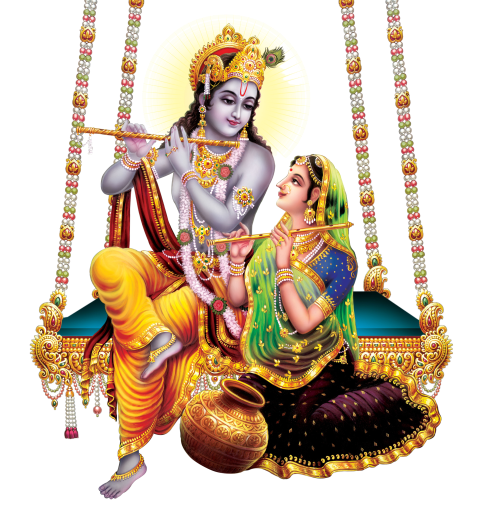
The cow's bond with Lord Krishna deepens this reverence immeasurably. Krishna is affectionately called Gopala, the protector and herder of cows, and Govinda, one who brings joy to cows. His entire childhood in Vrindavan and Gokul was spent among cows and gopas, tending to them, playing his flute for them, and famously lifting Govardhan Hill to shelter them and the villagers from Indra's wrath. This intimate, tender relationship between the Supreme Lord and the humble cow set a template for how devotees relate to cows even today - not as mere livestock, but as beings worthy of the same love a devotee shows Krishna himself.
Beyond mythology, the cow holds enormous practical and ritual significance in daily Hindu life. Her milk, curd, ghee, urine and dung together form panchagavya, the five sacred products of the cow that are used in purification rituals, homas, and ayurvedic preparations. Cow ghee is considered essential for lighting temple lamps and performing havan, since it is believed to carry the offerings most purely to the devas through the sacrificial fire. Cow dung, far from being seen as mere waste, is used to plaster courtyards, make eco-friendly dung cakes for fuel, and prepare the sacred vibhuti-like substances used in certain rites, owing to its purifying and antiseptic properties recognized even in ayurveda.
Gau seva, or service to cows, is considered one of the most meritorious acts a householder can perform. Feeding a cow fresh green fodder, jaggery, or roti before one's own morning meal is a common household practice, particularly on Wednesdays which are associated with Krishna, and on Amavasya and Diwali's Govardhan Puja day, when cows are specially bathed, decorated and worshipped. Many families donate to goshalas, cow shelters that care for elderly, sick or abandoned cows, considering such donation, called gau daan, to be one of the most punya-generating acts of charity described in the shastras, believed to help the soul cross the mythical Vaitarani river after death by holding the tail of a donated cow.
The symbolic meaning of the cow runs deeper still. She eats simple grass yet gives back nourishing milk, embodying the ideal of selfless giving without expectation of equal return, a quality the shastras hold up as the highest form of dharma. Her patience even when mistreated is held as a model of tolerance and forbearance. In protecting the cow, Hindu dharma also protects a whole ecosystem of rural, agrarian life that has sustained Indian civilization for millennia - the ox for ploughing, milk for nourishment, and dung for fuel and fertilizer, forming a self-sustaining cycle that ancient rishis recognized as sacred precisely because it was so essential to life itself.
Today, as urban life grows distant from rural traditions, many devotees still make it a point to feed a cow on special days, visit a goshala, or keep a small idol or image of Kamadhenu in their home shrine as a reminder of this ancient bond. Whether understood through the lens of Vedic hymn, Puranic mythology, Krishna's own life, or simple gratitude for sustenance, the reverence shown to Gau Mata remains one of the most enduring and universally practiced expressions of devotion within Sanatan Dharma.
Quick guide
Before you begin
Mantra
Khatu Shyam mantra
Om Shri Shyam Devaya Namah
Chant with love and surrender, especially before Shyam Baba katha, aarti, or bhog.
Bhav
Benefits devotees pray for
FAQ
Common questions
Why is the cow considered sacred in Hinduism?
The Vedas call the cow Aghnya, one who must never be harmed, and the Puranas describe thirty-three crore deities residing within her body. She is also considered a form of Kamadhenu and is deeply connected to Lord Krishna's own life in Vrindavan.
What is panchagavya and why is it important?
Panchagavya refers to the five sacred products of the cow - milk, curd, ghee, urine and dung - used together in purification rituals, homas and ayurvedic preparations, believed to carry deep spiritual and physical purifying properties.
What is gau daan and what are its benefits?
Gau daan is the charitable donation of a cow, or contribution to a goshala for cow welfare, considered one of the most meritorious acts in the shastras. It is believed to generate great punya and traditionally to help the soul cross the Vaitarani river after death.
Why is Lord Krishna associated with cows?
Krishna spent his childhood in Vrindavan and Gokul tending cows, earning names like Gopala and Govinda. His lifting of Govardhan Hill to protect cows and villagers is a central story reflecting his deep bond with Gau Mata.
Wish to Seek Krishna's Blessings and Perform Gau Seva?
Book an authentic puja with our pandits, complete with proper sankalp and vidhi, and receive the video of your ritual.