

 सूर्याय नमः
The complete Surya Dev aarti chanted at sunrise and sunset during Chhath Puja, with meaning, method, and the significance of worshipping the Sun God.
Chhath Puja is one of the most disciplined and austere festivals of Sanatan Dharma, dedicated entirely to Surya Dev, the visible form of the divine who sustains all life on earth. Across four days of fasting, river-bathing, and standing in water at dawn and dusk, devotees offer arghya to the sun and sing his aarti with folded hands, thanking him for light, warmth, health, and prosperity. The Surya aarti given below is sung at the ghats during the evening and morning arghya of Chhath, as well as in home Surya puja on Ravivar (Sunday).
Complete Surya Dev Aarti (Devanagari)
ॐ जय सूर्य भगवान, प्रभु जय सूर्य भगवान। सकल सृष्टि के नेत्र तुम, तुमसे जग में प्राण॥ ॐ जय सूर्य भगवान।
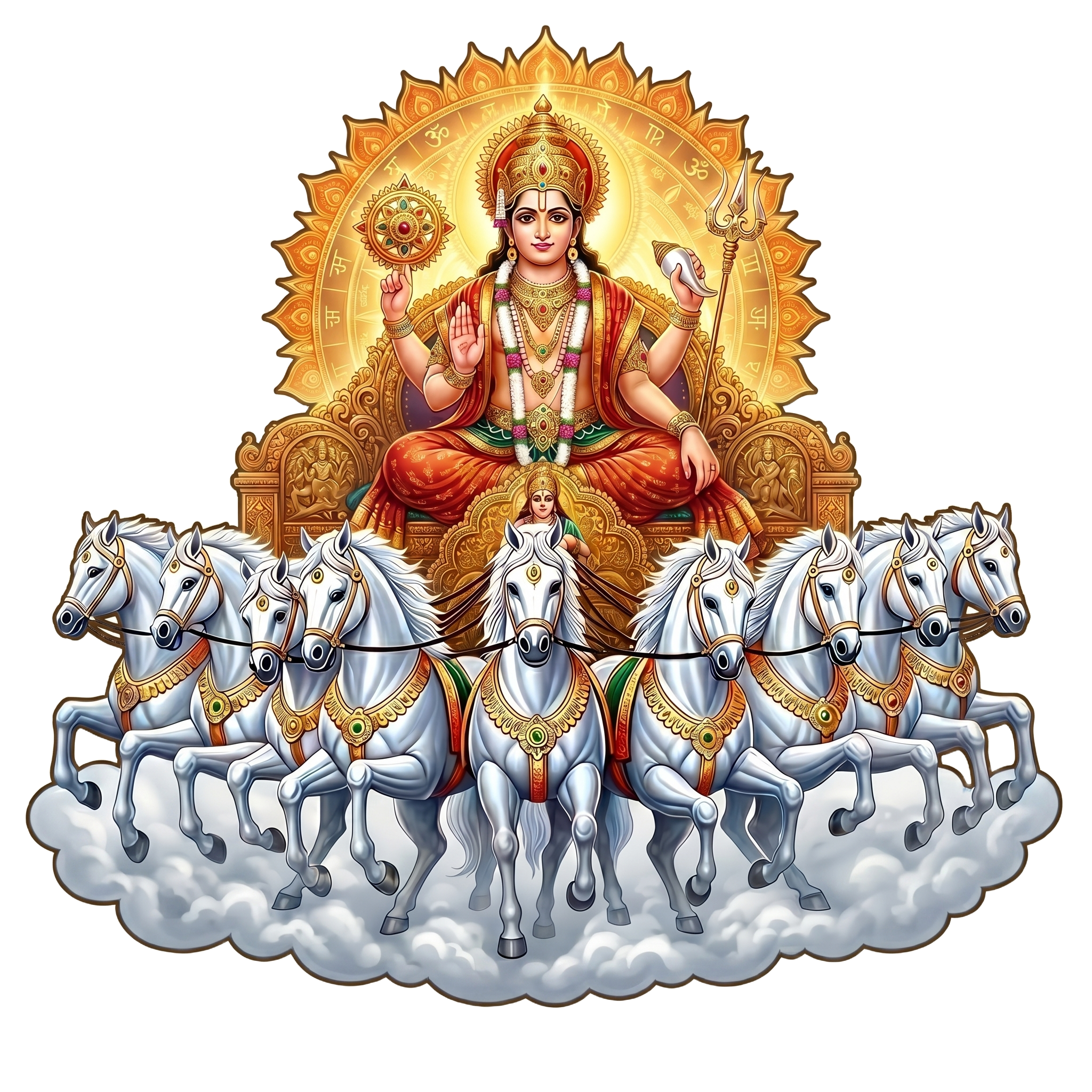
सप्त अश्वों के रथ पर, सवार हो दिनकर। अंधकार को हरते, फैलाते उजियर॥ ॐ जय सूर्य भगवान।
प्रातः काल जब उगते, हरे रोग शोक सारे। तेज तुम्हारा पाकर, जग जाते जग सारे॥ ॐ जय सूर्य भगवान।
तुम बिन जीवन सूना, तुम बिन अन्न न उपजे। तुम्हरी कृपा से ही तो, धरती फल-फूल सजे॥ ॐ जय सूर्य भगवान।
छठी मैया के संग तुम, पूजे जाओ हर घर। अर्घ्य चढ़ावें भक्तजन, नदियन तट पर सुंदर॥ ॐ जय सूर्य भगवान।
संध्या काल में डूबत, फिर प्रातः आते। जो तुमको ध्यावे नित प्रति, सुख-संपत्ति पाते॥ ॐ जय सूर्य भगवान।
रोग-दोष सब मिट जावें, तन-मन हो उजियारा। सूर्य देव की आरती, गावे जग सारा॥ ॐ जय सूर्य भगवान।
ॐ जय सूर्य भगवान, प्रभु जय सूर्य भगवान। सकल सृष्टि के नेत्र तुम, तुमसे जग में प्राण॥ ॐ जय सूर्य भगवान।
Meaning
The aarti begins by hailing Surya as the eye of all creation and the very source of life-breath (prana) in this world — without sunlight, nothing on earth would live or grow. It describes him riding his chariot drawn by seven horses, dispelling darkness and spreading light every dawn.
The following verses say that his rising removes disease and sorrow, that crops and harvests flourish only by his grace, and that he is worshipped in every home alongside Chhathi Maiya, especially at the riverbanks during Chhath. The final verses describe him setting in the evening only to rise again at dawn, and pray that whoever meditates on him daily receives happiness, prosperity, freedom from illness, and inner light. The aarti closes by repeating the opening invocation, as is traditional.
Why Surya Dev Is Worshipped at Chhath
Surya is the one deity whose form is visible to every eye — he is pratyaksha devta, the god who can be directly seen. Chhath Puja, believed to be one of the most ancient forms of sun worship in the world, honours him not just as a giver of light but as the presiding deity of health, eyesight, vitality, and timely harvest. Chhathi Maiya, worshipped alongside Surya during this festival, is regarded as his sister or consort and as the protector of children and family wellbeing.
When and How to Sing This Aarti
The Surya aarti is sung twice during Chhath: once in the evening of Sandhya Arghya, as the setting sun is offered water and prasad standing in a river or pond, and again the next morning at Usha Arghya, as the rising sun is worshipped in the same way. Outside Chhath, it may also be sung every Sunday morning facing the rising sun, ideally with a copper vessel of water, red flowers, and a few grains of rice offered as arghya.
Stand facing east, offer arghya with both hands raised, then sing the aarti with a small diya or incense stick moved in gentle clockwise circles before the sun or before a picture of Surya Dev at home.
Benefits of Surya Aarti and Worship
Regular worship of Surya is said to improve health, eyesight, confidence, and leadership qualities; to remove obstacles related to career, status, and father figures in one's life; and to bring discipline and inner radiance to the mind. During Chhath specifically, sincere worship is believed to bless the family with the long life and wellbeing of children, freedom from skin and eye ailments, and general prosperity.
Do's and Don'ts
Maintain purity and simplicity during the days of Chhath — the prasad is prepared without onion, garlic, or excess salt, and is not tasted before offering. Wear clean clothes, preferably in shades of yellow, red, or saffron, while singing the aarti. Avoid loud arguments, non-vegetarian food, and alcohol in the household during the vrat period. Never offer arghya to the sun with your back turned to it, and always use fresh, uncontaminated water.
A Short Mahatmya
Scriptures describe Surya as the soul of all beings (jagat chakshu, the eye of the world) and the source that the Gayatri Mantra itself invokes for wisdom and light. Chhath's austere sadhana of standing for hours in cold river water at dawn and dusk is considered one of the most powerful and purifying vrats, believed capable of curing chronic illnesses and fulfilling long-held wishes when performed with full faith.
Frequently Asked Questions
Can this aarti be sung by anyone, not only during Chhath? Yes. While it is central to Chhath Puja, the Surya aarti can be sung every morning or every Sunday as part of regular Surya upasana.
Is it necessary to fast to sing this aarti? No, fasting is specific to the Chhath vrat itself. The aarti can be sung with simple devotion on any day without a fast.
What should be offered during the aarti? A small lamp or incense, water in a copper vessel, red flowers, unbroken rice, and seasonal fruit are commonly offered while facing the sun.
Why is the aarti repeated at both sunrise and sunset during Chhath? Because Chhath honours the complete cycle of the sun — his setting is a reminder of humility and rest, and his rising the next morning symbolises renewal, hope, and gratitude for another day of life.
Quick guide
Before you begin
Mantra
Surya mantra
Om Ghrinih Suryaya Namah
Chant at sunrise or during Surya arghya for energy, clarity, and discipline.
Bhav
Benefits devotees pray for
FAQ
Common questions
Can this aarti be sung by anyone, not only during Chhath?
Yes. It can be sung every morning or every Sunday as part of regular Surya upasana.
Is fasting necessary to sing this aarti?
No, fasting is specific to the Chhath vrat. The aarti can be sung with simple devotion any day.
What should be offered while singing it?
Water in a copper vessel, red flowers, unbroken rice, seasonal fruit, and a small diya or incense are commonly offered facing the sun.
Why is it sung at both sunrise and sunset during Chhath?
Because Chhath honours the sun's full cycle — setting for humility and rest, rising again for renewal and gratitude.
Seeking blessings of Surya Dev this Chhath?
Let our pandits perform Surya puja and arghya sankalp on your behalf with full vidhi and devotion.