



 Bhagavad Gita · Chapter 14
What Chapter 14 teaches
The fourteenth chapter of the Bhagavad Gita is Gunatraya Vibhaga Yoga. In this chapter, Krishna reveals the three gunas (modes) of the material nature - goodness, passion and ignorance which everything in the material existence is influenced by. He further explains the essential characteristics of each of these modes, their cause and how they influence a living entity affected by them. He then reveals the various characteristics of the persons who have gone beyond these gunas. The chapter ends with Krishna reminding us of the power of pure devotion to God and how attachment to God can help us transcend these gunas.
Original Text
Verses & Meaning
श्रीभगवानुवाच। परं भूयः प्रवक्ष्यामि ज्ञानानां ज्ञानमुत्तमम्। यज्ज्ञात्वा मुनयः सर्वे परां सिद्धिमितो गताः॥
śrībhagavānuvāca paraṃ bhūyaḥ pravakṣyāmi jñānānāṃ jñānamuttamam yajjñātvā munayaḥ sarve parāṃ siddhimito gatāḥ
The Blessed Lord said I will again declare (to thee) that supreme knowledge, the best of all knowledge, having known which all the sages have gone to the supreme perfection after this life.
इदं ज्ञानमुपाश्रित्य मम साधर्म्यमागताः। सर्गेऽपि नोपजायन्ते प्रलये न व्यथन्ति च॥
idaṃ jñānamupāśritya mama sādharmyamāgatāḥ sarge.api nopajāyante pralaye na vyathanti ca
They who, having taken refuge in this knowledge, have attained to unity with Me, are neither born at the time of creation nor are they disturbed at the time of dissolution.
मम योनिर्महद् ब्रह्म तस्मिन्गर्भं दधाम्यहम्। सम्भवः सर्वभूतानां ततो भवति भारत॥
mama yonirmahad brahma tasmingarbhaṃ dadhāmyaham sambhavaḥ sarvabhūtānāṃ tato bhavati bhārata
My womb is the great Brahma; in that I place the germ; thence, O Arjuna, is the birth of all beings.
सर्वयोनिषु कौन्तेय मूर्तयः सम्भवन्ति याः। तासां ब्रह्म महद्योनिरहं बीजप्रदः पिता॥
sarvayoniṣu kaunteya mūrtayaḥ sambhavanti yāḥ tāsāṃ brahma mahadyonirahaṃ bījapradaḥ pitā
Whatever forms are produced, O Arjuna, in any womb whatsoever, the great Brahma is their womb and I am the seed-giving father.
सत्त्वं रजस्तम इति गुणाः प्रकृतिसम्भवाः। निबध्नन्ति महाबाहो देहे देहिनमव्ययम्॥
sattvaṃ rajastama iti guṇāḥ prakṛtisambhavāḥ nibadhnanti mahābāho dehe dehinamavyayam
Purity, passion and inertia these alities, O Arjuna, born of Nature, bind fast in the body, the embodied, the indestructible.
तत्र सत्त्वं निर्मलत्वात्प्रकाशकमनामयम्। सुखसङ्गेन बध्नाति ज्ञानसङ्गेन चानघ॥
tatra sattvaṃ nirmalatvātprakāśakamanāmayam sukhasaṅgena badhnāti jñānasaṅgena cānagha
Of these, Sattva, which from its stainlessness is luminous and healthy, binds by attachment to happiness and by attachment to knowledge, O sinless one.
रजो रागात्मकं विद्धि तृष्णासङ्गसमुद्भवम्। तन्निबध्नाति कौन्तेय कर्मसङ्गेन देहिनम्॥
rajo rāgātmakaṃ viddhi tṛṣṇāsaṅgasamudbhavam tannibadhnāti kaunteya karmasaṅgena dehinam
Know thou Rajas to be of the nature of passion, the source of thirst (for sensual enjoyment) and attachment; it binds fast, O Arjuna, the embodied one by attachment to action.
तमस्त्वज्ञानजं विद्धि मोहनं सर्वदेहिनाम्। प्रमादालस्यनिद्राभिस्तन्निबध्नाति भारत॥
tamastvajñānajaṃ viddhi mohanaṃ sarvadehinām pramādālasyanidrābhistannibadhnāti bhārata
But know thou Tamas to be born of ignorance, deluding all embodied beings; it binds fast, O Arjuna, by heedlessness, indolence and sleep.
सत्त्वं सुखे सञ्जयति रजः कर्मणि भारत। ज्ञानमावृत्य तु तमः प्रमादे सञ्जयत्युत॥
sattvaṃ sukhe sañjayati rajaḥ karmaṇi bhārata jñānamāvṛtya tu tamaḥ pramāde sañjayatyuta
Sattva attaches to happiness, Rajas to action, O Arjuna, while Tamas verily shrouding knowledge attaches to heedlessness.
रजस्तमश्चाभिभूय सत्त्वं भवति भारत। रजः सत्त्वं तमश्चैव तमः सत्त्वं रजस्तथा॥
rajastamaścābhibhūya sattvaṃ bhavati bhārata rajaḥ sattvaṃ tamaścaiva tamaḥ sattvaṃ rajastathā
Now Sattva arises (prevails), O Arjuna, having overpowered Rajas and Tamas; nor Rajas, having overpowered Sattva and Tamas; and now Tamas, having overpowered Sattva and Rajas.
सर्वद्वारेषु देहेऽस्मिन्प्रकाश उपजायते। ज्ञानं यदा तदा विद्याद्विवृद्धं सत्त्वमित्युत॥
sarvadvāreṣu dehe.asminprakāśa upajāyate jñānaṃ yadā tadā vidyādvivṛddhaṃ sattvamityuta
When through every gate (sense) in this body, the wisdom-light shines, then it may be known that Sattva is predominant.
लोभः प्रवृत्तिरारम्भः कर्मणामशमः स्पृहा। रजस्येतानि जायन्ते विवृद्धे भरतर्षभ॥
lobhaḥ pravṛttirārambhaḥ karmaṇāmaśamaḥ spṛhā rajasyetāni jāyante vivṛddhe bharatarṣabha
Greed, activity, the undertaking of actions, restlessness, longing these arise when Rajas is predominant, O Arjuna.
अप्रकाशोऽप्रवृत्तिश्च प्रमादो मोह एव च। तमस्येतानि जायन्ते विवृद्धे कुरुनन्दन॥
aprakāśo.apravṛttiśca pramādo moha eva ca tamasyetāni jāyante vivṛddhe kurunandana
Darkness, inertness, heedlessness and delusion these arise when Tamas is predominant, O Arjuna.
यदा सत्त्वे प्रवृद्धे तु प्रलयं याति देहभृत्। तदोत्तमविदां लोकानमलान्प्रतिपद्यते॥
yadā sattve pravṛddhe tu pralayaṃ yāti dehabhṛt tadottamavidāṃ lokānamalānpratipadyate
If the embodied one meets with death when Sattva is predominant, then he attains to the spotless worlds of the knowers of the Highest.
रजसि प्रलयं गत्वा कर्मसङ्गिषु जायते। तथा प्रलीनस्तमसि मूढयोनिषु जायते॥
rajasi pralayaṃ gatvā karmasaṅgiṣu jāyate tathā pralīnastamasi mūḍhayoniṣu jāyate
Meeting death in Rajas, he is born among those who are attached to action; and dying in Tamas, he is born in the womb of the senseless.
कर्मणः सुकृतस्याहुः सात्त्विकं निर्मलं फलम्। रजसस्तु फलं दुःखमज्ञानं तमसः फलम्॥
karmaṇaḥ sukṛtasyāhuḥ sāttvikaṃ nirmalaṃ phalam rajasastu phalaṃ duḥkhamajñānaṃ tamasaḥ phalam
The fruit of good action, they say, is Sattvic and pure, verily the fruit of Rajas is pain, and ignorance is the fruit of Tamas.
सत्त्वात्सञ्जायते ज्ञानं रजसो लोभ एव च। प्रमादमोहौ तमसो भवतोऽज्ञानमेव च॥
sattvātsañjāyate jñānaṃ rajaso lobha eva ca pramādamohau tamaso bhavato.ajñānameva ca
From Sattva arises knowledge, and greed from Rajas; heedlessness and delusion arise from Tamas, and also ignorance.
ऊर्ध्वं गच्छन्ति सत्त्वस्था मध्ये तिष्ठन्ति राजसाः। जघन्यगुणवृत्तिस्था अधो गच्छन्ति तामसाः॥
ūrdhvaṃ gacchanti sattvasthā madhye tiṣṭhanti rājasāḥ jaghanyaguṇavṛttisthā adho gacchanti tāmasāḥ
Those who are seated in Sattva go upwards; the Rajasic dwell in the middle; and the Tamasic, abiding in the function of the lowest Guna, go downwards.
नान्यं गुणेभ्यः कर्तारं यदा द्रष्टानुपश्यति। गुणेभ्यश्च परं वेत्ति मद्भावं सोऽधिगच्छति॥
nānyaṃ guṇebhyaḥ kartāraṃ yadā draṣṭānupaśyati guṇebhyaśca paraṃ vetti madbhāvaṃ so.adhigacchati
When the seer beholds no agent other than the Gunas and knows That which is higher than they, he attains to My Being.
गुणानेतानतीत्य त्रीन्देही देहसमुद्भवान्। जन्ममृत्युजरादुःखैर्विमुक्तोऽमृतमश्नुते॥
guṇānetānatītya trīndehī dehasamudbhavān janmamṛtyujarāduḥkhairvimukto.amṛtamaśnute
The embodied one having crossed beyond these three Gunas out of which the body is evolved, is freed from birth, death, decay and pain, and attains to immortality.
अर्जुन उवाच। कैर्लिङ्गैस्त्रीन्गुणानेतानतीतो भवति प्रभो। किमाचारः कथं चैतांस्त्रीन्गुणानतिवर्तते॥
arjuna uvāca kairliṅgaistrīnguṇānetānatīto bhavati prabho kimācāraḥ kathaṃ caitāṃstrīnguṇānativartate
Arjuna said What are the marks of him who has transcended the three alities, O Lord? What is his conduct and how does he go beyond these three alities?
श्रीभगवानुवाच। प्रकाशं च प्रवृत्तिं च मोहमेव च पाण्डव। न द्वेष्टि सम्प्रवृत्तानि न निवृत्तानि काङ्क्षति॥
śrībhagavānuvāca prakāśaṃ ca pravṛttiṃ ca mohameva ca pāṇḍava na dveṣṭi sampravṛttāni na nivṛttāni kāṅkṣati
The Blessed Lord said When light, activity and delusion are present, he hates them not, nor does he long for them when they are absent.
उदासीनवदासीनो गुणैर्यो न विचाल्यते। गुणा वर्तन्त इत्येवं योऽवतिष्ठति नेङ्गते॥
udāsīnavadāsīno guṇairyo na vicālyate guṇā vartanta ityevaṃ yo.avatiṣṭhati neṅgate
He who, seated like one unconcerned, is not moved by the alities, and who, knowing that the alities are active, is self-centred and moves not.
समदुःखसुखः स्वस्थः समलोष्टाश्मकाञ्चनः। तुल्यप्रियाप्रियो धीरस्तुल्यनिन्दात्मसंस्तुतिः॥
samaduḥkhasukhaḥ svasthaḥ samaloṣṭāśmakāñcanaḥ tulyapriyāpriyo dhīrastulyanindātmasaṃstutiḥ
Who is the same in pleasure and pain, who dwells in the Self, to whom a clod of earth, stone and gold are alike, who is the same to the dear and the unfriendly, who is firm, and to whom censure and praise are as one.
मानापमानयोस्तुल्यस्तुल्यो मित्रारिपक्षयोः। सर्वारम्भपरित्यागी गुणातीतः स उच्यते॥
mānāpamānayostulyastulyo mitrāripakṣayoḥ sarvārambhaparityāgī guṇātītaḥ sa ucyate
Who is the same in honour and dishonour, the same to friend and foe, abandoning all undertakings he is said to have transcended the alities.
मां च योऽव्यभिचारेण भक्तियोगेन सेवते। स गुणान्समतीत्यैतान्ब्रह्मभूयाय कल्पते॥
māṃ ca yo.avyabhicāreṇa bhaktiyogena sevate sa guṇānsamatītyaitānbrahmabhūyāya kalpate
And he who serves Me with unswerving devotion, he, crossing beyond the alities, is fit for becoming Brahman.
ब्रह्मणो हि प्रतिष्ठाहममृतस्याव्ययस्य च। शाश्वतस्य च धर्मस्य सुखस्यैकान्तिकस्य च॥
brahmaṇo hi pratiṣṭhāhamamṛtasyāvyayasya ca śāśvatasya ca dharmasya sukhasyaikāntikasya ca
For I am the abode of Brahman, the immortal and the immutable, of everlasting Dharma and of absolute bliss.
Quick guide
Before you begin
Bhav
Benefits devotees pray for
FAQ
Common questions
What is Bhagavad Gita Chapter 14 (Gunatraya Vibhaga Yoga) about?
The fourteenth chapter of the Bhagavad Gita is Gunatraya Vibhaga Yoga. In this chapter, Krishna reveals the three gunas (modes) of the material nature - goodness, passion and ignorance which everything in the material existence is influenced by. He further explains the essential characteristics of each of these modes, their cause and how they influence a living entity affected by them. He then reveals the various characteristics of the persons who have gone beyond these gunas. The chapter ends with Krishna reminding us of the power of pure devotion to God and how attachment to God can help us
How many verses are in Bhagavad Gita Chapter 14?
Chapter 14 (Gunatraya Vibhaga Yoga) has 27 verses. You can read every one above in Sanskrit, with IAST transliteration and its meaning in Hindi and English.
What does "Gunatraya Vibhaga Yoga" mean?
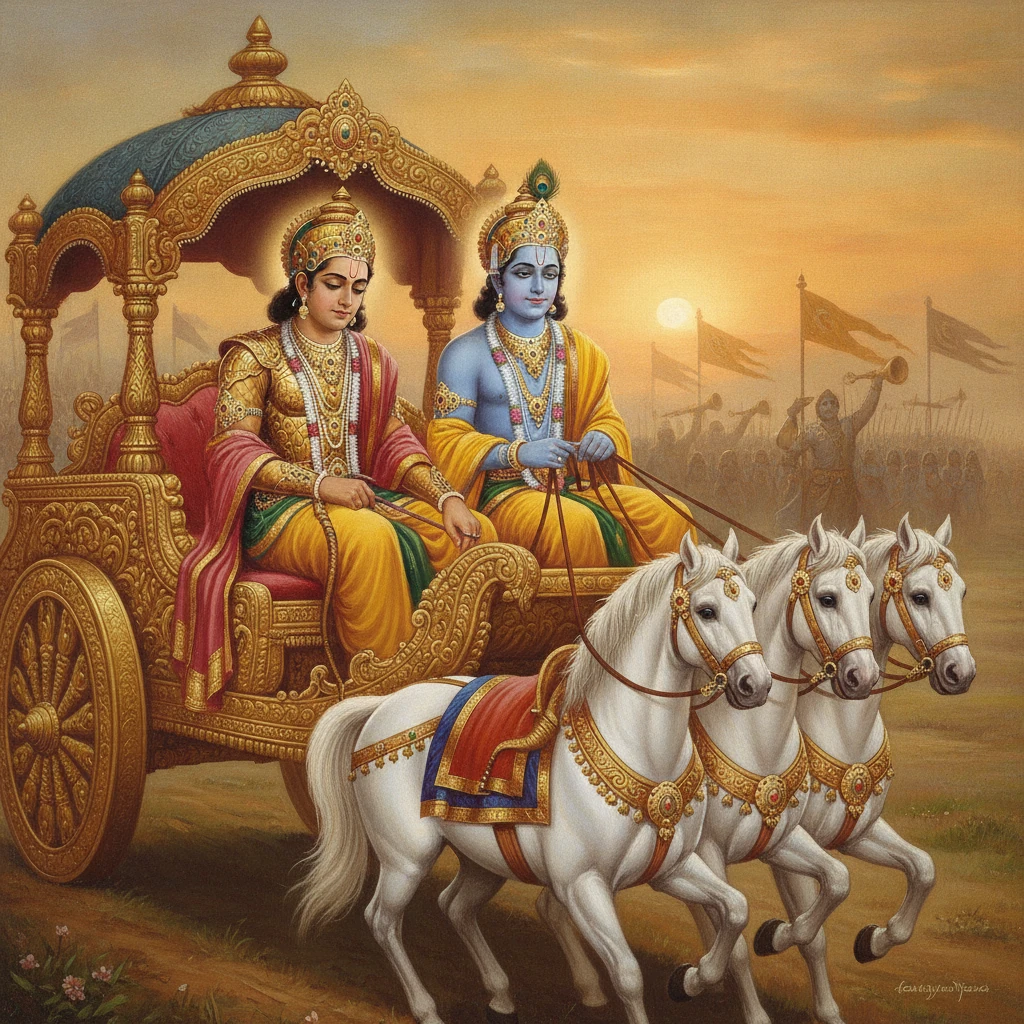
"Gunatraya Vibhaga Yoga" is the name of Chapter 14 of the Bhagavad Gita; it means "Yoga through Understanding the Three Modes of Material Nature". Its 27 verses form part of Bhagwan Krishna's teaching to Arjuna on the field of Kurukshetra.
Bring the Gita's wisdom into your life
On Gita Jayanti at Shri Vishnupad Mandir, Gaya, a sankalp is offered in your naam-gotra for clarity of mind and right decision. Book the seva, or continue reading the Bhagavad Gita.