



 Bhagavad Gita · Chapter 15
What Chapter 15 teaches
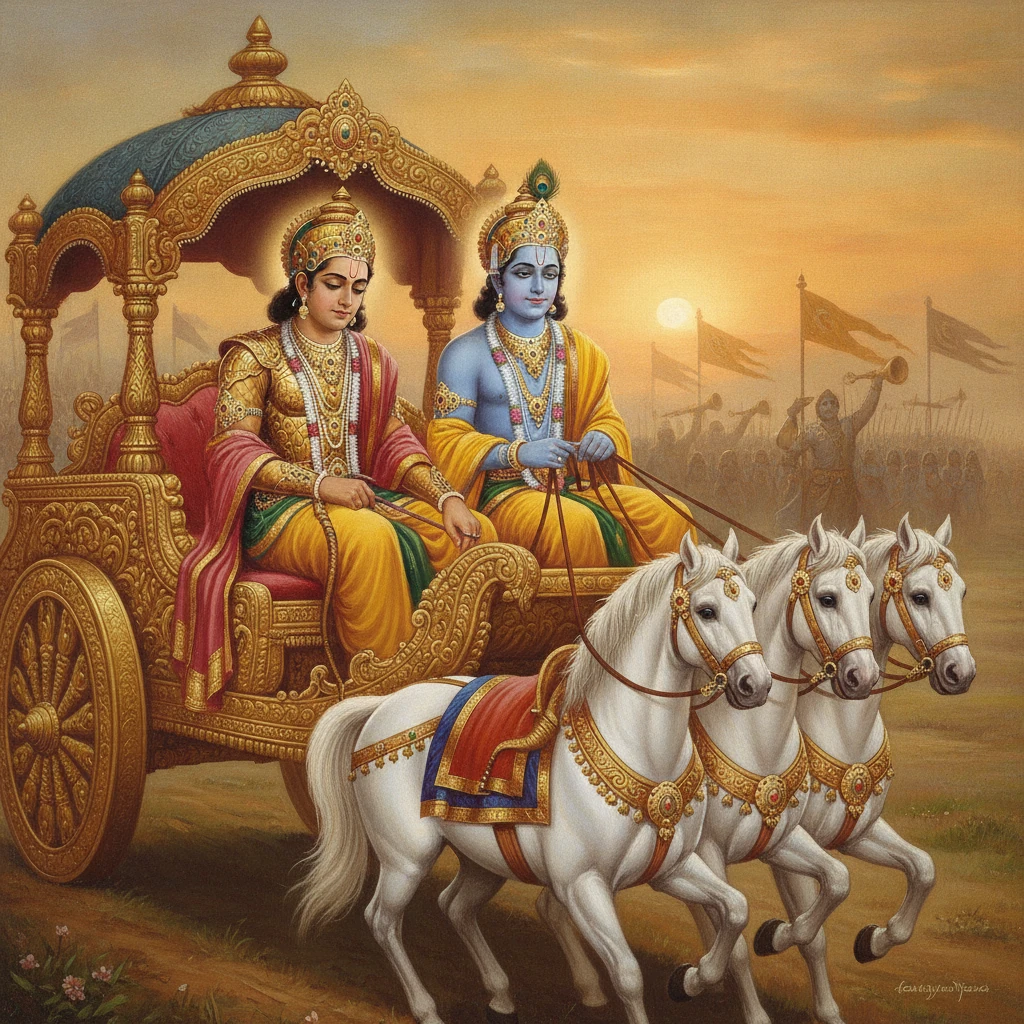
The fifteenth chapter of the Bhagavad Gita is Purushottama Yoga. In Sanskrit, Purusha means the All-pervading God, and Purushottam means the timeless & transcendental aspect of God. Krishna reveals that the purpose of this Transcendental knowledge of the God is to detach ourselves from the bondage of the material world and to understand Krishna as the Supreme Divine Personality, who is the eternal controller and sustainer of the world. One who understands this Ultimate Truth surrenders to Him and engages in His devotional service.
Original Text
Verses & Meaning
श्रीभगवानुवाच। ऊर्ध्वमूलमधःशाखमश्वत्थं प्राहुरव्ययम्। छन्दांसि यस्य पर्णानि यस्तं वेद स वेदवित्॥
śrībhagavānuvāca ūrdhvamūlamadhaḥśākhamaśvatthaṃ prāhuravyayam chandāṃsi yasya parṇāni yastaṃ veda sa vedavit
The Blessed Lord said They (the wise) speak of the indestructible peepul tree having its root above and branches below, whose leaves are the metres or hymns: he who knows it is a knower of the Vedas.
अधश्चोर्ध्वं प्रसृतास्तस्य शाखा गुणप्रवृद्धा विषयप्रवालाः। अधश्च मूलान्यनुसन्ततानि कर्मानुबन्धीनि मनुष्यलोके॥
adhaścordhvaṃ prasṛtāstasya śākhā guṇapravṛddhā viṣayapravālāḥ adhaśca mūlānyanusantatāni karmānubandhīni manuṣyaloke
Below and above spread its branches, nourished by the Gunas; sense-objects are its buds; and below, in the world of men, stretch forth the roots, originating action.
न रूपमस्येह तथोपलभ्यते नान्तो न चादिर्न च सम्प्रतिष्ठा। अश्वत्थमेनं सुविरूढमूलं असङ्गशस्त्रेण दृढेन छित्त्वा॥
na rūpamasyeha tathopalabhyate nānto na cādirna ca sampratiṣṭhā aśvatthamenaṃ suvirūḍhamūlaṃ asaṅgaśastreṇa dṛḍhena chittvā
Its form is not perceived here as such, neither its end nor its origin, nor its foundation nor resting place: having cut asunder this firmly rooted peepul tree with the strong axe of non-attachment.
ततः पदं तत्परिमार्गितव्यं यस्मिन्गता न निवर्तन्ति भूयः। तमेव चाद्यं पुरुषं प्रपद्ये। यतः प्रवृत्तिः प्रसृता पुराणी॥
tataḥ padaṃ tatparimārgitavyaṃ yasmingatā na nivartanti bhūyaḥ tameva cādyaṃ puruṣaṃ prapadye yataḥ pravṛttiḥ prasṛtā purāṇī
Then That goal should be sought for, whither having gone none returns again. I seek refuge in that Primeval Purusha Whence streamed forth the ancient activity or energy.
निर्मानमोहा जितसङ्गदोषा अध्यात्मनित्या विनिवृत्तकामाः। द्वन्द्वैर्विमुक्ताः सुखदुःखसंज्ञैर्- गच्छन्त्यमूढाः पदमव्ययं तत्॥
nirmānamohā jitasaṅgadoṣā adhyātmanityā vinivṛttakāmāḥ dvandvairvimuktāḥ sukhaduḥkhasaṃjñaira- gacchantyamūḍhāḥ padamavyayaṃ tat
Free from pride and delusion, victorious over the evil of attachment, dwelling constantly in the Self, their desires having completely turned away, freed from the pairs of opposites known as pleasure and pain, the undeluded reach the eternal goal.
न तद्भासयते सूर्यो न शशाङ्को न पावकः। यद्गत्वा न निवर्तन्ते तद्धाम परमं मम॥
na tadbhāsayate sūryo na śaśāṅko na pāvakaḥ yadgatvā na nivartante taddhāma paramaṃ mama
Neither doth the sun illumine there nor the moon, nor the fire; having gone thither they return not; that is My supreme abode.
ममैवांशो जीवलोके जीवभूतः सनातनः। मनःषष्ठानीन्द्रियाणि प्रकृतिस्थानि कर्षति॥
mamaivāṃśo jīvaloke jīvabhūtaḥ sanātanaḥ manaḥṣaṣṭhānīndriyāṇi prakṛtisthāni karṣati
An eternal portion of Myself having become a living soul in the world of life, draws to (itself) the (five) senses with the mind for the sixth, abiding in Nature.
शरीरं यदवाप्नोति यच्चाप्युत्क्रामतीश्वरः। गृहीत्वैतानि संयाति वायुर्गन्धानिवाशयात्॥
śarīraṃ yadavāpnoti yaccāpyutkrāmatīśvaraḥ gṛhitvaitāni saṃyāti vāyurgandhānivāśayāt
When the Lord (as the individual soul) obtains a body and when He leaves it, He takes these and goes (with them) as the wind takes the scents from their seats (flowers, etc.).
श्रोत्रं चक्षुः स्पर्शनं च रसनं घ्राणमेव च। अधिष्ठाय मनश्चायं विषयानुपसेवते॥
śrotraṃ cakṣuḥ sparśanaṃ ca rasanaṃ ghrāṇameva ca adhiṣṭhāya manaścāyaṃ viṣayānupasevate
Presiding over the ear, the eye, touch, taste and smell, as well as the mind, it enjoys the objects of the senses.
उत्क्रामन्तं स्थितं वापि भुञ्जानं वा गुणान्वितम्। विमूढा नानुपश्यन्ति पश्यन्ति ज्ञानचक्षुषः॥
utkrāmantaṃ sthitaṃ vāpi bhuñjānaṃ vā guṇānvitam vimūḍhā nānupaśyanti paśyanti jñānacakṣuṣaḥ
The deluded do not see Him Who departs, stays and enjoys; but they who possess the eye of knowledge behold Him.
यतन्तो योगिनश्चैनं पश्यन्त्यात्मन्यवस्थितम्। यतन्तोऽप्यकृतात्मानो नैनं पश्यन्त्यचेतसः॥
yatanto yoginaścainaṃ paśyantyātmanyavasthitam yatanto.apyakṛtātmāno nainaṃ paśyantyacetasaḥ
The Yogins striving (for perfection) behold Him dwelling in the Self; but, the unrefined and unintelligent, even though striving, see Him not.
यदादित्यगतं तेजो जगद्भासयतेऽखिलम्। यच्चन्द्रमसि यच्चाग्नौ तत्तेजो विद्धि मामकम्॥
yadādityagataṃ tejo jagadbhāsayate.akhilam yaccandramasi yaccāgnau tattejo viddhi māmakam
That light which residing in the sun illumines the whole world, that which is in the moon and in the fire know that light to be Mine.
गामाविश्य च भूतानि धारयाम्यहमोजसा। पुष्णामि चौषधीः सर्वाः सोमो भूत्वा रसात्मकः॥
gāmāviśya ca bhūtāni dhārayāmyahamojasā puṣṇāmi cauṣadhīḥ sarvāḥ somo bhūtvā rasātmakaḥ
Permeating the earth I support all beings by (My) energy; and having become the watery moon I nourish all herbs.
अहं वैश्वानरो भूत्वा प्राणिनां देहमाश्रितः। प्राणापानसमायुक्तः पचाम्यन्नं चतुर्विधम्॥
ahaṃ vaiśvānaro bhūtvā prāṇināṃ dehamāśritaḥ prāṇāpānasamāyuktaḥ pacāmyannaṃ caturvidham
Having become the fire Vaisvanara, I abide in the body of living beings and, associated with the Prana and the Apana, digest the fourfold food.
सर्वस्य चाहं हृदि सन्निविष्टो मत्तः स्मृतिर्ज्ञानमपोहनञ्च। वेदैश्च सर्वैरहमेव वेद्यो वेदान्तकृद्वेदविदेव चाहम्॥
sarvasya cāhaṃ hṛdi sanniviṣṭo mattaḥ smṛtirjñānamapohanañca vedaiśca sarvairahameva vedyo vedāntakṛdvedavideva cāham
And I am seated in the hearts of all; from Me are memory and knowledge, as well as their absence. I am verily That which has to be known by all the Vedas; I am indeed the author of the Vedanta and the knower of the Vedas am I.
द्वाविमौ पुरुषौ लोके क्षरश्चाक्षर एव च। क्षरः सर्वाणि भूतानि कूटस्थोऽक्षर उच्यते॥
dvāvimau puruṣau loke kṣaraścākṣara eva ca kṣaraḥ sarvāṇi bhūtāni kūṭastho.akṣara ucyate
Two Purushas there are in this world, the perishable and the imperishable. All beings are the perishable and the Kutastha the unchanging is called the imperishable.
उत्तमः पुरुषस्त्वन्यः परमात्मेत्युधाहृतः। यो लोकत्रयमाविश्य बिभर्त्यव्यय ईश्वरः॥
uttamaḥ puruṣastvanyaḥ paramātmetyudhāhṛtaḥ yo lokatrayamāviśya bibhartyavyaya īśvaraḥ
But distinct is the Supreme Purusha called the highest Self, the indestructible Lord Who, pervading the three worlds, sustains them.
यस्मात्क्षरमतीतोऽहमक्षरादपि चोत्तमः। अतोऽस्मि लोके वेदे च प्रथितः पुरुषोत्तमः॥
yasmātkṣaramatīto.ahamakṣarādapi cottamaḥ ato.asmi loke vedeca prathitaḥ puruṣottamaḥ
As I transcend the perishable and am even higher than the imperishable, I am declared to be the highest Purusha in the world and in the Vedas.
यो मामेवमसम्मूढो जानाति पुरुषोत्तमम्। स सर्वविद्भजति मां सर्वभावेन भारत॥
yo māmevamasammūḍho jānāti puruṣottamam sa sarvavidbhajati māṃ sarvabhāvena bhārata
He who, undeluded, knows Me thus as the highest Purusha, he, knowing all, worships Me with his whole being (heart), O Arjuna.
इति गुह्यतमं शास्त्रमिदमुक्तं मयानघ। एतद्बुद्ध्वा बुद्धिमान्स्यात्कृतकृत्यश्च भारत॥
iti guhyatamaṃ śāstramidamuktaṃ mayānagha etadbuddhvā buddhimānsyātkṛtakṛtyaśca bhārata
Thus, this most secret science has been taught by Me, O sinless one; on knowing this, a man becomes wise, and all his duties are accomplished, O Arjuna.
Quick guide
Before you begin
Bhav
Benefits devotees pray for
FAQ
Common questions
What is Bhagavad Gita Chapter 15 (Purushottama Yoga) about?
The fifteenth chapter of the Bhagavad Gita is Purushottama Yoga. In Sanskrit, Purusha means the All-pervading God, and Purushottam means the timeless & transcendental aspect of God. Krishna reveals that the purpose of this Transcendental knowledge of the God is to detach ourselves from the bondage of the material world and to understand Krishna as the Supreme Divine Personality, who is the eternal controller and sustainer of the world. One who understands this Ultimate Truth surrenders to Him and engages in His devotional service.
How many verses are in Bhagavad Gita Chapter 15?
Chapter 15 (Purushottama Yoga) has 20 verses. You can read every one above in Sanskrit, with IAST transliteration and its meaning in Hindi and English.
What does "Purushottama Yoga" mean?
"Purushottama Yoga" is the name of Chapter 15 of the Bhagavad Gita; it means "The Yoga of the Supreme Divine Personality". Its 20 verses form part of Bhagwan Krishna's teaching to Arjuna on the field of Kurukshetra.
Bring the Gita's wisdom into your life
On Gita Jayanti at Shri Vishnupad Mandir, Gaya, a sankalp is offered in your naam-gotra for clarity of mind and right decision. Book the seva, or continue reading the Bhagavad Gita.