
 Jai Mata Di
Chant these 108 names of Maa Durga, the fierce and compassionate mother goddess, to invoke protection, courage and strength.
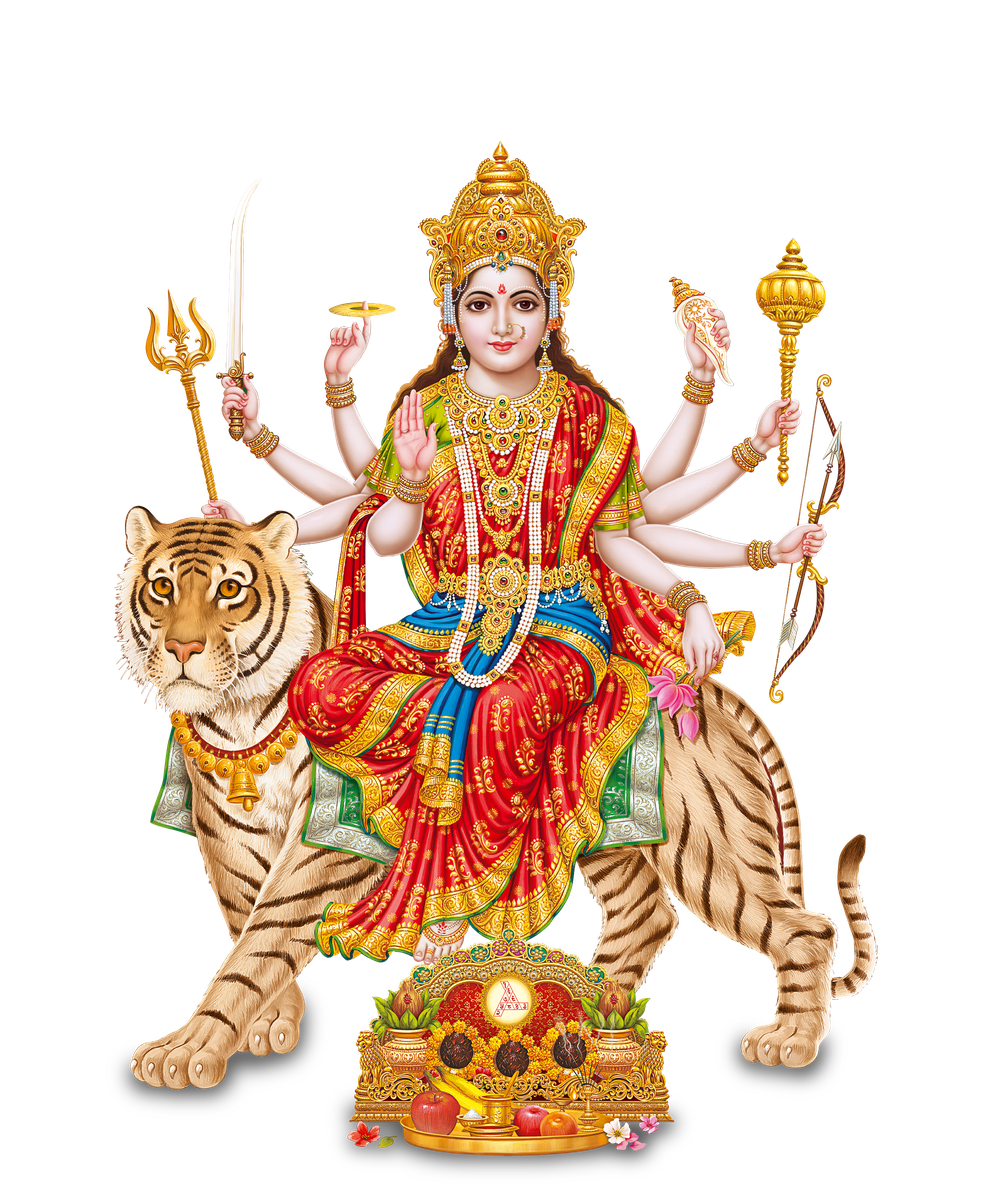
Goddess Durga is the supreme mother of Sanatan Dharma, worshipped as the embodiment of Shakti - the divine feminine force that creates, sustains and, when necessary, destroys evil to protect dharma. She rides a lion, carries weapons gifted by all the gods, and is celebrated across the nine nights of Navratri as the slayer of the buffalo demon Mahishasura and countless other forces of darkness.
While the Durga Saptashati and Devi Mahatmya glorify her in great detail, devotees commonly recite a shorter Ashtottara Shatanamavali of 108 names in daily worship, especially during Navratri, Ashtami and Durga Puja, to draw her protective and nurturing presence into their lives.
Why 108 Names of Durga?
The mother goddess is worshipped in countless forms across India - as Kali, Chandi, Bhavani, Ambika, Katyayani and more. A garland of 108 names allows a devotee to honor her many forms, weapons, virtues and victories in a single, complete round of remembrance, traditionally counted on a mala.
Complete List of 108 Names of Goddess Durga
1. दुर्गा (Durga) - The invincible goddess 2. शिवा (Shivaa) - The auspicious one 3. भवानी (Bhavaani) - Consort of Shiva, source of existence 4. भवमोचनी (Bhavamochani) - Liberator from worldly bondage 5. आर्या (Aarya) - The noble goddess 6. दुर्गाष्ट्री (Durgashtri) - Destroyer of Durgasura 7. निर्ऋति (Nirriti) - One who removes misery 8. महामाया (Mahamaya) - The great cosmic illusion 9. जया (Jaya) - The victorious one 10. अपराजिता (Aparajita) - The unconquerable one 11. कल्याणी (Kalyani) - The bestower of well-being 12. कालरात्रि (Kalratri) - The dark night of dissolution 13. चण्डिका (Chandika) - The fierce one 14. चण्डा (Chanda) - The wrathful power 15. चंडी (Chandi) - The furious goddess who slays evil 16. अम्बिका (Ambika) - The universal mother 17. भद्रकाली (Bhadrakali) - The auspicious form of Kali 18. चामुण्डा (Chamunda) - Slayer of Chanda and Munda 19. योगिनी (Yogini) - The mistress of yoga 20. कौशिकी (Kaushiki) - One born from Parvati's sheath 21. शान्ति (Shanti) - The goddess of peace 22. भद्रा (Bhadra) - The gracious one 23. विश्वमूर्ति (Vishwamurti) - One whose form is the universe 24. जयन्ती (Jayanti) - The bestower of victory 25. माला (Maalaa) - One garlanded with power 26. भूतिनी (Bhutini) - One who bestows prosperity 27. वैष्णवी (Vaishnavi) - The power of Vishnu 28. रुद्राणी (Rudrani) - The consort of Rudra 29. कृत्या (Kritya) - The one who accomplishes 30. सिंहवाहिनी (Sinhavahini) - She who rides the lion 31. कालिका (Kalika) - The consort of Time 32. महिषासुरमर्दिनी (Mahishasuramardini) - Slayer of the buffalo demon Mahishasura 33. कौमारी (Kaumari) - The ever-youthful goddess 34. ईशानी (Ishani) - The supreme ruler 35. त्रिनेत्रा (Trinetra) - The three-eyed one 36. पालिनी (Palini) - The protector of all 37. पार्वती (Parvati) - Daughter of the Himalayas 38. दुर्गतिनाशिनी (Durgatinashini) - Remover of misfortune 39. कन्या (Kanya) - The eternal virgin 40. मनोहरा (Manohara) - She who captivates the mind 41. सर्वमंगला (Sarvamangala) - The bestower of all auspiciousness 42. विद्या (Vidya) - Embodiment of knowledge 43. सरस्वती (अंश) (Sarasvati) - Goddess of speech and wisdom, as her aspect 44. कमला (Kamala) - One seated on the lotus (as Lakshmi aspect) 45. कामाक्षी (Kamaakshi) - One with compassionate eyes 46. क्रोधा (Kroeddhaa) - The stern, wrathful power 47. क्रोधजननी (Kroedhajanani) - Mother of righteous fury 48. शुभा (Shubha) - The auspicious one 49. जया (द्वितीय) (Jayaa) - Grantor of triumph 50. विजया (Vijaya) - The victorious power 51. निद्रा (Nidra) - Cosmic sleep, Yoganidra 52. भ्रामरी (Bhramari) - Goddess of the bees, form of Devi 53. कात्यायनी (Katyayani) - Daughter of Sage Katyayana 54. स्कन्दमाता (Skandamata) - Mother of Skanda (Kartikeya) 55. कूष्माण्डा (Kushmanda) - Creator of the cosmic egg with a smile 56. शैलपुत्री (Shailaputri) - Daughter of the mountain king 57. ब्रह्मचारिणी (Brahmacharini) - One who practices penance 58. चन्द्रघण्टा (Chandraghanta) - One who bears the bell-shaped moon 59. सिद्धिदात्री (Siddhidatri) - Bestower of spiritual accomplishments 60. लक्ष्मी (अंश) (Lakshmi) - Goddess of wealth as her aspect 61. सती (Sati) - The devoted, self-sacrificing one 62. उमा (Uma) - The gentle, radiant goddess 63. गौरी (Gauri) - The fair, luminous one 64. हैमवती (Haimavati) - Daughter of Himavan 65. विंध्यवासिनी (Vindhyavasini) - Dweller of the Vindhya hills 66. अन्नपूर्णा (Annapurna) - Goddess of nourishment 67. शाकम्भरी (Shakambhari) - Bestower of vegetation and sustenance 68. भैरवी (Bhairavi) - The fierce protective form 69. वाराही (Vaarahi) - The power of Varaha 70. नारसिंही (Narasimhi) - The power of Narasimha 71. इन्द्राणी (Indraani) - The power of Indra 72. सर्वाणी (Sarvani) - Consort of Sarva (Shiva) 73. दुर्गमचणाशनी (Durgamachanashani) - Destroyer of the demon Durgama 74. महातपा (Mahatapa) - One of great austerity 75. साध्वी (Sadhvi) - The virtuous one 76. कर्त्यायनी (वैकल्पिक) (Kartyayani) - Alternate epithet, form of Katyayani 77. विशालाक्षी (Vishalakshi) - The wide-eyed goddess 78. मेघस्वना (Meghswana) - One whose voice is like thunder 79. सुकेशी (Sukeshi) - One with beautiful hair 80. तपस्विनी (Tapaswini) - One engaged in penance 81. कन्याकुमारी (Kanyakumari) - The virgin goddess of the southern shore 82. करुणामयी (Karunamayi) - The compassionate one 83. सिंहस्था (Sinhastha) - One seated upon the lion 84. त्रिशूलधारिणी (Trishuladharini) - Bearer of the trident 85. खड्गधारिणी (Khadgadharini) - Bearer of the sword 86. चक्रधारिणी (Chakradharini) - Bearer of the discus 87. शंखिनी (Shankhini) - Bearer of the conch 88. धनुर्धारी (Dhanurdhari) - Bearer of the bow 89. घण्टाधारिणी (Ghantadharini) - Bearer of the bell 90. पद्महस्ता (Padmahasta) - One holding a lotus in hand 91. अमरवन्दितपादा (Amaravanditapadaa) - Whose feet are worshipped by immortals 92. सर्वशक्तिमयी (Sarvashaktimayi) - Embodiment of all power 93. अनन्तशक्ति (Anantashakti) - Of infinite power 94. सर्वरूपा (Sarvaroopa) - Present in every form 95. सर्वव्यापिनी (Sarvavyapini) - All-pervading goddess 96. नित्या (Nityaa) - The eternal one 97. अजिता (Ajita) - The unconquered one 98. चिन्तामणि (Chintamani) - The wish-fulfilling jewel 99. त्रैलोक्यजननी (Trailokyajanani) - Mother of the three worlds 100. सर्वपापहारिणी (Sarvapapaharini) - Remover of all sins 101. मंगलरूपा (Mangalaroopa) - Auspicious in form 102. तेजोमयी (Tejomayi) - Effulgent with divine light 103. अम्बा (Amba) - The universal mother 104. चन्द्रिका (Chandrika) - Moonlight-radiant goddess 105. सर्वसम्पत्प्रदा (Sarvasampatpradaa) - Bestower of all prosperity 106. भुवनेश्वरी (Bhuvaneshwari) - Ruler of the worlds 107. त्रिपुरसुंदरी (Tripurasundari) - The beautiful goddess of the three cities 108. रक्तबीजहन्त्री (Rakta Beej Hanta) - Destroyer of the demon Raktabija 109. शुम्भनिशुम्भहन्त्री (Shumbha Nishumbha Hanta) - Destroyer of Shumbha and Nishumbha 110. भक्तवरदा (Bhaktavarada) - Bestower of boons on devotees 111. शरण्या (Sharanya) - The refuge of all
Meaning and Significance
Names such as Mahishasuramardini and Rakta Beej Hanta recall her legendary battles against demons who threatened the balance of the universe. Names such as Bhavani, Uma and Gauri reflect her gentle, motherly form as consort of Lord Shiva and daughter of the Himalayas. Names such as Annapurna and Shakambhari honor her as the giver of food and sustenance, while names such as Chamunda, Kaalratri and Bhairavi reveal her fierce, protective aspect that destroys fear, ignorance and evil. Together, these 108 names paint the complete picture of Devi - infinitely compassionate to her devotees, yet unwavering against adharma.
How and When to Chant
Time: Navratri (both Chaitra and Sharad), Ashtami, Tuesdays and Fridays are especially auspicious. Early morning after bathing is ideal for daily practice.
Method: Sit facing east, light a diya, and offer a red flower or hibiscus, which Devi favors. Using a rudraksha or red hakik mala, recite each name prefixed with "Om" and followed by "Namah" (for example, "Om Durgayai Namah"), completing one full mala of 108.
Frequency: One mala daily is sufficient for regular sadhana; during Navratri, three or nine rounds may be undertaken for deeper devotion.
Benefits of Chanting Durga's 108 Names
Invokes courage, protection and strength to overcome fear, obstacles and negative influences.
Believed to bring stability, prosperity and harmony to the household when chanted with sincerity.
Strengthens inner resolve and self-confidence, especially valuable during difficult transitions in life.
Deepens the bond of devotion (bhakti) with the divine mother, offering comfort and emotional steadiness.
A Short Mahatmya (Glory)
The Devi Mahatmya recounts how, when the gods themselves could not defeat the demon Mahishasura, they combined their collective energies to manifest Durga - proof that the feminine divine holds power beyond even the trinity of gods when dharma is threatened. Her name alone, chanted with faith, is said to dispel fear and grant the courage to face any adversity.
Frequently Asked Questions
Is chanting these 108 names appropriate for women during their menstrual cycle? Personal and family customs vary; many households simply recite mentally or read the names with devotion during this time. Follow what feels respectful within your own family tradition.
Can these names be chanted outside of Navratri? Yes, Devi's names may be chanted any day of the year; Navratri, Ashtami, Tuesdays and Fridays are simply considered especially powerful.
Do I need to chant all 108 names in one sitting? It is ideal to complete a full round, but if time is short, chanting a portion daily with sincerity is still meaningful and beneficial.
What offering pleases Devi most during this practice? A red flower, hibiscus, vermilion (sindoor) and a lit diya are traditional, simple offerings that please the mother goddess.
Quick guide
Before you begin
Mantra
Devi mantra
Om Dum Durgaye Namah
Chant 11, 21, or 108 times according to your time and capacity.
Bhav
Benefits devotees pray for
FAQ
Common questions
Can women chant these names during menstruation?
This depends on personal and family tradition; many recite mentally or read with devotion during this time. Follow what feels respectful in your family.
Can these names be chanted outside Navratri?
Yes, any day is suitable; Navratri, Ashtami, Tuesdays and Fridays are considered especially powerful.
Must all 108 names be chanted in one sitting?
A full round is ideal, but a portion chanted daily with sincerity is also meaningful if time is short.
What offering pleases Devi most?
A red flower, hibiscus, sindoor and a lit diya are traditional, simple offerings that please her.
Seek Maa Durga's Blessings
Book a Durga puja performed with full vidhi by our pandits, or explore more sacred texts.