



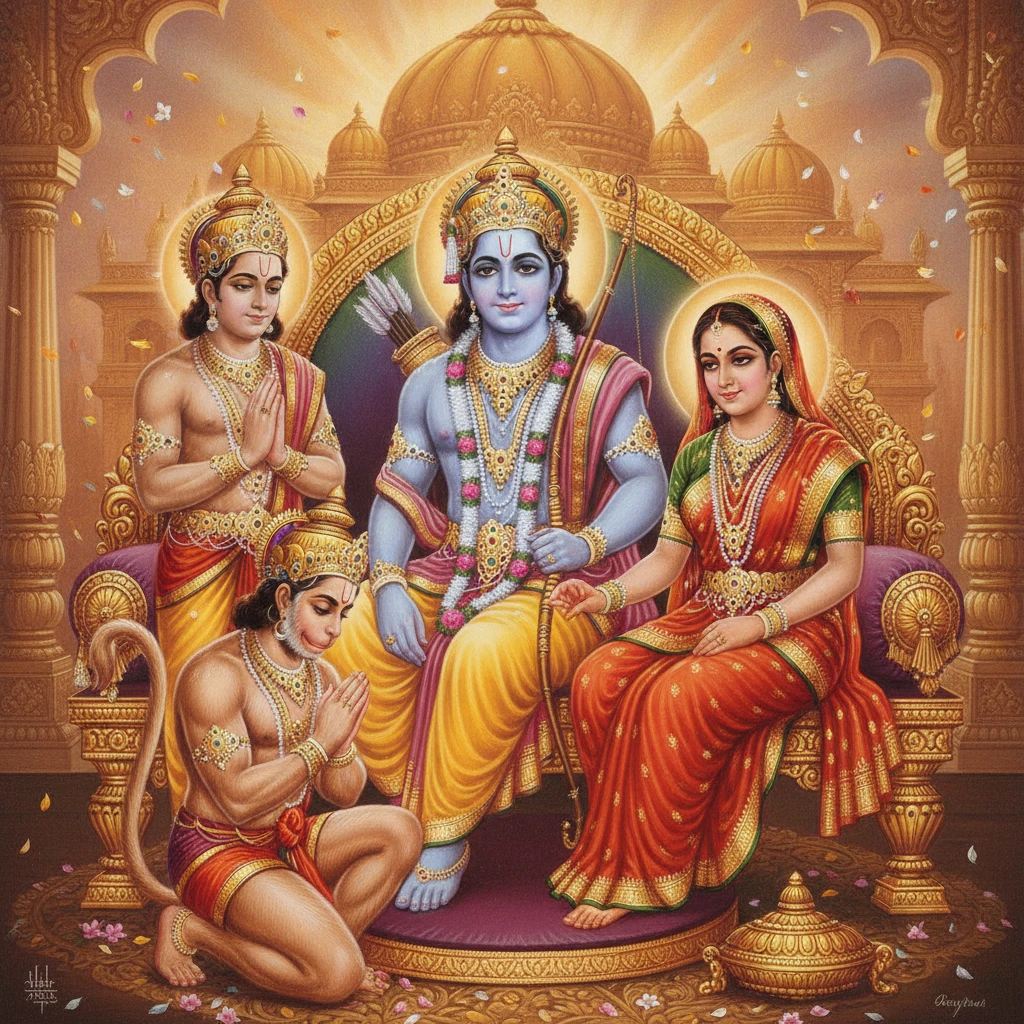
 Valmiki Ramayana · Kanda 2
About the Ayodhya Kanda
On the eve of Ram’s coronation, Queen Kaikeyi claims two boons — Bharat’s crowning and Ram’s fourteen-year exile. Ram accepts serenely; Sita and Lakshman accompany him to the forest. King Dasharath dies of grief, and Bharat, refusing the throne, installs Ram’s sandals and rules in his name.
How it is read
The Ayodhya Kanda is given below in its original Sanskrit (Devanagari), numbered by sarga and shloka. Read verse by verse; the Sundara Kanda in particular is recited as a paath for courage and protection.
Original Text
Verses & Meaning
गच्छता मातुलकुलं भरतेन तदाऽनघः ।शत्रुघ्नो नित्यशत्रुघ्नो नीतः प्रीतिपुरस्कृतः ॥२-१-१॥
When Bharata went to his maternal uncle's house, he lovingly took along the blameless Shatrughna, the constant destroyer of enemies.
स तत्र न्यवसद्भ्रात्रा सह सत्कारसत्कृतः ।मातुलेनाश्वपतिना पुत्रस्नेहेन लालितः ॥२-१-२॥
There Shatrughna stayed with his brother, honored with great hospitality, and cherished with fatherly affection by his maternal uncle Ashvapati.
तत्रापि निवसन्तौ तौ तर्प्यमाणौ च कामतः ।भ्रातरौ स्मरतां वीरौ वृद्धं दसरथं नृपम् ॥२-१-३॥
Even while living there and enjoying every pleasure, the two heroic brothers constantly remembered their aged father, King Dasharatha.
राजापि तौ महातेजाः सस्मार प्रोषितौ सुतौ ।उभौ भरतशत्रुघ्नौ महेन्द्रवरुणोपमौ ॥२-१-४॥
The mighty King Dasharatha too remembered his two sons who were away, Bharata and Shatrughna, who were like Indra and Varuna.
सर्व एव तु तस्येष्ट श्चत्वारः पुरुषर्षभाः ।स्वशरीराद्विनिर्वृत्ताश्चत्वार इव बाहवः ॥२-१-५॥
All four of his sons, the best among men, were equally dear to him, as if they were four arms born from his own body.
तेषामपि महातेजा रामो रतिकरः पितुः ।स्वयम्भूरिव भूतानां बभूव गुणवत्तरः ॥२-१-६॥
Among them, the mighty Rama, who gave his father the greatest joy, was the most excellent in virtues, just as the Self-born Brahma is supreme among all beings.
स हि देवै रुदीर्णस्य रावणस्य वधार्थिभिः ।अर्थितो मानुषे लोके जज्ञे विष्णुः सनातनः ॥२-१-७॥
For the eternal Lord Vishnu, requested by the gods who wished for the destruction of the arrogant Ravana, took birth in the world of men as Rama.
कौसल्या शुशुभे पुत्रेणामिततेजसा ।यथा वरेण देवानामदितिर्वज्रपाणिना ॥२-१-८॥
Kausalya shone with her son of immeasurable radiance, just as Aditi shone with Indra, the best of the gods and wielder of the thunderbolt.
स हि रूपोपपन्नश्च वीर्यवाननसूयकः ।भूमावनुपमः सूनुर्गणैर्धशरथोपमः ॥२-१-९॥
That son, endowed with beauty, valor, and a nature free from envy, was matchless on earth and equal to Dasharatha in his qualities.
स च नित्यं प्रशान्तात्मा मृदुपूर्वं तु भाषते ।उच्यमानोऽपि परुषं नोत्तरं प्रतिपद्यते ॥२-१-१०॥
Rama was always of a tranquil mind and spoke gently and kindly; even when addressed harshly, he never replied with harsh words.
कथंचिदुपकारेण कृतेनै केन तुष्यति ।न स्मरत्यपकाराणां शतमप्यात्मवत्तया ॥२-१-११॥
He felt satisfied even by the smallest favor done to him, yet out of his noble nature he did not remember even a hundred wrongs done against him.
शीलवृद्धै र्ज्ञानवृद्धैर्वयोवृद्धैश्च सज्जनैः ।कथयन्नास्त वैनित्य मस्त्रयोग्यान्तरेष्वपि ॥२-१-१२॥
He constantly conversed with virtuous men who were elders in character, wisdom, and age, even during the times set aside for practicing arms.
बुद्धिमान् मधुराभाषी पूर्वभाषी प्रियंवदः ।वीर्यवान्न च वीर्येण महता स्वेन विस्मितः ॥२-१-१३॥
He was intelligent and sweet-spoken, always the first to speak kindly, and pleasant of speech; though mighty in valor, he was never proud of his own great strength.
न चानृतकथो विद्वान् वृद्धानां प्रतिपूजकः ।अनुरक्तः प्रजाभिश्च प्रजाश्चाप्यनुरज्यते ॥२-१-१४॥
That learned prince never spoke falsehood, he honored his elders, was devoted to his subjects, and his subjects too were devoted to him.
सानुक्रोशो जितक्रोधो ब्राह्मणप्रतिपूजकः ।दीनानुकम्पी धर्मज्ञो नित्यं प्रग्रहवाञ्छुचिः ॥२-१-१५॥
He was compassionate, had conquered anger, honored the Brahmins, was kind to the poor and helpless, knew righteousness, and was always self-controlled and pure.
कुलोचितमतिः क्षात्रं धर्मं स्वं बहुमन्यते ।मन्यते परया कीर्त्य महत्स्वर्गफलं ततः ॥२-१-१६॥
With a mind befitting his noble lineage, he held his kshatriya duty in high regard, believing that from it came great fame and the great reward of heaven.
नाश्रेयसि रतो विद्वान्न विरुद्धकथारुचिः ।उत्तरोत्तरयुक्तौ च वक्ता वाचस्पति र्यथा ॥२-१-१७॥
The wise Rama took no delight in what was not good, nor did he enjoy contradictory talk; he spoke logically, each word following the last, like Brihaspati, lord of speech.
अरोगस्तरुणो वाग्मी वपुष्मान् देशकालवित् ।लोके पुरुषसारज्ञस्साधुरेको विनिर्मितः ॥२-१-१८॥
Healthy, youthful, eloquent, handsome, and knowing the proper time and place for everything, he alone was formed in this world as the one who truly knew the essence of manhood.
स तु स्रेष्ठैर्गुणैर्युक्तः प्रजानां पार्थिवात्मजः ।बहिश्चर इव प्राणो बभूव गुणतः प्रियः ॥२-१-१९॥
That prince, the king's son, endowed with the noblest virtues, became as dear to his subjects through his qualities as the life-breath is to the body it moves within.
सम्यग्विद्याव्रतस्नातो यथावत्साङ्गवेदवित् ।इष्वस्त्रे च पितुः श्रेष्ठो बभूव भरताग्रजः ॥२-१-२०॥
Having properly completed his vows of learning and duly mastered the Vedas along with their auxiliary branches, Bharata's elder brother Rama surpassed even his father in archery and the use of weapons.
कल्याणाभिजनः साधुरदीनः सत्यवागृजुः ।वृद्धैरभिविनीतश्च द्विजैर्धर्मार्थदर्शिभिः ॥२-१-२१॥
Of auspicious lineage, virtuous, never despondent, truthful in speech, and straightforward, he was well trained by elderly Brahmins who understood righteousness and worldly wisdom.
धर्मकामार्थतत्त्वज्ञः स्मृतिमान् प्रतिभानवान् ।लौकिके समयाचारे कृतकल्पो विशारदः ॥२-१-२२॥
He knew the true nature of dharma, artha, and kama, possessed a retentive memory and sharp intelligence, and was skilled and expert in worldly customs and conduct.
निभृतः संवृताकारो गुप्तमन्त्रः सहायवान् ।अमोघक्रोधहर्षश्च त्यागसंयमकालवित् ॥२-१-२३॥
He was self-controlled, never revealed his true feelings, kept his counsel secret, had capable helpers, never let his anger or joy go to waste, and knew the right time for generosity and for restraint.
दृढभक्तिः स्थिरप्रज्ञो नासद्ग्राही न दुर्वचाः ।निस्तन्द्रिरप्रमत्तश्च स्वदोषपरदोषवित् ॥२-१-२४॥
Steadfast in devotion and firm in wisdom, he never accepted what was improper nor spoke harsh words, was free of laziness and negligence, and knew both his own faults and those of others.
शास्त्रज्ञश्च कृतज्ञश्च पुरुषान्तरकोविदः ।यः प्रग्रहानुग्रहयोर्यथान्यायं विचक्षणः ॥२-१-२५॥
He was learned in the scriptures, grateful for favors received, skilled at judging differences among men, and wise in knowing, according to justice, when to show favor and when to restrain.
सत्संग्रहप्रग्रहणे स्थानविन्निग्रहस्य च ।आयकर्मण्युपायज्ञः संदृष्टव्ययकर्मवित् ॥२-१-२६॥
He knew how to gather good men around him and when to exercise restraint, and understood the means of increasing revenue and the wisdom of carefully examined expenditure.
श्रैष्ठ्यं शास्त्रसमूहेषु प्राप्तो व्यामिश्रकेषु च ।अर्थधर्मौ च संगृह्य सुखतन्त्रो न चालसः ॥२-१-२७॥
He had attained mastery in the collected bodies of scripture, including the mixed disciplines, and having brought together artha and dharma, he governed for the people's happiness without ever being lazy.
वैहारिकाणां शिल्पानां विज्ञातार्थविभागवित् ।आरोहे विनये चैव युक्तोवारणवाजिनाम् ॥२-१-२८॥
He understood well the meaning and various branches of the arts of leisure, and was skilled in mounting and training elephants and horses.
धनुर्वेदविदां स्रेष्ठो लोकेऽतिरथसंमतः ।अभियाता प्रहर्ता च सेनानयविशारदः ॥२-१-२९॥
He was the foremost among those who knew the science of archery, recognized in the world as a mighty warrior, a great commander able to march and strike, and expert in the strategy of leading an army.
अप्रधृष्यश्च संग्रामे क्रुद्धैरपि सुरासुरैः ।अनसूयो जितक्रोधो न दृप्तो न च मत्सरी ।न चावमन्ता भूतानां न च कालवशानुगः ॥२-१-३०॥
He was unassailable in battle even by enraged gods and demons; free of envy, having conquered anger, never arrogant or jealous, he never disrespected any being nor ever acted rashly under the sway of impulse.
एवं श्रेष्ठगुणैर्युक्तः प्रजानां पार्थिवात्मजः ।संमतस्त्रिषु लोकेषुवसुधायाः क्षमागुणैः ॥२-१-३१॥
Thus endowed with these excellent virtues, the king's son was honored in all three worlds, praised, like the earth, for his quality of forbearance.
बुद्द्या बृहस्पतेस्तुल्यो वीर्येणापि शचीपतेः ।तथा सर्वप्रजाकान्तैः प्रीतिसंजननैः पितुः ॥२-१-३२॥
He was equal to Brihaspati in intellect and to Indra, lord of Shachi, in valor, and through those qualities that endeared him to all his subjects, he brought his father the greatest joy.
गुणैर्विरुरुचे रामो दीप्तः सूर्य इवांशुभिः ।तमेवंव्रतसंपन्नमप्रधृष्यपराक्रमम् ॥२-१-३३॥
Rama shone with his virtues as brilliantly as the sun shines with its rays; seeing him thus endowed with such vows and unassailable prowess,
लोकपालोपमं नाथमकामयत मेदिनी ।एतैस्तु बहुभिर्युक्तं गुणैरनुपमैः सुतम् ॥२-१-३४॥
the earth desired him as her lord, comparable to the guardians of the world; seeing his son endowed with these many incomparable virtues,
दृष्ट्वा दशरथो राजा चक्रे चिन्तां परंतपः ।अथ राज्ञो बभूवैवं वृद्धस्य चिरजीविनः ॥२-१-३५॥
King Dasharatha, the scorcher of foes, fell into deep thought; and then this feeling arose in the mind of the aged, long-lived king.
प्रीतिरेषा कथं रामो राजा स्यान्मयि जीवति ।एषा ह्यस्य परा प्रीतिर्हृदि संपरिवर्तते ॥२-१-३६॥
'How may Rama become king while I am still alive?' — this supreme longing kept turning over and over in his heart.
कदा नाम सुतं द्रक्ष्याम्यभिषिक्तमहं प्रियम् ।वृद्धिकामो हि लोकस्य सर्वभूतानुकम्पनः ॥२-१-३७॥
'When indeed shall I see my beloved son consecrated as king?' — for Rama, wishing for the welfare of the world, was compassionate towards all beings.
मत्तः प्रियतरो लोके पर्ङन्य इव वृष्टिमान् ।यमशक्रसमो वीर्ये बृहस्पतिसमो मतौ ॥२-१-३८॥
'He is dearer to the world than I am, like a rain-bearing cloud; in valor he is equal to Yama and Indra, and in wisdom equal to Brihaspati.'
महीधरसमो धृत्यां मत्तश्च गुणवत्तरः ।महीमहमिमां कृत्स्नामधितिष्ठन्तमात्मजम् ॥२-१-३९॥
'In steadfastness he is like a mountain, and even more virtuous than I am. If only I could see this son of mine ruling over this entire earth,'
अनेन वयसा दृष्ट्वा यथा स्वर्गमवाप्नुयाम् ।इत्येतै र्विविधै स्तैस्तै रन्यपार्थिवदुर्लभैः ॥२-१-४०॥
'seeing this in my own lifetime, it would be as if I had attained heaven.' Reflecting thus on these many varied virtues of Rama, rare in other kings,
शिष्टैरपरिमेयैश्छ लोके लोकोत्तरैर्गुणैः ।तं समीक्ष्य महाराजो युक्तं समुदितैः शुभैः ॥२-१-४१॥
refined, immeasurable, and extraordinary in this world, the great king, seeing him endowed with all these auspicious virtues together,
निश्चित्य सचिवैः सार्धं युवराजममन्यत ।दिव्यन्तरिक्षे भूमौ च घोरमुत्पातजं भयम् ॥२-१-४२॥
having deliberated with his ministers, resolved to make Rama the crown prince; around that time terrible omens appeared in the heavens, in the sky, and on the earth.
संचचक्षेऽथ मेधावी शरीरे चात्मनो जराम् ।पूर्णचन्द्राननस्याथ शोकापनुदमात्मनः ॥२-१-४३॥
The wise king also observed old age advancing upon his own body, and so, wishing to dispel his own sorrow, he resolved to crown the moon-faced Rama,
लोके रामस्य बुबुधे संप्रियत्वं महात्मनः ।आत्मनश्च प्रजानां च श्रेयसे च प्रियेण च ॥२-१-४४॥
for he well understood how dear the great-souled Rama was to the whole world, and he acted for the welfare of himself and his subjects, and out of his own affection.
प्राप्तकालेन धर्मात्मा भक्त्या त्वरितवान् नृपः ।नानानगरवास्तव्यान् पृथग्जानपदानपि ॥२-१-४५॥
Knowing that the right time had come, the righteous king hastened out of his devotion to Rama, and summoned people living in various cities as well as in the countryside.
समानिनाय मेदिन्याः प्रधानान् पृथिवीपतीन् ।न तु केकयराजानं जनकं वा नराधिपः ॥२-१-४६॥
He gathered together the chief rulers of the earth, but the king did not summon the King of Kekaya or King Janaka.
त्वरया चानयामास पश्चात्तौ श्रोष्यतः प्रियम् ।तान्वेश्मनानाभरणैर्यथार्हं प्रतिपूजितान् ॥२-१-४७॥
He intended to send for those two later, so they would hear the joyful news afterward; he honored the assembled kings appropriately, providing them lodging and ornaments as each deserved.
ददर्शालंकृतो राजा प्रजापतिरिव प्रजाः ।अथोपविष्टे नृपतौ तस्मिन् परबलार्दने ॥२-१-४८॥
The richly adorned king looked upon them as Prajapati looks upon his creatures; then, when that destroyer of enemy armies had taken his seat,
ततः प्रविविशुः शेष राजानो लोकसम्मताः ।अथ राजवितीर्णेषु विविधेष्वासनेषु च ॥२-१-४९॥
the remaining kings, honored throughout the world, entered the assembly; then, on the various seats allotted by the king,
राजानमेवाभिमुखा निषेदुर्नियता नृपाः ।स लब्धमानैर्विनयान्वितैर्नृपैः ।पुरालयै र्जानपदैश्च मानवैः ।उपोपविष्टैर्नृतो बभौ ।सहस्रचक्षुर्भगवानिवामरैः ॥२-१-५०॥
the disciplined kings sat facing the king; honored with due respect, humble kings, along with people from the city and countryside, sat around him, and thus surrounded, King Dasharatha shone like the thousand-eyed Lord Indra surrounded by the gods.
ततः परिषदं सर्वामामन्त्र्य वसुधाधिपः ।हितमुद्धर्षणं चैवमुवाच प्रथितं वचः ॥२-२-१॥
Then the king, having summoned the entire assembly, spoke these well-known words that were beneficial and heartening.
दुन्धुभिस्वनकल्पेन गम्भीरेणानुनादिना ।स्वरेण महता राजा जीमूत इव नादयन् ॥२-२-२॥
The king spoke in a deep, resounding voice like the roll of a kettledrum, thundering like a rain-cloud.
राजलक्षणयुक्तेन कान्तेनानुपमेन च ।उवाच रसयुक्तेन स्वरेण नृपतिर्नृपान् ॥२-२-३॥
Endowed with royal majesty, pleasing and incomparable, the king addressed the assembled kings in a voice full of meaning and feeling.
विदितं भवतामेतद्यथा मे राज्यमुत्तमम् ।पूर्वकैर्मम राजेन्द्रैस्सुतवत् परिपालितम् ॥२-२-४॥
You all know well that this excellent kingdom of mine has been nurtured and protected like a son by the great kings before me.
सोऽहमिक्ष्ह्वाकुभिः सर्वैर्नरेन्द्रैः परिपालितम् ।श्रेयसा योक्तुकामोऽस्मि सुखार्हमखिलं जगत् ॥२-२-५॥
I, having protected this kingdom just as all the Ikshvaku kings did before me, now wish to secure further well-being for this entire world that deserves happiness.
मयाप्याचरितं पूर्वैः पन्थानमनुगच्छता ।प्रजा नित्यमनिद्रेण यथाशक्त्यभिरक्षिताः ॥२-२-६॥
Following the path walked by my ancestors, I too have vigilantly protected my subjects to the best of my ability, without ever growing negligent.
इदं शरीरं कृत्स्नस्य लोकस्य चरता हितम् ।पाण्दुरस्यातपत्रस्य च्छायायां जरितं मया ॥२-२-७॥
This body of mine has grown old while working for the welfare of the whole world, living under the shade of the white royal umbrella.
प्राप्य वर्षसहस्राणि बहू न्यायूंषि जीवतः ।जीर्णस्यास्य शरीरस्य विश्रान्ति मभिरोचये ॥२-२-८॥
Having lived for many long years, I now wish for rest for this aged and worn-out body of mine.
राजप्रभावजुष्टाम् हि दुर्वहामजितेन्द्रियैः ।परिश्रान्तोऽस्मि लोकस्य गुर्वीं धर्मधुरं वहन् ॥२-२-९॥
I am exhausted from bearing the heavy burden of royal duty toward the world, a burden hard even for the powerful to carry if they lack self-control.
सोऽहं विश्रममिच्छामि पुत्रं कृत्वा प्रजाहिते ।सन्निकृष्टानिमान् सर्वाननुमान्य द्विजर्षभान् ॥२-२-१०॥
Therefore, with the consent of all these eminent brahmins gathered here, I wish to place my son in charge of the people's welfare and take rest.
अनुजातो हि मां सर्वैर्गुणैर्ज्येष्ठो ममात्मजः ।पुरन्दरसमो वीर्ये रामः परपुरंजयः ॥२-२-११॥
My eldest son Rama, conqueror of enemy cities, resembles me in every virtue and equals Indra himself in valor.
तं चन्द्रमिव पुष्येण युक्तं धर्मभृतां वरम् ।यौवराज्ये नियोक्तास्मि प्रीतः पुरुषपुङ्गवम् ॥२-२-१२॥
I wish, with great joy, to install that finest upholder of dharma and foremost of men as Crown Prince, as fittingly as the moon joins with the Pushya star.
अनुरूपः स वै नाथो लक्ष्मीवान् लक्ष्मणाग्रजः ।त्रैलोक्यमपि नाथेन येन स्यान्नाथवत्तरम् ॥२-२-१३॥
He, the elder brother of Lakshmana and blessed with glory, is a fitting protector - one through whom even the three worlds would gain a truer guardian.
अनेन श्रेयसा सद्यः सम्योज्यैवमिमां महीम् ।गतक्लेशो भविष्यामि सुते तस्मिन्निवेश्य वै ॥२-२-१४॥
Having quickly joined this good fortune to the earth by establishing it in that son, I shall become free of all my sorrows.
यदीदम् मेऽनुरूपार्धं मया साधु सुमन्त्रितम् ।भवन्तो मेऽनुमन्यन्तां कथं वा करवाण्यहम् ॥२-२-१५॥
If this fitting decision of mine, well considered, seems right, may you all approve it; otherwise, tell me what else I should do.
यद्यप्येषा मम प्रीतिर्हितमन्यद्विचिन्त्यताम् ।अन्या मद्यस्थचिन्ता हि विमर्दाभ्यधिकोदया ॥२-२-१६॥
Although this is my own dearest wish, let some other course of benefit also be considered, for a decision weighed by many minds together yields a far better result.
इति बृवन्तं मुदिताः प्रत्यनन्दन् नृपा नृपम् ।वृष्तिमन्तं महामेघं नर्दन्त इव बर्हिणः ॥२-२-१७॥
As the king spoke thus, the assembled kings joyfully applauded him, like peacocks crying out in delight at a great rain-laden cloud.
स्निग्धोऽनुनादी सम्जजञे तत्र हर्षसमीरितः ।जनौघोद्घुष्टसन्नादो विमानं कम्पयन्निव ॥२-२-१८॥
There arose there a warm, resounding roar of joy raised by the multitude of people, as if it were shaking the very palace.
तस्य धर्मार्थविदुषो भावमाजञाय सर्वशः ।ब्राह्मणा जनमुख्याश्च पौरजानपदैः सह ॥२-२-१९॥
Understanding fully the intent of that king who was learned in dharma and statecraft, the brahmins and leading citizens, together with the people of city and country,
समेत्य मन्त्रयित्वा तु समतागतबुद्धयः ।ऊचुश्च मनसा जञात्वा वृद्धं दशरथं नृपम् ॥२-२-२०॥
assembled together, deliberated, and having reached a unanimous view, spoke to the aged King Dasharatha after understanding his heart's wish.
अनेकवर्षसाहस्रो वृद्धस्त्त्वमसि पार्थिव ।स रामं युवराजानमभिषिञ्चस्व पार्थिवम् ॥२-२-२१॥
"O king, you have lived for many thousand years and grown old; therefore consecrate Rama as the Crown Prince."
इच्छामो हि महाबाहुं रघुवीरं महाबलम् ।गजेन महता यान्तं रामं छत्रावृताननम् ॥२-२-२२॥
"We wish to see the mighty-armed, powerful hero of the Raghu race, Rama, riding a great elephant with the royal umbrella shading his face."
इति तद्वचनं श्रुत्वा राजा तेषां मनःप्रियम् ।अजानन्निव जिजञासुरिदं वचनमब्रवीत् ॥२-२-२३॥
Hearing these words dear to his own heart, the king, as though not understanding, spoke further, wishing to draw out their true feeling.
श्रुत्वैव वचनं यन्मे राघवं पतिमिच्छथ ।राजानः संशयोऽयं मे तदिदं ब्रूत तत्त्वतः ॥२-२-२४॥
"O kings, having heard that you desire Raghava as your ruler, a doubt has arisen in me - tell me the truth of this matter."
कथं नु मयि धर्मेण पृथिवीमनुशासति ।भवन्तो द्रष्टुमिच्छन्ति युवराजं ममात्मजम् ॥२-२-२५॥
"Why is it that, while I still rule the earth righteously, you all wish to see my son installed as Crown Prince?"
ते तमूचुर्महात्मानं पौरजानपदैः सह ।बहवो नृप कल्याणा गुणाः पुत्रस्य सन्ति ते ॥२-२-२६॥
They, together with the people of city and country, said to that great-souled king, "O king, your son possesses many auspicious virtues."
गुणान् गुणवतो देव देवकल्पस्य धीमतः ।प्रियानानन्ददान् कृत्स्नान् प्रवक्ष्यामोऽद्यतान् शृणु ॥२-२-२७॥
"O lord, listen now as we describe fully the pleasing and joy-giving virtues of your wise and godlike son."
दिव्यैर्गुणैः शक्रसमो रामः सत्यपराक्रमः ।इक्ष्वाकुभ्योऽपि सर्वेभ्यो ह्यतिरिक्तो विशांपते ॥२-२-२८॥
"O lord of the people, Rama, of true valor, equals Indra in his divine qualities and indeed surpasses all the Ikshvaku kings."
रामः सत्पुरुषो लोके सत्यधर्मपरायणः ।साक्ष्हाद्रामाद्विनिर्वृत्तो धर्मश्चापि श्रिया सह ॥२-२-२९॥
Rama is a truly virtuous man in this world, devoted to truth and righteousness; indeed, dharma itself along with prosperity seems to have arisen from Rama.
प्रजासुखत्वे चन्द्रस्य वसुधायाः क्ष्हमागुणैः ।बुध्या बृहस्पतेस्तुल्यो वीर्ये साक्षाच्छचीपतेः ॥२-२-३०॥
In giving joy to his people he is like the moon, in patient endurance he is like the earth, in wisdom he equals Brihaspati, and in valor he is like Indra himself.
धर्मजजञः सत्यसन्धश्च शीलवाननसूयकः ।क्षान्तः सान्त्वयिता श्लक्ष्ह्णः कृतजञो विजितेन्द्रियः ॥२-२-३१॥
He knows dharma, is true to his word, of good character, free from envy, forbearing, a comforter of others, gentle, grateful, and master of his senses.
मृदुश्च स्थिरचित्तश्च सदा भव्योऽनसूयकः ।प्रियवादी च भूतानाम् सत्यवादी च राघवः ॥२-२-३२॥
Raghava is gentle, steady of mind, ever noble, free from malice, kind in speech to all beings, and always truthful.
बहुश्रुतानां वृद्धानां ब्राह्मणानामुपासिता ।तेना स्येहातुला कीर्तिर्यशस्तेजश्च वर्धते ॥२-२-३३॥
He serves and attends upon learned, aged brahmins, and because of this his incomparable fame, glory, and radiance keep increasing.
देवासुरमनुष्याणां सर्वास्त्रेषु विशारदः ।सम्यग्विद्याव्रतस्नातो यथवत्साङ्गवेदवित् ॥२-२-३४॥
He is skilled in all the weapons known to gods, demons, and men; he has properly completed his vows of learning and rightly knows the Vedas together with their auxiliary sciences.
गान्धर्वे च भुवि श्रेष्ठो बभूव भरताग्रजः ।कल्याणाभिजनः साधुरदीनात्मा महामतिः ॥२-२-३५॥
Bharata's elder brother has become the foremost on earth in the art of music, and he is of noble lineage, virtuous, undespairing in spirit, and of great wisdom.
द्विजैरभिविनीतश्च श्रेष्ठैर्धर्मार्थनैपुणैः ।यदा व्रजति संग्रामं ग्रामार्थे नगरस्य वा ॥२-२-३६॥
He is guided by excellent brahmins skilled in dharma and worldly affairs. Whenever he goes forth to battle for the sake of a village or of the city,
गत्वा सौमित्रिसहितो नाविजित्य निवर्तते ।संग्रामात्पुनरागम्य कुङ्जरेण रथेन वा ॥२-२-३७॥
going together with Lakshmana, he never returns without victory. And coming back again from battle, whether on an elephant or in a chariot,
पौरान् स्वजनवन्नित्यम् कुशलं परिपृच्छति ।पुत्रेष्वग्निषु दारेषु प्रेष्यशिष्यगणेषु च ॥२-२-३८॥
he always asks after the welfare of the citizens as though they were his own family - about their sons, sacred fires, wives, servants, and groups of pupils -
निखिलेनानुपूर्व्याच्च पिता पुत्रानिवौरसान् ।शुश्रूषन्ते च वः शिष्याः कचित्कर्मसु दंशिताः ॥२-२-३९॥
asking in complete detail and proper order, as a father would ask about his own sons, whether the pupils are serving well and are diligent in their duties.
इति नः पुरुषव्याघ्रः सदा रामोऽभिभाषते ।व्यसनेषु मनुष्याणां भृशं भवति दुःखितः ॥२-२-४०॥
Thus does Rama, the tiger among men, always speak with us; and he becomes deeply grieved at the misfortunes of people.
उत्सवेषु च सर्वेषु पितेव परितुष्यति ।सत्यवादी महेष्वासो वृद्धसेवी जितेन्द्रियः ॥२-२-४१॥
And at every festive occasion he rejoices like a father. He is truthful, a great warrior, a server of elders, and master of his own senses.
स्मितपूर्वाभिभाषी च धर्मं सर्वात्मना श्रितः ।सम्यग्योक्ता श्रेयसां च न विगृह्य कथारुचिः ॥२-२-४२॥
He always speaks with a smile before his words, has taken refuge wholly in dharma, rightly guides others toward what is good, and has no taste for quarrelsome talk.
उत्तरोत्तरयुक्तौ च वक्ता वाचस्पतिर्यथा ।सुभ्रूरायतताम्राक्ष्हस्साक्ष्हाद्विष्णुरिव स्वयम् ॥२-२-४३॥
In progressively skillful argument he speaks like Brihaspati himself; with fine brows and large, reddish eyes, he resembles Lord Vishnu in person.
रामो लोकाभिरामोऽयं शौर्यवीर्यपराक्रमैः ।प्रजापालनतत्त्वजञो न रागोपहतेन्द्रियः ॥२-२-४४॥
This Rama delights the whole world through his courage, strength, and valor; he understands the true principles of protecting his subjects, and his senses are never overpowered by passion.
शक्तस्त्रैलोक्यमप्येको भोक्तुं किं नु महीमिमाम् ।नाऽस्य क्रोधः प्रसादश्च निरर्थोऽस्ति कदाचन ॥२-२-४५॥
He alone is capable of ruling even the three worlds, what then to speak of this earth! His anger and his favor are never without purpose.
हन्त्येव नियमाद्वध्यानवध्ये च न कुप्यति ।युनक्त्यर्थैः प्रहृष्टश्च तमसौ यत्र तुष्यति ॥२-२-४६॥
He punishes only those who deserve punishment, as the rule requires, and never grows angry with the innocent; and he joyfully rewards with wealth those with whom he is pleased.
शान्तैः सर्वप्रजाकान्तैः प्रीतिसंजननैर्नृणाम् ।गुणैर्विरुरुचे रामो दीप्तः सूर्य इवांशुभिः ॥२-२-४७॥
Rama shone forth with his peaceful qualities, dear to all his subjects and generating love in every heart, like the blazing sun shining with its rays.
तमेवंगुणसम्पन्नं रामं सत्यपराक्रमम् ।लोकपालोपमं नाथमकामयत मेदिनी ॥२-२-४८॥
The earth herself desired as her lord this Rama, endowed with such virtues, of true valor, comparable to the guardian deities of the world.
वत्सः श्रेयसि जातस्ते दिष्ट्यासौ तव राघव ।दिष्ट्या पुत्रगुणैर्युक्तो मारीच इव काश्यपः ॥२-२-४९॥
O king, by your good fortune this dear son was born to you, endowed with the qualities of a true son, just as Marichi was born to the sage Kashyapa.
बलमारोग्यमायुश्च रामस्य विदितात्मनः ।देवासुरमनुष्येषु सगन्धर्वोरगेषु च ॥२-२-५०॥
May the strength, health, and long life of Rama, who knows his own true self, become renowned among gods, demons, and men, together with the gandharvas and the serpent races.
Quick guide
Before you begin
Bhav
Benefits devotees pray for
FAQ
Common questions
What is the Ayodhya Kanda of the Valmiki Ramayana about?
On the eve of Ram’s coronation, Queen Kaikeyi claims two boons — Bharat’s crowning and Ram’s fourteen-year exile. Ram accepts serenely; Sita and Lakshman accompany him to the forest. King Dasharath dies of grief, and Bharat, refusing the throne, installs Ram’s sandals and rules in his name.
What is the Valmiki Ramayana?
The Valmiki Ramayana is the original Sanskrit epic of Shri Ram, composed by Maharishi Valmiki and revered as the Adi Kavya, the first poem. It has seven kandas (books): Bala, Ayodhya, Aranya, Kishkindha, Sundara, Yuddha and Uttara, and is the source of the many later Ramayanas including Tulsidas’s Ramcharitmanas.
Offer a Ram path or seva in your name
Have a Ramayana or Sunderkand path performed in your naam-gotra for protection and peace. Book a seva, or read on in Sanatan Sahitya.