


 नवग्रह शान्ति स्तोत्र
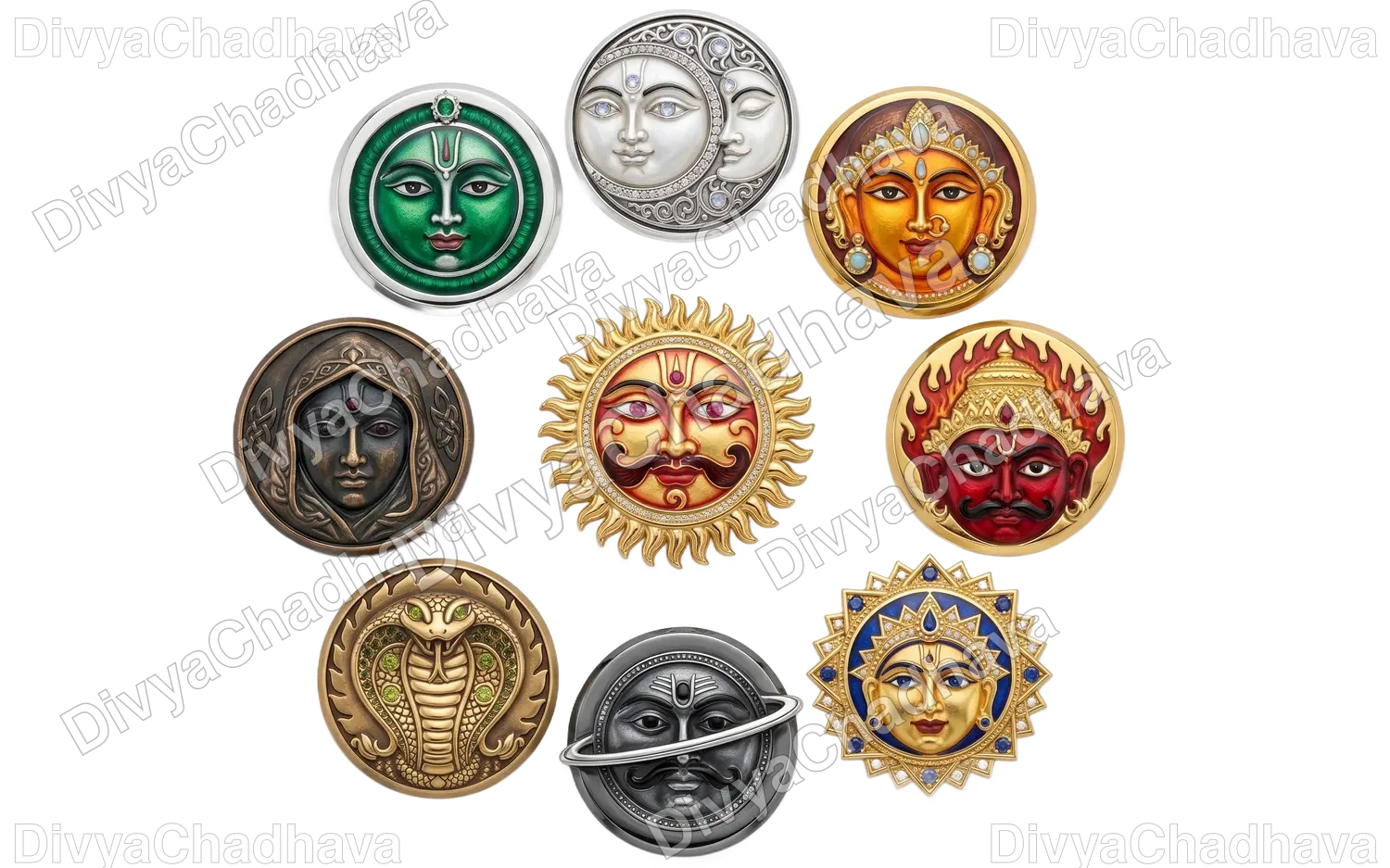
The Navgrah Mantra is the complete set of beej (seed) mantras for all nine planetary deities — Surya, Chandra, Mangal, Budh, Guru, Shukra, Shani, Rahu and Ketu — chanted together for overall planetary peace and life balance.
In Vedic astrology, the Navgrah — the nine planetary deities — govern every major aspect of human life: health, wealth, relationships, career, education, emotions and destiny. These nine are Surya (Sun), Chandra (Moon), Mangal (Mars), Budh (Mercury), Guru or Brihaspati (Jupiter), Shukra (Venus), Shani (Saturn), Rahu (North Lunar Node) and Ketu (South Lunar Node). Each graha carries its own energy, temperament and area of influence, and each has its own beej (seed) mantra — a short, potent sound-form that invokes and balances that specific planetary energy.
While one can chant an individual planet's mantra to address a specific concern, chanting the complete set of Navgrah Beej Mantras together is a time-honoured practice for restoring overall balance across the chart, especially when several planets are weak, in conflict, or passing through difficult transits or dashas simultaneously. It is also chanted simply as a general devotional and protective practice, since a well-balanced set of grahas supports smooth progress in every area of life.
Complete Navgrah Beej Mantras (Devanagari)
Surya (Sun) ॐ ह्रां ह्रीं ह्रौं सः सूर्याय नमः
Chandra (Moon) ॐ श्रां श्रीं श्रौं सः चन्द्राय नमः
Mangal (Mars) ॐ क्रां क्रीं क्रौं सः भौमाय नमः
Budh (Mercury) ॐ ब्रां ब्रीं ब्रौं सः बुधाय नमः
Guru / Brihaspati (Jupiter) ॐ ग्रां ग्रीं ग्रौं सः गुरवे नमः
Shukra (Venus) ॐ द्रां द्रीं द्रौं सः शुक्राय नमः
Shani (Saturn) ॐ प्रां प्रीं प्रौं सः शनैश्चराय नमः
Rahu (North Node) ॐ भ्रां भ्रीं भ्रौं सः राहवे नमः
Ketu (South Node) ॐ स्रां स्रीं स्रौं सः केतवे नमः
Transliteration of All Nine Mantras
Surya: Om Hraam Hreem Hraum Sah Suryaya Namah Chandra: Om Shraam Shreem Shraum Sah Chandraya Namah Mangal: Om Kraam Kreem Kraum Sah Bhaumaya Namah Budh: Om Braam Breem Braum Sah Budhaya Namah Guru: Om Graam Greem Graum Sah Gurave Namah Shukra: Om Draam Dreem Draum Sah Shukraya Namah Shani: Om Praam Preem Praum Sah Shanaishcharaya Namah Rahu: Om Bhraam Bhreem Bhraum Sah Rahave Namah Ketu: Om Sraam Sreem Sraum Sah Ketave Namah
Meaning and Significance of Each Planet's Mantra
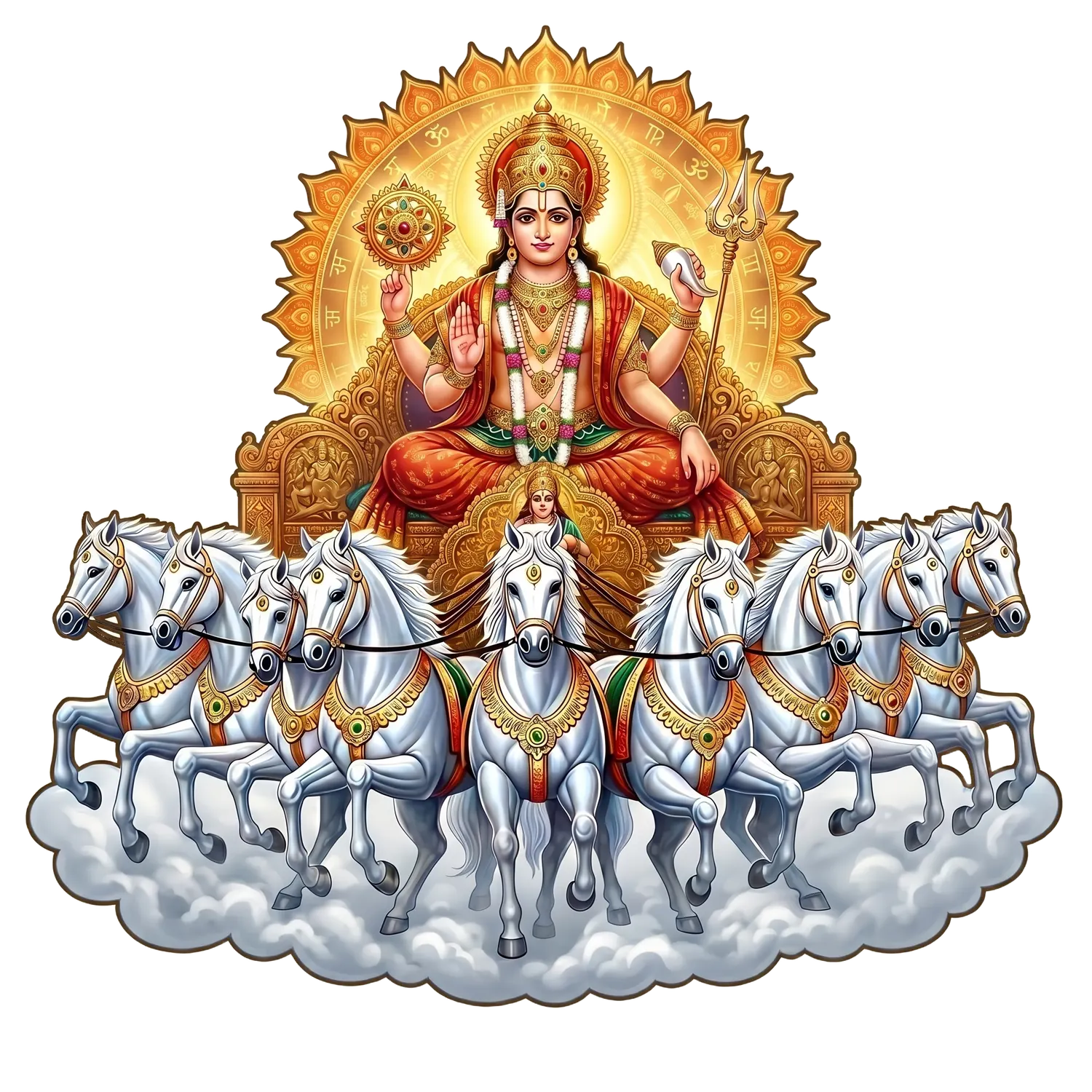
Surya (Sun): governs soul, self-confidence, vitality, authority, father and government favour. The mantra strengthens tejas (radiance), health and leadership qualities.
Chandra (Moon): governs mind, emotions, mother, intuition and mental peace. The mantra calms emotional turbulence, anxiety and overthinking, and nurtures inner peace.
Mangal (Mars): governs courage, energy, siblings, land, property and willpower. The mantra channels raw energy into constructive courage and protects against accidents, disputes and impulsive anger.
Budh (Mercury): governs intellect, communication, business acumen and analytical skill. The mantra sharpens speech, learning ability and clarity of thought.
Guru / Brihaspati (Jupiter): governs wisdom, dharma, marriage, children, wealth and spiritual growth. Considered the most benefic graha, the mantra invokes higher wisdom, good fortune and guidance.
Shukra (Venus): governs love, beauty, luxury, art, relationships and material comforts. The mantra brings harmony in relationships, refinement, and material and creative abundance.
Shani (Saturn): governs discipline, karma, patience, longevity and justice. The mantra invokes patience and steady effort and eases the hardships of Sade Sati and Dhaiya.
Rahu (North Node): governs illusion, sudden events, foreign connections and unconventional paths. The mantra brings clarity amidst confusion and protects from sudden setbacks and deception.
Ketu (South Node): governs detachment, spirituality, past-life karma and moksha (liberation). The mantra supports spiritual growth, intuition and release from unnecessary material attachment.
Why Chant the Navgrah Mantra Together
Chanting all nine mantras together is traditionally recommended when multiple planets are weak or afflicted, during major life transitions or important beginnings such as a new home, business, marriage or long journey, during Navgrah Shanti pujas performed by a purohit for overall planetary peace, and simply as a general daily or weekly devotional practice to invoke balance, protection and grace across every area of life governed by the nine grahas.
How and When to Chant
Best day: The complete Navgrah cycle can be chanted any day, though many begin the practice on a Sunday (Surya's day) or during a dedicated Navgrah Puja performed by a purohit at an auspicious muhurta.
Best time: Morning, ideally after sunrise, in a clean and quiet space; some also chant during a formal Navgrah Shanti puja that may take place at a temple or at home under a purohit's guidance.
Preparation: Bathe and wear clean clothes. If performing a home puja, a Navgrah yantra or the nine grahas represented through nine small bowls of grains, or images of each deity, may be used, along with a diya, incense and simple offerings such as flowers and fruit for each graha in turn.
Mala: A Rudraksha or Sphatik mala is commonly used for chanting the full set, since it is considered universally suitable for all nine deities; specific gemstone malas may be added for the planet a person wishes to emphasise.
Count: A common practice is to chant each of the nine beej mantras 9, 11, or 108 times in sequence, moving from Surya through to Ketu; a full Navgrah Shanti puja performed by a purohit may involve a much larger, ritually prescribed count and havan for each graha.
Sequence: Traditionally the mantras are chanted in the order Surya, Chandra, Mangal, Budh, Guru, Shukra, Shani, Rahu, Ketu, which follows the classical Navgrah sequence used in most panchangs and pujas.
Do's and Don'ts
Do chant with a calm, unhurried mind, giving each planet's mantra its due attention rather than rushing through the set.
Do maintain purity — bathe before chanting, wear clean clothes, and keep the chanting space tidy and quiet.
Do consider a formal Navgrah Shanti puja performed by a qualified purohit if you are facing multiple simultaneous difficulties, as the combined ritual, havan and mantra together are considered especially powerful.
Don't skip planets arbitrarily within the sequence out of impatience; the traditional order is meant to honour the balance and interplay between all nine grahas.
Don't treat this as a mechanical exercise; approach each mantra with genuine devotion and respect for that graha's unique energy and role in your life.
Don't expect this practice to replace the guidance of a qualified astrologer for chart-specific remedies; it is a general, protective and balancing devotional practice.
Benefits of the Navgrah Mantra
Regular chanting of the complete Navgrah mantra set is believed to bring balance and harmony across all areas of life governed by the nine planets — health, wealth, relationships, career and spiritual growth; ease the combined effect of multiple weak or conflicting planetary influences; offer protection during difficult transits, dashas or major life transitions; and invoke the collective grace and blessings of all nine grahas for overall peace, prosperity and well-being.
Mahatmya (Significance)
The Navgrah occupy a central place in Vedic astrology and temple worship; nearly every major Shiva or Vishnu temple in India has a dedicated Navgrah shrine, and a full Navgrah Shanti puja, complete with havan, is one of the most widely performed remedial rituals in Hindu tradition, prescribed for easing difficult planetary periods, removing obstacles before major life events, and restoring overall cosmic balance in one's life. The nine beej mantras distil this vast body of astrological and devotional knowledge into short, potent sounds that anyone can chant with sincerity, regardless of how deeply they understand the underlying astrology.
Frequently Asked Questions
Should I chant all nine mantras every day, or focus on just one: Both approaches are valid. If you have a specific concern linked to one planet (such as Shani during Sade Sati), you may focus on that mantra; for general balance and protection, chanting the full set periodically, such as weekly, is a widely followed practice.
Do I need a purohit to chant the Navgrah mantras, or can I do it myself: You can chant the beej mantras yourself with sincerity and correct pronunciation; a formal Navgrah Shanti puja with havan, however, is traditionally performed by a qualified purohit, especially for addressing significant chart-specific difficulties.
What is the difference between chanting one planet's mantra and the full Navgrah set: An individual mantra focuses energy on strengthening or pacifying one specific graha, while the full Navgrah set is chanted to invoke balance and harmony across all nine simultaneously, which is especially useful during major life transitions or when several planets are causing difficulty at once.
Is this mantra practice a substitute for astrological consultation or other professional advice: No. This is a devotional and spiritual practice rooted in faith and tradition. For chart-specific concerns, significant life decisions, or medical, legal or financial matters, please consult a qualified astrologer or relevant professional alongside your spiritual practice.
Quick guide
Before you begin
Mantra
Navagraha mantra
Om Navagrahebhyo Namah
Chant with a calm sankalp while praying for balanced graha shanti and guidance.
Bhav
Benefits devotees pray for
FAQ
Common questions
Should I chant all nine mantras every day, or focus on just one?
Both are valid. Focus on one for a specific concern (like Shani during Sade Sati); chant the full set periodically for general balance and protection.
Do I need a purohit to chant the Navgrah mantras?
You can chant the beej mantras yourself with sincerity; a formal Navgrah Shanti puja with havan is traditionally led by a qualified purohit.
What is the difference between one planet's mantra and the full set?
One mantra strengthens or pacifies a single graha; the full set invokes balance across all nine, useful during major transitions or multiple simultaneous difficulties.
Is this a substitute for astrological consultation?
No. It is a devotional practice; consult a qualified astrologer or relevant professional for chart-specific or significant life matters.
Seeking Overall Planetary Peace?
Book a heartfelt Navgrah puja and let our pandits offer your sankalp for balance, peace and grace across all nine planets.