

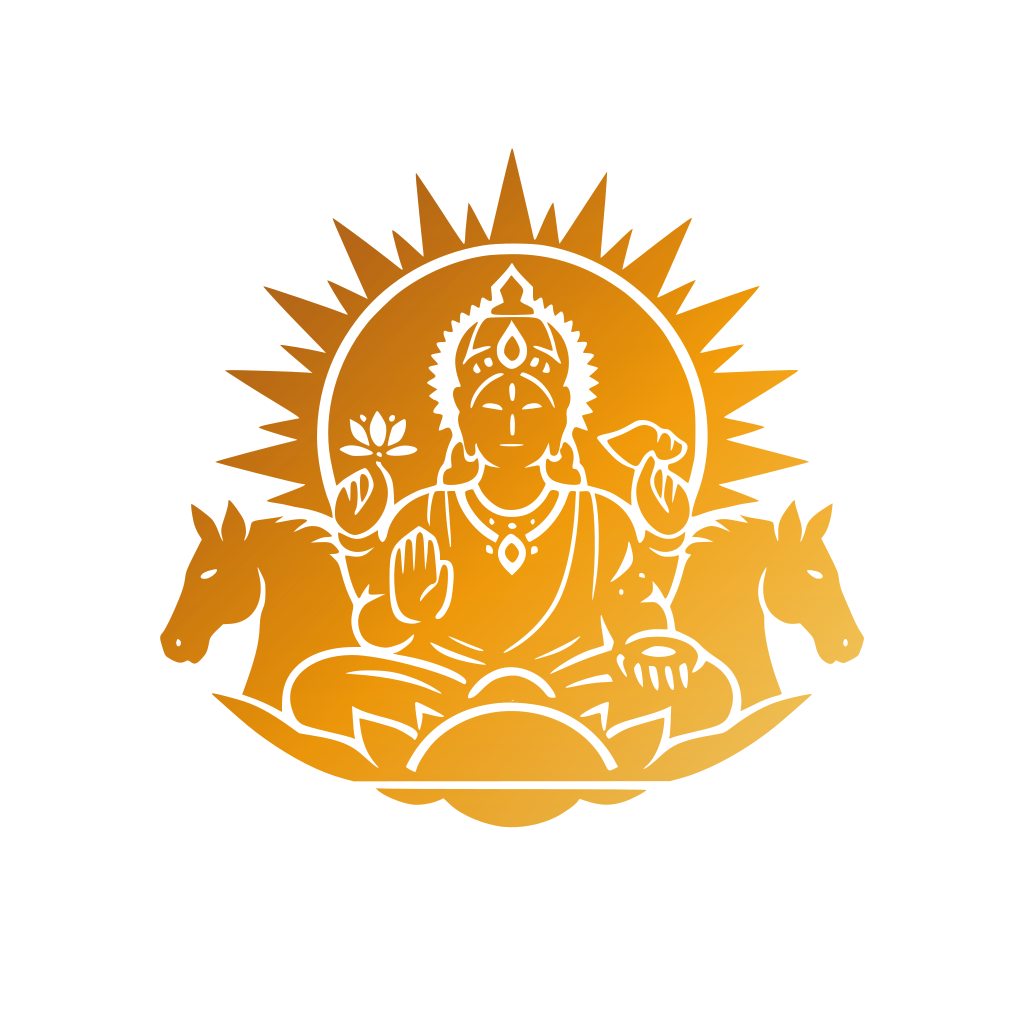
 Surya Ki Uttarayan Yatra
The complete story, spiritual meaning and puja vidhi of Makar Sankranti, the festival marking Surya Dev's entry into Capricorn and the start of Uttarayan.
Makar Sankranti is one of the few Hindu festivals fixed by the solar calendar rather than the lunar one, and hence it almost always falls on the same date, the 14th or occasionally the 15th of January, when Surya Dev, the Sun God, transitions from Dhanu Rashi (Sagittarius) into Makar Rashi (Capricorn). This movement marks the beginning of Uttarayan, the six month period when the Sun's path moves northward, considered the most auspicious half of the year in Sanatan Dharma, associated with light, knowledge, and spiritual upliftment, as opposed to Dakshinayan, the southward movement associated with introspection and rest.
Surya Dev and the Meaning of Sankranti
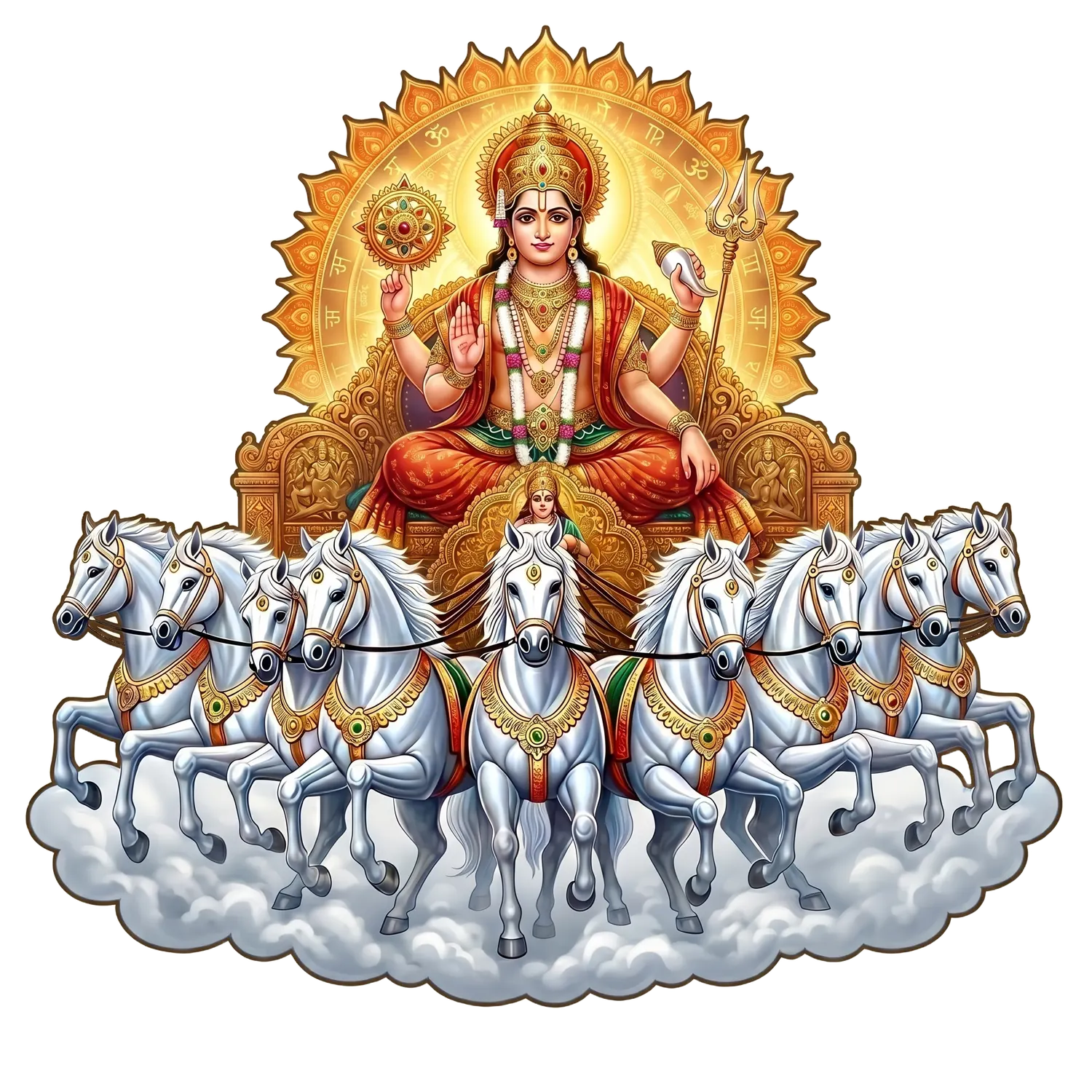
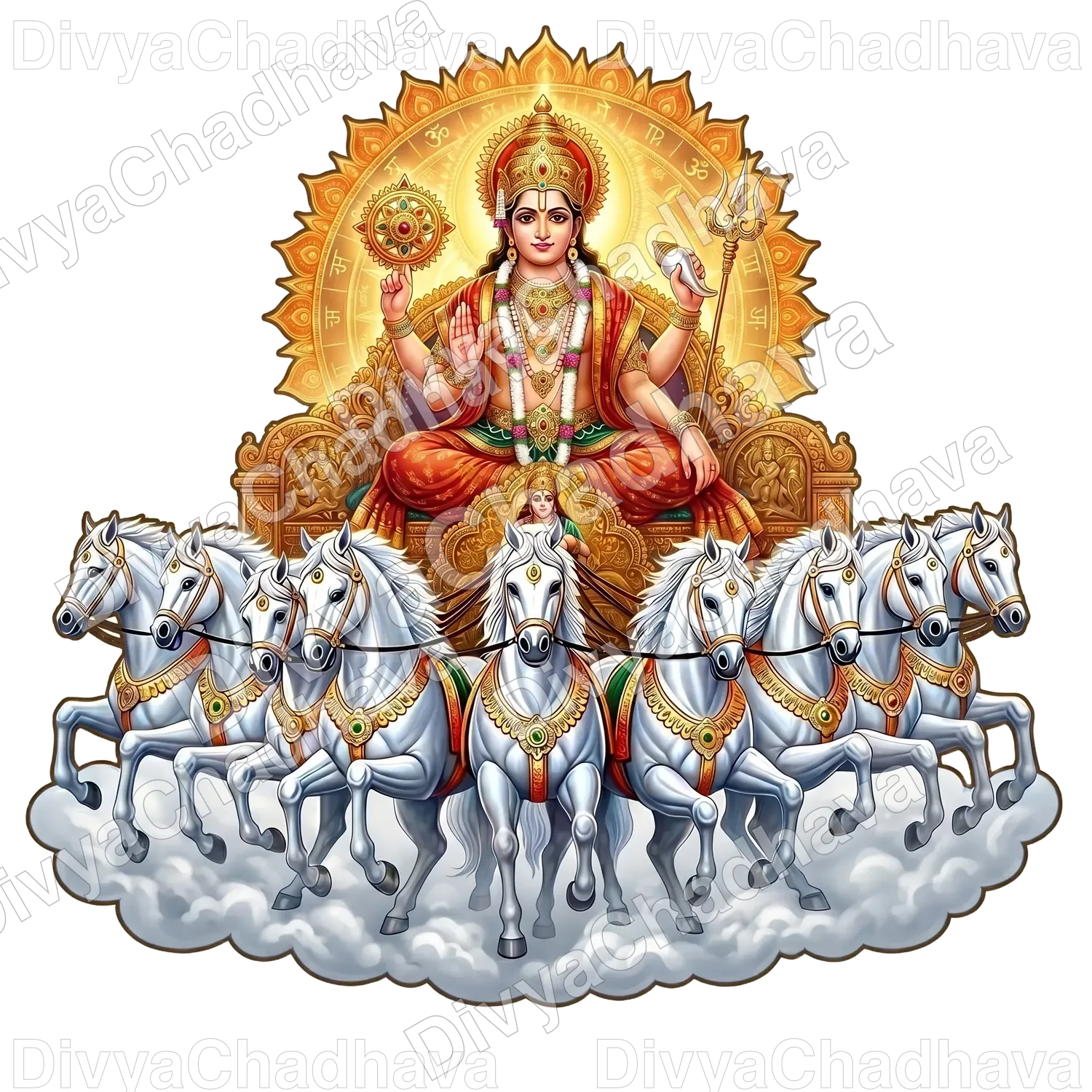
The word Sankranti itself means transition or movement, referring to the Sun's passage from one zodiac sign into another. While the Sun changes signs every month, the transition into Makar Rashi is considered the most significant because it marks the shift of the Sun's northward journey, which the Vedas associate with the day of the devas, a period believed to be spiritually elevating and favourable for new beginnings, charitable acts, and sacred rituals. Surya Dev is worshipped on this day as the source of all life and energy, the very eye of the cosmos, whose warmth sustains every living being. Makar Sankranti is thus fundamentally a festival of gratitude to the Sun God for sustaining the earth through his light.
The Katha of Surya and Shani Dev
One of the most touching legends associated with Makar Sankranti concerns the relationship between Surya Dev and his son Shani Dev, the deity of Saturn. It is said that Surya Dev, due to the extreme brilliance of his wife Sangya, could not bear her radiance and this created distance between them, leading to friction with their children as well, including Shani, who represents strict justice and discipline. As a result, Surya Dev is said to have felt displeasure towards Shani, who then went on to rule the sign of Makar (Capricorn) as its lord.
On the day of Makar Sankranti, Surya Dev visits the house of his son Shani Dev, that is, he enters Shani's zodiac sign, Makar Rashi. Despite the past differences between father and son, Shani Dev welcomes his father with respect and honour, setting aside all grievances. This story carries a profound teaching, that no matter the friction or estrangement within a family, the bond between father and son, and by extension, all family relationships, deserves reconciliation and respect. It also symbolically explains why black sesame (til) and objects associated with Shani, such as black clothes or blankets, are donated on this day, as an offering that pleases both Surya and Shani together.
The Descent of Ganga and Bhagirath's Tapasya
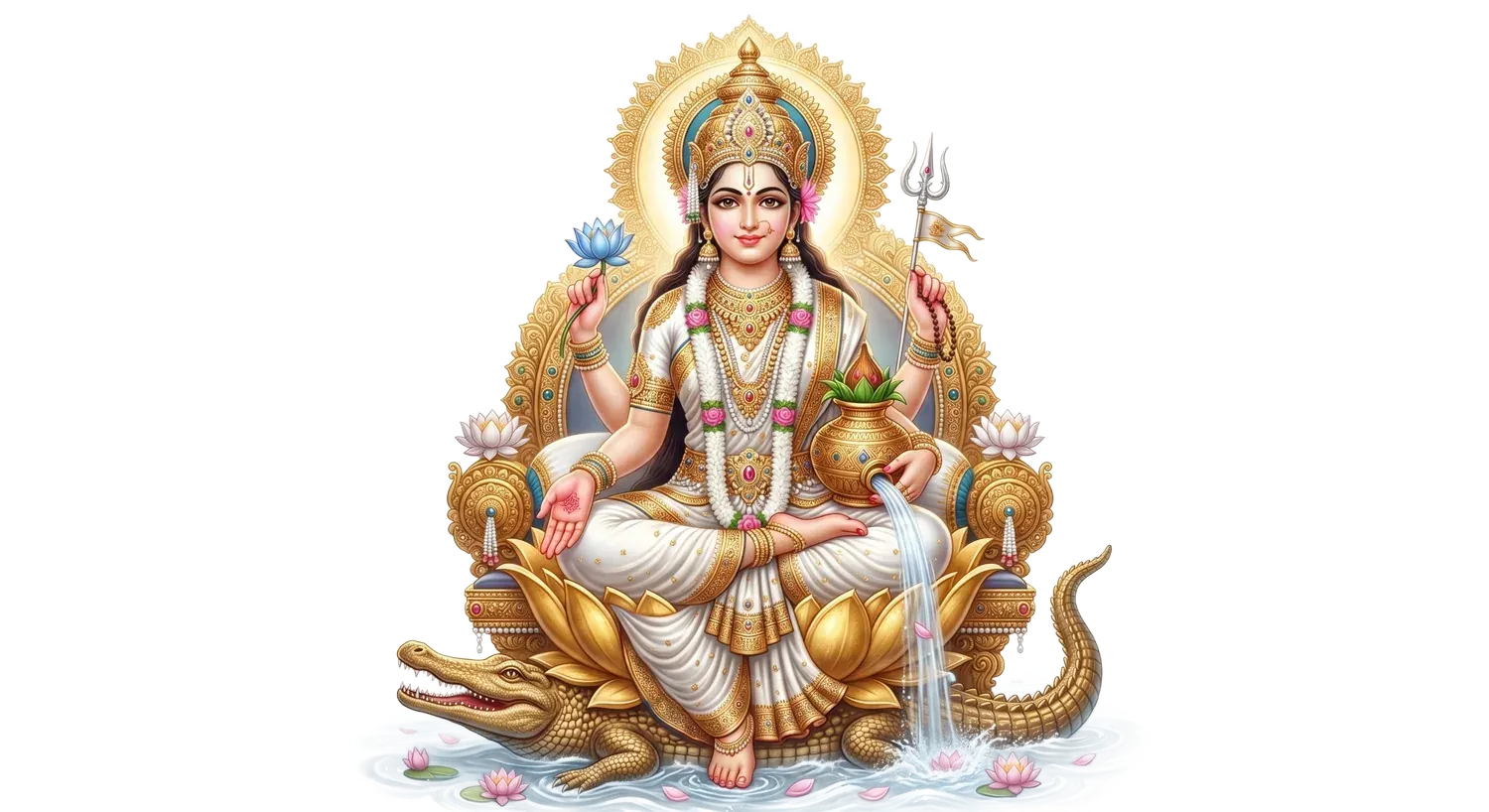
Makar Sankranti is also deeply connected to the story of Ganga's descent to earth. King Bhagirath, a descendant of King Sagar, performed intense tapasya to bring the celestial river Ganga down to earth in order to liberate the souls of his sixty thousand ancestors, who had been reduced to ashes by the curse of Sage Kapila. Pleased by his unwavering devotion, Ganga agreed to descend, and Lord Shiva agreed to receive her powerful flow in his matted locks to soften her fall and protect the earth from being crushed by her force.
It is believed that Ganga, following Bhagirath, reached the ashes of King Sagar's sons and liberated them on the day of Makar Sankranti, at a place now known as Gangasagar, where the river meets the sea in West Bengal. This is why Gangasagar Mela, one of the largest pilgrim gatherings in India, is held on Makar Sankranti, and taking a holy dip in the Ganga or any sacred river on this day is considered exceptionally purifying, believed to wash away sins accumulated over lifetimes and grant moksha to ancestors.
Bhishma Pitamah and the Significance of Uttarayan
Another profound connection to Makar Sankranti comes from the Mahabharata. Bhishma Pitamah, lying on a bed of arrows after the great war, had been blessed with Ichha Mrityu, the boon of choosing the time of his own death. Despite being mortally wounded, he chose to wait for the auspicious period of Uttarayan to leave his body, believing that departing during this sacred, light filled half of the year would lead the soul to a higher spiritual path. He continued to impart wisdom to the Pandavas throughout this period and finally left his mortal body on the day Uttarayan began, which many traditions associate with Makar Sankranti. This story reinforces the belief that Uttarayan is a spiritually potent period, favourable not just for beginnings but even for the soul's final journey.
Regional Celebrations and Their Spiritual Roots
Across India, Makar Sankranti is celebrated under many names, each rooted in the same solar significance. In Punjab it merges with Lohri celebrations the night before, in Gujarat and Rajasthan it is celebrated as Uttarayan with kite flying symbolising the rising sun and expanding light, in Tamil Nadu it is celebrated as Pongal, honouring Surya Dev and cattle for their role in agriculture, in Assam it is Magh Bihu, marking the harvest, and in Karnataka and Andhra Pradesh it is Makara Sankranti with the exchange of til-gud and sugarcane. Despite the regional variety, the underlying spiritual theme remains consistent, gratitude to Surya Dev, the harvest, and the beginning of the auspicious Uttarayan period.
Puja Vidhi of Makar Sankranti
Devotees traditionally wake before sunrise and take a holy bath, ideally in a river, or with water mixed with black sesame seeds at home if a river is not accessible. Offering Arghya to Surya Dev by standing facing the rising sun and offering water with folded hands is a central ritual, often accompanied by the recitation of the Surya mantra or Aditya Hridaya Stotra. Til (black sesame) and gud (jaggery) are prepared into sweets called tilgul or til-laddoo and distributed among family, friends and neighbours, often with the phrase, til-gul ghya, god god bola, meaning accept this sesame and jaggery and speak sweetly, symbolising the wish for harmony and sweetness in all relationships through the year. Charity, or daan, is considered especially meritorious on this day, with items like sesame, jaggery, blankets, warm clothes, and food being donated to the needy, particularly benefiting those affected by the cold winter season.
Mahatmya (Glory) of Makar Sankranti
Makar Sankranti holds a special place in the Hindu calendar as the harbinger of longer days and the retreat of winter, symbolising the victory of light over darkness at a cosmic level. It is considered one of the most auspicious days to perform charitable acts, begin new ventures, and seek blessings for prosperity, as the merit earned through daan and puja on this day is believed to be significantly amplified. The scriptures describe Uttarayan as Devayana, the path of the gods, making this period especially conducive for spiritual practices, meditation and pilgrimage.
Dos and Don'ts
It is auspicious to bathe before sunrise, offer Arghya to Surya Dev, and donate til, gud, and warm clothing to the needy. Elders are shown respect and blessings are sought. It is advised to avoid non-vegetarian food and alcohol on this day, and to refrain from harsh words, keeping the spirit of til-gul, sweetness and harmony, at the heart of interactions. Kite flying, where practised, should be done with awareness and care to avoid harm to birds or people.
Conclusion
Makar Sankranti, through the stories of Surya and Shani's reconciliation, Bhagirath's devotion bringing Ganga to earth, and Bhishma Pitamah's choice to wait for Uttarayan, reflects the festival's deep spiritual foundation, the celebration of light, renewal, reconciliation and gratitude. As the Sun begins its northward journey, devotees are reminded to let go of old grievances, embrace warmth in relationships, and walk towards a period of spiritual growth and auspiciousness.
Quick guide
Before you begin
Mantra
Surya mantra
Om Ghrinih Suryaya Namah
Chant at sunrise or during Surya arghya for energy, clarity, and discipline.
Bhav
Benefits devotees pray for
FAQ
Common questions
Why does Surya Dev visit Shani Dev's house on Makar Sankranti?
Makar Rashi is ruled by Shani Dev, and when the Sun transitions into this sign, it is symbolically described as Surya visiting his son's home. Despite past differences, Shani welcomes his father with respect, teaching the value of reconciliation within family bonds.
Why is Ganga snan considered especially auspicious on this day?
According to the legend of Bhagirath, Ganga descended to earth and liberated the ashes of King Sagar's sons on the day of Makar Sankranti at Gangasagar. A holy dip in the Ganga or any sacred river on this day is believed to purify the soul and grant blessings to ancestors.
Why did Bhishma Pitamah wait for Uttarayan to leave his body?
Bhishma had the boon of Ichha Mrityu, the power to choose the time of his death. He waited for the spiritually auspicious Uttarayan period, believing it would lead his soul to a higher path, reflecting the sacred importance of this solar period.
What is the significance of exchanging til and gud on Makar Sankranti?
Til-gud symbolises sweetness and warmth, offered with the wish that all relationships remain harmonious despite differences, much like the reconciliation between Surya and Shani. It is also nutritionally suited to the winter season.
Welcome Uttarayan with Divine Blessings
Begin the auspicious Uttarayan period with a Surya puja for health, prosperity and harmony in your family.