



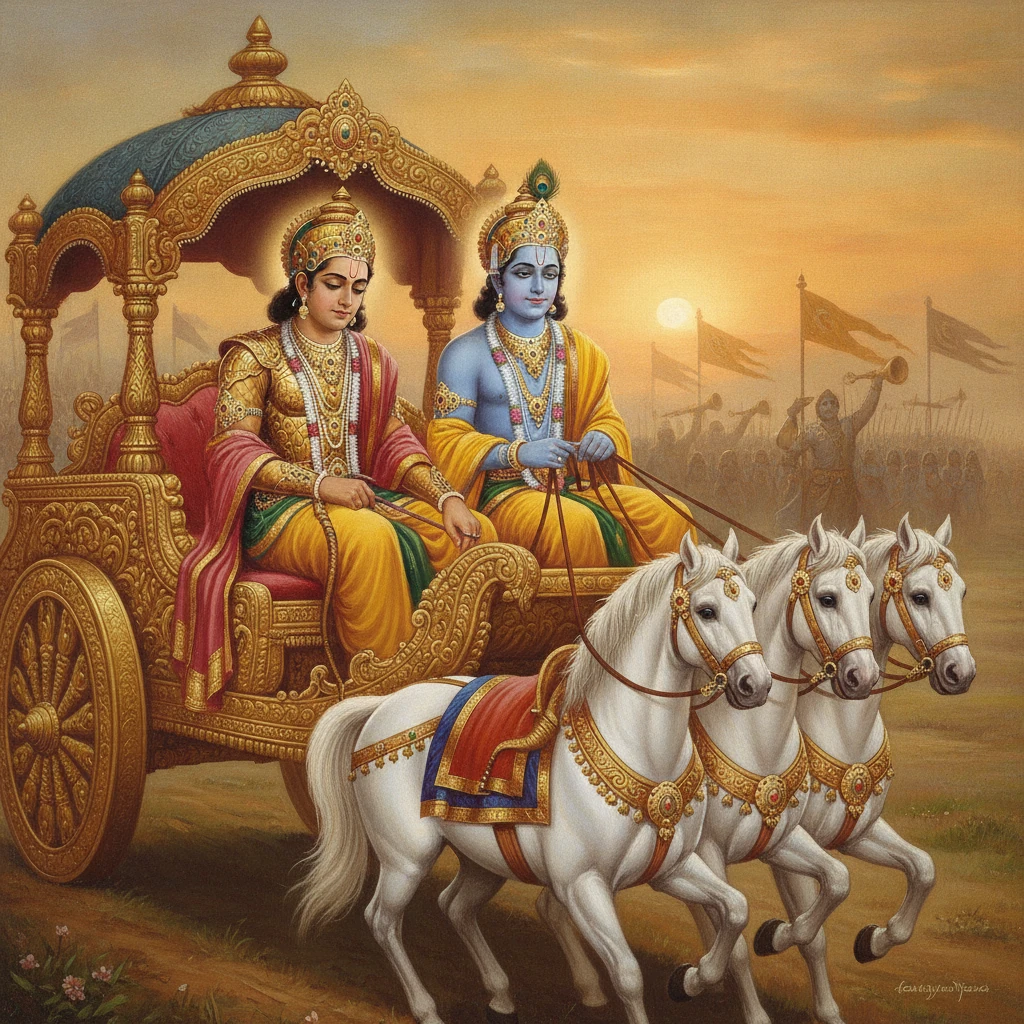
 Mahabharata · Parva 3
About the Vana Parva
The twelve years of the Pandavas’ forest exile — Arjuna’s austerities and winning of divine weapons from Shiva and the gods, many teaching-tales (Nala and Damayanti, Savitri, the Ramayana in brief), Bhima’s meeting with Hanuman, and the Yaksha’s riddles answered by Yudhishthira.
How it is read
The Vana Parva is given below in its original Sanskrit (Devanagari), numbered by chapter (adhyaya) and shloka. Read verse by verse; the Mahabharata is traditionally heard as itihasa-shravana, for dharma and discernment.
Original Text
Verses & Meaning
[ज] एवं दयूतजिताः पार्थाः कॊपिताश च दुरात्मभिः धार्तराष्ट्रैः सहामात्यैर निकृत्या दविजसत्तम
Janamejaya said: O best of the twice-born, thus defeated at dice and provoked by the evil-minded sons of Dhritarashtra along with their counsellors, through deceit — what did my forefathers, the sons of Pritha, do then?
शराविताः परुषा वाचः सृजद्भिर वैरम उत्तमम किम अकुर्वन्त कौरव्या मम पूर्वपितामहाः
Wounded by harsh words and cast into the depths of the greatest enmity, what did the Kauravas do, and what did my ancestors do in return?
कथं चैश्वर्यविभ्रष्टाः सहसा दुःखम एयुषः वने विजह्रिरे पार्थाः शक्र परतिमतेजसः
How did the sons of Pritha, whose splendor equalled Indra's, suddenly stripped of their sovereignty and plunged into sorrow, pass their time wandering in the forest?
के चैनान अन्ववर्तन्त पराप्तान वयसनम उत्तमम किमाहाराः किमाचाराः कव च वासॊ महात्मनाम
Who followed them when they fell into that great misfortune? What did they eat, how did they live, and where did those great souls dwell?
कथं दवादश वर्षाणि वने तेषां महात्मनाम वयतीयुर बराह्मणश्रेष्ठ शूराणाम अरिघातिनाम
O foremost of Brahmins, how did those twelve years pass in the forest for those great-souled heroes, slayers of their foes?
कथं च राजपुत्री सा परवरा सर्वयॊषिताम पतिव्रता महाभागा सततं सत्यवादिनी वनवासम अदुःखार्हा दारुणं परत्यपद्यत
And how did that royal princess, the foremost of all women, devoted to her husband, ever truthful and blessed, who did not deserve suffering, endure that harsh life in the forest?
एतद आचक्ष्व मे सर्वं विस्तरेण तपॊधन शरॊतुम इच्छामि चरितं भूरि दरविण तेजसाम कथ्यमानं तवया विप्र परं कौतूहलं हि मे
O ascetic of great wealth of austerity, tell me all this in detail; I wish to hear the story of those men of great valor and splendor as narrated by you, for it fills me with the deepest curiosity.
[व] एवं दयूतजिताः पार्थाः कॊपिताश च दुरात्मभिः धार्तराष्ट्रैः सहामात्यैर निर्ययुर गजसाह्वयात
Vaishampayana said: Thus defeated at dice and provoked by the evil-minded sons of Dhritarashtra and their counsellors, the sons of Pritha departed from the city named after the elephant, Hastinapura.
वर्धमानपुरद्वारेणाहिनिष्क्रम्य ते तदा उदङ्मुखः शस्त्रभृतः परययुः सह कृष्णया
Going out through the gate called Vardhamana, facing north, carrying their weapons, they departed together with Krishna (Draupadi).
इन्द्रसेनादयश चैनान भृत्याः परिचतुर्दश रथैर अनुययुः शीघ्रैः सत्रिय आदाय सर्वशः
Fourteen servants headed by Indrasena followed them swiftly in chariots, taking along all the women.
वरजतस तान विदित्वा तु पौराः शॊकाभिपीडिताः गर्हयन्तॊ ऽसकृद भीष्म विदुर दरॊण गौतमान ऊचुर विगतसंत्रासाः समागम्य परस्परम
As they departed, the citizens, overwhelmed with grief, gathered together, cast off their fear, and repeatedly reproached Bhishma, Vidura, Drona and Gautama (Kripa).
नेदम अस्ति कुलं सर्वं न वयं न च नॊ गृहाः यत्र दुर्यॊधनः पापः सौबलेयेन पालिताः कर्ण दुःखासनाभ्यां च राज्यम एतच चिकीर्षति
They said: This is no longer our family, nor are we truly ourselves, nor is this our home, where the wicked Duryodhana, upheld by Shakuni's son, seeks to seize the kingdom with the help of Karna and Duhshasana.
नॊ चेत कुलं न चाचारॊ न धर्मॊ ऽरथः कुतः सुखम यत्र पापसहायॊ ऽयं पापॊ राज्यं बुभूषते
If this is no longer our family, nor our conduct, nor our righteousness, then from where can happiness come, where this sinner, aided by another sinner, desires to rule?
दुर्यॊधनॊ गुरु दवेषी तयक्ताचार सुहृज्जनः अर्थलुब्धॊ ऽभिमानी च नीचः परकृतिनिर्घृणः
Duryodhana hates his elders, has abandoned good conduct toward his friends, is greedy for wealth, arrogant, base, and cruel by nature.
नेयम अस्ति महीकृत्स्ना यत्र दुर्यॊधनॊ नृपः साधु गच्छामहे सर्वे यत्र गच्छन्ति पाण्डवाः
This entire earth is not truly the earth so long as Duryodhana is its king; let us all go well wherever the Pandavas go.
सानुक्रॊशॊ महात्मानॊ विजितेन्द्रिय शत्रवः हरीमन्तः कीर्तिमन्तश च धर्माचार परायणाः
They (the Pandavas) are compassionate, great souls who have conquered their enemies the senses, modest, renowned, and devoted to righteous conduct.
एवम उक्त्वानुजग्मुस तान पाण्डवांस ते समेत्य च ऊचुः पराञ्जलयः सर्वे तान कुन्ती माद्रिनन्दनान
Having spoken thus, they all followed the Pandavas, and joining them, folded their hands and spoke to Kunti's sons, the sons of Madri too.
कव गमिष्यथ भद्रं वस तयक्त्वास्मान दुःखभागिनः वयम अप्य अनुयास्यामॊ यत्र यूयं गमिष्यथ
They said: Where will you go, blessings on you, leaving us who share your sorrow? We too shall follow you wherever you go.
अधर्मेण जिताञ शरुत्वा युष्मांस तयक्तघृषैः परैः उद्विग्नाः सम भृशं सर्वे नास्मान हातुम इहार्हथ
Having heard that you were unjustly defeated by shameless foes, we are all greatly troubled; you should not abandon us here.
भक्तानुरक्ताः सुहृदः सदा परियहिते रतान कुराजाधिष्ठिते राज्ये न विनश्येम सर्वशः
We are devoted followers and friends, always intent on your welfare and pleasure; we shall not perish while a kingdom ruled by an evil king remains.
शरूयतां चाभिधास्यामॊ गुणदॊषान नरर्षभाः शुभाशुभाधिवासेन संसर्गं कुरुते यथा
O bulls among men, hear what we shall say of merit and fault — how association, through good or bad influence, works its effect.
वस्त्रम आपस तिलान भूमिं गन्धॊ वासयते यथा पुष्पाणाम अधिवासेन तथा संसर्गजा गुणाः
Just as cloth, water, and sesame seeds take on fragrance when placed near flowers, so too do qualities arise from association.
मॊहजालस्य यॊनिर हि मूढैर एव समागमः अहन्य अहनि धर्मस्य यॊनिः साधु समागमः
Association with the foolish is indeed the source of the net of delusion; association with the good, day after day, is the source of righteousness.
तस्मात पराज्ञैश च वृद्धैश च सुस्वभावैस तपस्विभिः सद्भिश च सह संसर्गः कार्यः शम परायणैः
Therefore one should keep company with the wise, the elders, those of good nature, ascetics, and virtuous men devoted to peace.
येषां तरीण्य अवदातानि यॊनिर विध्या च कर्म च तान सेवेत तैः समास्या हि शास्त्रेभ्यॊ ऽपि गरीयसी
One should serve those whose birth, learning, and deeds are all pure; conversation with such men is greater even than the scriptures.
निरारम्भा हय अपि वयं पुण्यशीलेषु साधुषु पुण्यम एवाप्नुयामेह पापं पापॊपसेवनात
Even without effort, keeping company with virtuous, righteous people, we shall attain merit here, just as association with sin brings sin.
असतां दर्शनात सपर्शात संजल्पन सहासनत धर्माचारः परहीयन्ते न च सिध्यन्ति मानवाः
By seeing, touching, conversing with, and sitting beside the wicked, righteous conduct is lost and men do not succeed.
बुद्धिश च हीयते पुंसां नीचैः सह समागमात मध्यमैर मध्यतां याति शरेष्ठतां याति चॊत्तमैः
A man's intellect is diminished by association with the base; it becomes middling through association with the mediocre, and excellent through association with the excellent.
ये गुणाः कीर्तिता लॊके धर्मकामार्थ संभवाः लॊकाचारात्म संभूता वेदॊक्ताः शिष्टसंमताः
The qualities praised in this world, born of righteousness, desire and wealth rightly pursued, arising from worldly and spiritual conduct, taught in the Vedas and approved by the wise —
ते युष्मासु समस्ताश च वयस्ताश चैवेह सद्गुणाः इच्छामॊ गुणवन मध्ये वस्तुं शरेयॊ ऽभिकाङ्क्षिणः
All these good qualities, whether combined or separate, are present in you; we wish to dwell among the virtuous, desiring only what is good.
[य] धन्या वयं यद अस्माकं सनेहकारुण्ययन्त्रिताः असतॊ ऽपि गुणान आहुर बराह्मण परमुखाः परजाः
Yudhishthira said: Blessed are we, that even affection and compassion bound by love, these Brahmin-led people speak of virtues in me though I have none.
तद अहं भरातृसहितः सर्वान विज्ञापयामि वः नान्यथा तद धि कर्तव्यम अस्मत सनेहानुकम्पया
So I, along with my brothers, ask you all to consider this — it must not be done otherwise, out of your affection and compassion for us.
भीष्मः पितामहॊ राजा विदुरॊ जननी च मे सुहृज्जनश च परायॊ मे नगरे नागसाह्वये
My grandfather King Bhishma, Vidura, and my mother, and most of my well-wishers remain in the city named after the elephant (Hastinapura).
ते तव अस्मद्धितकामार्थं पालनीयाः परयत्नतः युष्माभिः सहितैः सर्वैः शॊकसंताप विह्वलाः
They, overwhelmed by grief and sorrow, must be carefully protected by all of you together, for the sake of our welfare.
निवर्ततागता दूरं समागमन शापिताः सवजने नयासभूते मे कार्या सनेहान्विता मतिः
Turn back — you have come far enough; I release you from this meeting; your loving thought should now be directed toward my kin, whom I leave in your trust.
एतद धि मम कार्याणां परमं हृदि संस्थितम सुकृतानेन मे तुष्टिः सत्काराश च भविष्यति
This indeed is foremost among my duties, held firmly in my heart; by your doing this good deed, I shall find contentment and honor.
[व] तथानुमन्त्रितास तेन धर्मराजेन ताः परजाः चक्रुर आर्तस्वरं घॊरं हा राजन्न इति दुःखिताः
Vaishampayana said: Thus addressed by the righteous king, those people cried out in terrible, sorrowful voices, saying, "Alas, O king!" grief-stricken.
गुणान पार्थस्य संस्मृत्य दुःखार्ताः परमातुराः अकामाः संन्यवर्तन्त समागम्याथ पाण्डवान
Recalling the virtues of the son of Pritha, grief-stricken and deeply distressed, they reluctantly turned back after meeting with the Pandavas.
निवृत्तेषु तु पौरेषु रथान आस्थाय पाण्डवाः परजग्मुर जाह्नवीतीरे परमाणाख्यं महावटम
When the citizens had turned back, the Pandavas mounted their chariots and proceeded to the great banyan tree known as Pramana on the bank of the Ganga.
तं ते दिवसशेषेण वटं गत्वा तु पाण्डवाः ऊषुस तां रजनीं वीराः संस्पृश्य सलिलं शुचि उदकेनैव तां रात्रिम ऊषुस ते दुःखकर्शिताः
Reaching that banyan tree with the remaining daylight, those heroes, touching the pure water, spent that night there, sustained only by water, worn down by grief.
अनुजग्मुश च तत्रैतान सनेहात के चिद दविजातयः सग्नयॊ ऽनग्नयश चैव सशिष्य गणबान्धवाः स तैः परिवृतॊ राजा शुशुभे बरह्मवादिभिः
Some Brahmins, out of affection, followed them there — some who kept sacred fires, some who did not, along with their disciples and kinsmen; the king shone surrounded by these speakers of Brahman.
तेषां परादुष्कृताग्नीनां मुहूर्ते रम्यदारुणे बरह्मघॊषपुरस्कारः संजल्पः समजायत
At that pleasant yet mournful hour, when their sacrificial fires had been kindled, conversation began there, led by the sound of Vedic recitation.
राजानं तु कुरुश्रेष्ठं ते हंसमधुरस्वराः आश्वासयन्तॊ विप्राग्र्याः कषपां सर्वां वयनॊदयन
Those foremost Brahmins, with voices sweet as swans, consoling the best of the Kurus, spent the whole night in this way.
[व] परभातायां तु शर्वर्यां तेषाम अक्लिष्टकर्मणाम वनं यियासतां विप्रास तस्थुर भिक्षा भुजॊ ऽगरतः तान उवाच ततॊ राजा कुन्तीपुत्रॊ युधिष्ठिरः
Vaishampayana said: When that night had passed into dawn, as those Brahmins who lived on alms stood before those tireless heroes ready to go into the forest, King Yudhishthira, son of Kunti, spoke to them.
वयं हि हृतसर्वस्वा हृतराज्या हृतश्रियः फलमूलामिषाहारा वनं यास्याम दुःखिताः
We, deprived of all our wealth, our kingdom, and our royal fortune, shall go into the forest in sorrow, living on fruits, roots, and meat.
वनं च दॊषबहुलं बहु वयालसरीसृपम परिक्लेशश च वॊ मन्ये धरुवं तत्र भविष्यति
The forest is full of dangers, with many wild beasts and serpents; I think hardship will certainly befall you there.
बराह्मणानां परिक्लेशॊ दैवतान्य अपि सादयेत किं पुनर माम इतॊ विप्रा निवर्तध्वं यथेष्टतः
Even hardship to Brahmins can afflict the gods themselves — how much more so through me. So, O Brahmins, please turn back as you wish.
[बर] गतिर या भवतां राजंस तां वयं गन्तुम उद्यताः नार्हथास्मान परित्यक्तुं भक्तान सद धर्मदर्शिनः
The Brahmins said: O king, we are ready to go wherever you go; you, a devoted upholder of true righteousness, should not abandon us, your devotees.
अनुकम्पां हि भक्तेषु दैवतान्य अपि कुर्वते विशेषतॊ बराह्मणेषु सद आचारावलम्बिषु
Even the gods show compassion to their devotees, especially to Brahmins who steadfastly hold to righteous conduct.
[य] ममापि परमा भक्तिर बराह्मणेषु सदा दविजाः सहायविपरिभ्रंशस तव अयं सादयतीव माम
Yudhishthira said: O twice-born ones, I too have always had the deepest devotion to Brahmins, but this loss of companions and resources seems to be afflicting me even now, as I face you.
आहरेयुर हि मे ये ऽपि फलमूलमृगांस तथा त इमे शॊकजैर दुःखैर भरातरॊ मे विमॊहिताः
Those very brothers of mine who once could gather fruits, roots, and game for me are now bewildered with grief-born sorrow.
दरौपद्या विप्रकर्षेण राज्यापहरणेन च दुःखान्वितान इमान कलेशैर नाहं यॊक्तुम इहॊत्सहे
Because of Draupadi's dragging and the seizure of the kingdom, my brothers are already so afflicted with sorrow that I cannot bring myself to burden them further with the troubles of feeding you all.
[बर] अस्मत पॊषणजा चिन्ता मा भूत ते हृदि पार्थिव सवयम आहृत्य वन्यानि अनुयास्यामहे वयम
The Brahmins said: O king, let no worry about our sustenance be in your heart; we shall follow you, gathering forest produce ourselves.
अनुध्यानेन जप्येन विधास्यामः शिवं तव कथाभिश चानुकूलाभिः सह रंस्यामहे वने
Through meditation and silent recitation of prayers, we shall bring you well-being, and we shall find joy in the forest with pleasant conversation together.
[य] एवम एतन न संदेहॊ रमेयं बराह्मणैः सह नयून भावात तु पश्यामि परत्यादेशम इवात्मनः
Yudhishthira said: If this is so, there is no doubt I would rejoice to dwell among Brahmins; but I feel it would be a kind of rejection of my own worth, seeing my diminished state.
कथं दरक्ष्यामि वः सर्वान सवयम आहृत भॊजनान मद्भक्त्या कलिश्यतॊ ऽनर्हान धिक पापान धृतराष्ट्रजान
How shall I bear to see all of you, who deserve better, gathering your own food and enduring hardship purely out of devotion to me? Shame upon the sinful sons of Dhritarashtra!
[व] इत्य उक्त्वा स नृपः शॊचन निषसाद महीतले तम अध्यात्मरतिर विद्वाञ शौनकॊ नाम वै दविजः यॊगे सांख्ये च कुशलॊ राजानम इदम अब्रवीत
Vaishampayana said: Having said this, the grieving king sat down upon the ground; then a learned Brahmin named Shaunaka, devoted to spiritual contemplation and skilled in Yoga and Sankhya, spoke these words to the king.
शॊकस्थान सहस्राणि भयस्थान शतानि च दिवसे दिवसे मूढम आविशन्ति न पण्डितम
Thousands of causes of grief and hundreds of causes of fear afflict the foolish man day after day, but not the wise.
न हि जञानविरुद्धेषु बहुदॊषेषु कर्मसु शरेयॊ घातिषु सज्जन्ते बुद्धिमन्तॊ भवद्विधाः
Wise men like you do not become attached to actions filled with faults, contrary to true knowledge, and destructive of one's true good.
अष्टाङ्गां बुद्धिम आहुर यां सर्वाश्रेयॊ विघातिनीम शरुतिस्मृतिसमायुक्तां सा राजंस तवय्य अवस्थिता
They speak of an eightfold wisdom that averts every misfortune, joined with the teachings of the Shrutis and Smritis; O king, that wisdom resides firmly in you.
अर्थकृच्छ्रेषु दुर्गेषु वयापत्सु सवजनस्य च शारीर मानसैर दुःखैर न सीदन्ति भवद्विधाः
In financial troubles, in dangers, and in misfortunes befalling their own kin, men like you do not sink under bodily and mental suffering.
शरूयतां चाभिधास्यामि जनकेन यथा पुरा आत्मव्यवस्थान करा गीताः शलॊका महात्मना
Listen, I shall now tell you the verses once sung long ago by King Janaka, the great soul, teaching how to steady one's own mind.
मनॊ देहसमुत्थाभ्यां दुःखाभ्याम अर्दितं जगत तयॊर वयास समासाभ्यां शमॊपायम इमं शृणु
The world is afflicted by two kinds of suffering — that born of the mind and that born of the body; hear now, briefly and in detail, the remedy for both.
वयाधेर अनिष्ट संस्पर्शाच छरमाद इष्टविवर्जनात दुःखं चतुर्भिर शारीरं कारणैः संप्रवर्तते
Bodily suffering arises from four causes: contact with what is unwanted, exertion, and separation from what is desired.
तद आशु परतिकाराच च सततं चाविचिन्तनात आधिव्याधिप्रशमनं करियायॊगद्वयेन तु
Mental and bodily afflictions are pacified through two means — by swift remedy, and by ceasing constantly to dwell upon them.
मतिमन्तॊ हय अतॊ वैद्याः शमं पराग एव कुर्वते मानसस्य परियाख्यानैः संभॊगॊपनयैर नृणाम
Therefore, wise physicians first bring peace to the mind of men through pleasing words and the offering of comforts.
मानसेन हि दुःखेन शरीरम उपतप्यते अयः पिण्डेन तप्तेन कुम्ब्भ संस्थाम इवॊदकम
For the body is scorched by mental suffering just as water is heated in a pot by a burning iron ball placed within it.
मानसं शमयेत तस्माज जञानेनागिम इवाम्बुना परशान्ते मानसे दुःखे शारीरम उपशाम्यति
Therefore one should pacify the mind through knowledge, just as fire is quenched by water; when mental suffering is fully calmed, bodily suffering also subsides.
मनसॊ दुःखमूलं तु सनेह इत्य उपलभ्यते सनेहात तु सज्जते जन्तुर दुःखयॊगम उपैति च
It is understood that attachment is the root of mental suffering; through attachment a being becomes ensnared and enters into union with suffering.
सनेहमूलानि दुःखानि सनेहजानि भयानि च शॊकहर्षौ तथायासः सर्वं सनेहात परवर्तते
Sorrows and the fears born of it have attachment as their root; grief, joy and weariness — all arise from attachment.
सनेहत करण रागश च परजज्ञे वैषयस तथा अश्रेयस्काव उभाव एतौ पूर्वस तत्र गुरुः समृतः
From attachment arise both fondness for the senses and craving for sense-objects; both of these are inauspicious, and of the two, the former is considered the graver.
कॊटराग्निर यथाशेषं समूलं पादपं दहेत धर्मार्थिनं तथाल्पॊ ऽपि रागदॊषॊ विनाशयेत
Just as a fire hidden in a hollow can burn a whole tree down to its roots, so even a small fault of attachment can destroy one who seeks righteousness.
विप्रयॊगे न तु तयागी दॊषदर्शी समागमात विरागं भजते जन्तुर निर्वैरॊ निष्परिग्रहः
One who has severed attachment does not grieve at separation, for having seen its faults through association, a being who is free of hatred and possessions attains true detachment.
तस्मात सनेहं सवपक्षेभ्यॊ मित्रेभ्यॊ धनसंचयात सवशरीरसमुत्थं तु जञानेन विनिवर्तयेत
Therefore one should, through knowledge, withdraw the attachment that arises from one's own body, from that born toward one's kin, friends, and accumulated wealth.
जञानान्वितेषु मुख्येषु शास्त्रज्ञेषु कृतात्मसु न तेषु सज्जते सनेहः पद्मपत्रेष्व इवॊदकम
Among the foremost men — knowledgeable, versed in scripture, and self-controlled — attachment does not cling, just as water does not cling to a lotus leaf.
रागाभिभूतः पुरुषः कामेन परिकृष्यते इच्छा संजायते तस्य ततस तृष्णा परवर्तते
A man overpowered by attachment is dragged along by desire; from him arises longing, and from that longing arises craving.
तृष्णा हि सर्वपापिष्ठा नित्यॊद्वेग करी नृणाम अधर्मबहुला चैव घॊरा पापानुबन्धिनी
Craving is indeed the most sinful of all things, forever causing anxiety in men; it is full of unrighteousness, dreadful, and bound up with further sin.
या दुस्त्यजा दुर्मतिभिर या न जीर्यति जीर्यतः यॊ ऽसौ पराणान्तिकॊ रॊगस तां तृष्णां तयजतः सुखम
It is hard for the foolish to abandon, and does not age even as one grows old; it is a disease that ends only in death — happy is he who forsakes that craving.
अनाद्य अन्ता तु सा तृष्णा अन्तर देहगता नृणाम विनाशयति संभूता अयॊनिज इवानलः
That craving, without beginning or end, dwelling within the bodies of men, once born, destroys them like a fire kindled without any visible source.
यथैधः सवसमुत्थेन वह्निना नाशम ऋच्छति तथाकृतात्मा लॊभेन सहजेन विनश्यति
Just as fuel is destroyed by the very fire that arises from it, so too an unrestrained man is destroyed by the greed that is born within himself.
राजतः सलिलाद अग्नेश चॊरतः सवजनाद अपि भयम अर्थवतां नित्यं मृत्यॊः पराणभृताम इव
A man of means lives always in fear of the king, of water and fire, of thieves, and even of his own kin — just as living beings fear death.
यथा हय आमिषम आकाशे पक्षिभिः शवापदैर भुवि भक्ष्यते सलिले मत्स्यैस तथा सर्वेण वित्तवान
Just as flesh in the sky is preyed upon by birds, on earth by wild beasts, and in water by fish, so a wealthy man is devoured by everyone around him.
अर्थ एव हि केषां चिद अनर्थॊ भविता नृणाम अर्थश्रेयसि चासक्तॊ न शरेयॊ विन्दते नरः तस्माद अर्थागमाः सर्वे मनॊ मॊहविवर्धनाः
For some men wealth itself becomes their ruin; one attached to the pursuit of riches never attains true good — therefore all acquisition of wealth only increases delusion of mind.
कार्पण्यं दर्पमानौ च भयम उद्वेग एव च अर्थजानि विदुः पराज्ञा दुःखान्य एतानि देहिनाम
The wise know that meanness, pride, arrogance, fear and anxiety are all sufferings born of wealth for embodied beings.
अर्थस्यॊपार्जने दुःखं पालने च कषये तथा नाशे दुःखं वयये दुःखं घनन्ति चैवार्थ कारणात
There is sorrow in earning wealth, sorrow in protecting it, sorrow in its loss, and sorrow in spending it — men suffer on account of wealth at every stage.
अर्था दुःखं परित्यक्तुं पालिताश चापि ते ऽसुखाः दुःखेन चाधिगम्यन्ते तेषां नाशं न चिन्तयेत
It is painful to give wealth away, and even when guarded it brings no true happiness; it is acquired only through suffering, so one should not grieve over its loss.
असंतॊष परा मूढाः संतॊषं यान्ति पण्डिताः अन्तॊ नास्ति पिपासायाः संतॊषः परमं सुखम
The foolish are devoted to insatiable craving while the wise attain contentment; thirst for possessions has no end, but contentment is the highest happiness.
तस्मात संतॊषम एवेह धनं पश्यन्ति पण्डिताः अनित्यं यौवनं रूपं जीवितं दरव्यसंचयः ऐश्वर्यं परिय संवासॊ गृध्येद एषु न पण्डितः
Therefore the wise regard contentment alone as true wealth in this world; youth, beauty, life, accumulated riches, prosperity and the company of loved ones are all impermanent — the wise do not covet these.
तयजेत संचयांस तस्मात तज्जं कलेशं सहेत कः न हि संचयवान कश चिद दृश्यते निरुपद्रवः
One should therefore give up hoarding — who would bear the affliction it causes? No one who possesses great accumulated wealth is ever seen free of trouble.
अतश च धर्मिभिः पुम्भिर अनीहार्थः परशस्यते परक्षालनाद धि पङ्कस्य दूराद अस्पर्शनं वरम
Hence righteous men praise a life free of the desire for wealth, for it is better to avoid mud entirely from a distance than to wash it off after getting soiled.
युधिष्ठिरैवम अर्थेषु न सपृहां कर्तुम अर्हसि धर्मेण यदि ते कार्यं विमुक्तेच्छॊ भवार्थतः
O Yudhishthira, thus you ought not to crave wealth; if your purpose truly lies in dharma, then free yourself of desire for riches.
[य] नार्थॊपभॊग लिप्सार्थम इयम अर्थेप्सुता मम भरणार्थं तु विप्राणां बरह्मन काङ्क्षे न लॊभतः
[Yudhishthira said] My desire for wealth is not for my own enjoyment of it, O Brahman — I seek it only to support the brahmanas, not out of greed.
कथं हय अस्मद्विधॊ बरह्मन वर्तमानॊ गृहाश्रमे भरणं पालनं चापि न कुर्याद अनुयायिनाम
How, O Brahman, could someone like me, living in the householder's stage, fail to provide for and protect those who depend upon me?
संविभागॊ हि भूतानां सर्वेषाम एव शिष्यते तथैवॊपचमानेभ्यः परदेयं गृहमेधिना
It is enjoined that a share of one's possessions must go to all beings; a householder should give to those who come to serve or seek him.
तृणानि भूमिर उदकं वाक चतुर्थी च सूनृता सताम एतानि गेहेषु नॊच्छिद्यन्ते कदा चन
Grass for a seat, ground to sit on, water, and fourthly kind speech — these four things should never be lacking in the homes of the virtuous.
देयम आर्तस्य शयनं सथितश्रान्तस्य चासनम तृषितस्य च पानीयं कषुधितस्य च भॊजनम
A bed should be given to the distressed, a seat to one tired of standing, water to the thirsty, and food to the hungry.
चक्षुर अद्यान मनॊ दद्याद वाचं दद्याच च सूनृताम परत्युद्गम्याभिगमनं कुर्यान नयायेन चार्चनम
One should offer a gaze from the eyes, goodwill from the mind, and kind words from speech; one should rise to greet a guest, go forward to receive him, and honor him according to custom.
अघि हॊत्रम अनड्वांश च जञातयॊ ऽतिथिबान्धवाः पुत्रदारभृताश चैव निर्दहेयुर अपूजिताः
If left unhonored, the sacred fire, the bull, kinsmen, guests, relatives, and those dependent on one — wife and sons — would consume the householder with their displeasure.
नात्मार्थं पाचयेद अन्नं न वृथा घातयेत पशून न च तत सवयम अश्नीयाद विधिवद यन न निर्वपेत
One should not cook food only for oneself, nor kill animals uselessly, nor eat anything oneself that has not first been properly offered in sacrifice.
शवभ्यश च शवपचेभ्यश च वयॊभ्यश चावपेद भुवि वैश्वदेवं हि नामैतत सायंप्रातर विधीयते
One should scatter food on the ground for dogs, outcastes, and birds — this offering, called Vaishvadeva, is enjoined to be performed morning and evening.
Quick guide
Before you begin
Bhav
Benefits devotees pray for
FAQ
Common questions
What is the Vana Parva of the Mahabharata about?
The twelve years of the Pandavas’ forest exile — Arjuna’s austerities and winning of divine weapons from Shiva and the gods, many teaching-tales (Nala and Damayanti, Savitri, the Ramayana in brief), Bhima’s meeting with Hanuman, and the Yaksha’s riddles answered by Yudhishthira.
What is the Mahabharata?
The Mahabharata is the great Sanskrit itihasa (epic) composed by Maharishi Vyasa, telling of the Kuru dynasty and the war between the Pandavas and the Kauravas at Kurukshetra. In its eighteen parvas (books) it contains the Bhagavad Gita, the Vishnu Sahasranama and a vast treasury of dharma, and is revered as the fifth Veda.
Offer a path or seva in your name
Have a Gita paath or seva performed in your naam-gotra for peace and clarity. Book a seva, or read on in Sanatan Sahitya.