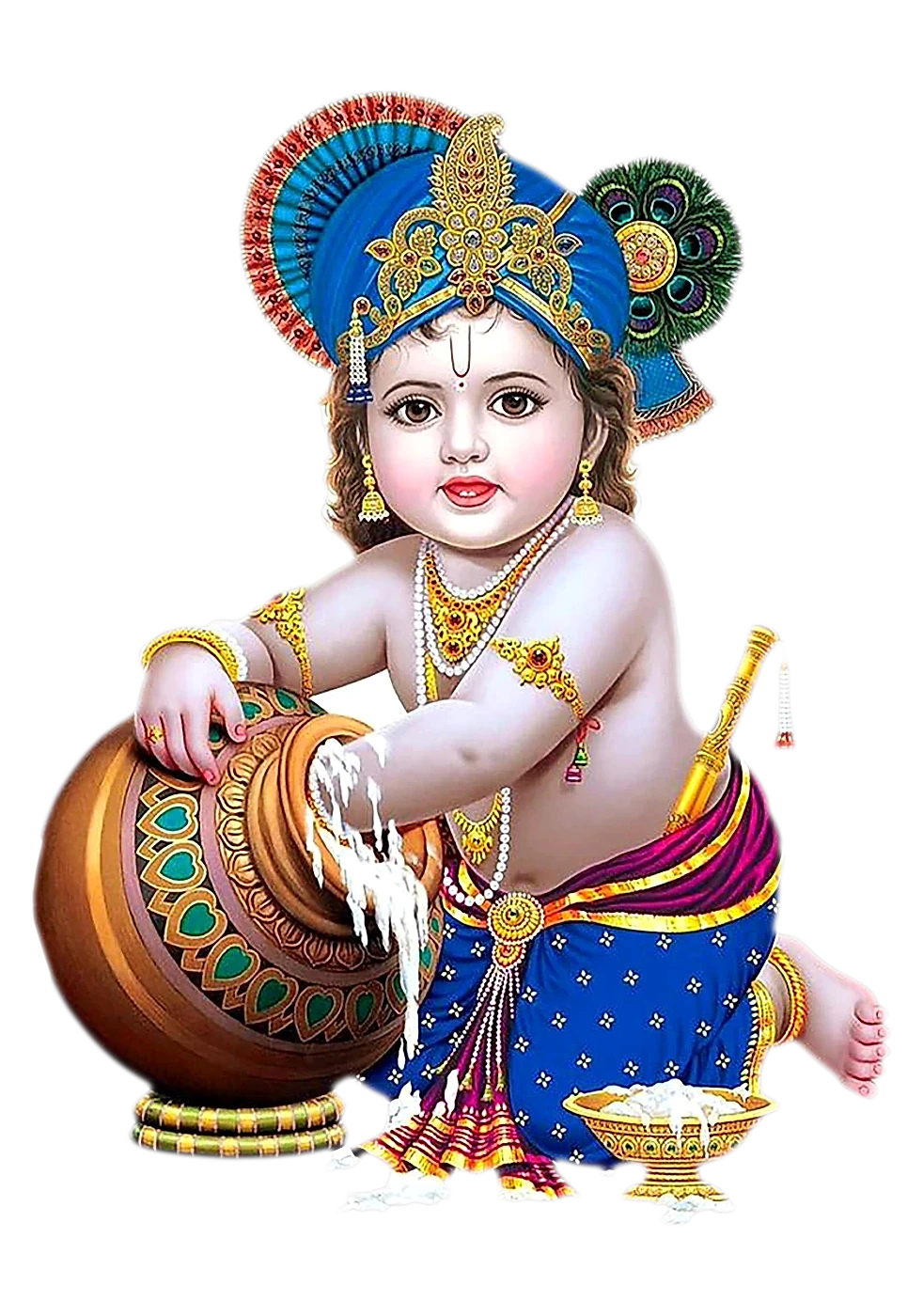

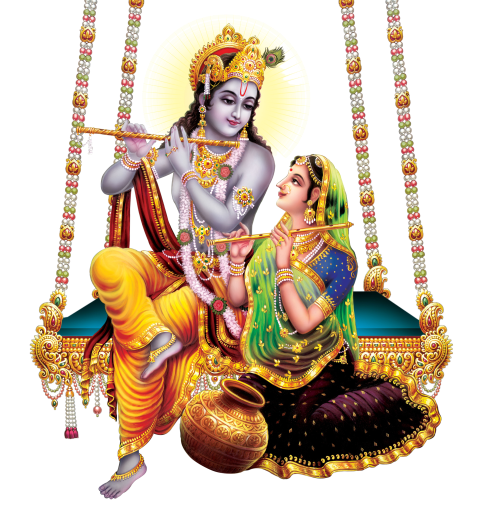
 यदुनंदन, नटनागर, गीता के प्रवक्ता
The complete Krishna Chalisa in Devanagari with meaning, vidhi and benefits, tracing the Leelas of Bhagwan Krishna from Vrindavan to the Kurukshetra battlefield.
Bhagwan Krishna, the eighth avatar of Vishnu, is worshipped as the playful child of Vrindavan, the protector of dharma, and the divine charioteer who gave the world the Bhagavad Gita. The Krishna Chalisa, composed by the devotee Sundardas, is a joyous recounting of his childhood leelas, his heroic deeds, and his compassion toward every sincere devotee.
Complete Krishna Chalisa (Devanagari)
बंशी शोभित कर मधुर, नील जलद तन श्याम। अरुण अधर जनु बिम्बफल, नयन कमल अभिराम॥ पूर्ण इन्द्र, अरविन्द मुख, पीताम्बर शुभ साज। जय मनमोहन मदन छवि, कृष्णचन्द्र महाराज॥
जय यदुनंदन जय जगवंदन। जय वसुदेव देवकी नन्दन॥ जय यशुदा सुत नन्द दुलारे। जय प्रभु भक्तन के दृग तारे॥
जय नटनागर, नाग नथइया। कृष्ण कन्हइया धेनु चरइया॥ पुनि नख पर प्रभु गिरिवर धारो। आओ दीनन कष्ट निवारो॥
वंशी मधुर अधर धरि टेरौ। होवे पूर्ण विनय यह मेरौ॥ आओ हरि पुनि माखन चाखो। आज लाज भारत की राखो॥
गोल कपोल, चिबुक अरुणारे। मृदु मुस्कान मोहिनी डारे॥ राजित राजिव नयन विशाला। मोर मुकुट वैजन्तीमाला॥
कुंडल श्रवण, पीत पट आछे। कटि किंकिणी काछनी काछे॥ नील जलज सुन्दर तनु सोहे। छबि लखि, सुर नर मुनिमन मोहे॥
मस्तक तिलक, अलक घुँघराले। आओ कृष्ण बांसुरी वाले॥ करि पय पान, पूतनहि तार्यो। अका बका कागासुर मार्यो॥
मधुवन जलत अगिन जब ज्वाला। भै शीतल लखतहिं नंदलाला॥ सुरपति जब ब्रज चढ़्यो रिसाई। मूसर धार वारि वर्षाई॥
लगत लगत व्रज चहन बहायो। गोवर्धन नख धारि बचायो॥ लखि यसुदा मन भ्रम अधिकाई। मुख मंह चौदह भुवन दिखाई॥
दुष्ट कंस अति उधम मचायो। कोटि कमल जब फूल मंगायो॥ नाथि कालियहिं तब तुम लीन्हें। चरण चिह्न दै निर्भय कीन्हें॥
करि गोपिन संग रास विलासा। सब की पूरण करी अभिलाषा॥ केतिक महा असुर संहार्यो। कंसहि केस पकड़ि दै मार्यो॥
मात पिता की बन्दि छुड़ाई। उग्रसेन कहँ राज दिलाई॥ महि से मृतक छहों सुत लायो। मातु देवकी शोक मिटायो॥
भौमासुर मुर दैत्य संहारी। लाये षट दश सहस कुमारी॥ दै भीमहिं तृण चीर सहारा। जरासिंधु राक्षस कहँ मारा॥
असुर बकासुर आदिक मार्यो। भक्तन के तब कष्ट निवार्यो॥ दीन सुदामा के दुःख टार्यो। तंदुल तीन मूंठ मुख डार्यो॥
प्रेम के साग विदुर घर माँगे। दर्योधन के मेवा त्यागे॥ लखी प्रेम की महिमा भारी। ऐसे श्याम दीन हितकारी॥
भारत के पारथ रथ हाँके। लिये चक्र कर नहिं बल थाके॥ निज गीता के ज्ञान सुनाए। भक्तन हृदय सुधा वर्षाए॥
मीरा थी ऐसी मतवाली। विष पी गई बजाकर ताली॥ राना भेजा साँप पिटारी। शालीग्राम बने बनवारी॥
निज माया तुम विधिहिं दिखायो। उर ते संशय सकल मिटायो॥ तब शत निन्दा करि तत्काला। जीवन मुक्त भयो शिशुपाला॥
जबहिं द्रौपदी टेर लगाई। दीनानाथ लाज अब जाई॥ तुरतहि वसन बने नंदलाला। बढ़े चीर भै अरि मुँह काला॥
अस अनाथ के नाथ कन्हइया। डूबत भंवर बचावइ नइया॥ सुन्दरदास आस उर धारी। दयादृष्टि कीजै बनवारी॥
नाथ सकल मम कुमति निवारो। क्षमहु बेगि अपराध हमारो॥ खोलो पट अब दर्शन दीजै। बोलो कृष्ण कन्हइया की जै॥
यह चालीसा कृष्ण का, पाठ करै उर धारि। अष्ट सिद्धि नवनिधि फल, लहै पदारथ चारि॥
Meaning
Opening Doha: The devotee describes Krishna's beautiful form — the flute at his lips, his dark cloud-hued body, coral-red lips, lotus eyes, moon-like face and yellow silk garments — and salutes him as the enchanting Krishnachandra Maharaj, praying for his protection.
Verses 1-3: Krishna is hailed as the joy of the Yadu clan, worshipped by the world, son of Vasudev and Devaki, the beloved foster son of Nanda and Yashoda, the protector of his devotees. He is remembered as the playful cowherd who subdued the serpent Kaliya in the Yamuna, and who lifted Govardhan on his little finger. The devotee prays for him to come, remove sorrow, and taste the butter offered with love, protecting the honour of his devotees.
Verses 4-9: His enchanting form is described in loving detail — rounded cheeks, a gentle smile, wide lotus eyes, a peacock-feather crown, garlands, earrings and yellow garments. As a child he drank the poisoned milk of the demoness Putana yet survived, and destroyed the demons Aghasura and Bakasura sent by Kansa. When the forest of Madhuvan caught fire, he cooled it for the safety of Nandalala; when Indra, angered, poured torrential rain upon Vraj, Krishna lifted Govardhan hill on his fingertip to shelter the villagers, and showed Mother Yashoda the entire universe within his mouth.
Verses 9-13: He tamed the serpent Kaliya in the Yamuna and made him leave, marking the riverbank with his footprints as a sign of protection. He performed the divine Raas Leela with the gopis, fulfilling their devotion, slew numerous great demons, and finally killed the tyrant Kansa by his hair, freeing his own parents from prison and restoring King Ugrasen to his throne. He brought back to life the six sons of Devaki who had died, removing his mother's sorrow. He destroyed the demons Bhaumasura and Mura, freeing sixteen thousand princesses, and gave Bhima the strength to slay Jarasandha.
Significance and Benefits
The Krishna Chalisa is chanted by devotees seeking joy, protection, guidance in difficult decisions, and freedom from fear. Sincere recitation is believed to:
Bring a sense of playful trust and surrender (bhakti), easing anxiety about outcomes beyond one's control.
Offer protection in difficulties, echoing Krishna's role as protector of Sudama, Draupadi and countless devotees in the scriptures.
Deepen clarity of purpose, inspired by the wisdom of the Bhagavad Gita that Krishna delivered on the battlefield.
Bring joy, especially when chanted around Janmashtami, in the company of family or during evening aarti.
How and When to Chant (Vidhi)
Best day: Janmashtami is the most significant occasion, along with Wednesdays, which are traditionally associated with Krishna worship.
Best time: Early morning after bathing, or in the evening during the cowdust hour (godhuli vela), when Krishna is believed to return home with the cows in Vrindavan tradition.
Preparation: Offer tulsi leaves, a little makhan-mishri (butter and sugar) if available, and light a diya before an image or murti of Krishna.
Method: Recite the chalisa once or a few times with a joyful, devotional mood rather than a solemn one — Krishna bhakti is traditionally associated with warmth and playfulness (madhurya bhava).
Conclude with the Krishna aarti if possible, and share the offered prasad with family.
Dos and Don'ts
Do chant with a light, joyful heart — excessive formality is not required in Krishna bhakti, though respect always is.
Do offer tulsi leaves if available, as they are considered especially dear to Krishna.
Do use the chalisa as a source of courage during difficult decisions, remembering the Gita's teaching of doing one's duty without attachment to results.
Avoid chanting mechanically without reflecting on the meaning of the leelas being recited.
Avoid neglecting ethical conduct in daily life while expecting devotion alone to resolve every difficulty.
Mahatmya (Glory of the Chalisa)
Devotional tradition holds that the sincere love of a devotee matters more to Krishna than ritual wealth — as shown in his acceptance of Sudama's humble rice and Vidura's simple saag over royal delicacies. This chalisa is often recited by families with children on Janmashtami night, alongside cradle-rocking of the infant Krishna murti, as a way of passing down both the stories and the values of humility, courage and devotion found in his life.
Frequently Asked Questions
Who composed the Krishna Chalisa? Traditional sources attribute the Krishna Chalisa to the devotee-poet Sundardas, whose name appears in the later verses of the hymn.
Which day is best for chanting the Krishna Chalisa? Janmashtami is the most significant day, and Wednesdays are also traditionally associated with Krishna worship throughout the year.
Can it be chanted along with the Bhagavad Gita or Vishnu Sahasranama? Yes, many devotees pair the Krishna Chalisa with a few verses of the Gita or the Vishnu Sahasranama as part of a fuller daily practice.
What benefit does the closing doha mention? It states that sincere reciters attain the eight siddhis, nine treasures and the four purusharthas of dharma, artha, kama and moksha, representing complete well-being.
Quick guide
Before you begin
Mantra
Krishna mantra
Om Kleem Krishnaya Namah
Chant with love and surrender, especially before Krishna katha, aarti, or bhog.
Bhav
Benefits devotees pray for
FAQ
Common questions
Who composed the Krishna Chalisa?
Traditional sources attribute it to the devotee-poet Sundardas, named later in the hymn.
Which day is best to chant?
Janmashtami is most significant, and Wednesdays are also traditionally linked to Krishna worship.
Can it be paired with the Bhagavad Gita?
Yes, many devotees recite it alongside a few Gita verses or the Vishnu Sahasranama.
What does the closing doha promise?
It states sincere reciters attain the eight siddhis, nine treasures and the four purusharthas.
Seek Bhagwan Krishna's Blessings Through a Sacred Puja
Let our pandits perform an authentic Krishna Puja with sankalp in your name and gotra, especially meaningful around Janmashtami or new beginnings.