

 Bal Brahmachari Ka Avatar
The complete birth story, vrat katha and puja vidhi of Hanuman Jayanti, celebrating the divine appearance of Bhagwan Hanuman, the ultimate embodiment of devotion and strength.
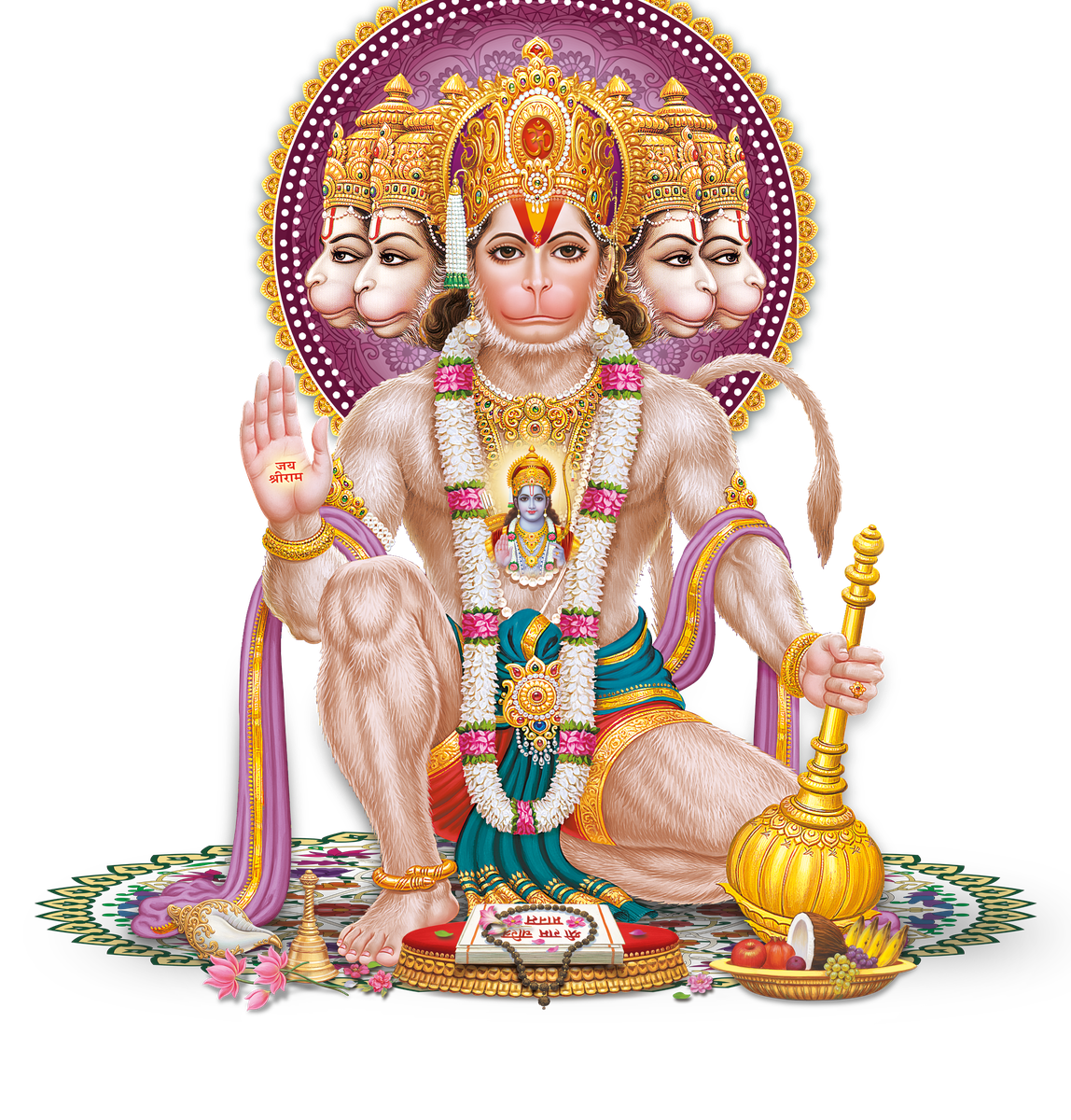
Hanuman Jayanti celebrates the divine birth of Bhagwan Hanuman, the eternal embodiment of devotion, strength, wisdom and selfless service, revered across Sanatan Dharma as the greatest devotee of Bhagwan Ram. While the most widely observed date in North India falls on the Purnima (full moon) of Chaitra month, some regional traditions, particularly in parts of South India, observe it on other dates such as Vaishakh Krishna Chaturdashi or Ashwin, reflecting the vast devotional geography of Hanuman worship across the country. Regardless of the date observed locally, the katha and spiritual essence of the day remain the same.
The Tapasya of Mata Anjana
The story of Hanuman's birth begins with Anjana, an apsara who, due to a sage's curse, was born on earth as a vanari, destined to remain in this form until she gave birth to an avatar of Lord Shiva. Anjana married the powerful vanar chief Kesari, and together they performed intense tapasya, praying fervently for a son who would embody extraordinary strength and devotion. Anjana is said to have observed severe penance for twelve years, meditating upon Lord Shiva with unwavering focus, seeking his blessing to be freed from her curse through the birth of a divine son.
The Putrakameshti Yagya Connection
Hanuman's birth is intricately woven into the same divine event that led to the birth of Bhagwan Ram. When King Dashrath performed the Putrakameshti Yagya and received the sacred kheer to bless his three queens, it is said that a kite (or in some versions, an eagle) snatched a portion of the kheer while it was being carried and dropped it over the forest where Anjana was deep in her penance. At that very moment, by the will of the divine and the grace of Vayu Dev, the Wind God, this portion of the divine kheer fell into Anjana's outstretched hands, or according to another version, Vayu Dev himself delivered the blessed offering to her as she prayed with her hands raised toward the sky.
With full faith, Anjana consumed the divine kheer, and in time she gave birth to a son on the ninth day of Chaitra month, in some traditions described as being born at Purnima, radiant with the golden hue of molten gold, filled from birth with the strength of Vayu Dev, whose blessing had carried and delivered the sacred offering to her. Because Vayu Dev played a central role in this miraculous birth, Hanuman came to be known as Pavan Putra or Vayu Putra, the son of the Wind God, and Anjana became Anjani Putra's mother, giving him the name Anjaneya as well.
The Child Who Reached for the Sun
One of the most beloved episodes from Hanuman's infancy illustrates his extraordinary divine strength even as a baby. One morning, seeing the rising sun glowing red like a ripe fruit, the infant Hanuman, driven by hunger and innocent wonder, leapt into the sky with tremendous force, intending to swallow the sun, mistaking it for a fruit. Such was his strength that he soared effortlessly through the heavens toward the sun.
Alarmed at this cosmic disturbance, Indra, the king of devas, struck young Hanuman with his Vajra (thunderbolt) to protect the celestial order, causing the child to fall to earth, his jaw injured by the blow. Enraged at seeing his son harmed, Vayu Dev withdrew all air from the universe in his fury, causing immense distress to all living beings, since without Vayu's breath, no creature could survive. Alarmed, the devas rushed to appease Vayu Dev, and Brahma Ji, along with other gods, bestowed upon the child numerous boons, invulnerability to celestial weapons, immense strength, the power of flight, and the ability to change form at will, among other divine gifts, to pacify Vayu Dev and revive the cosmic balance. It is because of his injured jaw (hanu in Sanskrit) from Indra's Vajra that the child came to be known as Hanuman.
Hanuman's Devotion to Bhagwan Ram
Although gifted with immense powers from birth, Hanuman's true glory unfolded through his lifelong, unwavering devotion to Bhagwan Ram. He served as the trusted messenger and warrior during Rama's search for Sita, leapt across the ocean to reach Lanka, set the demon city ablaze, and ultimately played an indispensable role in the war against Ravana, including carrying the Sanjeevani mountain to save Lakshman's life. His devotion is so complete that he is regarded as the embodiment of pure bhakti, humility and selfless service, teaching that true strength finds its highest purpose only when placed in service of dharma.
Puja Vidhi of Hanuman Jayanti
Devotees begin the day with an early morning bath and wear red or saffron coloured clothing, colours closely associated with Hanuman Ji. A murti or picture of Hanuman is bathed with water, and in many traditions with sindoor mixed with oil, recreating the belief that Hanuman applies sindoor to his body as a mark of devotion, since it is said he once saw Mata Sita applying sindoor for Lord Rama's long life and decided to cover his entire body in it out of even greater devotion. Offerings of red flowers, chameli oil, betel leaves, jaggery, boondi laddoos and bananas are made, alongside the lighting of a diya with pure ghee.
The Hanuman Chalisa is recited, often multiple times, along with the Bajrang Baan and Sundarkand, particularly popular on this day. Many temples organize akhand path, continuous recitation of the Ramayana or Hanuman Chalisa, throughout the day and night. Devotees who observe a fast typically keep it as a phalahari (fruit-only) vrat, breaking it after the puja is completed, and distribute prasad, commonly boondi or besan laddoos, to all present.
Mahatmya (Glory) of Hanuman Jayanti
Hanuman Jayanti holds immense spiritual significance because Hanuman Ji is considered a Chiranjivi, an immortal being who remains present wherever Ram Katha is recited with devotion. Worshipping him on this day is believed to remove fear, negative energies and obstacles from a devotee's life, granting courage, strength and protection from evil influences. Since Hanuman also governs the planet Mangal (Mars) in certain astrological traditions and is considered a powerful remedy for various doshas and difficulties, many devotees specifically seek his blessings on this day for relief from problems related to enemies, health, and unexplained fears.
Dos and Don'ts
Devotees are advised to maintain celibacy in thought and conduct on this day, reflecting Hanuman's own identity as Bal Brahmachari, avoid anger and falsehood, and dedicate the day to devotion, service and recitation. Non-vegetarian food and alcohol are avoided, and it is considered especially auspicious to help the needy, feed the hungry, or serve monkeys, who are seen as connected to Hanuman Ji, with food on this day.
Conclusion
The katha of Hanuman Jayanti, from Anjana's steadfast tapasya to the miraculous descent of the divine kheer through Vayu Dev's grace, and the extraordinary childhood that revealed his boundless strength, reflects a life destined from birth for greatness in service of dharma. Hanuman Ji's story teaches that true power finds its fullest meaning only when surrendered in devotion, a lesson that continues to inspire millions of devotees who turn to him for courage, protection and unwavering faith.
Quick guide
Before you begin
Mantra
Hanuman mantra
Om Hanumate Namah
Chant on Tuesday or Saturday for strength, protection, and devotion.
Bhav
Benefits devotees pray for
FAQ
Common questions
Why is Hanuman also called Pavan Putra or Vayu Putra?
Vayu Dev, the Wind God, played a central role in delivering the divine kheer to Mata Anjana that led to Hanuman's birth, and his blessing infused Hanuman with tremendous strength. This connection is why Hanuman is known as Pavan Putra or Vayu Putra, the son of the wind.
Why does Hanuman Ji apply sindoor to his entire body?
It is said that Hanuman once saw Mata Sita applying sindoor, and upon learning it was for Lord Rama's long life, he covered his entire body in sindoor out of even greater devotion, believing it would ensure Rama's wellbeing further. This is why devotees offer sindoor mixed with oil to Hanuman Ji's murti.
How did Hanuman get his name?
As an infant, Hanuman leapt toward the sun mistaking it for a fruit. Indra struck him with his Vajra to protect cosmic order, injuring his jaw (hanu in Sanskrit). This injury is the origin of the name Hanuman.
Why do dates for Hanuman Jayanti vary by region?
Different regional traditions across India follow distinct scriptural and cultural references for Hanuman's birth, leading to Chaitra Purnima being widely observed in North India while some southern traditions observe other dates such as Vaishakh Krishna Chaturdashi.
Seek Hanuman Ji's Blessings This Jayanti
Offer a puja to Bhagwan Hanuman for courage, protection and removal of obstacles in your life.