



 या देवी सर्वभूतेषु शक्तिरूपेण संस्थिता
The Dus Mahavidyas are ten profound forms of Adi Shakti — from Kali to Kamala — each representing a different aspect of cosmic wisdom, transformation and liberation.
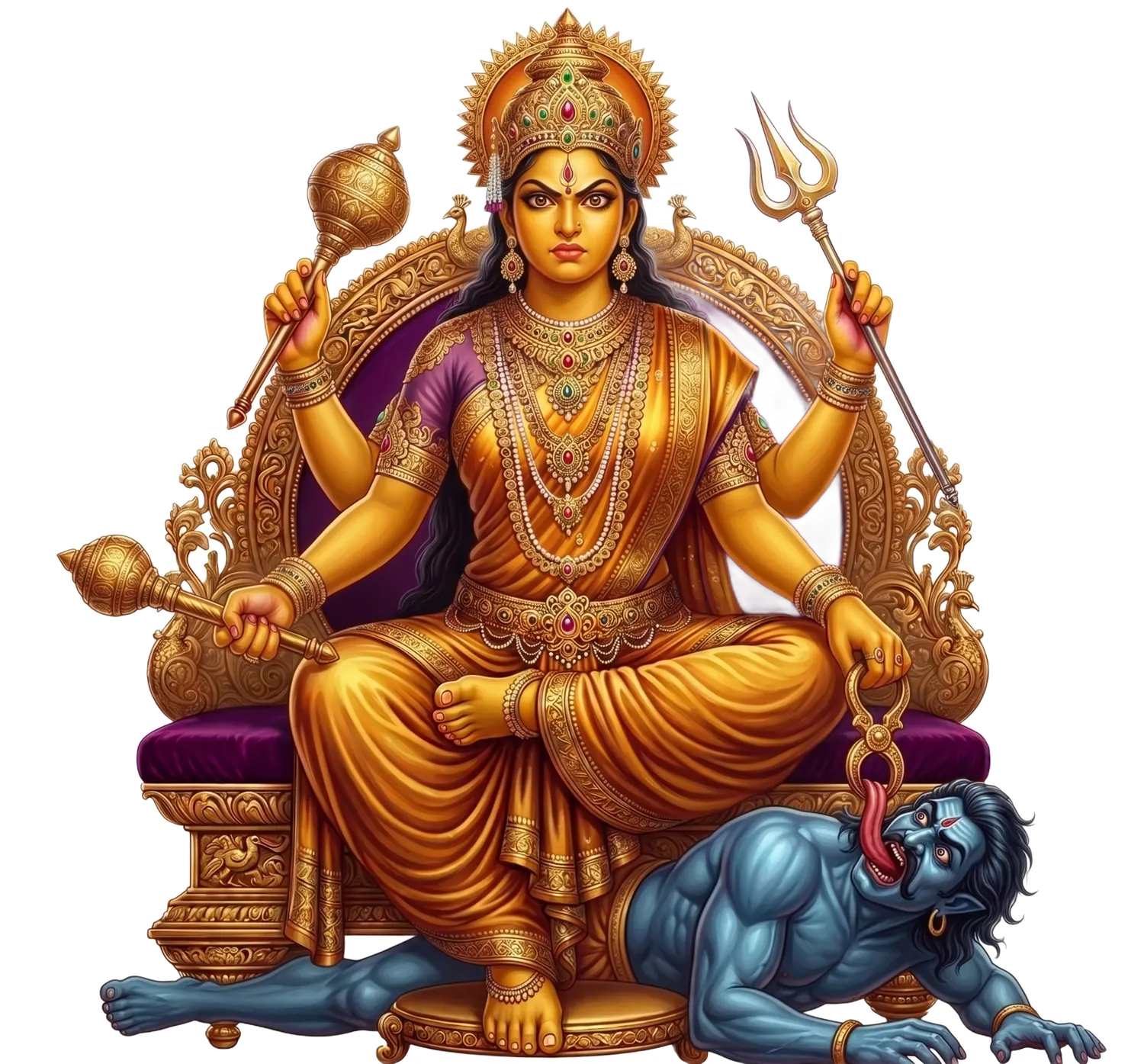
In the vast ocean of Shakti tantra tradition, few concepts are as profound and misunderstood as the Dus Mahavidya — the Ten Great Wisdom Goddesses. Far from being fearsome or inauspicious as popular imagination sometimes portrays them, the Mahavidyas represent the complete spectrum of the Divine Mother's wisdom: creation and dissolution, gentleness and fierceness, worldly abundance and ultimate liberation. Together they teach that the Goddess cannot be confined to a single form — she is present in every aspect of existence, benevolent and formidable alike.
This article offers a reverent introduction to who the Mahavidyas are, the story of their origin, and their collective significance, so that devotees can approach this profound tradition with understanding rather than fear.
The Origin Story of the Dus Mahavidya
According to Puranic tradition, the story begins with Sati, daughter of Daksha Prajapati and consort of Lord Shiva. When Daksha organised a grand yagna and deliberately did not invite Shiva, Sati wished to attend anyway, out of love for her father. Shiva, aware of the insult that awaited her, gently refused permission.
In that moment, to reveal to Shiva the full, unstoppable extent of her own Shakti, Sati manifested ten tremendous forms surrounding him in all directions, so that wherever he turned, he faced the Goddess herself. Overwhelmed and humbled by this vision, Shiva relented and allowed her to go. These ten manifestations are remembered as the Dus Mahavidya. In another cherished telling, they emerge from Devi's own being to protect dharma and destroy formidable demonic forces, each Mahavidya answering a different form of adharma with a different aspect of divine power.
The Ten Mahavidyas and Their Meaning
Kali: The primordial form of time and transformation. She represents the dissolving of ego, fear and illusion, ultimately revealing eternal truth beyond birth and death. Fierce in appearance, she is deeply compassionate to her devotees, and is worshipped for courage and liberation from fear.
Tara: The goddess who guides devotees across the ocean of worldly suffering, much like a star (tara) that guides a traveller through darkness. She is associated with protection, guidance in difficult times, and clarity of speech and knowledge.
Tripura Sundari (Shodashi): The supremely beautiful goddess representing the perfect balance of the universe — often worshipped as Lalita or Rajarajeshwari. She embodies beauty, harmony, prosperity and the fulfilment of righteous desires.
Bhuvaneshwari: The goddess as the very ground and space of the universe, the sovereign of all worlds (bhuvana). She represents nurturing, sustaining energy — the cosmos as a mother's embrace — and is worshipped for stability and holistic well-being.
Chhinnamasta: A profound and philosophically deep form, depicted holding her own severed head, teaching the ultimate truth of self-sacrifice and the transcendence of the ego and bodily identification. She represents spiritual awakening through radical detachment.
Bhairavi: The fierce yet nurturing form associated with Kashi (Varanasi), representing the power to destroy negativity, laziness and ignorance, and to awaken inner strength and discipline on the spiritual path.
The Deeper Meaning of the Mahavidyas
Together, the Dus Mahavidya map a complete spiritual journey — from confronting fear and illusion (Kali), through gaining protection and clarity (Tara), balance and fulfilment (Tripura Sundari), grounded stability (Bhuvaneshwari), radical self-transcendence (Chhinnamasta), inner discipline (Bhairavi), acceptance of impermanence (Dhumavati), protection from negativity (Bagalamukhi), boundless expression and compassion (Matangi), to final worldly and spiritual abundance (Kamala). Tantric philosophy teaches that a sincere devotee, in worshipping the Mother in these varied forms, comes to understand that no single quality — however comfortable or uncomfortable — is separate from the Divine.
How the Mahavidyas Are Worshipped
Mahavidya worship is traditionally approached with deep reverence, purity of intent, and often under the guidance of a qualified guru for advanced sadhana. For ordinary devotees, worship generally takes gentler and safer forms: reciting the goddess's stotra or chalisa, chanting her bija mantra with devotion, visiting temples dedicated to a specific Mahavidya (such as Kali temples in Kolkata, Tara temples in Bengal, or Bagalamukhi temples in Nalkheshwar and Bankhandi), and observing simple vratas on days associated with each form. Navratri, and specifically the tradition of worshipping the Devi in her many forms during this period, is considered a highly auspicious time to honour the Mahavidyas collectively.
It is important to approach this tradition only through gentle, devotional, protective practice — never through fear-based or harmful ritual, which has no place in authentic Sanatan dharma.
A Gentle Note
The Dus Mahavidya tradition is vast, deep and best explored gradually, with a pure heart and, for deeper practices, under proper guidance. This article is offered as a respectful introduction; devotees wishing to pursue focused sadhana toward a specific Mahavidya are encouraged to do so through gentle, protective, dharmic worship rooted in devotion rather than fear.
Frequently Asked Questions
Quick guide
Before you begin
Mantra
Devi mantra
Om Dum Durgaye Namah
Chant 11, 21, or 108 times according to your time and capacity.
Bhav
Benefits devotees pray for
FAQ
Common questions
Dus Mahavidya kaun kaun si hai?
The ten Mahavidyas are Kali, Tara, Tripura Sundari (Shodashi), Bhuvaneshwari, Chhinnamasta, Bhairavi, Dhumavati, Bagalamukhi, Matangi, and Kamala.
Are the Mahavidyas frightening or inauspicious deities?
No. While some forms appear fierce, each Mahavidya represents a profound, benevolent aspect of the Divine Mother's wisdom. They are worshipped with the same devotion, reverence and hope as any other form of the Goddess.
Can ordinary devotees worship the Mahavidyas?
Yes, through gentle practices such as mantra chanting, stotra recitation, and temple visits. Advanced tantric sadhana, however, is traditionally undertaken only under the guidance of a qualified guru.
Is Mahavidya worship connected to black magic?
No. Authentic Mahavidya worship in Sanatan dharma is entirely devotional and protective in nature. Any practice involving harm to others has no place in this tradition and should always be avoided.
Seek the Divine Mother's Blessing
Book a devi puja performed with full reverence and let the Divine Mother's grace guide your spiritual path.