

 या देवी सर्वभूतेषु
An introduction to the 700-verse Durga Saptashati (Chandi Path), its structure, its most sacred verses, and how to read it with devotion.
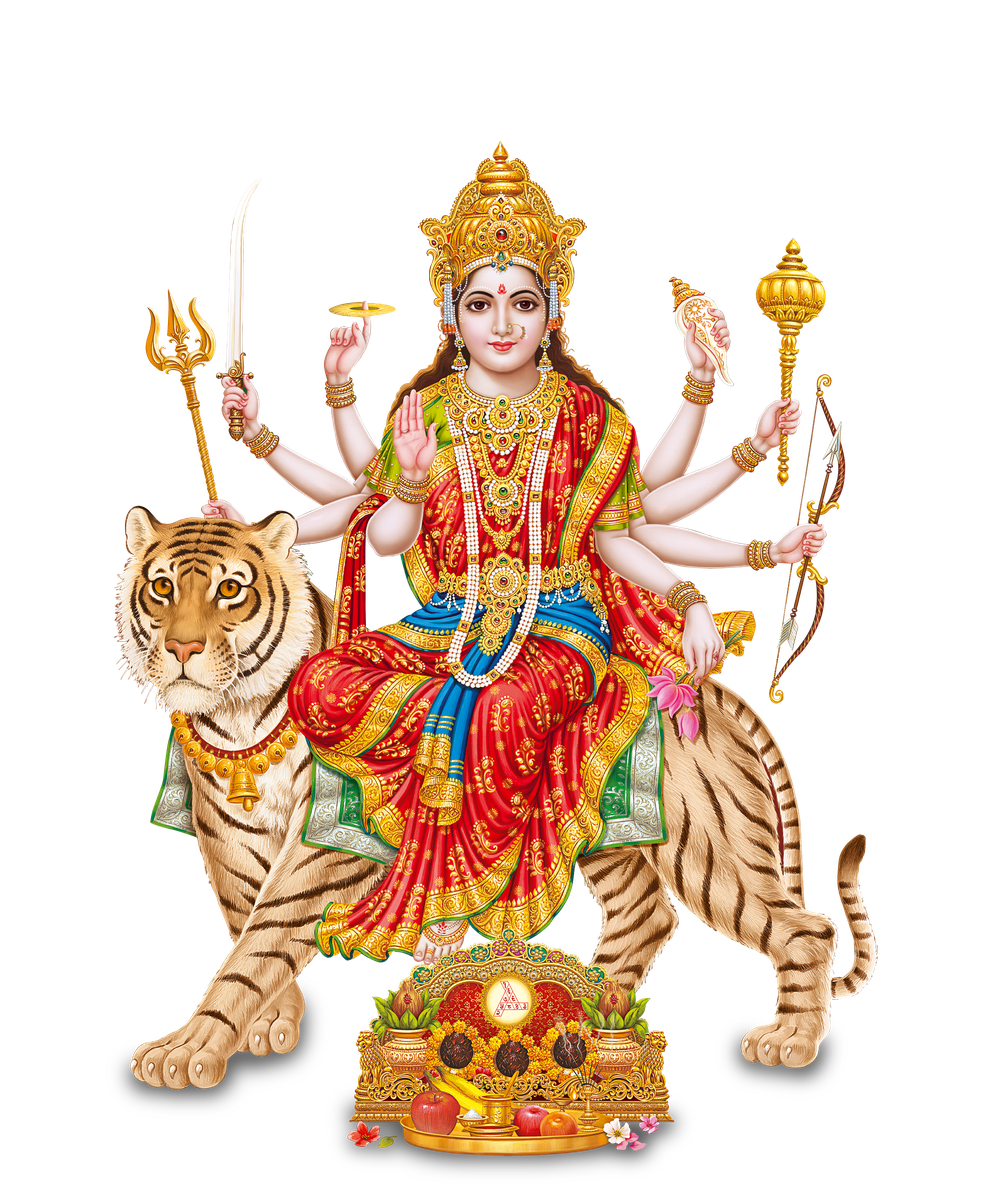
The Durga Saptashati, also called Devi Mahatmyam or Chandi Path, is one of the most revered scriptures of Shakti worship in Sanatan Dharma. It is part of the Markandeya Purana and consists of seven hundred (saptashati) shlokas divided into thirteen chapters, describing three great battles in which the Divine Mother, in her form as Durga or Chandika, destroys the demons Madhu-Kaitabh, Mahishasura, and Shumbha-Nishumbha along with their armies. Because the complete text is very long, it is traditionally read from a printed Saptashati book by a pandit or a trained devotee; here we present its structure, its most sacred and widely chanted verses in full, and the vidhi for reading it, so that every devotee can understand and connect with this scripture.
Structure of the Durga Saptashati
The text is organised into three charitas (episodes) across thirteen chapters:
Prathama Charitra (Chapter 1): The Madhu-Kaitabh episode, where Yoganidra (the Devi as cosmic sleep) is invoked by Brahma to help Vishnu slay the demons Madhu and Kaitabh who threaten to kill Brahma. This charitra is dedicated to Devi Mahakali.
Madhyama Charitra (Chapters 2-4): The story of Mahishasura Mardini, where the combined energies (tejas) of all the gods form the Devi, who is given divine weapons by each deity, and who fights and destroys the buffalo-demon Mahishasura after a fierce battle. Chapter 4 contains the beautiful hymn Shakradi Stuti, in which Indra and the gods praise the Devi.
Uttama Charitra (Chapters 5-13): The longest section, describing the battle with the demon brothers Shumbha and Nishumbha and their generals Chanda, Munda, and Raktabija. The Devi Ambika, angered by the demons' arrogance, manifests Kaushiki, and later the fierce Chamunda who beheads Chanda and Munda. Raktabija, whose every blood-drop spawns a new demon, is finally destroyed when Chamunda drinks his blood before it touches the ground. This section is dedicated to Devi Saraswati and includes the celebrated Devi Suktam / Narayani Stuti in chapter 5 and the Aparajita Stuti in chapter 11.
The Saptashati is bookended by auxiliary texts recited alongside it: the Devi Kavacham (armour), Argala Stotram (bolt/key hymn) and Kilaka Stotram (nail hymn) before the main text, and the Devi Suktam and Siddha Kunjika Stotram often after it.
Sacred Verses (Devanagari)
Dhyanam (Invocation):
ॐ बालार्कमण्डलाभासां चतुर्बाहुं त्रिलोचनाम्। पाशाङ्कुशवराभीति धारिणीं कमलस्थिताम्॥ अतिश्वेतकमलासनां शुभ्रां तां जगदम्बिकां। नमामि सर्वभूतानां प्रसन्नवदनां शिवाम्॥
From the Devi Kavacham (opening):
ॐ नमश्चण्डिकायै। मार्कण्डेय उवाच। ॐ यद्गुह्यं परमं लोके सर्वरक्षाकरं नृणाम्। यन्न कस्यचिदाख्यातं तन्मे ब्रूहि पितामह॥
From Chapter 1, the invocation of the Devi as the cosmic power sustaining all:
या देवी सर्वभूतेषु विष्णुमायेति शब्दिता। नमस्तस्यै नमस्तस्यै नमस्तस्यै नमो नमः॥
From the Shakradi Stuti, Chapter 4 (praise by the gods after the slaying of Mahishasura):
या देवी सर्वभूतेषु शक्तिरूपेण संस्थिता। नमस्तस्यै नमस्तस्यै नमस्तस्यै नमो नमः॥
सर्वमङ्गलमाङ्गल्ये शिवे सर्वार्थसाधिके। शरण्ये त्र्यम्बके गौरि नारायणि नमोऽस्तु ते॥
शरणागतदीनार्तपरित्राणपरायणे। सर्वस्यार्तिहरे देवि नारायणि नमोऽस्तु ते॥
From Chapter 5, the Devi Suktam / Narayani Stuti, describing the Devi's manifold forms:
या देवी सर्वभूतेषु मातृरूपेण संस्थिता। नमस्तस्यै नमस्तस्यै नमस्तस्यै नमो नमः॥
या देवी सर्वभूतेषु बुद्धिरूपेण संस्थिता। नमस्तस्यै नमस्तस्यै नमस्तस्यै नमो नमः॥
या देवी सर्वभूतेषु निद्रारूपेण संस्थिता। नमस्तस्यै नमस्तस्यै नमस्तस्यै नमो नमः॥
या देवी सर्वभूतेषु क्षुधारूपेण संस्थिता। नमस्तस्यै नमस्तस्यै नमस्तस्यै नमो नमः॥
या देवी सर्वभूतेषु छायारूपेण संस्थिता। नमस्तस्यै नमस्तस्यै नमस्तस्यै नमो नमः॥
या देवी सर्वभूतेषु शान्तिरूपेण संस्थिता। नमस्तस्यै नमस्तस्यै नमस्तस्यै नमो नमः॥
या देवी सर्वभूतेषु श्रद्धारूपेण संस्थिता। नमस्तस्यै नमस्तस्यै नमस्तस्यै नमो नमः॥
Meaning of Key Verses
"Ya Devi Sarvabhuteshu" is the most repeated refrain of the entire Saptashati — it means "O Devi who resides in all beings in the form of..." followed by a different divine quality each time: power (shakti), consciousness (chetana), intelligence (buddhi), sleep (nidra), hunger (kshudha), reflection (chhaya), peace (shanti), faith (shraddha), and finally as pure consciousness (chiti) pervading the whole universe — each verse ending with triple salutations, "I bow to you again and again." This teaches that the Devi is not a distant goddess but the very energy present within every living being.
"Sarva-mangala-mangalye" is perhaps the single most popular verse from the entire text: "O auspiciousness of all auspicious things, O Shiva's consort, O one who fulfils every purpose, O refuge, O three-eyed Gauri, O Narayani, salutations to you." It is chanted at the close of Durga puja and on nearly every Devi occasion.
The verse "Ittham yada yada badha" is the Devi's own vow: "Whenever demonic trouble arises in this way, then I shall incarnate and destroy the enemies." This is understood as the Devi's eternal promise to protect dharma in every age, echoing the same assurance Bhagwan Krishna gives in the Gita.
Why Chant the Durga Saptashati
The Saptashati is read for the destruction of obstacles, negative energies, and enemies both external and internal (ego, fear, ignorance), for the fulfilment of righteous desires, for protection of family and health, and above all for the awakening of Shakti — the divine feminine power — within the devotee. It is considered one of the most potent texts for Navratri sadhana.
How and When to Read (Vidhi)
The Saptashati is most commonly read during the nine nights of Navratri (Chaitra and Sharad), though it can be read on any Ashtami, Navami, Purnima, or Amavasya, or as part of a special sankalp. A complete reading (path) ideally covers all thirteen chapters, often across the nine days, or as a single-day "akhand path" by an experienced reader. Before beginning, the reader performs the Devi Kavacham, Argala Stotram and Kilaka Stotram, then reads the chapters with a lit akhand diya, red flowers, and an image or idol of the Devi. It should not be started and left incomplete once begun on a given day — if a full chapter cannot be finished, complete it before rising from the seat. Many households prefer to have this path done through a qualified pandit or an experienced devotee due to its length and the strict discipline it requires; devotees may also listen with full attention as an alternative.
Dos and Don'ts
Begin only after bathing and in a clean, sattvic state of mind. Once initiated, avoid interruption, anger, and non-vegetarian food or alcohol during the days of the path. Do not attempt the Saptashati path casually or without guidance if you are a complete beginner — take help from a knowledgeable elder or purohit, or begin with listening and the key verses given above before attempting the full text yourself.
Mahatmya (Glory)
The Devi Mahatmyam itself declares that wherever it is read with devotion, the Devi resides, and the household is freed from untimely death, disease, poverty and the fear of enemies. It is one of the very few scriptures where the Goddess speaks in her own voice, describing her own glory and making her own promise of protection — for this reason it holds a place in Devi worship comparable to the Bhagavad Gita in Vaishnav tradition.
Frequently Asked Questions
Can the Durga Saptashati be read at home by a layperson? Yes, though because of its length and the discipline required, many prefer to have it read by a purohit, or to read the key verses and listen to the rest with devotion, especially if this is their first time.
Is it necessary to complete all 13 chapters in one sitting? No. It is commonly divided across the nine days of Navratri. What matters is that once a chapter is begun on a given day, it should be completed before leaving the seat.
What is the difference between the Saptashati and the Chandi Path? They refer to the same text — Durga Saptashati, Devi Mahatmyam, and Chandi Path are different names for the same 700-verse scripture from the Markandeya Purana.
Can women read the Durga Saptashati during menstruation? Practices vary by family and tradition. Many devotees choose to read mentally, listen with devotion, or simply chant the Devi's name during this time, and resume the full path once comfortable; the Devi's compassion is not conditional, and sincere devotion in any form is always accepted.
Quick guide
Before you begin
Mantra
Devi mantra
Om Dum Durgaye Namah
Chant 11, 21, or 108 times according to your time and capacity.
Bhav
Benefits devotees pray for
FAQ
Common questions
Can the Durga Saptashati be read at home by a layperson?
Yes, though because of its length many prefer a purohit, or to read the key verses and listen to the rest with devotion, especially the first time.
Is it necessary to complete all 13 chapters in one sitting?
No. It is commonly divided across the nine days of Navratri; once a chapter is begun on a given day it should be completed before leaving the seat.
What is the difference between the Saptashati and the Chandi Path?
They refer to the same text — Durga Saptashati, Devi Mahatmyam, and Chandi Path are different names for the same scripture.
Can women read the Durga Saptashati during menstruation?
Practices vary by family and tradition; many choose to listen or chant the Devi's name during this time and resume full reading once comfortable.
Invoke Maa Durga's blessings this Navratri
Book a puja dedicated to Maa Durga for strength, protection and the removal of obstacles.