



 Bhagavad Gita · Chapter 7
What Chapter 7 teaches
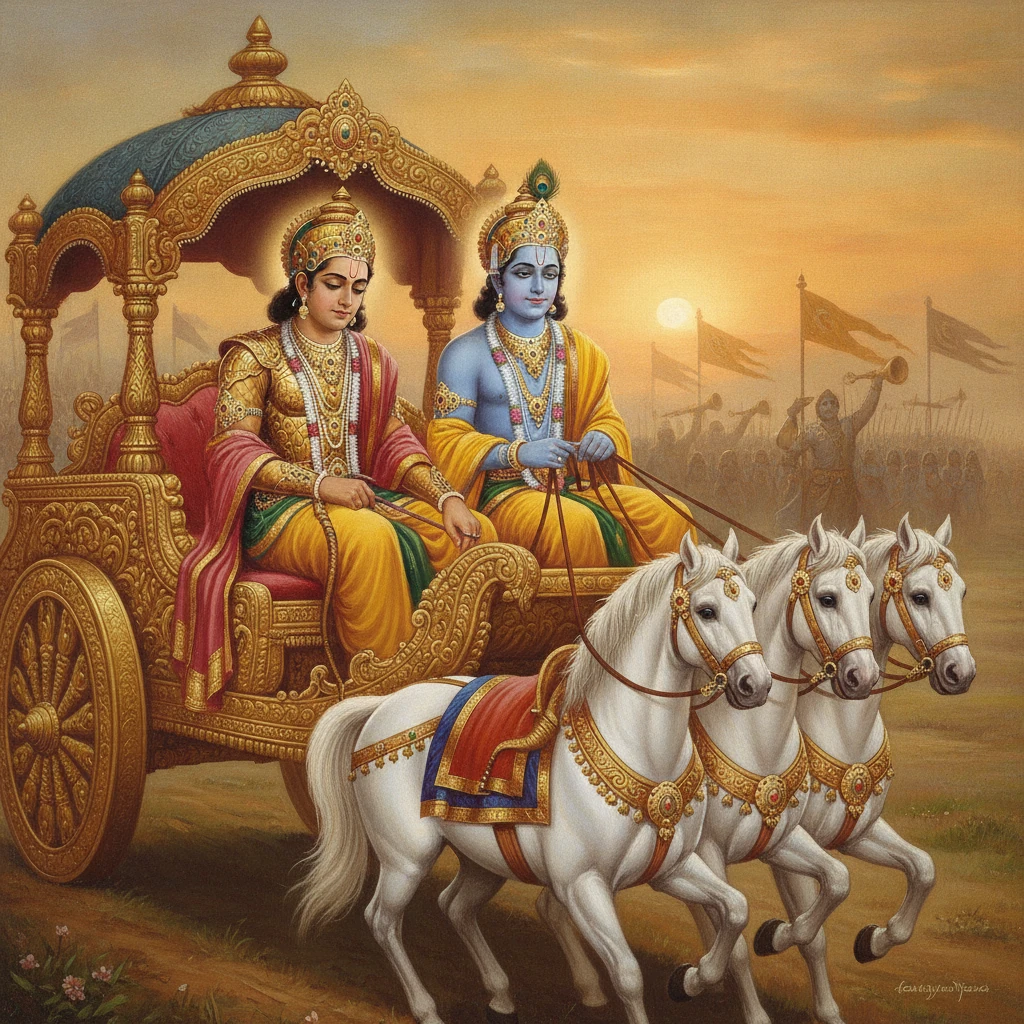
The seventh chapter of the Bhagavad Gita is Gyaan Vigyana Yoga . In this chapter, Krishna reveals that he is the Supreme Truth, the principal cause and the sustaining force of everything. He reveals his illusionary energy in this material world called Maya, which is very difficult to overcome but those who surrender their minds unto Him attain Him easily. He also describes the four types of people who surrender to Him in devotion and the four kinds that don't. Krishna confirms that He is the Ultimate Reality and those who realize this Truth reach the pinnacle of spiritual realization and unite with the Lord.
Original Text
Verses & Meaning
श्रीभगवानुवाच। मय्यासक्तमनाः पार्थ योगं युञ्जन्मदाश्रयः। असंशयं समग्रं मां यथा ज्ञास्यसि तच्छृणु॥
śrībhagavānuvāca mayyāsaktamanāḥ pārtha yogaṃ yuñjanmadāśrayaḥ asaṃśayaṃ samagraṃ māṃ yathā jñāsyasi tacchṛṇu
The Blessed Lord said O Arjuna, hear how you shall without doubt know Me fully, with the mind intent on Me, practising Yoga and taking refuge in Me.
ज्ञानं तेऽहं सविज्ञानमिदं वक्ष्याम्यशेषतः। यज्ज्ञात्वा नेह भूयोऽन्यज्ज्ञातव्यमवशिष्यते॥
jñānaṃ te.ahaṃ savijñānamidaṃ vakṣyāmyaśeṣataḥ yajjñātvā neha bhūyo.anyajjñātavyamavaśiṣyate
I shall declare to thee in full this knowledge combined with realisation, after knowing which nothing more here remains to be known.
मनुष्याणां सहस्रेषु कश्चिद्यतति सिद्धये। यततामपि सिद्धानां कश्चिन्मां वेत्ति तत्त्वतः॥
manuṣyāṇāṃ sahasreṣu kaścidyatati siddhaye yatatāmapi siddhānāṃ kaścinmāṃ vetti tattvataḥ
Among thousands of men, one perchance strives for perfection; even among those successful strivers, only one perchance knows Me in essence.
भूमिरापोऽनलो वायुः खं मनो बुद्धिरेव च। अहंकार इतीयं मे भिन्ना प्रकृतिरष्टधा॥
bhūmirāpo.analo vāyuḥ khaṃ mano buddhireva ca ahaṃkāra itīyaṃ me bhinnā prakṛtiraṣṭadhā
Earth, water, fire, air, ether, mind, intellect and egoism thus is My Nature divided eightfold.
अपरेयमितस्त्वन्यां प्रकृतिं विद्धि मे पराम्। जीवभूतां महाबाहो ययेदं धार्यते जगत्॥
apareyamitastvanyāṃ prakṛtiṃ viddhi me parām jīvabhūtāṃ mahābāho yayedaṃ dhāryate jagat
This is the inferior Prakriti, O mighty-armed (Arjuna); know thou as different from it My higher Prakriti (Nature), the very life-element, by which this world is upheld.
एतद्योनीनि भूतानि सर्वाणीत्युपधारय। अहं कृत्स्नस्य जगतः प्रभवः प्रलयस्तथा॥
etadyonīni bhūtāni sarvāṇītyupadhāraya ahaṃ kṛtsnasya jagataḥ prabhavaḥ pralayastathā
Know that these two (Natures) are the womb of all beings. So I am the source and dissolution of the whole universe.
मत्तः परतरं नान्यत्किञ्चिदस्ति धनञ्जय। मयि सर्वमिदं प्रोतं सूत्रे मणिगणा इव॥
mattaḥ parataraṃ nānyatkiñcidasti dhanañjaya mayi sarvamidaṃ protaṃ sūtre maṇigaṇā iva
There is nothing whatsoever higher than Me, O Arjuna. All this is strung on Me, as clusters of gems on a string.
रसोऽहमप्सु कौन्तेय प्रभास्मि शशिसूर्ययोः। प्रणवः सर्ववेदेषु शब्दः खे पौरुषं नृषु॥
raso.ahamapsu kaunteya prabhāsmi śaśisūryayoḥ praṇavaḥ sarvavedeṣu śabdaḥ khe pauruṣaṃ nṛṣu
I am the sapidity in water, O Arjuna; I am the light in the moon and the sun; I am the syllable Om in all the Vedas, sound in ether and virility in men.
पुण्यो गन्धः पृथिव्यां च तेजश्चास्मि विभावसौ। जीवनं सर्वभूतेषु तपश्चास्मि तपस्विषु॥
puṇyo gandhaḥ pṛthivyāṃ ca tejaścāsmi vibhāvasau jīvanaṃ sarvabhūteṣu tapaścāsmi tapasviṣu
I am the sweet fragrance in the earth and the brilliance in the fire, the life in all beings, and I am the austerity in ascetics.
बीजं मां सर्वभूतानां विद्धि पार्थ सनातनम्। बुद्धिर्बुद्धिमतामस्मि तेजस्तेजस्विनामहम्॥
bījaṃ māṃ sarvabhūtānāṃ viddhi pārtha sanātanam buddhirbuddhimatāmasmi tejastejasvināmaham
Know Me, O Arjuna, as the eternal seed of all beings; I am the intelligence of the intelligent; the splendour of the splendid objects am I.
बलं बलवतां चाहं कामरागविवर्जितम्। धर्माविरुद्धो भूतेषु कामोऽस्मि भरतर्षभ॥
balaṃ balavatāṃ cāhaṃ kāmarāgavivarjitam dharmāviruddho bhūteṣu kāmo.asmi bharatarṣabha
Of the strong, I am the strength devoid of desire and attachment, and in (all) beings, I am the desire unopposed to Dharma, O Arjuna.
ये चैव सात्त्विका भावा राजसास्तामसाश्च ये। मत्त एवेति तान्विद्धि न त्वहं तेषु ते मयि॥
ye caiva sāttvikā bhāvā rājasāstāmasāśca ye matta eveti tānviddhi na tvahaṃ teṣu te mayi
Whatever beings (and objects) that are pure, active and inert, know that they proceed from Me. They are in Me, yet I am not in them.
त्रिभिर्गुणमयैर्भावैरेभिः सर्वमिदं जगत्। मोहितं नाभिजानाति मामेभ्यः परमव्ययम्॥
tribhirguṇamayairbhāvairebhiḥ sarvamidaṃ jagat mohitaṃ nābhijānāti māmebhyaḥ paramavyayam
Deluded by these Natures (states or things) composed of the three alities of Nature all this world does not know Me as distinct from them and immutable.
दैवी ह्येषा गुणमयी मम माया दुरत्यया। मामेव ये प्रपद्यन्ते मायामेतां तरन्ति ते॥
daivī hyeṣā guṇamayī mama māyā duratyayā māmeva ye prapadyante māyāmetāṃ taranti te
Verily, this divine illusion of Mine, made up of the (three) alities (of Nature) is difficult to cross over; those who take refuge in Me alone, cross over this illusion.
न मां दुष्कृतिनो मूढाः प्रपद्यन्ते नराधमाः। माययापहृतज्ञाना आसुरं भावमाश्रिताः॥
na māṃ duṣkṛtino mūḍhāḥ prapadyante narādhamāḥ māyayāpahṛtajñānā āsuraṃ bhāvamāśritāḥ
The evil-doers and the deluded who are the lowest of men do not seek Me; they whose knowledge is destroyed by illusion follow the ways of demons.
चतुर्विधा भजन्ते मां जनाः सुकृतिनोऽर्जुन। आर्तो जिज्ञासुरर्थार्थी ज्ञानी च भरतर्षभ॥
caturvidhā bhajante māṃ janāḥ sukṛtino.arjuna ārto jijñāsurarthārthī jñānī ca bharatarṣabha
Four kinds of virtuous men worship Me, O Arjuna, and they are the distressed, the seekr of knowledge, the seekr of wealth and the wise, O lord of the Bharatas.
तेषां ज्ञानी नित्ययुक्त एकभक्तिर्विशिष्यते। प्रियो हि ज्ञानिनोऽत्यर्थमहं स च मम प्रियः॥
teṣāṃ jñānī nityayukta ekabhaktirviśiṣyate priyo hi jñānino.atyarthamahaṃ sa ca mama priyaḥ
Of them the wise, ever steadfast and devoted to the One, excels (is the best); for I am exceedingly dear to the wise and he is dear to Me.
उदाराः सर्व एवैते ज्ञानी त्वात्मैव मे मतम्। आस्थितः स हि युक्तात्मा मामेवानुत्तमां गतिम्॥
udārāḥ sarva evaite jñānī tvātmaiva me matam āsthitaḥ sa hi yuktātmā māmevānuttamāṃ gatim
Noble indeed are all these; but I deem the wise man as My very Self; for, steadfast in mind he is established in Me alone as the supreme goal.
बहूनां जन्मनामन्ते ज्ञानवान्मां प्रपद्यते। वासुदेवः सर्वमिति स महात्मा सुदुर्लभः॥
bahūnāṃ janmanāmante jñānavānmāṃ prapadyate vāsudevaḥ sarvamiti sa mahātmā sudurlabhaḥ
At the end of many births the wise man comes to Me, realising that all this is Vaasudeva (the innermost Self); such a great soul (Mahatma) is very hard to find.
कामैस्तैस्तैर्हृतज्ञानाः प्रपद्यन्तेऽन्यदेवताः। तं तं नियममास्थाय प्रकृत्या नियताः स्वया॥
kāmaistaistairhṛtajñānāḥ prapadyante.anyadevatāḥ taṃ taṃ niyamamāsthāya prakṛtyā niyatāḥ svayā
Those whose wisdom has been rent away by this or that desire, go to other gods, following this or that rite, led by their own nature.
यो यो यां यां तनुं भक्तः श्रद्धयार्चितुमिच्छति। तस्य तस्याचलां श्रद्धां तामेव विदधाम्यहम्॥
yo yo yāṃ yāṃ tanuṃ bhaktaḥ śraddhayārcitumicchati tasya tasyācalāṃ śraddhāṃ tāmeva vidadhāmyaham
Whatsoever form any devotee desires to worship with faith that (same) faith of his I make firm and unflinching.
स तया श्रद्धया युक्तस्तस्याराधनमीहते। लभते च ततः कामान्मयैव विहितान्हि तान्॥
sa tayā śraddhayā yuktastasyārādhanamīhate labhate ca tataḥ kāmānmayaivavihitānhi tān
Endowed with that faith, he engages in the worship of that (form) and from it he obtains his desire, these being verily ordained by Me (alone).
अन्तवत्तु फलं तेषां तद्भवत्यल्पमेधसाम्। देवान्देवयजो यान्ति मद्भक्ता यान्ति मामपि॥
antavattu phalaṃ teṣāṃ tadbhavatyalpamedhasām devāndevayajo yānti madbhaktā yānti māmapi
Verily the reward (fruit) that accrues to those men of small intelligence is finite. The worshippers of the gods go to them, but My devotees come to Me.
अव्यक्तं व्यक्तिमापन्नं मन्यन्ते मामबुद्धयः। परं भावमजानन्तो ममाव्ययमनुत्तमम्॥
avyaktaṃ vyaktimāpannaṃ manyante māmabuddhayaḥ paraṃ bhāvamajānanto mamāvyayamanuttamam
The foolish think of Me, the Unmanifest, as having manifestation, knowing not My higher, immutable and most excellent nature.
नाहं प्रकाशः सर्वस्य योगमायासमावृतः। मूढोऽयं नाभिजानाति लोको मामजमव्ययम्॥
nāhaṃ prakāśaḥ sarvasya yogamāyāsamāvṛtaḥ mūḍho.ayaṃ nābhijānāti loko māmajamavyayam
I am not manifest to all (as I am) veiled by the Yoga-Maya. This deluded world does not know Me, the unborn and imperishable.
वेदाहं समतीतानि वर्तमानानि चार्जुन। भविष्याणि च भूतानि मां तु वेद न कश्चन॥
vedāhaṃ samatītāni vartamānāni cārjuna bhaviṣyāṇi ca bhūtāni māṃ tu veda na kaścana
I know, O Arjuna, the beings of the past, the present and the future, but no one knows Me.
इच्छाद्वेषसमुत्थेन द्वन्द्वमोहेन भारत। सर्वभूतानि सम्मोहं सर्गे यान्ति परन्तप॥
icchādveṣasamutthena dvandvamohena bhārata sarvabhūtāni sammohaṃ sarge yānti parantapa
By the delusion of the pairs of opposites arising from desire and aversion, O Bharata, all beings are subject to delusion at birth, O Parantapa.
येषां त्वन्तगतं पापं जनानां पुण्यकर्मणाम्। ते द्वन्द्वमोहनिर्मुक्ता भजन्ते मां दृढव्रताः॥
yeṣāṃ tvantagataṃ pāpaṃ janānāṃ puṇyakarmaṇām te dvandvamohanirmuktā bhajante māṃ dṛḍhavratāḥ
But those men of virtuous deeds whose sins have come to an end, and who are freed from the delusion of the pairs of opposites, worship Me, steadfast in their vows.
जरामरणमोक्षाय मामाश्रित्य यतन्ति ये। ते ब्रह्म तद्विदुः कृत्स्नमध्यात्मं कर्म चाखिलम्॥
jarāmaraṇamokṣāya māmāśritya yatanti ye te brahma tadviduḥ kṛtsnamadhyātmaṃ karma cākhilam
Those who strive for liberation from old age and death, taking refuge in Me, realise in full ï1thatï1 Brahman, the whole knowledge of the Self and all action.
साधिभूताधिदैवं मां साधियज्ञं च ये विदुः। प्रयाणकालेऽपि च मां ते विदुर्युक्तचेतसः॥
sādhibhūtādhidaivaṃ māṃ sādhiyajñaṃ ca ye viduḥ prayāṇakāle.api ca māṃ te viduryuktacetasaḥ
Those who know Me with the Adhibhuta (pertaining to the elements), Adhidaiva (pertaining to the gods) and the Adhiyajna (pertaining to the sacrifice) know Me even at the time of death, steadfast in mind.
Quick guide
Before you begin
Bhav
Benefits devotees pray for
FAQ
Common questions
What is Bhagavad Gita Chapter 7 (Jnana-Vijnana Yoga) about?
The seventh chapter of the Bhagavad Gita is Gyaan Vigyana Yoga . In this chapter, Krishna reveals that he is the Supreme Truth, the principal cause and the sustaining force of everything. He reveals his illusionary energy in this material world called Maya, which is very difficult to overcome but those who surrender their minds unto Him attain Him easily. He also describes the four types of people who surrender to Him in devotion and the four kinds that don't. Krishna confirms that He is the Ultimate Reality and those who realize this Truth reach the pinnacle of spiritual realization and unite
How many verses are in Bhagavad Gita Chapter 7?
Chapter 7 (Jnana-Vijnana Yoga) has 30 verses. You can read every one above in Sanskrit, with IAST transliteration and its meaning in Hindi and English.
What does "Jnana-Vijnana Yoga" mean?
"Jnana-Vijnana Yoga" is the name of Chapter 7 of the Bhagavad Gita; it means "Self-Knowledge and Enlightenment". Its 30 verses form part of Bhagwan Krishna's teaching to Arjuna on the field of Kurukshetra.
Bring the Gita's wisdom into your life
On Gita Jayanti at Shri Vishnupad Mandir, Gaya, a sankalp is offered in your naam-gotra for clarity of mind and right decision. Book the seva, or continue reading the Bhagavad Gita.