 Bhagavad Gita · Chapter 8
What Chapter 8 teaches
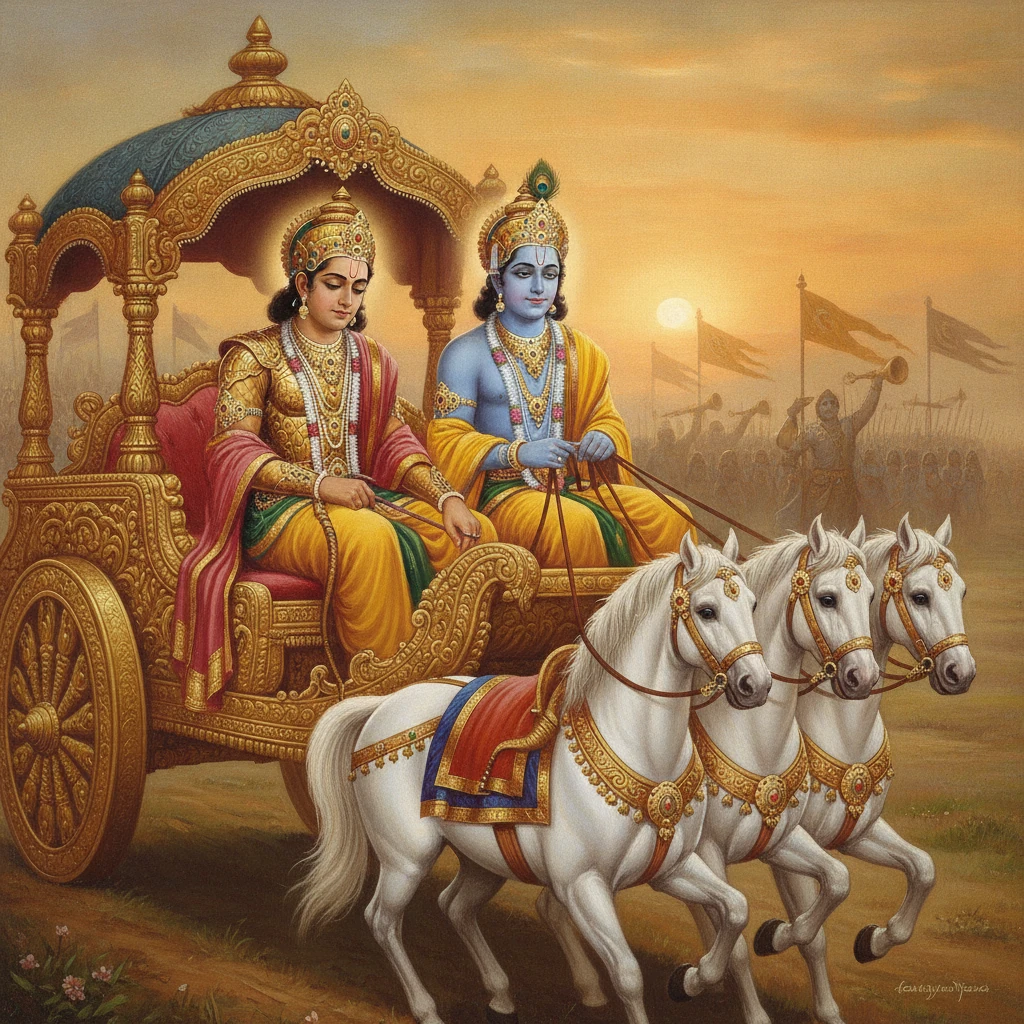
The eighth chapter of the Bhagavad Gita is Akshara Brahma Yoga. In this chapter, Krishna reveals the importance of the last thought before death. If we can remember Krishna at the time of death, we will certainly attain him. Thus, it is very important to be in constant awareness of the Lord at all times, thinking of Him and chanting His names at all times. By perfectly absorbing their mind in Him through constant devotion, one can go beyond this material existence to Lord's Supreme abode.
Original Text
Verses & Meaning
अर्जुन उवाच। किं तद् ब्रह्म किमध्यात्मं किं कर्म पुरुषोत्तम। अधिभूतं च किं प्रोक्तमधिदैवं किमुच्यते॥
arjuna uvāca kiṃ tad brahma kimadhyātmaṃ kiṃ karma puruṣottama adhibhūtaṃ ca kiṃ proktamadhidaivaṃ kimucyate
Swami Sivananda did not comment on this sloka
अधियज्ञः कथं कोऽत्र देहेऽस्मिन्मधुसूदन। प्रयाणकाले च कथं ज्ञेयोऽसि नियतात्मभिः॥
adhiyajñaḥ kathaṃ ko.atra dehe.asminmadhusūdana prayāṇakāle ca kathaṃ jñeyo.asi niyatātmabhiḥ
Who and how is Adhiyajna here in this body, O destroyer of Madhu (Krishna)? And how at the time of death, art Thou to be known by the self-controlled?
श्रीभगवानुवाच। अक्षरं ब्रह्म परमं स्वभावोऽध्यात्ममुच्यते। भूतभावोद्भवकरो विसर्गः कर्मसंज्ञितः॥
śrībhagavānuvāca akṣaraṃ brahma paramaṃ svabhāvo.adhyātmamucyate bhūtabhāvodbhavakaro visargaḥ karmasaṃjñitaḥ
The Blessed Lord said Brahman is the Imperishable, the Supreme; Its essential nature is called Self-knowledge; the offering (to the gods) which causes existence and manifestation of beings and which also sustains them is called action.
अधिभूतं क्षरो भावः पुरुषश्चाधिदैवतम्। अधियज्ञोऽहमेवात्र देहे देहभृतां वर॥
adhibhūtaṃ kṣaro bhāvaḥ puruṣaścādhidaivatam adhiyajño.ahamevātra dehe dehabhṛtāṃ vara
Adhibhuta (knowledge of the elements) pertains to My perishable Nature and the Purusha or the Soul is the Adhidaiva; I alone am the Adhiyajna here in this body, O best among the embodied (men).
अन्तकाले च मामेव स्मरन्मुक्त्वा कलेवरम्। यः प्रयाति स मद्भावं याति नास्त्यत्र संशयः॥
antakāle ca māmeva smaranmuktvā kalevaram yaḥ prayāti sa madbhāvaṃ yāti nāstyatra saṃśayaḥ
And whosoever, leaving the body, goes forth remembering Me alone, at the time of death, he attains My Being: there is no doubt about this.
यं यं वापि स्मरन्भावं त्यजत्यन्ते कलेवरम्। तं तमेवैति कौन्तेय सदा तद्भावभावितः॥
yaṃ yaṃ vāpi smaranbhāvaṃ tyajatyante kalevaram taṃ tamevaiti kaunteya sadā tadbhāvabhāvitaḥ
Whosoever at the end leaves the body, thinking of any being, to that being only does he go, O son of Kunti (Arjuna), because of his constant thought of that being.
तस्मात्सर्वेषु कालेषु मामनुस्मर युध्य च। मय्यर्पितमनोबुद्धिर्मामेवैष्यस्यसंशयः (orसंशयम्)॥
tasmātsarveṣu kāleṣu māmanusmara yudhya ca mayyarpitamanobuddhirmāmevaiṣyasyasaṃśayaḥ
Therefore at all times remember Me only and fight. With mind and intellect fixed (or absorbed) in Me, thou shalt doubtessly come to Me alone.
अभ्यासयोगयुक्तेन चेतसा नान्यगामिना। परमं पुरुषं दिव्यं याति पार्थानुचिन्तयन्॥
orsaṃśayama abhyāsayogayuktena cetasā nānyagāminā paramaṃ puruṣaṃ divyaṃ yāti pārthānucintayan
With the mind not moving towards any other thing, made steadfast by the method of habitual meditation, and constantly meditating, one goes to the Supreme Person, the Resplendent, O Arjuna.
कविं पुराणमनुशासितार- मणोरणीयंसमनुस्मरेद्यः। सर्वस्य धातारमचिन्त्यरूप- मादित्यवर्णं तमसः परस्तात्॥
kaviṃ purāṇamanuśāsitāraṃ aṇoraṇīyaṃsamanusmaredyaḥ sarvasya dhātāramacintyarūpaṃ ādityavarṇaṃ tamasaḥ parastāt
Whosoever meditates on the Omniscient, the Ancient, the Ruler (of the whole world), minuter than an atom, the supporter of all, of inconceivable form, effulgent like the sun and beyond the darkness of ignorance.
प्रयाणकाले मनसाऽचलेन भक्त्या युक्तो योगबलेन चैव। भ्रुवोर्मध्ये प्राणमावेश्य सम्यक् स तं परं पुरुषमुपैति दिव्यम्॥
prayāṇakāle manasā.acalena bhaktyā yukto yogabalena caiva bhruvormadhye prāṇamāveśya samyak sa taṃ paraṃ puruṣamupaiti divyam
At the time of death, with unshaken mind, endowed with devotio, by the power of Yoga, fixing the whole life-breath in the middle of the two eyrows, he reaches that resplendent Supreme Person.
यदक्षरं वेदविदो वदन्ति विशन्ति यद्यतयो वीतरागाः। यदिच्छन्तो ब्रह्मचर्यं चरन्ति तत्ते पदं संग्रहेण प्रवक्ष्ये॥
yadakṣaraṃ vedavido vadanti viśanti yadyatayo vītarāgāḥ yadicchanto brahmacaryaṃ caranti tatte padaṃ saṃgraheṇa pravakṣye
That which is declared Imperishable by those who know the Vedas, that which the self-controlled (ascetics or Sannyasins) and passion-free enter, that desiring which celibacy is practised that goal I will declare to thee in brief.
सर्वद्वाराणि संयम्य मनो हृदि निरुध्य च। मूध्न्यार्धायात्मनः प्राणमास्थितो योगधारणाम्॥
sarvadvārāṇi saṃyamya mano hṛdi nirudhya ca mūdhnyā^^rdhāyātmanaḥ prāṇamāsthito yogadhāraṇām
Having closed all the gates, confined the mind in the heart and fixed the life-breath in the head, engaged in the practice of concentration.
ओमित्येकाक्षरं ब्रह्म व्याहरन्मामनुस्मरन्। यः प्रयाति त्यजन्देहं स याति परमां गतिम्॥
omityekākṣaraṃ brahma vyāharanmāmanusmaran yaḥ prayāti tyajandehaṃ sa yāti paramāṃ gatim
Uttering the one-syllabled Om the Brahman and remembering Me, he who departs, leaving the body, attains to the Supreme Goal.
अनन्यचेताः सततं यो मां स्मरति नित्यशः। तस्याहं सुलभः पार्थ नित्ययुक्तस्य योगिनः॥
ananyacetāḥ satataṃ yo māṃ smarati nityaśaḥ tasyāhaṃ sulabhaḥ pārtha nityayuktasya yoginaḥ
I am easily attainable by that ever-steadfast Yogi who constantly and daily remembers Me (for a long time), not thinking of anything else (with a single mind or one-pointed mind), O Partha (Arjuna).
मामुपेत्य पुनर्जन्म दुःखालयमशाश्वतम्। नाप्नुवन्ति महात्मानः संसिद्धिं परमां गताः॥
māmupetya punarjanma duḥkhālayamaśāśvatam nāpnuvanti mahātmānaḥ saṃsiddhiṃ paramāṃ gatāḥ
Having attained Me these great souls do not again take birth (here) which is the place of pain and is non-eternal: they have reached the highest perfection (liberation).
आब्रह्मभुवनाल्लोकाः पुनरावर्तिनोऽर्जुन। मामुपेत्य तु कौन्तेय पुनर्जन्म न विद्यते॥
ābrahmabhuvanāllokāḥ punarāvartino.arjuna māmupetya tu kaunteya punarjanma na vidyate
(All) the worlds including the world of Brahma are subject to return again, O Arjuna; but he who reaches Me, O son of Kunti, has no rirth.
सहस्रयुगपर्यन्तमहर्यद् ब्रह्मणो विदुः। रात्रिं युगसहस्रान्तां तेऽहोरात्रविदो जनाः॥
sahasrayugaparyantamaharyad brahmaṇo viduḥ rātriṃ yugasahasrāntāṃ te.ahorātravido janāḥ
Those people who know the day of Brahma which is of a duration of a thousand Yugas (ages) and the night which is also of a thousand Yugas duration, they know day and night.
अव्यक्ताद् व्यक्तयः सर्वाः प्रभवन्त्यहरागमे। रात्र्यागमे प्रलीयन्ते तत्रैवाव्यक्तसंज्ञके॥
avyaktād vyaktayaḥ sarvāḥ prabhavantyaharāgame rātryāgame pralīyante tatraivāvyaktasaṃjñake
From the Unmanifested all the manifested (worlds) proceed at the coming of the 'day'; at the coming of the 'night' they dissolve verily into ï1thatï1 alone which is called the Unmanifested.
भूतग्रामः स एवायं भूत्वा भूत्वा प्रलीयते। रात्र्यागमेऽवशः पार्थ प्रभवत्यहरागमे॥
bhūtagrāmaḥ sa evāyaṃ bhūtvā bhūtvā pralīyate rātryāgame.avaśaḥ pārtha prabhavatyaharāgame
This same multitude of beings, being born again and again, is dissolved, helplessly, O Arjuna (into the Unmanifested) at the coming of the night and comes forth at the coming of the day.
परस्तस्मात्तु भावोऽन्योऽव्यक्तोऽव्यक्तात्सनातनः। यः स सर्वेषु भूतेषु नश्यत्सु न विनश्यति॥
parastasmāttu bhāvo.anyo.avyakto.avyaktātsanātanaḥ yaḥ sa sarveṣu bhūteṣu naśyatsu na vinaśyati
But verily there exists, higher than this Unmanifested, another unmanifested Eternal, which is not destroyed when all beings are destroyed.
अव्यक्तोऽक्षर इत्युक्तस्तमाहुः परमां गतिम्। यं प्राप्य न निवर्तन्ते तद्धाम परमं मम॥
avyakto.akṣara ityuktastamāhuḥ paramāṃ gatim yaṃ prāpya na nivartante taddhāma paramaṃ mama
What is called the Unmanifested and the Imperishable, That they say is the highest goal. They who reach It do not return (to this Samsara). That is My highest abode (place or state).
पुरुषः स परः पार्थ भक्त्या लभ्यस्त्वनन्यया। यस्यान्तःस्थानि भूतानि येन सर्वमिदं ततम्॥
puruṣaḥ sa paraḥ pārtha bhaktyā labhyastvananyayā yasyāntaḥsthāni bhūtāni yena sarvamidaṃ tatam
That highest Purusha, O Arjuna, is attainable by unswerving devotion to Him alone within Whom all beings dwell and by Whom all this is pervaded.
यत्र काले त्वनावृत्तिमावृत्तिं चैव योगिनः। प्रयाता यान्ति तं कालं वक्ष्यामि भरतर्षभ॥
yatra kāle tvanāvṛttimāvṛttiṃ caiva yoginaḥ prayātā yānti taṃ kālaṃ vakṣyāmi bharatarṣabha
Now I will tell thee, O chief of Bharatas, the times departing at which the Yogis will return or not return.
अग्निर्जोतिरहः शुक्लः षण्मासा उत्तरायणम्। तत्र प्रयाता गच्छन्ति ब्रह्म ब्रह्मविदो जनाः॥
agnirjotirahaḥ śuklaḥ ṣaṇmāsā uttarāyaṇam tatra prayātā gacchanti brahma brahmavido janāḥ
Fire, light daytime, the bright fortnight, the six months of the northern path of the sun (the northern solstice) departing then (by these) men who know Brahman go to Brahman.
धूमो रात्रिस्तथा कृष्णः षण्मासा दक्षिणायनम्। तत्र चान्द्रमसं ज्योतिर्योगी प्राप्य निवर्तते॥
dhūmo rātristathā kṛṣṇaḥ ṣaṇmāsā dakṣiṇāyanam tatra cāndramasaṃ jyotiryogī prāpya nivartate
Attaining to the lunar light by smoke, night time, the dark fortnight also, the six months of the southern path of the sun (the southern solstice), the Yogi returns.
शुक्लकृष्णे गती ह्येते जगतः शाश्वते मते। एकया यात्यनावृत्तिमन्ययावर्तते पुनः॥
śuklakṛṣṇe gatī hyete jagataḥ śāśvate mate ekayā yātyanāvṛttimanyayāvartate punaḥ
The bright and the dark paths of the world are verily thought to be eternal; by the one (the bright path) a man goes not to return and by the other (the dark path) he returns.
नैते सृती पार्थ जानन्योगी मुह्यति कश्चन। तस्मात्सर्वेषु कालेषु योगयुक्तो भवार्जुन॥
naite sṛtī pārtha jānanyogī muhyati kaścana tasmātsarveṣu kāleṣu yogayukto bhavārjuna
Knowing these paths, O Arjuna, no Yogi is deluded; therefore at all times be steadfast in Yoga.
वेदेषु यज्ञेषु तपःसु चैव दानेषु यत्पुण्यफलं प्रदिष्टम्। अत्येति तत्सर्वमिदं विदित्वा योगी परं स्थानमुपैति चाद्यम्॥
vedeṣu yajñeṣu tapaḥsu caiva dāneṣu yatpuṇyaphalaṃ pradiṣṭam atyeti tatsarvamidaṃ viditvā yogī paraṃ sthānamupaiti cādyam
Whatever fruit of merit is declared (in the scriptures) to accrue from (the study of) the Vedas, (the performance of) sacrifices, (the practice of) austerities, and gifts beyond all this goes the Yogi, having known this; and he attains to the Supreme Primeval (first or ancient) Abode.
Quick guide
Before you begin
Bhav
Benefits devotees pray for
FAQ
Common questions
What is Bhagavad Gita Chapter 8 (Akshara Brahma Yoga) about?
The eighth chapter of the Bhagavad Gita is Akshara Brahma Yoga. In this chapter, Krishna reveals the importance of the last thought before death. If we can remember Krishna at the time of death, we will certainly attain him. Thus, it is very important to be in constant awareness of the Lord at all times, thinking of Him and chanting His names at all times. By perfectly absorbing their mind in Him through constant devotion, one can go beyond this material existence to Lord's Supreme abode.
How many verses are in Bhagavad Gita Chapter 8?
Chapter 8 (Akshara Brahma Yoga) has 28 verses. You can read every one above in Sanskrit, with IAST transliteration and its meaning in Hindi and English.
What does "Akshara Brahma Yoga" mean?
"Akshara Brahma Yoga" is the name of Chapter 8 of the Bhagavad Gita; it means "Path of the Eternal God". Its 28 verses form part of Bhagwan Krishna's teaching to Arjuna on the field of Kurukshetra.
Bring the Gita's wisdom into your life
On Gita Jayanti at Shri Vishnupad Mandir, Gaya, a sankalp is offered in your naam-gotra for clarity of mind and right decision. Book the seva, or continue reading the Bhagavad Gita.