
 Bhagavad Gita · Chapter 6
What Chapter 6 teaches
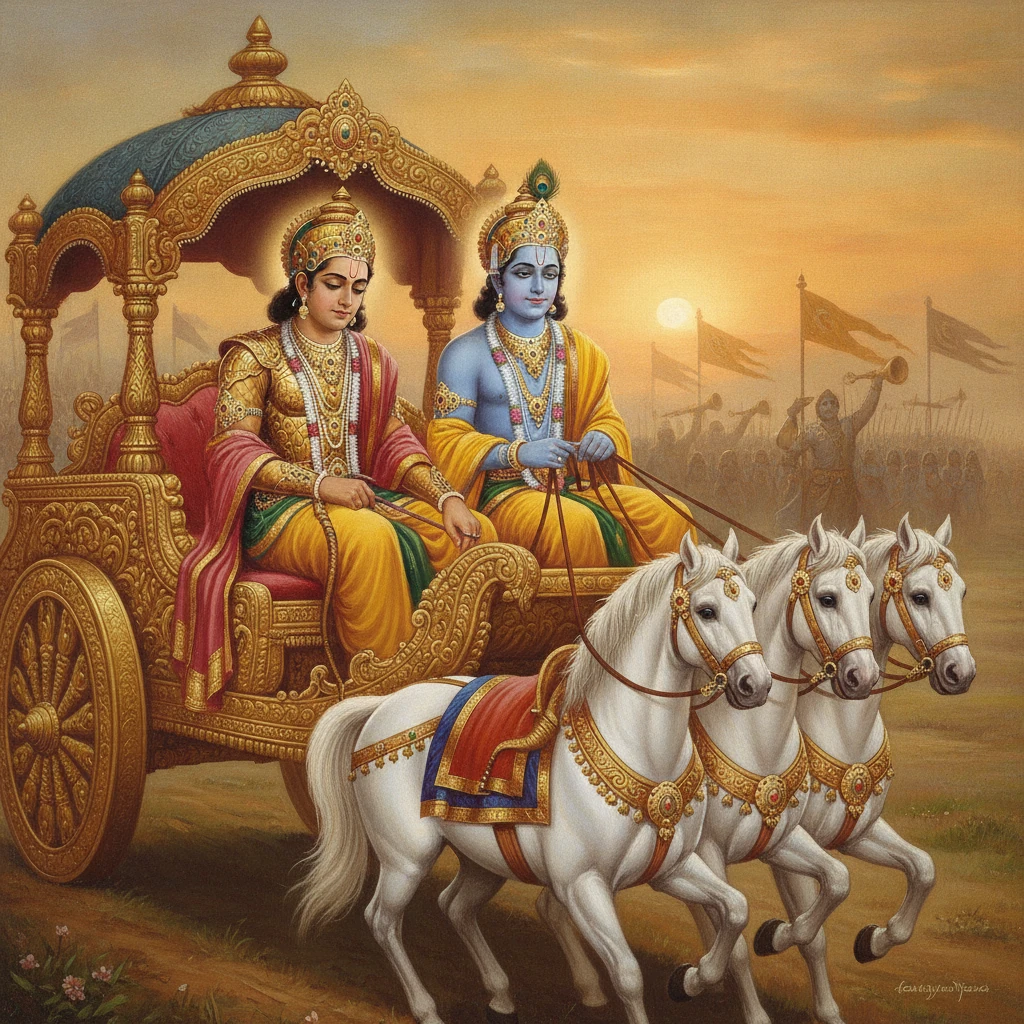
The sixth chapter of the Bhagavad Gita is Dhyana Yoga. In this chapter, Krishna reveals the Yoga of Meditation and how to practise this Yoga. He discusses the role of action in preparing for Meditation, how performing duties in devotion purifies one's mind and heightens one's spiritual consciousness. He explains in detail the obstacles that one faces when trying to control their mind and the exact methods by which one can conquer their mind. He reveals how one can focus their mind on Paramatma and unite with the God.
Original Text
Verses & Meaning
श्रीभगवानुवाच। अनाश्रितः कर्मफलं कार्यं कर्म करोति यः। स संन्यासी च योगी च न निरग्निर्न चाक्रियः॥
śrībhagavānuvāca anāśritaḥ karmaphalaṃ kāryaṃ karma karoti yaḥ sa saṃnyāsī ca yogī ca na niragnirna cākriyaḥ
The Blessed Lord said He who performs his bounden duty without depending on the fruits of his actions he is a Sannyasi and a Yogi; not he who is without fire and without action.
यं संन्यासमिति प्राहुर्योगं तं विद्धि पाण्डव। न ह्यसंन्यस्तसङ्कल्पो योगी भवति कश्चन॥
yaṃ saṃnyāsamiti prāhuryogaṃ taṃ viddhi pāṇḍava na hyasaṃnyastasaṅkalpo yogī bhavati kaścana
Do thou, O Arjuna, know Yoga to be that which they call renunciation; no one verily becomes a Yogi who has not renounced thoughts.
आरुरुक्षोर्मुनेर्योगं कर्म कारणमुच्यते। योगारूढस्य तस्यैव शमः कारणमुच्यते॥
ārurukṣormuneryogaṃ karma kāraṇamucyate yogārūḍhasya tasyaiva śamaḥ kāraṇamucyate
For a sage who wishes to attain to Yoga, action is said to be the means; for the same sage who has attained to Yoga, inaction (iescence) is said to be the means.
यदा हि नेन्द्रियार्थेषु न कर्मस्वनुषज्जते। सर्वसङ्कल्पसंन्यासी योगारूढस्तदोच्यते॥
yadā hi nendriyārtheṣu na karmasvanuṣajjate sarvasaṅkalpasaṃnyāsī yogārūḍhastadocyate
When a man is not attached to the sense-objects or to actions, having renounced all thoughts, then he is said to have attained to Yoga.
उद्धरेदात्मनात्मानं नात्मानमवसादयेत्। आत्मैव ह्यात्मनो बन्धुरात्मैव रिपुरात्मनः॥
uddharedātmanātmānaṃ nātmānamavasādayet ātmaiva hyātmano bandhurātmaiva ripurātmanaḥ
One should raise oneself by one's Self alone; let not one lower oneself; for the Self alone is the friend of oneself, and the Self alone is the enemy of oneself.
बन्धुरात्मात्मनस्तस्य येनात्मैवात्मना जितः। अनात्मनस्तु शत्रुत्वे वर्तेतात्मैव शत्रुवत्॥
bandhurātmātmanastasya yenātmaivātmanā jitaḥ anātmanastu śatrutve vartetātmaiva śatruvat
The Self is the friend of the self of him by whom the self has been conered by the Self, but to the unconered self, this Self stands in the position of an enemy, like an (external) foe.
जितात्मनः प्रशान्तस्य परमात्मा समाहितः। शीतोष्णसुखदुःखेषु तथा मानापमानयोः॥
jitātmanaḥ praśāntasya paramātmā samāhitaḥ śītoṣṇasukhaduḥkheṣu tathā mānāpamānayoḥ
The Supreme Self of him who is self-controlled and peaceful is balanced in cold and heat, pleasure and pain, as also in honour and dishonour.
ज्ञानविज्ञानतृप्तात्मा कूटस्थो विजितेन्द्रियः। युक्त इत्युच्यते योगी समलोष्टाश्मकाञ्चनः॥
jñānavijñānatṛptātmā kūṭastho vijitendriyaḥ yukta ityucyate yogī samaloṣṭāśmakāñcanaḥ
The Yogi who is satisfied with the knowledge and the wisdom (of the Self), who has conered the senses, and to whom a clod of earth, a piece of stone and gold are the same, is said to be harmonied (i.e., is said to have attained Nirvikalpa Samadhi).
सुहृन्मित्रार्युदासीनमध्यस्थद्वेष्यबन्धुषु। साधुष्वपि च पापेषु समबुद्धिर्विशिष्यते॥
suhṛnmitrāryudāsīnamadhyasthadveṣyabandhuṣu sādhuṣvapi ca pāpeṣu samabuddhirviśiṣyate
He who is of the same mind to the good-hearted, friends, enemies, the indifferent, the neutral, the hateful, the relatives, the righteous and the unrighteous, excels.
योगी युञ्जीत सततमात्मानं रहसि स्थितः। एकाकी यतचित्तात्मा निराशीरपरिग्रहः॥
yogī yuñjīta satatamātmānaṃ rahasi sthitaḥ ekākī yatacittātmā nirāśīraparigrahaḥ
Let the Yogi try constantly to keep the mind steady, remaining in solitude, alone, with the mind and the body controlled, and free from hope and covetousness.
शुचौ देशे प्रतिष्ठाप्य स्थिरमासनमात्मनः। नात्युच्छ्रितं नातिनीचं चैलाजिनकुशोत्तरम्॥
śucau deśe pratiṣṭhāpya sthiramāsanamātmanaḥ nātyucchritaṃ nātinīcaṃ cailājinakuśottaram
In a clean spot, having established a firm seat of his own, neither too high nor too low, made of a cloth, a skin and Kusa-grass, one over the other.
तत्रैकाग्रं मनः कृत्वा यतचित्तेन्द्रियक्रियः। उपविश्यासने युञ्ज्याद्योगमात्मविशुद्धये॥
tatraikāgraṃ manaḥ kṛtvā yatacittendriyakriyaḥ upaviśyāsane yuñjyādyogamātmaviśuddhaye
There, having made the mind one-pointed, with the actions of the mind and the senses controlled, let him, seated on the seat, practise Yoga for the purification of the self.
समं कायशिरोग्रीवं धारयन्नचलं स्थिरः। सम्प्रेक्ष्य नासिकाग्रं स्वं दिशश्चानवलोकयन्॥
samaṃ kāyaśirogrīvaṃ dhārayannacalaṃ sthiraḥ samprekṣya nāsikāgraṃ svaṃ diśaścānavalokayan
Let him firmly hold his body, head and neck erect and still, gazing at the tip of his nose, without looking around.
प्रशान्तात्मा विगतभीर्ब्रह्मचारिव्रते स्थितः। मनः संयम्य मच्चित्तो युक्त आसीत मत्परः॥
praśāntātmā vigatabhīrbrahmacārivrate sthitaḥ manaḥ saṃyamya maccitto yukta āsīta matparaḥ
Serene-minded, fearless, firm in the vow of a Brahmachari, having controlled the mind, thinking of Me and balanced in mind, let him sit, having Me as his supreme goal.
युञ्जन्नेवं सदात्मानं योगी नियतमानसः। शान्तिं निर्वाणपरमां मत्संस्थामधिगच्छति॥
yuñjannevaṃ sadātmānaṃ yogī niyatamānasaḥ śāntiṃ nirvāṇaparamāṃ matsaṃsthāmadhigacchati
Thus always keeping the mind balanced, the Yogi, with the mind controlled, attains to the peace abiding in Me, which culminates in liberation.
नात्यश्नतस्तु योगोऽस्ति न चैकान्तमनश्नतः। न चातिस्वप्नशीलस्य जाग्रतो नैव चार्जुन॥
nātyaśnatastu yogo.asti na caikāntamanaśnataḥ na cātisvapnaśīlasya jāgrato naiva cārjuna
Verily Yoga is not possible for him who eats too much, nor for him who does not eat at all, nor for him who sleeps too much, nor for him who is (always) awake, O Arjuna.
युक्ताहारविहारस्य युक्तचेष्टस्य कर्मसु। युक्तस्वप्नावबोधस्य योगो भवति दुःखहा॥
yuktāhāravihārasya yuktaceṣṭasya karmasu yuktasvapnāvabodhasya yogo bhavati duḥkhahā
Yoga becomes the destroyer of pain for him who is moderate in eating and recreation (such as walking, etc.), who is moderate in exertion in actions, who is moderate in sleep and wakefulness.
यदा विनियतं चित्तमात्मन्येवावतिष्ठते। निःस्पृहः सर्वकामेभ्यो युक्त इत्युच्यते तदा॥
yadā viniyataṃ cittamātmanyevāvatiṣṭhate niḥspṛhaḥ sarvakāmebhyo yukta ityucyate tadā
When the perfectly controlled mind rests in the Self only, free from longing for all the objects of desires, then it is said, 'He is united'.
यथा दीपो निवातस्थो नेङ्गते सोपमा स्मृता। योगिनो यतचित्तस्य युञ्जतो योगमात्मनः॥
yathā dīpo nivātastho neṅgate sopamā smṛtā yogino yatacittasya yuñjato yogamātmanaḥ
As a lamp placed in a windless spot does not flicker to such is compared the Yogi of controlled mind, practising Yoga in the Self (or absorbed in the Yoga of the Self).
यत्रोपरमते चित्तं निरुद्धं योगसेवया। यत्र चैवात्मनात्मानं पश्यन्नात्मनि तुष्यति॥
yatroparamate cittaṃ niruddhaṃ yogasevayā yatra caivātmanātmānaṃ paśyannātmani tuṣyati
When the mind, restrained by the practice of Yoga attains to quietude and when seeing the Self by the self, he is satisfied in his own Self.
सुखमात्यन्तिकं यत्तद् बुद्धिग्राह्यमतीन्द्रियम्। वेत्ति यत्र न चैवायं स्थितश्चलति तत्त्वतः॥
sukhamātyantikaṃ yattad buddhigrāhyamatīndriyam vetti yatra na caivāyaṃ sthitaścalati tattvataḥ
When he (the Yogi) feels that Infinite Bliss which can be grasped by the (pure) intellect and which transcends the senses, and established wherein he never moves from the Reality.
यं लब्ध्वा चापरं लाभं मन्यते नाधिकं ततः। यस्मिन्स्थितो न दुःखेन गुरुणापि विचाल्यते॥
yaṃ labdhvā cāparaṃ lābhaṃ manyate nādhikaṃ tataḥ yasminsthito na duḥkhena guruṇāpi vicālyate
Which, having obtained, he thinks there is no other gain superior to it; wherein estabished, he is not moved even by heavy sorrow.
तं विद्याद् दुःखसंयोगवियोगं योगसंज्ञितम्। स निश्चयेन योक्तव्यो योगोऽनिर्विण्णचेतसा॥
taṃ vidyād duḥkhasaṃyogaviyogaṃ yogasaṃjñitam sa niścayena yoktavyo yogo.anirviṇṇacetasā
Let that be known by the name of Yoga, the severance from union with pain. This Yoga should be practised with determination and with an undesponding mind.
सङ्कल्पप्रभवान्कामांस्त्यक्त्वा सर्वानशेषतः। मनसैवेन्द्रियग्रामं विनियम्य समन्ततः॥
saṅkalpaprabhavānkāmāṃstyaktvā sarvānaśeṣataḥ manasaivendriyagrāmaṃ viniyamya samantataḥ
Abandoning without reserve all desires born of Sankalpa (thought and imagination) and completely restraining the whole group of the senses by the mind from all sides.
शनैः शनैरुपरमेद् बुद्ध्या धृतिगृहीतया। आत्मसंस्थं मनः कृत्वा न किञ्चिदपि चिन्तयेत्॥
śanaiḥ śanairuparamed buddhyā dhṛtigṛhītayā ātmasaṃsthaṃ manaḥ kṛtvā na kiñcidapi cintayet
Little by little let him attain to ietude by the intellect held firmly; having made the mind establish itself in the Self, let him not think of anything.
यतो यतो निश्चरति मनश्चञ्चलमस्थिरम्। ततस्ततो नियम्यैतदात्मन्येव वशं नयेत्॥
yato yato niścarati manaścañcalamasthiram tatastato niyamyaitadātmanyeva vaśaṃ nayet
From whatever cause the restless and unsteady mind wanders away, from that let him restrain it and bring it under the control of the Self alone.
प्रशान्तमनसं ह्येनं योगिनं सुखमुत्तमम्। उपैति शान्तरजसं ब्रह्मभूतमकल्मषम्॥
praśāntamanasaṃ hyenaṃ yoginaṃ sukhamuttamam upaiti śāntarajasaṃ brahmabhūtamakalmaṣam
Supreme Bliss verily comes to this Yogi whose mind is ite peaceful, whose passion is ieted, who has become Brahman and who is free from sin.
युञ्जन्नेवं सदात्मानं योगी विगतकल्मषः। सुखेन ब्रह्मसंस्पर्शमत्यन्तं सुखमश्नुते॥
yuñjannevaṃ sadātmānaṃ yogī vigatakalmaṣaḥ sukhena brahmasaṃsparśamatyantaṃ sukhamaśnute
The Yogi, always engaging the mind thus (in the practice of Yoga), freed from sins, easily enjoys the Infinite Bliss of contact with Brahman (the Eternal).
सर्वभूतस्थमात्मानं सर्वभूतानि चात्मनि। ईक्षते योगयुक्तात्मा सर्वत्र समदर्शनः॥
sarvabhūtasthamātmānaṃ sarvabhūtāni cātmani īkṣate yogayuktātmā sarvatra samadarśanaḥ
With the mind harmonised by Yoga he sees the Self abiding in all beings and all beings in the Self; he sees the same everywhere.
यो मां पश्यति सर्वत्र सर्वं च मयि पश्यति। तस्याहं न प्रणश्यामि स च मे न प्रणश्यति॥
yo māṃ paśyati sarvatra sarvaṃ ca mayi paśyati tasyāhaṃ na praṇaśyāmi sa ca me na praṇaśyati
He who sees Me everywhere and sees everything in Me, he never becomes separated from Me, nor do I become separated from him.
सर्वभूतस्थितं यो मां भजत्येकत्वमास्थितः। सर्वथा वर्तमानोऽपि स योगी मयि वर्तते॥
sarvabhūtasthitaṃ yo māṃ bhajatyekatvamāsthitaḥ sarvathā vartamāno.api sa yogī mayi vartate
He who, being established in unity, worships Me Who dwells in all beings, that Yogi abides in Me, whatever may be his mode of living.
आत्मौपम्येन सर्वत्र समं पश्यति योऽर्जुन। सुखं वा यदि वा दुःखं स योगी परमो मतः॥
ātmaupamyena sarvatra samaṃ paśyati yo.arjuna sukhaṃ vā yadi vā duḥkhaṃ sa yogī paramo mataḥ
He who, through the likeness of the Self, O Arjuna, sees eality everywhere, be it pleasure or pain, he is regarded as the highest Yogi.
अर्जुन उवाच। योऽयं योगस्त्वया प्रोक्तः साम्येन मधुसूदन। एतस्याहं न पश्यामि चञ्चलत्वात्स्थितिं स्थिराम्॥
arjuna uvāca yo.ayaṃ yogastvayā proktaḥ sāmyena madhusūdana etasyāhaṃ na paśyāmi cañcalatvātsthitiṃ sthirām
Arjuna said This Yoga of eanimity taught by Thee, O Krishna, I do not see its steady continuance, because of the restlessness (of the mind).
चञ्चलं हि मनः कृष्ण प्रमाथि बलवद् दृढम्। तस्याहं निग्रहं मन्ये वायोरिव सुदुष्करम्॥
cañcalaṃ hi manaḥ kṛṣṇa pramāthi balavad dṛḍham tasyāhaṃ nigrahaṃ manye vāyoriva suduṣkaram
The mind verily is restless, turbulent, strong and unyielding, O Krishna: I deem it as difficult to control it as to control the wind.
श्रीभगवानुवाच। असंशयं महाबाहो मनो दुर्निग्रहं चलम्। अभ्यासेन तु कौन्तेय वैराग्येण च गृह्यते॥
śrībhagavānuvāca asaṃśayaṃ mahābāho mano durnigrahaṃ calam abhyāsena tu kaunteya vairāgyeṇa ca gṛhyate
The Blessed Lord said Undoubtedly, O mighty-armed Arjuna, the mind is difficult to control and restless; but by practice and by dispassion it may be restrained.
असंयतात्मना योगो दुष्प्राप इति मे मतिः। वश्यात्मना तु यतता शक्योऽवाप्तुमुपायतः॥
asaṃyatātmanā yogo duṣprāpa iti me matiḥ vaśyātmanā tu yatatā śakyo.avāptumupāyataḥ
I think Yoga is hard to be attained by one of uncontrolled self, but the self-controlled and striving one can attain to it by the (proper) means.
अर्जुन उवाच। अयतिः श्रद्धयोपेतो योगाच्चलितमानसः। अप्राप्य योगसंसिद्धिं कां गतिं कृष्ण गच्छति॥
arjuna uvāca ayatiḥ śraddhayopeto yogāccalitamānasaḥ aprāpya yogasaṃsiddhiṃ kāṃ gatiṃ kṛṣṇa gacchati
Arjuna said He who is unable to control himself though he has the faith, and whose mind wanders away from Yoga, what end does he, having failed to attain perfection in Yoga, mee,t O Krishna?
कच्चिन्नोभयविभ्रष्टश्छिन्नाभ्रमिव नश्यति। अप्रतिष्ठो महाबाहो विमूढो ब्रह्मणः पथि॥
kaccinnobhayavibhraṣṭaśchinnābhramiva naśyati apratiṣṭho mahābāho vimūḍho brahmaṇaḥ pathi
Swami Sivananda did not comment on this sloka
एतन्मे संशयं कृष्ण छेत्तुमर्हस्यशेषतः। त्वदन्यः संशयस्यास्य छेत्ता न ह्युपपद्यते॥
etanme saṃśayaṃ kṛṣṇa chettumarhasyaśeṣataḥ tvadanyaḥ saṃśayasyāsya chettā na hyupapadyate
This doubt of mine, O Krishna, do Thou dispel completely; because it is not possible for any but Thee to dispel this doubt.
श्रीभगवानुवाच। पार्थ नैवेह नामुत्र विनाशस्तस्य विद्यते। न हि कल्याणकृत्कश्चिद् दुर्गतिं तात गच्छति॥
śrībhagavānuvāca pārtha naiveha nāmutra vināśastasya vidyate na hi kalyāṇakṛtkaścid durgatiṃ tāta gacchati
The Blessed Lord said O Arjuna, neither in this world, nor in the next world is there destruction for him; none, verily, who does good, O My son, ever comes to grief.
प्राप्य पुण्यकृतां लोकानुषित्वा शाश्वतीः समाः। शुचीनां श्रीमतां गेहे योगभ्रष्टोऽभिजायते॥
prāpya puṇyakṛtāṃ lokānuṣitvā śāśvatīḥ samāḥ śucīnāṃ śrīmatāṃ gehe yogabhraṣṭo.abhijāyate
Having attained to the worlds of the righteous and having dwelt there for everlasting years, he who fell from Yoga is rorn in a house of the pure and wealthy.
अथवा योगिनामेव कुले भवति धीमताम्। एतद्धि दुर्लभतरं लोके जन्म यदीदृशम्॥
athavā yogināmeva kule bhavati dhīmatām etaddhi durlabhataraṃ loke janma yadīdṛśam
Or he is born in a family of even the wise Yogis; verily a birth like this is very difficult to obtain in this world.
तत्र तं बुद्धिसंयोगं लभते पौर्वदेहिकम्। यतते च ततो भूयः संसिद्धौ कुरुनन्दन॥
tatra taṃ buddhisaṃyogaṃ labhate paurvadehikam yatate ca tato bhūyaḥ saṃsiddhau kurunandana
Thee he comes in touch with the knowledge acired in his former body and strives more than before for perfection, O Arjuna.
पूर्वाभ्यासेन तेनैव ह्रियते ह्यवशोऽपि सः। जिज्ञासुरपि योगस्य शब्दब्रह्मातिवर्तते॥
pūrvābhyāsena tenaiva hriyate hyavaśo.api saḥ jijñāsurapi yogasya śabdabrahmātivartate
By that very former practice he is borne on in spite of himself. Even he who merely wishes to know Yoga goes beyond the Brahmic word.
प्रयत्नाद्यतमानस्तु योगी संशुद्धकिल्बिषः। अनेकजन्मसंसिद्धस्ततो याति परां गतिम्॥
prayatnādyatamānastu yogī saṃśuddhakilbiṣaḥ anekajanmasaṃsiddhastato yāti parāṃ gatim
But the Yogi who strives with assiduity, purified of sins and perfected gradually through many births, reaches the highest goal.
तपस्विभ्योऽधिको योगी ज्ञानिभ्योऽपि मतोऽधिकः। कर्मिभ्यश्चाधिको योगी तस्माद्योगी भवार्जुन॥
tapasvibhyo.adhiko yogī jñānibhyo.api mato.adhikaḥ karmibhyaścādhiko yogī tasmādyogī bhavārjuna
The Yogi is thought to be superior to the ascetics and even superior to men of knowledge (obtained through the study of scriptures); he is also superior to men of action; therefore be thou a Yogi, O Arjuna.
योगिनामपि सर्वेषां मद्गतेनान्तरात्मना। श्रद्धावान्भजते यो मां स मे युक्ततमो मतः॥
yogināmapi sarveṣāṃ madgatenāntarātmanā śraddhāvānbhajate yo māṃ sa me yuktatamo mataḥ
And among all the Yogis he who, full of faith and with his inner self merged in Me, worships Me is deemed by Me to be the most devout.
Quick guide
Before you begin
Bhav
Benefits devotees pray for
FAQ
Common questions
What is Bhagavad Gita Chapter 6 (Dhyana Yoga) about?
The sixth chapter of the Bhagavad Gita is Dhyana Yoga. In this chapter, Krishna reveals the Yoga of Meditation and how to practise this Yoga. He discusses the role of action in preparing for Meditation, how performing duties in devotion purifies one's mind and heightens one's spiritual consciousness. He explains in detail the obstacles that one faces when trying to control their mind and the exact methods by which one can conquer their mind. He reveals how one can focus their mind on Paramatma and unite with the God.
How many verses are in Bhagavad Gita Chapter 6?
Chapter 6 (Dhyana Yoga) has 47 verses. You can read every one above in Sanskrit, with IAST transliteration and its meaning in Hindi and English.
What does "Dhyana Yoga" mean?
"Dhyana Yoga" is the name of Chapter 6 of the Bhagavad Gita; it means "Path of Meditation". Its 47 verses form part of Bhagwan Krishna's teaching to Arjuna on the field of Kurukshetra.
Bring the Gita's wisdom into your life
On Gita Jayanti at Shri Vishnupad Mandir, Gaya, a sankalp is offered in your naam-gotra for clarity of mind and right decision. Book the seva, or continue reading the Bhagavad Gita.