



 श्री गिरधर कृष्ण मुरारी की
The complete Aarti Kunj Bihari Ki with meaning, significance and the right way to sing this beloved Krishna aarti every evening.
Aarti Kunj Bihari Ki is one of the most beloved and widely sung aartis of Lord Krishna, describing the playful, radiant form of Kunj Bihari — "the one who sports in the groves of Vrindavan." It is sung every evening in Krishna temples across India, most famously at Banke Bihari Mandir in Vrindavan, and in countless homes after the evening puja or Bhagavad Katha.
Complete Aarti Kunj Bihari Ki (Devanagari)
आरती कुंजबिहारी की, श्री गिरिधर कृष्णमुरारी की।
गले में बैजंतीमाला, बजावै मुरली मधुर बाला। श्रवण में कुंडल झलकाला, नंद के आनंद नंदलाला। आरती कुंजबिहारी की, श्री गिरिधर कृष्णमुरारी की।
गगन सम अंग कांति काली, राधिका चमक रही आली। लतन में ठाढ़े बनमाली, भ्रमर सी अलक कस्तूरी तिलक चंद्र सी झलक। ललित छवि श्यामा प्यारी की। आरती कुंजबिहारी की, श्री गिरिधर कृष्णमुरारी की।
कनकमय मोर मुकुट बिलसै, देवता दरसन को तरसैं। गगन सों सुमन रासि बरसैं, बजे मुरचंग मधुर मृदंग। ग्वालिन संग अतुल रति गोप कुमारी की। आरती कुंजबिहारी की, श्री गिरिधर कृष्णमुरारी की।
जहाँ ते प्रकट भई गंगा, सकल मन हारिणि श्री गंगा। स्मरन ते होत मोह भंगा, बसी शिव सीस जटा के बीच। हरै अघ कीच चरण छवि श्री बनवारी की। आरती कुंजबिहारी की, श्री गिरिधर कृष्णमुरारी की।
चमकती उज्ज्वल तट रेनू, बज रही वृंदावन बेनू। चहुँ दिसि गोपि ग्वाल धेनू, हँसत मृदु मंद चांदनी चंद्र। कुंज मंहि गोविंद राधिका प्यारी की। आरती कुंजबिहारी की, श्री गिरिधर कृष्णमुरारी की।
श्री गिरिधर कृष्णमुरारी की, आरती कुंजबिहारी की।
Meaning
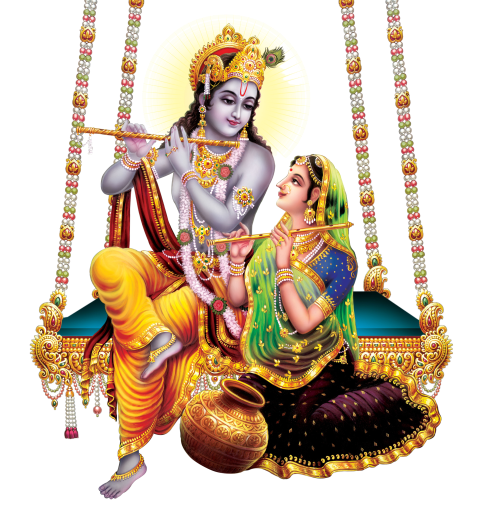
The aarti opens by bowing to Kunj Bihari, the Girdhar (mountain-lifter) Krishna Murari, who plays in the groves of Vrindavan. It describes His vaijyanti garland, the sweet flute at His lips, His swaying earrings, and calls Him the joy of Nanda's household, Nandlala.
It then paints His dark, sky-like complexion beside the glowing beauty of Radhika. Standing amid the flowering vines as Banmali (garland-of-the-forest), with curling locks like bees, a musk tilak shining like the moon — this is the tender, lovely image of Shyama Pyari's beloved.
The golden peacock-feather crown gleams; even the gods yearn for His darshan. Flowers rain down from the sky, mridangas and cymbals resound, and the gopis share matchless love with the cowherd prince.
The verse remembers that the Ganga herself flows from the touch of Krishna's feet — the Ganga that steals every heart, whose very remembrance dissolves worldly attachment, and that rests in Shiva's matted locks. The glory of Banwari's feet washes away sin like mud.
Finally, the moonlit sands of Vrindavan shimmer, the divine flute plays, gopis, cowherds and cows surround Him on every side, and in the groves Govinda rests with His beloved Radhika under the soft glow of the moon.
Why This Aarti Is Sung
Aarti Kunj Bihari Ki is sung to invoke the sakhya-bhava and madhurya-bhava of Krishna bhakti — the sweet, intimate love the gopis of Vrindavan bore for Krishna. Unlike aartis that emphasise Krishna's cosmic power, this one dwells lovingly on His beauty, His flute, His playful pastimes (leela) with Radha in the kunj (groves) of Vrindavan. Singing it is believed to draw the devotee into that same devotional sweetness.
How and When to Perform
This aarti is traditionally sung during the evening (sandhya) aarti of Krishna, especially in Vrindavan temples where it accompanies the daily Shringar and Sandhya aarti of Banke Bihari ji. At home, light a ghee diya before an image or murti of Krishna and Radha, offer tulsi leaves, incense and a few flowers, then sing the aarti while gently moving the lit lamp in a circular motion before the deity. It may also be sung after reciting the Bhagavad Gita, Vishnu Sahasranama, or any Krishna katha.
Some families sing it every evening; others reserve it especially for Janmashtami, Radhashtami, and the month of Kartik or Shravan, when Krishna-Radha worship intensifies.
Benefits
Devotees believe that singing this aarti with sincerity brings peace of mind, deepens devotion (bhakti) toward Krishna and Radha, removes obstacles from the heart, and fills the home with a sense of divine sweetness and protection. It is especially cherished by those on the path of Radha-Krishna upasana (Vaishnava bhakti).
Quick guide
Before you begin
Mantra
Khatu Shyam mantra
Om Shri Shyam Devaya Namah
Chant with love and surrender, especially before Shyam Baba katha, aarti, or bhog.
Bhav
Benefits devotees pray for
FAQ
Common questions
When should Aarti Kunj Bihari Ki be sung?
It is traditionally sung during the evening (sandhya) aarti of Krishna, and especially on Janmashtami, Radhashtami and through Kartik month.
Who wrote Aarti Kunj Bihari Ki?
It comes from the Vaishnava devotional tradition of Vrindavan and is sung as part of the daily aarti at Banke Bihari Mandir; its exact authorship, like many folk aartis, has been passed down orally through generations of Braj bhakti poets.
Can this aarti be sung at home without a priest?
Yes, any devotee can light a diya before a Krishna or Radha-Krishna image and sing this aarti; no priest is required for home worship.
What is the meaning of 'Kunj Bihari'?
Kunj Bihari means 'the one who sports/plays in the groves (kunj) of Vrindavan' — a name for Krishna describing His playful pastimes with Radha and the gopis.
Deepen your Krishna bhakti
Offer a puja to Radha-Krishna or explore more sacred texts on Divya Chadhava.