



 Bhagavad Gita · Chapter 3
What Chapter 3 teaches
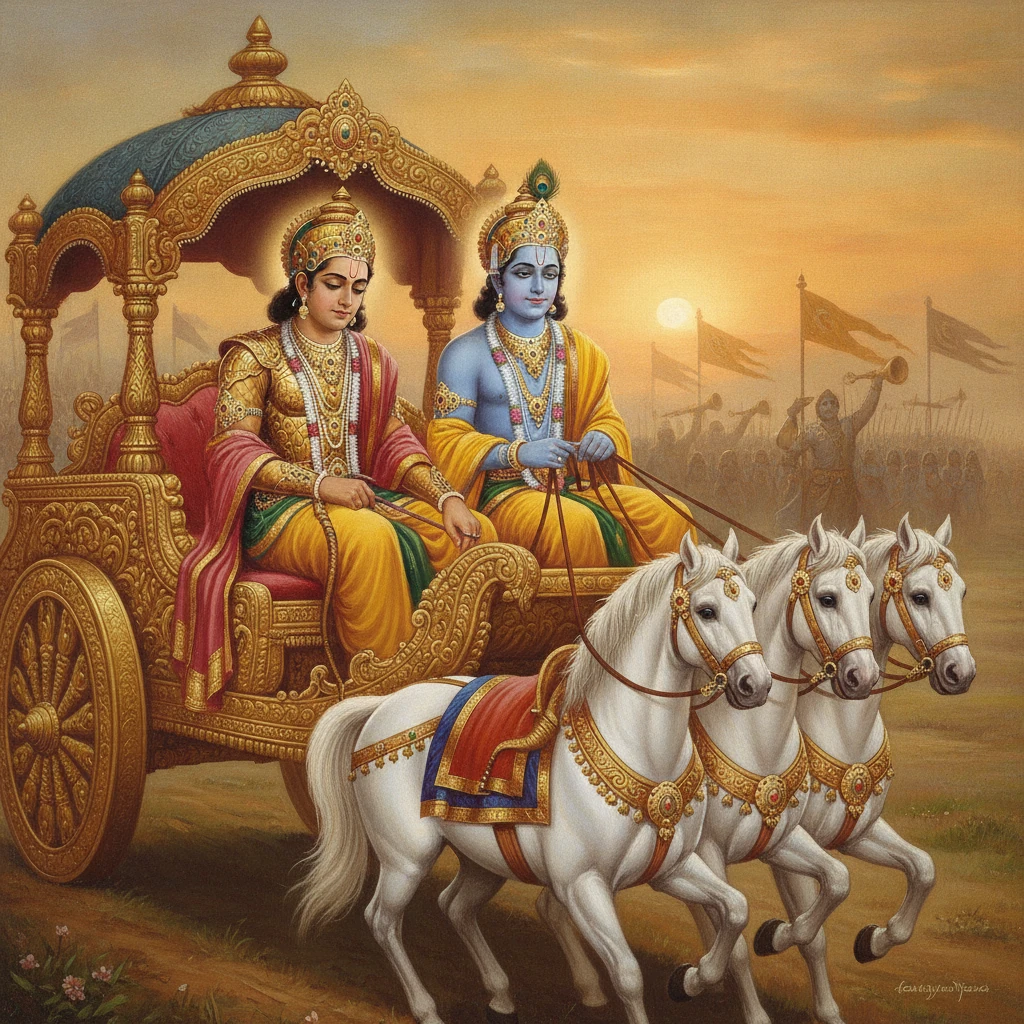
The third chapter of the Bhagavad Gita is Karma Yoga or the Path of Selfless Service. Here Lord Krishna emphasizes the importance of karma in life. He reveals that it is important for every human being to engage in some sort of activity in this material world. Further, he describes the kinds of actions that lead to bondage and the kinds that lead to liberation. Those persons who continue to perform their respective duties externally for the pleasure of the Supreme, without attachment to its rewards get liberation at the end.
Original Text
Verses & Meaning
अर्जुन उवाच। ज्यायसी चेत्कर्मणस्ते मता बुद्धिर्जनार्दन। तत्किं कर्मणि घोरे मां नियोजयसि केशव॥
arjuna uvāca jyāyasī cetkarmaṇaste matā buddhirjanārdana tatkiṃ karmaṇi ghore māṃ niyojayasi keśava
Arjuna said If Thou thinkest that knowledge is superior to action, O Krishna, why then, O Kesava, dost Thou ask me to engage in this terrible action?
व्यामिश्रेणेव वाक्येन बुद्धिं मोहयसीव मे। तदेकं वद निश्चित्य येन श्रेयोऽहमाप्नुयाम्॥
vyāmiśreṇeva vākyena buddhiṃ mohayasīva me tadekaṃ vada niścitya yena śreyo.ahamāpnuyām
With this apparently perplexing speech, Thou confusest, as it were, my understanding; therefore tell me that one way for certain by which I may attain bliss.
श्रीभगवानुवाच। लोकेऽस्मिन् द्विविधा निष्ठा पुरा प्रोक्ता मयानघ। ज्ञानयोगेन साङ्ख्यानां कर्मयोगेन योगिनाम्॥
śrībhagavānuvāca loke.asmina dvividhā niṣṭhā purā proktā mayānagha jñānayogena sāṅkhyānāṃ karmayogena yoginām
The Blessed Lord said In this world there is a twofold path, as I said before, O sinless one; the path of knowledge of the Sankhyas and the path of action of the Yogins.
न कर्मणामनारम्भान्नैष्कर्म्यं पुरुषोऽश्नुते। न च संन्यसनादेव सिद्धिं समधिगच्छति॥
na karmaṇāmanārambhānnaiṣkarmyaṃ puruṣo.aśnute na ca saṃnyasanādeva siddhiṃ samadhigacchati
Not by non-performance of actions does man reach actionlessness; nor by mere renunciation does he attain to perfection.
न हि कश्चित्क्षणमपि जातु तिष्ठत्यकर्मकृत्। कार्यते ह्यवशः कर्म सर्वः प्रकृतिजैर्गुणैः॥
na hi kaścitkṣaṇamapi jātu tiṣṭhatyakarmakṛt kāryate hyavaśaḥ karma sarvaḥ prakṛtijairguṇaiḥ
Verily none can ever remain for even a moment without performing action; for everyone is made to act helplessly indeed by the alities born of Nature.
कर्मेन्द्रियाणि संयम्य य आस्ते मनसा स्मरन्। इन्द्रियार्थान्विमूढात्मा मिथ्याचारः स उच्यते॥
karmendriyāṇi saṃyamya ya āste manasā smaran indriyārthānvimūḍhātmā mithyācāraḥ sa ucyate
He who, restraining the organs of action, sits thinking of the sense-objects in mind, he of deluded understanding is called a hypocrite.
यस्त्विन्द्रियाणि मनसा नियम्यारभतेऽर्जुन। कर्मेन्द्रियैः कर्मयोगमसक्तः स विशिष्यते॥
yastvindriyāṇi manasā niyamyārabhate.arjuna karmendriyaiḥ karmayogamasaktaḥ sa viśiṣyate
But whosoever, controlling the senses by the mind, O Arjuna, engages himself in Karma Yoga with the organs of action, without attachment, he excels.
नियतं कुरु कर्म त्वं कर्म ज्यायो ह्यकर्मणः। शरीरयात्रापि च ते न प्रसिद्ध्येदकर्मणः॥
niyataṃ kuru karma tvaṃ karma jyāyo hyakarmaṇaḥ śarīrayātrāpi ca te na prasiddhyedakarmaṇaḥ
Do thou perform (thy) bounden duty, for action is superior to inaction and even the maintenance of the body would not be possible for thee by inaction.
यज्ञार्थात्कर्मणोऽन्यत्र लोकोऽयं कर्मबन्धनः। तदर्थं कर्म कौन्तेय मुक्तसङ्गः समाचर॥
yajñārthātkarmaṇo.anyatra loko.ayaṃ karmabandhanaḥ tadarthaṃ karma kaunteya muktasaṅgaḥ samācara
The world is bound by actions other than those performed for the sake of sacrifice; do thou, therefore, O son of Kunti (Arjuna), perform action for that sake (for sacrifice alone), free from attachment.
सहयज्ञाः प्रजाः सृष्ट्वा पुरोवाच प्रजापतिः। अनेन प्रसविष्यध्वमेष वोऽस्त्विष्टकामधुक्॥
sahayajñāḥ prajāḥ sṛṣṭvā purovāca prajāpatiḥ anena prasaviṣyadhvameṣa vo.astviṣṭakāmadhuk
The Creator, having in the beginning (of creation) created mankind together with sacrifice, said, "By this shall ye propagate; let this be the milch cow of your desires (the cow which yields all the desired objects)."
देवान्भावयतानेन ते देवा भावयन्तु वः। परस्परं भावयन्तः श्रेयः परमवाप्स्यथ॥
devānbhāvayatānena te devā bhāvayantu vaḥ parasparaṃ bhāvayantaḥ śreyaḥ paramavāpsyatha
With this do ye nourish the gods and may those gods nourish you; thus nourishing one another, ye shall attain to the highest good.
इष्टान्भोगान्हि वो देवा दास्यन्ते यज्ञभाविताः। तैर्दत्तानप्रदायैभ्यो यो भुङ्क्ते स्तेन एव सः॥
iṣṭānbhogānhi vo devā dāsyante yajñabhāvitāḥ tairdattānapradāyaibhyo yo bhuṅkte stena eva saḥ
The gods, nourished by the sacrifice, will give you the desired objects. So, he who enjoys the objects given by the gods without offering (in return) to them, is verily a thief.
यज्ञशिष्टाशिनः सन्तो मुच्यन्ते सर्वकिल्बिषैः। भुञ्जते ते त्वघं पापा ये पचन्त्यात्मकारणात्॥
yajñaśiṣṭāśinaḥ santo mucyante sarvakilbiṣaiḥ bhuñjate te tvaghaṃ pāpā ye pacantyātmakāraṇāt
The righteous who eat the remnants of the sacrifice are freed from all sins; but those sinful ones who cook food (only) for their own sake verily eat sin.
अन्नाद्भवन्ति भूतानि पर्जन्यादन्नसम्भवः। यज्ञाद्भवति पर्जन्यो यज्ञः कर्मसमुद्भवः॥
annādbhavanti bhūtāni parjanyādannasambhavaḥ yajñādbhavati parjanyo yajñaḥ karmasamudbhavaḥ
From food come forth beings; from rain food is produced; from sacrifice arises rain and sacrifice is born of action.
कर्म ब्रह्मोद्भवं विद्धि ब्रह्माक्षरसमुद्भवम्। तस्मात्सर्वगतं ब्रह्म नित्यं यज्ञे प्रतिष्ठितम्॥
karma brahmodbhavaṃ viddhi brahmākṣarasamudbhavam tasmātsarvagataṃ brahma nityaṃ yajñe pratiṣṭhitam
Know thou that action comes from Brahma and Brahma comes from the Imperishable. Therefore, the all-pervading (Brahma) ever rests in sacrifice.
एवं प्रवर्तितं चक्रं नानुवर्तयतीह यः। अघायुरिन्द्रियारामो मोघं पार्थ स जीवति॥
evaṃ pravartitaṃ cakraṃ nānuvartayatīha yaḥ aghāyurindriyārāmo moghaṃ pārtha sa jīvati
He who does not follow here the wheel thus set revolving, who is of sinful life, rejoicing in the senses, he lives in vain, O Arjuna.
यस्त्वात्मरतिरेव स्यादात्मतृप्तश्च मानवः। आत्मन्येव च सन्तुष्टस्तस्य कार्यं न विद्यते॥
yastvātmaratireva syādātmatṛptaśca mānavaḥ ātmanyeva ca santuṣṭastasya kāryaṃ na vidyate
But for that man who rejoices only in the Self, who is satisfied with the Self and who is content in the Self alone, verily there is nothing to do.
नैव तस्य कृतेनार्थो नाकृतेनेह कश्चन। न चास्य सर्वभूतेषु कश्चिदर्थव्यपाश्रयः॥
naiva tasya kṛtenārtho nākṛteneha kaścana na cāsya sarvabhūteṣu kaścidarthavyapāśrayaḥ
For him there is no interest whatever in what is done or what is not done; nor does he depend on any being for any object.
तस्मादसक्तः सततं कार्यं कर्म समाचर। असक्तो ह्याचरन्कर्म परमाप्नोति पूरुषः॥
tasmādasaktaḥ satataṃ kāryaṃ karma samācara asakto hyācarankarma paramāpnoti pūruṣaḥ
Therefore without attachment, do thou always perform action which should be done; for by performing action without attachment man reaches the Supreme.
कर्मणैव हि संसिद्धिमास्थिता जनकादयः। लोकसंग्रहमेवापि सम्पश्यन्कर्तुमर्हसि॥
karmaṇaiva hi saṃsiddhimāsthitā janakādayaḥ lokasaṃgrahamevāpi sampaśyankartumarhasi
Janaka and others attained perfection verily by action only; even with a view to the protection of the masses thou shouldst perform action.
यद्यदाचरति श्रेष्ठस्तत्तदेवेतरो जनः। स यत्प्रमाणं कुरुते लोकस्तदनुवर्तते॥
yadyadācarati śreṣṭhastattadevetaro janaḥ sa yatpramāṇaṃ kurute lokastadanuvartate
Whatsoever a great man does, that the other men also do; whatever he sets up as the standard, that the world (mankind) follows.
न मे पार्थास्ति कर्तव्यं त्रिषु लोकेषु किञ्चन। नानवाप्तमवाप्तव्यं वर्त एव च कर्मणि॥
na me pārthāsti kartavyaṃ triṣu lokeṣu kiñcana nānavāptamavāptavyaṃ varta eva ca karmaṇi
There is nothing in the three worlds, O Arjuna, that should be done by Me, nor is there anything unattained that should be attained; yet I engage Myself in action.
यदि ह्यहं न वर्तेयं जातु कर्मण्यतन्द्रितः। मम वर्त्मानुवर्तन्ते मनुष्याः पार्थ सर्वशः॥
yadi hyahaṃ na varteyaṃ jātu karmaṇyatandritaḥ mama vartmānuvartante manuṣyāḥ pārtha sarvaśaḥ
For, should I not ever engage Myself in action, unwearied, men would in every way follow My path, O Arjuna.
उत्सीदेयुरिमे लोका न कुर्यां कर्म चेदहम्। सङ्करस्य च कर्ता स्यामुपहन्यामिमाः प्रजाः॥
utsīdeyurime lokā na kuryāṃ karma cedaham saṅkarasya ca kartā syāmupahanyāmimāḥ prajāḥ
These worlds would perish if I did not perform action; I should be the author of confusion of castes and destruction of these beings.
सक्ताः कर्मण्यविद्वांसो यथा कुर्वन्ति भारत। कुर्याद्विद्वांस्तथासक्तश्चिकीर्षुर्लोकसंग्रहम्॥
saktāḥ karmaṇyavidvāṃso yathā kurvanti bhārata kuryādvidvāṃstathāsaktaścikīrṣurlokasaṃgraham
As the ignorant men act from attachment to action, O Bharata (Arjuna), so should the wise act without attachment, wishing the welfare of the world.
न बुद्धिभेदं जनयेदज्ञानां कर्मसङ्गिनाम्। जोषयेत्सर्वकर्माणि विद्वान्युक्तः समाचरन्॥
na buddhibhedaṃ janayedajñānāṃ karmasaṅginām joṣayetsarvakarmāṇi vidvānyuktaḥ samācaran
Let no wise man unsettle the mind of ignorant people who are attached to action; he should engage them in all actions, himself fulfilling them with devotion.
प्रकृतेः क्रियमाणानि गुणैः कर्माणि सर्वशः। अहङ्कारविमूढात्मा कर्ताहमिति मन्यते॥
prakṛteḥ kriyamāṇāni guṇaiḥ karmāṇi sarvaśaḥ ahaṅkāravimūḍhātmā kartāhamiti manyate
All actions are wrought in all cases by the alities of Nature only. He whose mind is deluded by egoism thinks, "I am the doer."
तत्त्ववित्तु महाबाहो गुणकर्मविभागयोः। गुणा गुणेषु वर्तन्त इति मत्वा न सज्जते॥
tattvavittu mahābāho guṇakarmavibhāgayoḥ guṇā guṇeṣu vartanta iti matvā na sajjate
But he who knows the Truth, O mighty-armed (Arjuna), about the divisions of the alities and (their) functions, knowing that the Gunas as senses move amidst the Gunas as the sense-objects, is not attached.
प्रकृतेर्गुणसम्मूढाः सज्जन्ते गुणकर्मसु। तानकृत्स्नविदो मन्दान्कृत्स्नविन्न विचालयेत्॥
prakṛterguṇasammūḍhāḥ sajjante guṇakarmasu tānakṛtsnavido mandānkṛtsnavinna vicālayet
Those deluded by the alities of Nature are attached to the functions of the alities. The man of perfect knowledge should not unsettle the foolish one who is of imperfect knowledge.
मयि सर्वाणि कर्माणि संन्यस्याध्यात्मचेतसा। निराशीर्निर्ममो भूत्वा युध्यस्व विगतज्वरः॥
mayi sarvāṇi karmāṇi saṃnyasyādhyātmacetasā nirāśīrnirmamo bhūtvā yudhyasva vigatajvaraḥ
Renouncing all actions in Me, with the mind centred in the Self, free from hope and egoism, and from (mental) fever, do thou fight.
ये मे मतमिदं नित्यमनुतिष्ठन्ति मानवाः। श्रद्धावन्तोऽनसूयन्तो मुच्यन्ते तेऽपि कर्मभिः॥
ye me matamidaṃ nityamanutiṣṭhanti mānavāḥ śraddhāvanto.anasūyanto mucyante te.api karmabhiḥ
Those men who constantly practise this teaching of Mine with faith and without cavilling, they too are freed from actions.
ये त्वेतदभ्यसूयन्तो नानुतिष्ठन्ति मे मतम्। सर्वज्ञानविमूढांस्तान्विद्धि नष्टानचेतसः॥
ye tvetadabhyasūyanto nānutiṣṭhanti me matam sarvajñānavimūḍhāṃstānviddhi naṣṭānacetasaḥ
But those who carp at My teaching and do not practise it, deluded of all knowledge, and devoid of discrimination, know them to be doomed to destruction.
सदृशं चेष्टते स्वस्याः प्रकृतेर्ज्ञानवानपि। प्रकृतिं यान्ति भूतानि निग्रहः किं करिष्यति॥
sadṛśaṃ ceṣṭate svasyāḥ prakṛterjñānavānapi prakṛtiṃ yānti bhūtāni nigrahaḥ kiṃ kariṣyati
Even a wise man acts in accordance with his own nature; beings will follow Nature; what can restraint do?
इन्द्रियस्येन्द्रियस्यार्थे रागद्वेषौ व्यवस्थितौ। तयोर्न वशमागच्छेत्तौ ह्यस्य परिपन्थिनौ॥
indriyasyendriyasyārthe rāgadveṣau vyavasthitau tayorna vaśamāgacchettau hyasya paripanthinau
Attachment and aversion for the objects of the senses abide in the senses; let none come under their sway; for, they are his foes.
श्रेयान्स्वधर्मो विगुणः परधर्मात्स्वनुष्ठितात्। स्वधर्मे निधनं श्रेयः परधर्मो भयावहः॥
śreyānsvadharmo viguṇaḥ paradharmātsvanuṣṭhitāt svadharme nidhanaṃ śreyaḥ paradharmo bhayāvahaḥ
Better is one's own duty, though devoid of merit than the duty of another well discharged. Better is death in one's own duty; the duty of another is fraught with fear (is productive of danger).
अर्जुन उवाच। अथ केन प्रयुक्तोऽयं पापं चरति पूरुषः। अनिच्छन्नपि वार्ष्णेय बलादिव नियोजितः॥
arjuna uvāca atha kena prayukto.ayaṃ pāpaṃ carati pūruṣaḥ anicchannapi vārṣṇeya balādiva niyojitaḥ
Arjuna said But impelled by what does man commit sin, though against his wishes, O Varshneya (Krishna), constrained as it were, by force?
श्रीभगवानुवाच। काम एष क्रोध एष रजोगुणसमुद्भवः। महाशनो महापाप्मा विद्ध्येनमिह वैरिणम्॥
śrībhagavānuvāca kāma eṣa krodha eṣa rajoguṇasamudbhavaḥ mahāśano mahāpāpmā viddhyenamiha vairiṇam
The Blessed Lord said It is desire, it is anger both of the ality of Rajas, all-devouring, all-sinful; know this as the foe here (in this world).
धूमेनाव्रियते वह्निर्यथादर्शो मलेन च। यथोल्बेनावृतो गर्भस्तथा तेनेदमावृतम्॥
dhūmenāvriyate vahniryathādarśo malena ca yatholbenāvṛto garbhastathā tenedamāvṛtam
As fire is enveloped by smoke, as a mirror by dust, and as an embryo by the amnion, so is this enveloped by that.
आवृतं ज्ञानमेतेन ज्ञानिनो नित्यवैरिणा। कामरूपेण कौन्तेय दुष्पूरेणानलेन च॥
āvṛtaṃ jñānametena jñānino nityavairiṇā kāmarūpeṇa kaunteya duṣpūreṇānalena ca
O Arjuna, wisdom is enveloped by this constant enemy of the wise in the form of desire, which is unappeasable as fire.
इन्द्रियाणि मनो बुद्धिरस्याधिष्ठानमुच्यते। एतैर्विमोहयत्येष ज्ञानमावृत्य देहिनम्॥
indriyāṇi mano buddhirasyādhiṣṭhānamucyate etairvimohayatyeṣa jñānamāvṛtya dehinam
The senses, the mind and the intellect are said to be its seat; through these it deludes the embodied by veiling his wisdom.
तस्मात्त्वमिन्द्रियाण्यादौ नियम्य भरतर्षभ। पाप्मानं प्रजहि ह्येनं ज्ञानविज्ञाननाशनम्॥
tasmāttvamindriyāṇyādau niyamya bharatarṣabha pāpmānaṃ prajahi hyenaṃ jñānavijñānanāśanam
Therefore, O best of the Bharatas (Arjuna), controlling the senses first, do thou kill this sinful thing, the destroyer of knowledge and realisation.
इन्द्रियाणि पराण्याहुरिन्द्रियेभ्यः परं मनः। मनसस्तु परा बुद्धिर्यो बुद्धेः परतस्तु सः॥
indriyāṇi parāṇyāhurindriyebhyaḥ paraṃ manaḥ manasastu parā buddhiryo buddheḥ paratastu saḥ
They say that the senses are superior (to the body); superior to the senses is the mind; superior to the mind is the intellect; one who is superior even to the intellect is He (the Self).
एवं बुद्धेः परं बुद्ध्वा संस्तभ्यात्मानमात्मना। जहि शत्रुं महाबाहो कामरूपं दुरासदम्॥
evaṃ buddheḥ paraṃ buddhvā saṃstabhyātmānamātmanā jahi śatruṃ mahābāho kāmarūpaṃ durāsadam
Thus knowing Him Who is superior to the intellect and restraining the self by the Self, slay thou, O mighty-armed Arjuna, the enemy in the form of desire, hard to coner.
Quick guide
Before you begin
Bhav
Benefits devotees pray for
FAQ
Common questions
What is Bhagavad Gita Chapter 3 (Karma Yoga) about?
The third chapter of the Bhagavad Gita is Karma Yoga or the Path of Selfless Service. Here Lord Krishna emphasizes the importance of karma in life. He reveals that it is important for every human being to engage in some sort of activity in this material world. Further, he describes the kinds of actions that lead to bondage and the kinds that lead to liberation. Those persons who continue to perform their respective duties externally for the pleasure of the Supreme, without attachment to its rewards get liberation at the end.
How many verses are in Bhagavad Gita Chapter 3?
Chapter 3 (Karma Yoga) has 43 verses. You can read every one above in Sanskrit, with IAST transliteration and its meaning in Hindi and English.
What does "Karma Yoga" mean?
"Karma Yoga" is the name of Chapter 3 of the Bhagavad Gita; it means "Path of Selfless Service". Its 43 verses form part of Bhagwan Krishna's teaching to Arjuna on the field of Kurukshetra.
Bring the Gita's wisdom into your life
On Gita Jayanti at Shri Vishnupad Mandir, Gaya, a sankalp is offered in your naam-gotra for clarity of mind and right decision. Book the seva, or continue reading the Bhagavad Gita.