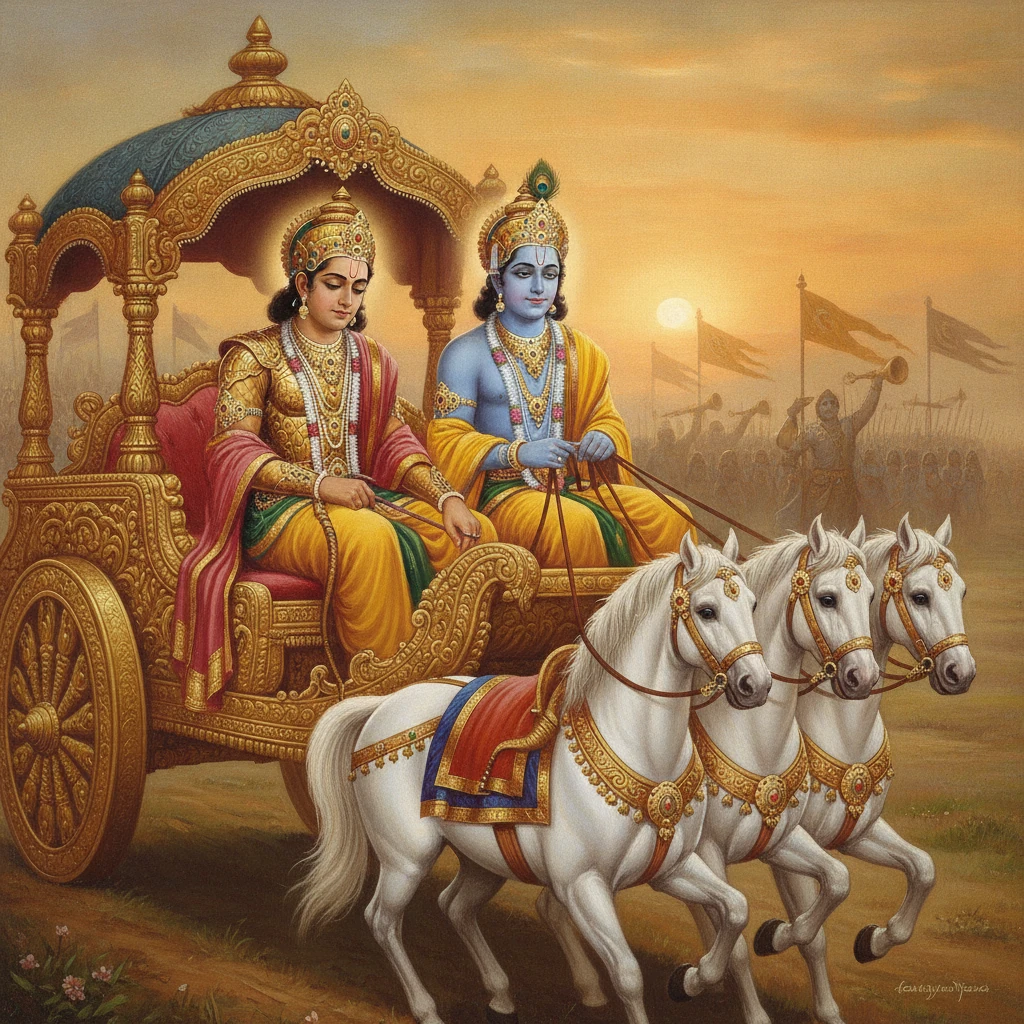
2.1सञ्जय उवाच।
तं तथा कृपयाविष्टमश्रुपूर्णाकुलेक्षणम्।
विषीदन्तमिदं वाक्यमुवाच मधुसूदनः॥
sañjaya uvāca
taṃ tathā kṛpayāviṣṭamaśrupūrṇākulekṣaṇam
viṣīdantamidaṃ vākyamuvāca madhusūdanaḥ
Sanjaya said To him who was thus overcome with pity and who was despondent, with eyes full of tears and agitated, Madhusudana (the destroyer of Madhu) or Krishna spoke these words.
2.2श्रीभगवानुवाच।
कुतस्त्वा कश्मलमिदं विषमे समुपस्थितम्।
अनार्यजुष्टमस्वर्ग्यमकीर्तिकरमर्जुन॥
śrībhagavānuvāca
kutastvā kaśmalamidaṃ viṣame samupasthitam
anāryajuṣṭamasvargyamakīrtikaramarjuna
The Blessed Lord said Whence is this perilous strait come upon thee, this dejection which is unworthy of you, disgraceful, and which will close the gates of heaven upon you, O Arjuna?
2.3क्लैब्यं मा स्म गमः पार्थ नैतत्त्वय्युपपद्यते।
क्षुद्रं हृदयदौर्बल्यं त्यक्त्वोत्तिष्ठ परन्तप॥
klaibyaṃ mā sma gamaḥ pārtha naitattvayyupapadyate
kṣudraṃ hṛdayadaurbalyaṃ tyaktvottiṣṭha parantapa
Yield not to impotence, O Arjuna, son of Pritha. It does not befit thee. Cast off this mean weakness of the heart! Stand up, O scorcher of the foes!
2.4अर्जुन उवाच।
कथं भीष्ममहं सङ्ख्ये द्रोणं च मधुसूदन।
इषुभिः प्रतियोत्स्यामि पूजार्हावरिसूदन॥
arjuna uvāca
kathaṃ bhīṣmamahaṃ saṅkhye droṇaṃ ca madhusūdana
iṣubhiḥ pratiyotsyāmi pūjārhāvarisūdana
Arjuna said How, O Madhusudana, shall I fight in battle with arrows against Bhishma and Drona, who are fit to be worshipped, O destroyer of enemies?
2.5गुरूनहत्वा हि महानुभावान्
श्रेयो भोक्तुं भैक्ष्यमपीह लोके।
हत्वार्थकामांस्तु गुरूनिहैव
भुञ्जीय भोगान् रुधिरप्रदिग्धान्॥
gurūnahatvā hi mahānubhāvān śreyo bhoktuṃ bhaikṣyamapīha loke
hatvārthakāmāṃstu gurūnihaiva bhuñjīya bhogān rudhirapradigdhān
Better it is, indeed, in this world to accept alms than to slay the most noble teachers. But if I kill them, even in this world all my enjoyments of wealth and fulfilled desires will be stained with (their) blood.
2.6न चैतद्विद्मः कतरन्नो गरीयो
यद्वा जयेम यदि वा नो जयेयुः।
यानेव हत्वा न जिजीविषामस्-
तेऽवस्थिताः प्रमुखे धार्तराष्ट्राः॥
na caitadvidmaḥ kataranno garīyo yadvā jayema yadi vā no jayeyuḥ
yāneva hatvā na jijīviṣāmaḥ te.avasthitāḥ pramukhe dhārtarāṣṭrāḥ
I can hardly tell which will be better, that we should coner them or that they should coner us. Even the sons of Dhritarashtra, after slaying whom we do not wish to live, stand facing us.
2.7कार्पण्यदोषोपहतस्वभावः
पृच्छामि त्वां धर्मसम्मूढचेताः।
यच्छ्रेयः स्यान्निश्चितं ब्रूहि तन्मे
शिष्यस्तेऽहं शाधि मां त्वां प्रपन्नम्॥
kārpaṇyadoṣopahatasvabhāvaḥ pṛcchāmi tvāṃ dharmasammūḍhacetāḥ
yacchreyaḥ syānniścitaṃ brūhi tanme śiṣyaste.ahaṃ śādhi māṃ tvāṃ prapannam
My heart is overpowered by the taint of pity; my mind is confused as to duty. I ask Thee: Tell me decisively what is good for me. I am Thy disciple. Instruct me who has taken refuge in Thee.
2.8न हि प्रपश्यामि ममापनुद्याद्
यच्छोकमुच्छोषणमिन्द्रियाणाम्।
अवाप्य भूमावसपत्नमृद्धं
राज्यं सुराणामपि चाधिपत्यम्॥
na hi prapaśyāmi mamāpanudyād yacchokamucchoṣaṇamindriyāṇām
avāpya bhūmāvasapatnamṛddhaṃ rājyaṃ surāṇāmapi cādhipatyam
I do not see that it would remove this sorrow that burns up my senses, even if I should attain prosperous and unrivalled dominion on earth or lordship over the gods.
2.9सञ्जय उवाच।
एवमुक्त्वा हृषीकेशं गुडाकेशः परन्तप।
न योत्स्य इति गोविन्दमुक्त्वा तूष्णीं बभूव ह॥
sañjaya uvāca
evamuktvā hṛṣīkeśaṃ guḍākeśaḥ parantapaḥ
na yotsya iti govindamuktvā tūṣṇīṃ babhūva ha
Sanjaya said Having spoken thus to Hrishikesha (the Lord of the senses), Arjuna (the coneror of sleep), the destroyer of foes, said to Krishna, "I will not fight" and became silent.
2.10तमुवाच हृषीकेशः प्रहसन्निव भारत।
सेनयोरुभयोर्मध्ये विषीदन्तमिदं वचः॥
tamuvāca hṛṣīkeśaḥ prahasanniva bhārata
senayorubhayormadhye viṣīdantamidaṃ vacaḥ
To him who was despondent in the midst of the two armies, Krishna, as if smiling, O Bharata, spoke these words.
2.11श्रीभगवानुवाच।
अशोच्यानन्वशोचस्त्वं प्रज्ञावादांश्च भाषसे।
गतासूनगतासूंश्च नानुशोचन्ति पण्डिताः॥
śrībhagavānuvāca
aśocyānanvaśocastvaṃ prajñāvādāṃśca bhāṣase
gatāsūnagatāsūṃśca nānuśocanti paṇḍitāḥ
The Blessed Lord said Thou hast grieved for those that should not be grieved for, yet thou speakest words of wisdom. The wise grieve neither for the living nor for the dead.
2.12न त्वेवाहं जातु नासं न त्वं नेमे जनाधिपाः।
न चैव न भविष्यामः सर्वे वयमतः परम्॥
na tvevāhaṃ jātu nāsaṃ na tvaṃ neme janādhipāḥ
na caiva na bhaviṣyāmaḥ sarve vayamataḥ param
Nor at any time indeed was I not, nor thou, nor these rulers of men, nor verily shall we ever cease to be hereafter.
2.13देहिनोऽस्मिन्यथा देहे कौमारं यौवनं जरा।
तथा देहान्तरप्राप्तिर्धीरस्तत्र न मुह्यति॥
dehino.asminyathā dehe kaumāraṃ yauvanaṃ jarā
tathā dehāntaraprāptirdhīrastatra na muhyati
Just as in this body the embodied (soul) passes into childhood, youth and old age, so also does it pass into another body; the firm man does not grieve thereat.
2.14मात्रास्पर्शास्तु कौन्तेय शीतोष्णसुखदुःखदाः।
आगमापायिनोऽनित्यास्तांस्तितिक्षस्व भारत॥
mātrāsparśāstu kaunteya śītoṣṇasukhaduḥkhadāḥ
āgamāpāyino.anityāstāṃstitikṣasva bhārata
The contacts of the senses with the objects, O son of Kunti, which cause heat and cold, pleasure and pain, have a beginning and an end; they are impermanent; endure them bravely, O Arjuna.
2.15यं हि न व्यथयन्त्येते पुरुषं पुरुषर्षभ।
समदुःखसुखं धीरं सोऽमृतत्वाय कल्पते॥
yaṃ hi na vyathayantyete puruṣaṃ puruṣarṣabha
samaduḥkhasukhaṃ dhīraṃ so.amṛtatvāya kalpate
That firm man whom, surely, these afflict not, O chief among men, to whom pleasure and pain are the same, is fit for attaining immortality.
2.16नासतो विद्यते भावो नाभावो विद्यते सतः।
उभयोरपि दृष्टोऽन्तस्त्वनयोस्तत्त्वदर्शिभिः॥
nāsato vidyate bhāvo nābhāvo vidyate sataḥ
ubhayorapi dṛṣṭo.antastvanayostattvadarśibhiḥ
The unreal hath no being; there is non-being of the real; the truth about both has been seen by the knowers of the Truth (or the seers of the Essence).
2.17अविनाशि तु तद्विद्धि येन सर्वमिदं ततम्।
विनाशमव्ययस्यास्य न कश्चित्कर्तुमर्हति॥
avināśi tu tadviddhi yena sarvamidaṃ tatam
vināśamavyayasyāsya na kaścitkartumarhati
Know that to be indestructible, by Which all this is pervaded. None can cause the destruction of That, the Imperishable.
2.18अन्तवन्त इमे देहा नित्यस्योक्ताः शरीरिणः।
अनाशिनोऽप्रमेयस्य तस्माद्युध्यस्व भारत॥
antavanta ime dehā nityasyoktāḥ śarīriṇaḥ
anāśino.aprameyasya tasmādyudhyasva bhārata
These bodies of the embodied Self, Which is eternal, indestructible and immeasurable, are said to have an end. Therefore fight, O Arjuna.
2.19य एनं वेत्ति हन्तारं यश्चैनं मन्यते हतम्।
उभौ तौ न विजानीतो नायं हन्ति न हन्यते॥
ya enaṃ vetti hantāraṃ yaścainaṃ manyate hatam ubhau tau na vijānīto nāyaṃ hanti na hanyate
He who takes the Self to be the slayer and he who thinks It is slain, neither of them ï1knowsï1. It slays not, nor is It slain.
2.20न जायते म्रियते वा कदाचिन्
नायं भूत्वा भविता वा न भूयः।
अजो नित्यः शाश्वतोऽयं पुराणो
न हन्यते हन्यमाने शरीरे॥
na jāyate mriyate vā kadācin nāyaṃ bhūtvā bhavitā vā na bhūyaḥ
ajo nityaḥ śāśvato.ayaṃ purāṇo na hanyate hanyamāne śarīre
It is not born, nor does It ever die; after having been, It again ceases not to be; unborn, eternal, changeless and ancient, It is not killed when the body is killed.
2.21वेदाविनाशिनं नित्यं य एनमजमव्ययम्।
कथं स पुरुषः पार्थ कं घातयति हन्ति कम्॥
vedāvināśinaṃ nityaṃ ya enamajamavyayam
kathaṃ sa puruṣaḥ pārtha kaṃ ghātayati hanti kam
Whosoever knows It to be indestructible, eternal, unborn and inexhaustible, how can that man slay, O Arjuna, or cause to be slain?
2.22वासांसि जीर्णानि यथा विहाय
नवानि गृह्णाति नरोऽपराणि।
तथा शरीराणि विहाय जीर्णा-
न्यन्यानि संयाति नवानि देही॥
vāsāṃsi jīrṇāni yathā vihāya navāni gṛhṇāti naro.aparāṇi
tathā śarīrāṇi vihāya jīrṇāni anyāni saṃyāti navāni dehī
Just as a man casts off worn-out clothes and puts on new ones, so also the embodied Self casts off worn-out bodies and enters others which are new.
2.23नैनं छिन्दन्ति शस्त्राणि नैनं दहति पावकः।
न चैनं क्लेदयन्त्यापो न शोषयति मारुतः॥
nainaṃ chindanti śastrāṇi nainaṃ dahati pāvakaḥ
na cainaṃ kledayantyāpo na śoṣayati mārutaḥ
Weapons cut It not, fire burns It not, water wets It not, wind dries It not.
2.24अच्छेद्योऽयमदाह्योऽयमक्लेद्योऽशोष्य एव च।
नित्यः सर्वगतः स्थाणुरचलोऽयं सनातनः॥
acchedyo.ayamadāhyo.ayamakledyo.aśoṣya eva ca
nityaḥ sarvagataḥ sthāṇuracalo.ayaṃ sanātanaḥ
This Self cannot be cut, burnt, wetted, nor dried up. It is eternal, all-pervading, stable, immovable and ancient.
2.25अव्यक्तोऽयमचिन्त्योऽयमविकार्योऽयमुच्यते।
तस्मादेवं विदित्वैनं नानुशोचितुमर्हसि॥
avyakto.ayamacintyo.ayamavikāryo.ayamucyate
tasmādevaṃ viditvainaṃ nānuśocitumarhasi
This (Self) is said to be unmanifested, unthinkable and unchangeable. Therefore, knowing This to be such, thou shouldst not grieve.
2.26अथ चैनं नित्यजातं नित्यं वा मन्यसे मृतम्।
तथापि त्वं महाबाहो नैवं शोचितुमर्हसि॥
atha cainaṃ nityajātaṃ nityaṃ vā manyase mṛtam
tathāpi tvaṃ mahābāho naivaṃ śocitumarhasi
But even if thou thinkest of It as being constantly born and constantly dying, even then, O mighty-armed, thou shouldst not grieve.
2.27जातस्य हि ध्रुवो मृत्युर्ध्रुवं जन्म मृतस्य च।
तस्मादपरिहार्येऽर्थे न त्वं शोचितुमर्हसि॥
jātasya hi dhruvo mṛtyurdhruvaṃ janma mṛtasya ca
tasmādaparihārye.arthe na tvaṃ śocitumarhasi
For certain is death for the born, and certain is birth for the dead; therefore, over the inevitable thou shouldst not grieve.
2.28अव्यक्तादीनि भूतानि व्यक्तमध्यानि भारत।
अव्यक्तनिधनान्येव तत्र का परिदेवना॥
avyaktādīni bhūtāni vyaktamadhyāni bhārata
avyaktanidhanānyeva tatra kā paridevanā
Beings are unmanifested in their beginning, manifested in their middle state, O Arjuna, and unmanifested again in their end. What is there to grieve about?
2.29आश्चर्यवत्पश्यति कश्चिदेन-
माश्चर्यवद्वदति तथैव चान्यः।
आश्चर्यवच्चैनमन्यः शृणोति
श्रुत्वाप्येनं वेद न चैव कश्चित्॥
āścaryavatpaśyati kaścidenam āścaryavadvadati tathaiva cānyaḥ
āścaryavaccainamanyaḥ śṛṇoti śrutvāpyenaṃ veda na caiva kaścit
One sees This (the Self) as a wonder; another speaks of It as a wonder; another hears of It as a wonder; yet having heard, none understands It at all.
2.30देही नित्यमवध्योऽयं देहे सर्वस्य भारत।
तस्मात्सर्वाणि भूतानि न त्वं शोचितुमर्हसि॥
dehī nityamavadhyo.ayaṃ dehe sarvasya bhārata
tasmātsarvāṇi bhūtāni na tvaṃ śocitumarhasi
This, the Indweller in the body of everyone, is ever indestructible, O Arjuna; therefore, thou shouldst not grieve for any creature.
2.31स्वधर्ममपि चावेक्ष्य न विकम्पितुमर्हसि।
धर्म्याद्धि युद्धाच्छ्रेयोऽन्यत्क्षत्रियस्य न विद्यते॥
svadharmamapi cāvekṣya na vikampitumarhasi
dharmyāddhi yuddhācchreyo.anyatkṣatriyasya na vidyate
Further, having regard to thy duty, shouldst not waver, for there is nothing higher for a Kshatriya than a righteous war.
2.32यदृच्छया चोपपन्नं स्वर्गद्वारमपावृतम्।
सुखिनः क्षत्रियाः पार्थ लभन्ते युद्धमीदृशम्॥
yadṛcchayā copapannaṃ svargadvāramapāvṛtam
sukhinaḥ kṣatriyāḥ pārtha labhante yuddhamīdṛśam
Happy are the Kshatriyas, O Arjuna! who are called upon to fight in such a battle that comes of itself as an open door to heaven.
2.33अथ चेत्त्वमिमं धर्म्यं संग्रामं न करिष्यसि।
ततः स्वधर्मं कीर्तिं च हित्वा पापमवाप्स्यसि॥
atha cettvamimaṃ dharmyaṃ saṃgrāmaṃ na kariṣyasi
tataḥ svadharmaṃ kīrtiṃ ca hitvā pāpamavāpsyasi
But if thou wilt not fight this righteous war, then having abandoned thine own duty and fame, thou shalt incur sin.
2.34अकीर्तिं चापि भूतानि कथयिष्यन्ति तेऽव्ययाम्।
सम्भावितस्य चाकीर्तिर्मरणादतिरिच्यते॥
akīrtiṃ cāpi bhūtāni kathayiṣyanti te.avyayām
sambhāvitasya cākīrtirmaraṇādatiricyate
People, too, will recount thy everlasting dishonour; and to one who has been honoured, dishonour is worse than death.
2.35भयाद्रणादुपरतं मंस्यन्ते त्वां महारथाः।
येषां च त्वं बहुमतो भूत्वा यास्यसि लाघवम्॥
bhayādraṇāduparataṃ maṃsyante tvāṃ mahārathāḥ
yeṣāṃ ca tvaṃ bahumato bhūtvā yāsyasi lāghavam
The great car-warriors will think that thou hast withdrawn from the battle through fear; and thou wilt be lightly held by them who have thought much of thee.
2.36अवाच्यवादांश्च बहून्वदिष्यन्ति तवाहिताः।
निन्दन्तस्तव सामर्थ्यं ततो दुःखतरं नु किम्॥
avācyavādāṃśca bahūnvadiṣyanti tavāhitāḥ
nindantastava sāmarthyaṃ tato duḥkhataraṃ nu kim
Thy enemies also, cavilling at thy power, will speak many abusive words. What is more painful than this?
2.37हतो वा प्राप्स्यसि स्वर्गं जित्वा वा भोक्ष्यसे महीम्।
तस्मादुत्तिष्ठ कौन्तेय युद्धाय कृतनिश्चयः॥
hato vā prāpsyasi svargaṃ jitvā vā bhokṣyase mahīm
tasmāduttiṣṭha kaunteya yuddhāya kṛtaniścayaḥ
Slain, thou wilt obtain heaven; victorious, thou wilt enjoy the earth; therefore, stand up, O son of Kunti, resolved to fight.
2.38सुखदुःखे समे कृत्वा लाभालाभौ जयाजयौ।
ततो युद्धाय युज्यस्व नैवं पापमवाप्स्यसि॥
sukhaduḥkhe same kṛtvā lābhālābhau jayājayau
tato yuddhāya yujyasva naivaṃ pāpamavāpsyasi
Having made pleasure and pain, gain and loss, victory and defeat the same, engage thou in battle for the sake of battle; thus thou shalt not incur sin.
2.39एषा तेऽभिहिता साङ्ख्ये बुद्धिर्योगे त्विमां शृणु।
बुद्ध्या युक्तो यया पार्थ कर्मबन्धं प्रहास्यसि॥
eṣā te.abhihitā sāṅkhye buddhiryoge tvimāṃ śṛṇu
buddhyā yukto yayā pārtha karmabandhaṃ prahāsyasi
This, which has been taught to thee, is wisdon concerning Sankhya. Now listen to wisdom concerning Yoga, endowed with which, O Arjuna, thou shalt cast off the bonds of action.
2.40नेहाभिक्रमनाशोऽस्ति प्रत्यवायो न विद्यते।
स्वल्पमप्यस्य धर्मस्य त्रायते महतो भयात्॥
nehābhikramanāśo.asti pratyavāyo na vidyate
svalpamapyasya dharmasya trāyate mahato bhayāt
In this there is no loss of effort, nor is there any harm (production of contrary results or transgression). Even a little of this knowledge (even a little practice of this Yoga) protects one from great fear.
2.41व्यवसायात्मिका बुद्धिरेकेह कुरुनन्दन।
बहुशाखा ह्यनन्ताश्च बुद्धयोऽव्यवसायिनाम्॥
vyavasāyātmikā buddhirekeha kurunandana
bahuśākhā hyanantāśca buddhayo.avyavasāyinām
Here, O joy of the Kurus, there is but a single one-pointed determination; many-branched and endless are the thoughts of the irresolute.
2.42यामिमां पुष्पितां वाचं प्रवदन्त्यविपश्चितः।
वेदवादरताः पार्थ नान्यदस्तीति वादिनः॥
yāmimāṃ puṣpitāṃ vācaṃ pravadantyavipaścitaḥ
vedavādaratāḥ pārtha nānyadastīti vādinaḥ
Flowery speech is uttered by the unwise, taking pleasure in the eulogising words of the Vedas, O Arjuna, saying, "There is nothing else."
2.43कामात्मानः स्वर्गपरा जन्मकर्मफलप्रदाम्।
क्रियाविशेषबहुलां भोगैश्वर्यगतिं प्रति॥
kāmātmānaḥ svargaparā janmakarmaphalapradām
kriyāviśeṣabahulāṃ bhogaiśvaryagatiṃ prati
Full of desires, having heaven as their goal, (they utter speech which is directed to ends) leading to new births as the result of their works, and prescribe various methods abounding in specific actions, for the attainment of pleasure and power.
2.44भोगैश्वर्यप्रसक्तानां तयापहृतचेतसाम्।
व्यवसायात्मिका बुद्धिः समाधौ न विधीयते॥
bhogaiśvaryaprasaktānāṃ tayāpahṛtacetasām
vyavasāyātmikā buddhiḥ samādhau na vidhīyate
For those who are attached to pleasure and power, whose minds are drawn away by such teaching, ï1thatï1 determinate reason is not formed which is steadily bent on meditation and Samadhi (superconscious state).
2.45त्रैगुण्यविषया वेदा निस्त्रैगुण्यो भवार्जुन।
निर्द्वन्द्वो नित्यसत्त्वस्थो निर्योगक्षेम आत्मवान्॥
traiguṇyaviṣayā vedā nistraiguṇyo bhavārjuna
nirdvandvo nityasattvastho niryogakṣema ātmavān
The Vedas deal with the three attributes (of Nature); be thou above these three attributes. O Arjuna, free yourself from the pairs of opposites, and ever remain in the ality of Sattva (goodness), freed from (the thought of) acisition and preservation, and be established in the Self.
2.46यावानर्थ उदपाने सर्वतः सम्प्लुतोदके।
तावान्सर्वेषु वेदेषु ब्राह्मणस्य विजानतः॥
yāvānartha udapāne sarvataḥ samplutodake
tāvānsarveṣu vedeṣu brāhmaṇasya vijānataḥ
To the Brahmana who has known the Self, all the Vedas are of as much use as is a reservoir of water in a place where there is a flood.
2.47कर्मण्येवाधिकारस्ते मा फलेषु कदाचन।
मा कर्मफलहेतुर्भूर्मा ते सङ्गोऽस्त्वकर्मणि॥
karmaṇyevādhikāraste mā phaleṣu kadācana
mā karmaphalaheturbhūrmā te saṅgo.astvakarmaṇi
Thy right is to work only, but never with its fruits; let not the fruits of action be thy motive, nor let thy attachment be to inaction.
2.48योगस्थः कुरु कर्माणि सङ्गं त्यक्त्वा धनञ्जय।
सिद्ध्यसिद्ध्योः समो भूत्वा समत्वं योग उच्यते॥
yogasthaḥ kuru karmāṇi saṅgaṃ tyaktvā dhanañjaya
siddhyasiddhyoḥ samo bhūtvā samatvaṃ yoga ucyate
Perform action, O Arjuna, being steadfast in Yoga, abandoning attachment and balanced in success and failure. Evenness of mind is called Yoga.
2.49दूरेण ह्यवरं कर्म बुद्धियोगाद्धनञ्जय।
बुद्धौ शरणमन्विच्छ कृपणाः फलहेतवः॥
dūreṇa hyavaraṃ karma buddhiyogāddhanañjaya
buddhau śaraṇamanviccha kṛpaṇāḥ phalahetavaḥ
Far lower than the Yoga of wisdon is action, O Arjuna. Seek thou refuge in wisdom; wretched are they whose motive is the fruit.
2.50बुद्धियुक्तो जहातीह उभे सुकृतदुष्कृते।
तस्माद्योगाय युज्यस्व योगः कर्मसु कौशलम्॥
buddhiyukto jahātīha ubhe sukṛtaduṣkṛte
tasmādyogāya yujyasva yogaḥ karmasu kauśalam
Endowed with wisdom (evenness of mind), one casts off in this life both good and evil deeds; therefore, devote thyself to Yoga; Yoga is skill in action.
2.51कर्मजं बुद्धियुक्ता हि फलं त्यक्त्वा मनीषिणः।
जन्मबन्धविनिर्मुक्ताः पदं गच्छन्त्यनामयम्॥
karmajaṃ buddhiyuktā hi phalaṃ tyaktvā manīṣiṇaḥ
janmabandhavinirmuktāḥ padaṃ gacchantyanāmayam
The wise, possessed of knowledge, having abandoned the fruits of their actions, and being freed from the fetters of birth, go to the place which is beyond all evil.
2.52यदा ते मोहकलिलं बुद्धिर्व्यतितरिष्यति।
तदा गन्तासि निर्वेदं श्रोतव्यस्य श्रुतस्य च॥
yadā te mohakalilaṃ buddhirvyatitariṣyati
tadā gantāsi nirvedaṃ śrotavyasya śrutasya ca
When thy intellect crosses beyond the mire of delusion, then thou shalt attain to indifference as to what has been heard and what has yet to be heard.
2.53श्रुतिविप्रतिपन्ना ते यदा स्थास्यति निश्चला।
समाधावचला बुद्धिस्तदा योगमवाप्स्यसि॥
śrutivipratipannā te yadā sthāsyati niścalā
samādhāvacalā buddhistadā yogamavāpsyasi
When thy intellect, which is perplexed by the Veda text, which thou hast read, shall stand immovable and steady in the Self, then thou shalt attain Self-realisation.
2.54अर्जुन उवाच।
स्थितप्रज्ञस्य का भाषा समाधिस्थस्य केशव।
स्थितधीः किं प्रभाषेत किमासीत व्रजेत किम्॥
arjuna uvāca
sthitaprajñasya kā bhāṣā samādhisthasya keśava
sthitadhīḥ kiṃ prabhāṣeta kimāsīta vrajeta kim
Arjuna said What, O Krishna, is the description of him who has steady wisdom, and is merged in the superconscious state? How does one of steady wisdom speak, how does he sit, how does he walk?
2.55श्रीभगवानुवाच।
प्रजहाति यदा कामान्सर्वान्पार्थ मनोगतान्।
आत्मन्येवात्मना तुष्टः स्थितप्रज्ञस्तदोच्यते॥
śrībhagavānuvāca
prajahāti yadā kāmānsarvānpārtha manogatān
ātmanyevātmanā tuṣṭaḥ sthitaprajñastadocyate
The Blessed Lord said When a man completely casts off, O Arjuna, all the desires of the mind and is satisfied in the Self by the Self, then is he said to be one of steady wisdom.
2.56दुःखेष्वनुद्विग्नमनाः सुखेषु विगतस्पृहः।
वीतरागभयक्रोधः स्थितधीर्मुनिरुच्यते॥
duḥkheṣvanudvignamanāḥ sukheṣu vigataspṛhaḥ
vītarāgabhayakrodhaḥ sthitadhīrmunirucyate
He whose mind is not shaken by adversity, who does not hanker after pleasures, and is free from attachment, fear and anger, is called a sage of steady wisdom.
2.57यः सर्वत्रानभिस्नेहस्तत्तत्प्राप्य शुभाशुभम्।
नाभिनन्दति न द्वेष्टि तस्य प्रज्ञा प्रतिष्ठिता॥
yaḥ sarvatrānabhisnehastattatprāpya śubhāśubham
nābhinandati na dveṣṭi tasya prajñā pratiṣṭhitā
He who is everywhere without attachment, on meeting with anything good or bad, who neither rejoices not hastes, his wisdom is fixed.
2.58यदा संहरते चायं कूर्मोऽङ्गानीव सर्वशः।
इन्द्रियाणीन्द्रियार्थेभ्यस्तस्य प्रज्ञा प्रतिष्ठिता॥
yadā saṃharate cāyaṃ kūrmo.aṅgānīva sarvaśaḥ
indriyāṇīndriyārthebhyastasya prajñā pratiṣṭhitā
When, like the tortoise which withdraws on all sides its limbs, he withdraws his senses from the sense-objects, then his wisdom becomes steady.
2.59विषया विनिवर्तन्ते निराहारस्य देहिनः।
रसवर्जं रसोऽप्यस्य परं दृष्ट्वा निवर्तते॥
viṣayā vinivartante nirāhārasya dehinaḥ
rasavarjaṃ raso.apyasya paraṃ dṛṣṭvā nivartate
The objects of the senses turn away from the abstinent man leaving the longing (behind); but his longing also turns away on seeing the Supreme.
2.60यततो ह्यपि कौन्तेय पुरुषस्य विपश्चितः।
इन्द्रियाणि प्रमाथीनि हरन्ति प्रसभं मनः॥
yatato hyapi kaunteya puruṣasya vipaścitaḥ
indriyāṇi pramāthīni haranti prasabhaṃ manaḥ
The turbulent senses, O Arjuna, do violently carry away the mind of a wise man though he be striving (to control them).
2.61तानि सर्वाणि संयम्य युक्त आसीत मत्परः।
वशे हि यस्येन्द्रियाणि तस्य प्रज्ञा प्रतिष्ठिता॥
tāni sarvāṇi saṃyamya yukta āsīta matparaḥ
vaśe hi yasyendriyāṇi tasya prajñā pratiṣṭhitā
Having restrained them all he should sit steadfast, intent on Me; his wisdom is steady whose senses are under control.
2.62ध्यायतो विषयान्पुंसः सङ्गस्तेषूपजायते।
सङ्गात्सञ्जायते कामः कामात्क्रोधोऽभिजायते॥
dhyāyato viṣayānpuṃsaḥ saṅgasteṣūpajāyate
saṅgātsañjāyate kāmaḥ kāmātkrodho.abhijāyate
When a man thinks of the objects, attachment for them arises; from attachment desire is born; from desire anger arises.
2.63क्रोधाद्भवति सम्मोहः सम्मोहात्स्मृतिविभ्रमः।
स्मृतिभ्रंशाद् बुद्धिनाशो बुद्धिनाशात्प्रणश्यति॥
krodhādbhavati sammohaḥ sammohātsmṛtivibhramaḥ
smṛtibhraṃśād buddhināśo buddhināśātpraṇaśyati
From anger comes delusion; from delusion loss of memory; from loss of memory the destruction of discrimination; from the destruction of discrimination he perishes.
2.64रागद्वेषविमुक्तैस्तु विषयानिन्द्रियैश्चरन्। (or वियुक्तैस्तु)
आत्मवश्यैर्विधेयात्मा प्रसादमधिगच्छति॥
rāgadveṣavimuktaistu viṣayānindriyaiścaran
orviyuktaistu ātmavaśyairvidheyātmā prasādamadhigacchati
But the self-controlled man, moving among the objects with the senses under restraint and free from attraction and repulsion, attains to peace.
2.65प्रसादे सर्वदुःखानां हानिरस्योपजायते।
प्रसन्नचेतसो ह्याशु बुद्धिः पर्यवतिष्ठते॥
prasāde sarvaduḥkhānāṃ hānirasyopajāyate
prasannacetaso hyāśu buddhiḥ paryavatiṣṭhate
In that peace all pains are destroyed; for the intellect of the tranil-minded soon becomes steady.
2.66नास्ति बुद्धिरयुक्तस्य न चायुक्तस्य भावना।
न चाभावयतः शान्तिरशान्तस्य कुतः सुखम्॥
nāsti buddhirayuktasya na cāyuktasya bhāvanā
na cābhāvayataḥ śāntiraśāntasya kutaḥ sukham
There is no knowledge of the Self to the unsteady and to the unsteady no meditation is possible, and to the unmeditative there can be no peace, and to the man who has no peace, how can there be happiness?
2.67इन्द्रियाणां हि चरतां यन्मनोऽनुविधीयते।
तदस्य हरति प्रज्ञां वायुर्नावमिवाम्भसि॥
indriyāṇāṃ hi caratāṃ yanmano.anuvidhīyate
tadasya harati prajñāṃ vāyurnāvamivāmbhasi
For the mind, which follows in the wake of the wandering senses, carries away his discrimination, as the wind (carries away) a boat on the waters.
2.68तस्माद्यस्य महाबाहो निगृहीतानि सर्वशः।
इन्द्रियाणीन्द्रियार्थेभ्यस्तस्य प्रज्ञा प्रतिष्ठिता॥
tasmādyasya mahābāho nigṛhītāni sarvaśaḥ
indriyāṇīndriyārthebhyastasya prajñā pratiṣṭhitā
Therefore, O mighty-armed Arjuna, his knowledge is steady whose senses are completely restrained from sense-objects.
2.69या निशा सर्वभूतानां तस्यां जागर्ति संयमी।
यस्यां जाग्रति भूतानि सा निशा पश्यतो मुनेः॥
yā niśā sarvabhūtānāṃ tasyāṃ jāgarti saṃyamī
yasyāṃ jāgrati bhūtāni sā niśā paśyato muneḥ
That which is night to all beings, in that the self-controlled man is awake; when all beings are awake, that is night for the Muni (sage) who sees.
2.70आपूर्यमाणमचलप्रतिष्ठं
समुद्रमापः प्रविशन्ति यद्वत्।
तद्वत्कामा यं प्रविशन्ति सर्वे
स शान्तिमाप्नोति न कामकामी॥
āpūryamāṇamacalapratiṣṭhaṃ samudramāpaḥ praviśanti yadvat
tadvatkāmā yaṃ praviśanti sarve sa śāntimāpnoti na kāmakāmī
He attains peace into whom all desires enter as waters enter the ocean which, filled from all sides, remains unmoved; but not the man who is full of desires.
2.71विहाय कामान्यः सर्वान्पुमांश्चरति निःस्पृहः।
निर्ममो निरहङ्कारः स शान्तिमधिगच्छति॥
vihāya kāmānyaḥ sarvānpumāṃścarati niḥspṛhaḥ
nirmamo nirahaṅkāraḥ sa śāntimadhigacchati
That man attains peace who, abandoning all desires, moves about without longing, without the sense of mine and without egoism.
2.72एषा ब्राह्मी स्थितिः पार्थ नैनां प्राप्य विमुह्यति।
स्थित्वास्यामन्तकालेऽपि ब्रह्मनिर्वाणमृच्छति॥
eṣā brāhmī sthitiḥ pārtha naināṃ prāpya vimuhyati
sthitvāsyāmantakāle.api brahmanirvāṇamṛcchati
This is the Brahmic seat (eternal state), O son of Pritha. Attaining to this, none is deluded. Being established therein, even at the end of life, one attains to oneness with Brahman.



 Bhagavad Gita · Chapter 2