



 Bhagavad Gita · Chapter 13
What Chapter 13 teaches
The thirteenth chapter of the Bhagavad Gita is Ksetra Ksetrajna Vibhaaga Yoga. The word kshetra means the field, and the kshetrajna means the knower of the field. We can think of our material body as the field and our immortal soul as the knower of the field. In this chapter, Krishna discriminates between the physical body and the immortal soul. He explains that the physical body is temporary and perishable whereas the soul is permanent and eternal. The physical body can be destroyed but the soul can never be destroyed. The chapter then describes God, who is the Supreme Soul. All the individual souls have originated from the Supreme Soul. One who clearly understands the difference between the body, the Soul and the Supreme Soul attains the realization of Brahman.
Original Text
Verses & Meaning
अर्जुन उवाच। प्रकृतिं पुरुषं चैव क्षेत्रं क्षेत्रज्ञमेव च। एतद्वेदितुमिच्छामि ज्ञानं ज्ञेयं च केशव॥
arjuna uvāca prakṛtiṃ puruṣaṃ caiva kṣetraṃ kṣetrajñameva ca etadveditumicchāmi jñānaṃ jñeyaṃ ca keśava
Arjuna said I wish to learn about Nature (matter) and the Spirit (soul), the field and the knower of the field, knowledge and that which ought to be known, O Kesava.
श्रीभगवानुवाच। इदं शरीरं कौन्तेय क्षेत्रमित्यभिधीयते। एतद्यो वेत्ति तं प्राहुः क्षेत्रज्ञ इति तद्विदः॥
śrībhagavānuvāca idaṃ śarīraṃ kaunteya kṣetramityabhidhīyate etadyo vetti taṃ prāhuḥ kṣetrajña iti tadvidaḥ
The Blessed Lord said This body, O Arjuna, is called the field; he who knows it is called the knower of the field, by those who know of them.
क्षेत्रज्ञं चापि मां विद्धि सर्वक्षेत्रेषु भारत। क्षेत्रक्षेत्रज्ञयोर्ज्ञानं यत्तज्ज्ञानं मतं मम॥
kṣetrajñaṃ cāpi māṃ viddhi sarvakṣetreṣu bhārata kṣetrakṣetrajñayorjñānaṃ yattajjñānaṃ mataṃ mama
Do thou also know Me as the knower of the field in all fields, O Arjuna. Knowledge of both the field and the knower of the field is considered by Me to be ï1the ï1 knowledge.
तत्क्षेत्रं यच्च यादृक्च यद्विकारि यतश्च यत्। स च यो यत्प्रभावश्च तत्समासेन मे शृणु॥
tatkṣetraṃ yacca yādṛkca yadvikāri yataśca yat sa ca yo yatprabhāvaśca tatsamāsena me śṛṇu
What the field is and of what nature, what are its modifications and whence it is and also who He is and what His powers are hear all that from Me in brief.
ऋषिभिर्बहुधा गीतं छन्दोभिर्विविधैः पृथक्। ब्रह्मसूत्रपदैश्चैव हेतुमद्भिर्विनिश्चितैः॥
ṛṣibhirbahudhā gītaṃ chandobhirvividhaiḥ pṛthak brahmasūtrapadaiścaiva hetumadbhirviniścitaiḥ
Sages have sung in many ways, in various distinctive chants and also in the suggestive words indicative of the Absolute, full of reasoning and decisive.
महाभूतान्यहंकारो बुद्धिरव्यक्तमेव च। इन्द्रियाणि दशैकं च पञ्च चेन्द्रियगोचराः॥
mahābhūtānyahaṃkāro buddhiravyaktameva ca indriyāṇi daśaikaṃ ca pañca cendriyagocarāḥ
The great elements, egoism, intellect, and also the Unmanifested Nature, the ten senses and one (mind), and the five objects of the senses.
इच्छा द्वेषः सुखं दुःखं संघातश्चेतना धृतिः। एतत्क्षेत्रं समासेन सविकारमुदाहृतम्॥
icchā dveṣaḥ sukhaṃ duḥkhaṃ saṃghātaścetanā dhṛtiḥ etatkṣetraṃ samāsena savikāramudāhṛtam
Desire, hatred, pleasure, pain, the aggregate (the body), intelligence, fortitude the field has thus been briefly described with its modifications.
अमानित्वमदम्भित्वमहिंसा क्षान्तिरार्जवम्। आचार्योपासनं शौचं स्थैर्यमात्मविनिग्रहः॥
amānitvamadambhitvamahiṃsā kṣāntirārjavam ācāryopāsanaṃ śaucaṃ sthairyamātmavinigrahaḥ
Humility, unpretentiousness, non-injury, forgiveness, uprightness, service of the teacher, purity, steadfastness, self-control.
इन्द्रियार्थेषु वैराग्यमनहंकार एव च। जन्ममृत्युजराव्याधिदुःखदोषानुदर्शनम्॥
indriyārtheṣu vairāgyamanahaṃkāra eva ca janmamṛtyujarāvyādhiduḥkhadoṣānudarśanam
Indifference to the objects of the senses and also absence of egoism; perception of (or reflection on) the evil in birth, death, old age, sickness and pain.
असक्तिरनभिष्वङ्गः पुत्रदारगृहादिषु। नित्यं च समचित्तत्वमिष्टानिष्टोपपत्तिषु॥
asaktiranabhiṣvaṅgaḥ putradāragṛhādiṣu nityaṃ ca samacittatvamiṣṭāniṣṭopapattiṣu
Non-attachment, non-identification of the Self with son, wife, home and the rest, and constant even-mindedness on the attainment of the desirable and the undesirable.
मयि चानन्ययोगेन भक्तिरव्यभिचारिणी। विविक्तदेशसेवित्वमरतिर्जनसंसदि॥
mayi cānanyayogena bhaktiravyabhicāriṇī viviktadeśasevitvamaratirjanasaṃsadi
Unswerving devotion unto Me by the Yoga of non-separation, resort to solitary places, distaste for the society of men.
अध्यात्मज्ञाननित्यत्वं तत्त्वज्ञानार्थदर्शनम्। एतज्ज्ञानमिति प्रोक्तमज्ञानं यदतोऽन्यथा॥
adhyātmajñānanityatvaṃ tattvajñānārthadarśanam etajjñānamiti proktamajñānaṃ yadato.anyathā
Constancy in Self-knowledge, perception of the end of true knowledge this is declared to be knowledge, and what is opposed to it is ignorance.
ज्ञेयं यत्तत्प्रवक्ष्यामि यज्ज्ञात्वामृतमश्नुते। अनादिमत्परं ब्रह्म न सत्तन्नासदुच्यते॥
jñeyaṃ yattatpravakṣyāmi yajjñātvāmṛtamaśnute anādi matparaṃ brahma na sattannāsaducyate
I will declare that which has to be known, knowing which one attains to immortality, the beginningless supreme Brahman, called neither being nor non-being.
सर्वतः पाणिपादं तत्सर्वतोऽक्षिशिरोमुखम्। सर्वतः श्रुतिमल्लोके सर्वमावृत्य तिष्ठति॥
sarvataḥ pāṇipādaṃ tatsarvato.akṣiśiromukham sarvataḥ śrutimalloke sarvamāvṛtya tiṣṭhati
With hands and feet everywhere, with eyes, heads and mouths everywhere, with ears everywhere, He exists in the worlds enveloping all.
सर्वेन्द्रियगुणाभासं सर्वेन्द्रियविवर्जितम्। असक्तं सर्वभृच्चैव निर्गुणं गुणभोक्तृ च॥
sarvendriyaguṇābhāsaṃ sarvendriyavivarjitam asaktaṃ sarvabhṛccaiva nirguṇaṃ guṇabhoktṛ ca
Shining by the functions of all the senses, yet without the senses; unattached, yet supporting all; devoid of alities, yet their experiencer.
बहिरन्तश्च भूतानामचरं चरमेव च। सूक्ष्मत्वात्तदविज्ञेयं दूरस्थं चान्तिके च तत्॥
bahirantaśca bhūtānāmacaraṃ carameva ca sūkṣmatvāttadavijñeyaṃ dūrasthaṃ cāntike ca tat
Without and within (all) beings the unmoving and also the moving; because of Its subtlety, unknowable; and near and far away is That.
अविभक्तं च भूतेषु विभक्तमिव च स्थितम्। भूतभर्तृ च तज्ज्ञेयं ग्रसिष्णु प्रभविष्णु च॥
avibhaktaṃ ca bhūteṣu vibhaktamiva ca sthitam bhūtabhartṛ ca tajjñeyaṃ grasiṣṇu prabhaviṣṇu ca
And undivided, yet It exists as if divided in beings; It is to be known as the supporter of being; It devours and It generates.
ज्योतिषामपि तज्ज्योतिस्तमसः परमुच्यते। ज्ञानं ज्ञेयं ज्ञानगम्यं हृदि सर्वस्य विष्ठितम्॥
jyotiṣāmapi tajjyotistamasaḥ paramucyate jñānaṃ jñeyaṃ jñānagamyaṃ hṛdi sarvasya viṣṭhitam
That, the Light of all lights, is said to be beyond darkness: knowledge, the knowable and the goal of knowledge, seated in the hearts of all.
इति क्षेत्रं तथा ज्ञानं ज्ञेयं चोक्तं समासतः। मद्भक्त एतद्विज्ञाय मद्भावायोपपद्यते॥
iti kṣetraṃ tathā jñānaṃ jñeyaṃ coktaṃ samāsataḥ madbhakta etadvijñāya madbhāvāyopapadyate
Thus the field, as well as knowledge and the knowable have been briefly stated. My devotee, knowing this, enters into My Being.
प्रकृतिं पुरुषं चैव विद्ध्यनादी उभावपि। विकारांश्च गुणांश्चैव विद्धि प्रकृतिसम्भवान्॥
prakṛtiṃ puruṣaṃ caiva viddhyanādi ubhāvapi vikārāṃśca guṇāṃścaiva viddhi prakṛtisambhavān
Know thou that Nature (matter) and the Spirit are both beginningless; and know also that all modifications and alities are born of Nature.
कार्यकारणकर्तृत्वे हेतुः प्रकृतिरुच्यते। पुरुषः सुखदुःखानां भोक्तृत्वे हेतुरुच्यते॥
kāryakāraṇakartṛtve hetuḥ prakṛtirucyate puruṣaḥ sukhaduḥkhānāṃ bhoktṛtve heturucyate
In the production of the effect and the cause, Nature (matter) is said to be the cause; in the experience of pleasure and pain, the soul is said to be the cause.
पुरुषः प्रकृतिस्थो हि भुङ्क्ते प्रकृतिजान्गुणान्। कारणं गुणसङ्गोऽस्य सदसद्योनिजन्मसु॥
puruṣaḥ prakṛtistho hi bhuṅkte prakṛtijānguṇān kāraṇaṃ guṇasaṅgo.asya sadasadyonijanmasu
The soul seated in Nature experiences the alities born of Nature; attachment to the alities is the cause of its birth in good and evil wombs.
उपद्रष्टानुमन्ता च भर्ता भोक्ता महेश्वरः। परमात्मेति चाप्युक्तो देहेऽस्मिन्पुरुषः परः॥
upadraṣṭānumantā ca bhartā bhoktā maheśvaraḥ paramātmeti cāpyukto dehe.asminpuruṣaḥ paraḥ
The Supreme Soul in this body is also called the spectator, the permitter, the supporter, the enjoyer, the great Lord and the Supreme Self.
य एवं वेत्ति पुरुषं प्रकृतिं च गुणैः सह। सर्वथा वर्तमानोऽपि न स भूयोऽभिजायते॥
ya evaṃ vetti puruṣaṃ prakṛtiṃ ca guṇaiḥ saha sarvathā vartamāno.api na sa bhūyo.abhijāyate
He who thus knows the Spirit and Matter together with the alities, in whatever condition he may be, he is not born again.
ध्यानेनात्मनि पश्यन्ति केचिदात्मानमात्मना। अन्ये साङ्ख्येन योगेन कर्मयोगेन चापरे॥
dhyānenātmani paśyanti kecidātmānamātmanā anye sāṅkhyena yogena karmayogena cāpare
Some by meditation behold the Self in the self by the self, others by the Yoga of knowledge, and still others by the Yoga of action.
अन्ये त्वेवमजानन्तः श्रुत्वान्येभ्य उपासते। तेऽपि चातितरन्त्येव मृत्युं श्रुतिपरायणाः॥
anye tvevamajānantaḥ śrutvānyebhya upāsate te.api cātitarantyeva mṛtyuṃ śrutiparāyaṇāḥ
Others also, not knowing thus, worship, having heard of It from others; they, too, cross beyond death, regarding what they have heard as the Supreme refuge.
यावत्सञ्जायते किञ्चित्सत्त्वं स्थावरजङ्गमम्। क्षेत्रक्षेत्रज्ञसंयोगात्तद्विद्धि भरतर्षभ॥
yāvatsañjāyate kiñcitsattvaṃ sthāvarajaṅgamam kṣetrakṣetrajñasaṃyogāttadviddhi bharatarṣabha
Wherever a being is born, whether unmoving or moving, know thou, O best of the Bharatas (Arjuna), that it is from the union between the field and its knower.
समं सर्वेषु भूतेषु तिष्ठन्तं परमेश्वरम्। विनश्यत्स्वविनश्यन्तं यः पश्यति स पश्यति॥
samaṃ sarveṣu bhūteṣu tiṣṭhantaṃ parameśvaram vinaśyatsvavinaśyantaṃ yaḥ paśyati sa paśyati
He sees, who sees the Supreme Lord, existing eally in all beings, the unperishing within the perishing.
समं पश्यन्हि सर्वत्र समवस्थितमीश्वरम्। न हिनस्त्यात्मनात्मानं ततो याति परां गतिम्॥
samaṃ paśyanhi sarvatra samavasthitamīśvaram na hinastyātmanātmānaṃ tato yāti parāṃ gatim
Because he who sees the same Lord eally dwelling everywhere does not destroy the Self by the self; he goes to the highest goal.
प्रकृत्यैव च कर्माणि क्रियमाणानि सर्वशः। यः पश्यति तथात्मानमकर्तारं स पश्यति॥
prakṛtyaiva ca karmāṇi kriyamāṇāni sarvaśaḥ yaḥ paśyati tathātmānamakartāraṃ sa paśyati
He sees, who sees that all actions are performed by Nature alone and that the Self is actionless.
यदा भूतपृथग्भावमेकस्थमनुपश्यति। तत एव च विस्तारं ब्रह्म सम्पद्यते तदा॥
yadā bhūtapṛthagbhāvamekasthamanupaśyati tata eva ca vistāraṃ brahma sampadyate tadā
When a man sees the whole variety of beings as resting in the One, and spreading forth from That alone, he then becomes Brahman.
अनादित्वान्निर्गुणत्वात्परमात्मायमव्ययः। शरीरस्थोऽपि कौन्तेय न करोति न लिप्यते॥
anāditvānnirguṇatvātparamātmāyamavyayaḥ śarīrastho.api kaunteya na karoti na lipyate
Being without beginning and being devoid of (any) alities, the Supreme Self, imperishable, though dwelling in the body, O Arjuna, neither acts nor is tainted.
यथा सर्वगतं सौक्ष्म्यादाकाशं नोपलिप्यते। सर्वत्रावस्थितो देहे तथात्मा नोपलिप्यते॥
yathā sarvagataṃ saukṣmyādākāśaṃ nopalipyate sarvatrāvasthito dehe tathātmā nopalipyate
As the all-pervading ether is not tainted, because of its subtlety, so the Self seated everywhere in the body is not tainted.
यथा प्रकाशयत्येकः कृत्स्नं लोकमिमं रविः। क्षेत्रं क्षेत्री तथा कृत्स्नं प्रकाशयति भारत॥
yathā prakāśayatyekaḥ kṛtsnaṃ lokamimaṃ raviḥ kṣetraṃ kṣetrī tathā kṛtsnaṃ prakāśayati bhārata
Just as the one sun illumines the whole world, so also the Lord of the field (Supreme Self) illumines the whole field, O Arjuna.
क्षेत्रक्षेत्रज्ञयोरेवमन्तरं ज्ञानचक्षुषा। भूतप्रकृतिमोक्षं च ये विदुर्यान्ति ते परम्॥
kṣetrakṣetrajñayorevamantaraṃ jñānacakṣuṣā bhūtaprakṛtimokṣaṃ ca ye viduryānti te param
They who, by the eye of knowledge, perceive the distinction between the field and its knower and also the liberation from the Nature of being, go to the Supreme.
Quick guide
Before you begin
Bhav
Benefits devotees pray for
FAQ
Common questions
What is Bhagavad Gita Chapter 13 (Kshetra-Kshetrajna Vibhaga Yoga) about?
The thirteenth chapter of the Bhagavad Gita is Ksetra Ksetrajna Vibhaaga Yoga. The word kshetra means the field, and the kshetrajna means the knower of the field. We can think of our material body as the field and our immortal soul as the knower of the field. In this chapter, Krishna discriminates between the physical body and the immortal soul. He explains that the physical body is temporary and perishable whereas the soul is permanent and eternal. The physical body can be destroyed but the soul can never be destroyed. The chapter then describes God, who is the Supreme Soul. All the individua
How many verses are in Bhagavad Gita Chapter 13?
Chapter 13 (Kshetra-Kshetrajna Vibhaga Yoga) has 35 verses. You can read every one above in Sanskrit, with IAST transliteration and its meaning in Hindi and English.
What does "Kshetra-Kshetrajna Vibhaga Yoga" mean?
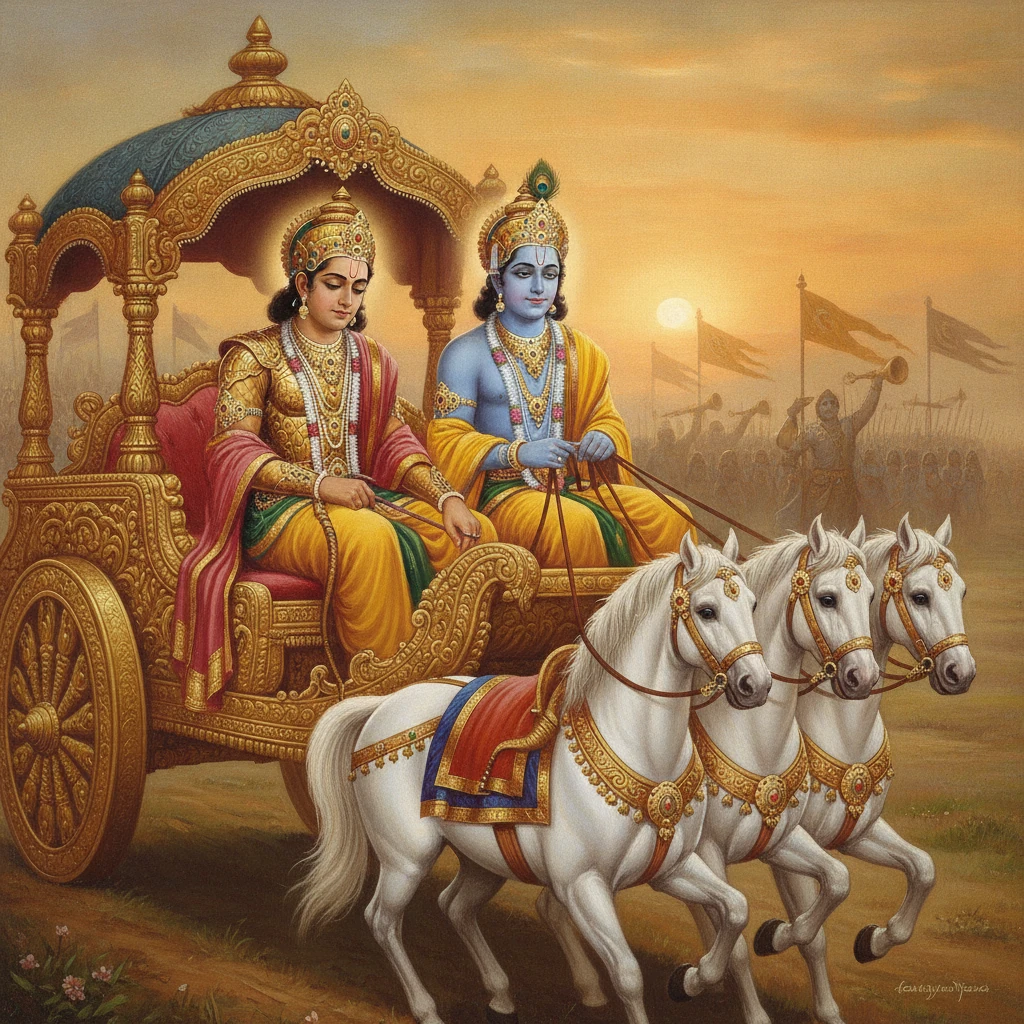
"Kshetra-Kshetrajna Vibhaga Yoga" is the name of Chapter 13 of the Bhagavad Gita; it means "Yoga through Distinguishing the Field and the Knower of the Field". Its 35 verses form part of Bhagwan Krishna's teaching to Arjuna on the field of Kurukshetra.
Bring the Gita's wisdom into your life
On Gita Jayanti at Shri Vishnupad Mandir, Gaya, a sankalp is offered in your naam-gotra for clarity of mind and right decision. Book the seva, or continue reading the Bhagavad Gita.