



 Ramcharitmanas · Kand 7
About the Uttar Kand
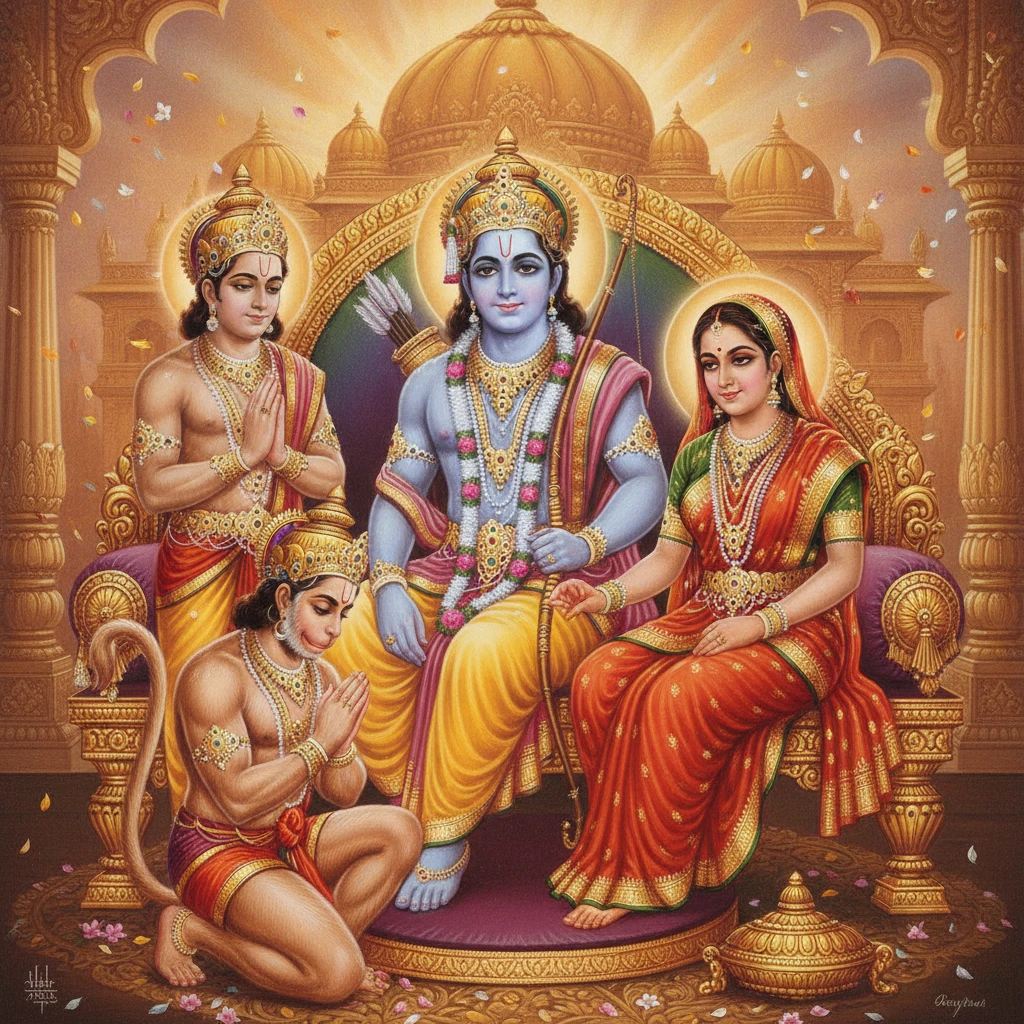
Ram, Sita and Lakshman return in triumph to Ayodhya, where Ram is at last crowned — the golden age of Ram Rajya begins. The book closes with luminous discourses on bhakti and dharma, including the dialogue of Kagbhushundi and the glory of Ram-naam.
How it is read
The Uttar Kand is read and recited in its original Awadhi (given below in Devanagari). Read unhurriedly, verse by verse; Sundar Kand in particular is chanted as a paath for courage and protection.
Original Text
Verses & Meaning
केकीकण्ठाभनीलं सुरवरविलसद्विप्रपादाब्जचिह्नं शोभाढ्यं पीतवस्त्रं सरसिजनयनं सर्वदा सुप्रसन्नम्। पाणौ नाराचचापं कपिनिकरयुतं बन्धुना सेव्यमानं नौमीड्यं जानकीशं रघुवरमनिशं पुष्पकारूढरामम्।।1।। कोसलेन्द्रपदकञ्जमञ्जुलौ कोमलावजमहेशवन्दितौ। जानकीकरसरोजलालितौ चिन्तकस्य मनभृङ्गसड्गिनौ।।2।। कुन्दइन्दुदरगौरसुन्दरं अम्बिकापतिमभीष्टसिद्धिदम्। कारुणीककलकञ्जलोचनं नौमि शंकरमनंगमोचनम्।।3।।
Invocation verses of the Uttar Kand. I bow to the praiseworthy Lord of Janaki (Sita), best of the Raghus, dark like a peacock's throat, bearing on his lotus feet the mark of the Brahmin, adorned with beauty and yellow raiment, lotus-eyed and ever gracious, holding bow and arrow, surrounded by the host of monkeys, served by his brother, and mounted upon the Pushpak. I adore the tender, lovely lotus feet of the Lord of Kosala, worshipped by Brahma and Mahesh, caressed by Sita's lotus hands, the constant companions of the meditator's bee-like mind. I bow to Shankar, fair and beautiful like the jasmine, moon and conch, husband of Ambika (Parvati), giver of every desired attainment, compassionate and lotus-eyed, the liberator who conquered Kama.
रहा एक दिन अवधि कर अति आरत पुर लोग। जहँ तहँ सोचहिं नारि नर कृस तन राम बियोग।। सगुन होहिं सुंदर सकल मन प्रसन्न सब केर। प्रभु आगवन जनाव जनु नगर रम्य चहुँ फेर।। कौसल्यादि मातु सब मन अनंद अस होइ। आयउ प्रभु श्री अनुज जुत कहन चहत अब कोइ।। भरत नयन भुज दच्छिन फरकत बारहिं बार। जानि सगुन मन हरष अति लागे करन बिचार।।
Only one day of the fourteen-year term remained, and the people of the city were deeply distressed; men and women everywhere grieved, their bodies wasted by separation from Ram. Then beautiful omens appeared and everyone's heart grew glad, as if to announce the Lord's arrival the whole city turned lovely all around. Kausalya and all the mothers felt such joy in their hearts, as though someone would now come to say the Lord had arrived with Sita and his younger brother. Bharat's eye and right arm throbbed again and again; recognizing the good omen, his mind rejoiced greatly and he began to reflect.
रहेउ एक दिन अवधि अधारा। समुझत मन दुख भयउ अपारा।। कारन कवन नाथ नहिं आयउ। जानि कुटिल किधौं मोहि बिसरायउ।। अहह धन्य लछिमन बड़भागी। राम पदारबिंदु अनुरागी।। कपटी कुटिल मोहि प्रभु चीन्हा। ताते नाथ संग नहिं लीन्हा।। जौं करनी समुझै प्रभु मोरी। नहिं निस्तार कलप सत कोरी।। जन अवगुन प्रभु मान न काऊ। दीन बंधु अति मृदुल सुभाऊ।। मोरि जियँ भरोस दृढ़ सोई। मिलिहहिं राम सगुन सुभ होई।। बीतें अवधि रहहि जौं प्राना। अधम कवन जग मोहि समाना।।
Bharat thought: only one day of the term is left, and pondering it boundless sorrow filled his mind. What could be the reason the Lord has not come? Perhaps thinking me crooked he has forgotten me. Ah, blessed and fortunate is Lakshman, devoted to Ram's lotus feet; the Lord knew me to be deceitful and crooked, and so did not take me along. If the Lord were to weigh my deeds, there would be no deliverance for me even in a hundred crore ages. Yet the Lord never holds a servant's faults; he is the friend of the humble, of most tender nature. This firm faith is in my heart: Ram will surely meet me, and the omens are auspicious. But if my life should remain after the term is past, who in the world would be as wretched as I.
राम बिरह सागर महँ भरत मगन मन होत। बिप्र रूप धरि पवन सुत आइ गयउ जनु पोत।।1(क)।। बैठि देखि कुसासन जटा मुकुट कृस गात। राम राम रघुपति जपत स्त्रवत नयन जलजात।।1(ख)।।
Bharat's mind was drowning, sunk in the ocean of separation from Ram, when the son of the Wind (Hanuman), taking the form of a Brahmin, arrived like a boat to rescue him. Hanuman saw Bharat seated on a mat of kusha grass, his matted locks piled like a crown, his body emaciated, repeating "Ram, Ram, Raghupati," with tears streaming from his lotus eyes.
देखत हनूमान अति हरषेउ। पुलक गात लोचन जल बरषेउ।। मन महँ बहुत भाँति सुख मानी। बोलेउ श्रवन सुधा सम बानी।। जासु बिरहँ सोचहु दिन राती। रटहु निरंतर गुन गन पाँती।। रघुकुल तिलक सुजन सुखदाता। आयउ कुसल देव मुनि त्राता।। रिपु रन जीति सुजस सुर गावत। सीता सहित अनुज प्रभु आवत।। सुनत बचन बिसरे सब दूखा। तृषावंत जिमि पाइ पियूषा।। को तुम्ह तात कहाँ ते आए। मोहि परम प्रिय बचन सुनाए।। मारुत सुत मैं कपि हनुमाना। नामु मोर सुनु कृपानिधाना।। दीनबंधु रघुपति कर किंकर। सुनत भरत भेंटेउ उठि सादर।। मिलत प्रेम नहिं हृदयँ समाता। नयन स्त्रवत जल पुलकित गाता।। कपि तव दरस सकल दुख बीते। मिले आजु मोहि राम पिरीते।। बार बार बूझी कुसलाता। तो कहुँ देउँ काह सुनु भ्राता।। एहि संदेस सरिस जग माहीं। करि बिचार देखेउँ कछु नाहीं।। नाहिन तात उरिन मैं तोही। अब प्रभु चरित सुनावहु मोही।। तब हनुमंत नाइ पद माथा। कहे सकल रघुपति गुन गाथा।। कहु कपि कबहुँ कृपाल गोसाईं। सुमिरहिं मोहि दास की नाईं।।
Seeing Bharat, Hanuman was overjoyed, his body thrilling and his eyes raining tears, and feeling great gladness he spoke words sweet as nectar to the ear: "He for whom you grieve day and night, whose virtues you ceaselessly recite, the crown-jewel of Raghu's line, the good-hearted giver of joy, protector of gods and sages, has come home safe. Having won the war against the enemy, the gods sing his glory; the Lord comes with Sita and his younger brother." Hearing this Bharat forgot all his sorrows, like a thirsty man who receives nectar, and asked, "Who are you, dear one, and whence have you come? You have spoken words most dear to me." "I am the monkey Hanuman, son of the Wind; hear my name, O treasure of mercy. Friend of the humble, I am the servant of Raghupati." Hearing this, Bharat rose and embraced him with reverence, his love not contained in his heart, his eyes streaming and his body thrilling. "Monkey, by your sight all my sorrows are ended; today my beloved Ram has met me," he said, asking his welfare again and again. "What can I give you, brother? On reflection I find nothing in the world equal to this message; I can never repay my debt to you. Now tell me the Lord's doings." Then Hanuman bowed his head at Bharat's feet and told the whole story of Raghupati's virtues. Bharat asked, "Tell me, monkey, does the gracious Lord ever remember me as his servant?"
निज दास ज्यों रघुबंसभूषन कबहुँ मम सुमिरन कर् यो। सुनि भरत बचन बिनीत अति कपि पुलकित तन चरनन्हि पर् यो।। रघुबीर निज मुख जासु गुन गन कहत अग जग नाथ जो। काहे न होइ बिनीत परम पुनीत सदगुन सिंधु सो।।
Hanuman replied, "The ornament of Raghu's line remembers you as his own servant." Hearing Bharat's most humble words the monkey thrilled with joy and fell at his feet. He whose virtues Raghubir himself recounts with his own mouth, the Lord of all moving and unmoving things, why should he not be humble, supremely pure, and an ocean of noble virtues.
राम प्रान प्रिय नाथ तुम्ह सत्य बचन मम तात। पुनि पुनि मिलत भरत सुनि हरष न हृदयँ समात।।2(क)।। भरत चरन सिरु नाइ तुरित गयउ कपि राम पहिं। कही कुसल सब जाइ हरषि चलेउ प्रभु जान चढ़ि।।2(ख)।।
Hanuman said, "Ram is dear to you as life itself, O Lord; my words are true, dear one." Meeting Bharat again and again and hearing this, his joy could not be contained in his heart. Bowing his head at Bharat's feet, the monkey quickly went to Ram; having joyfully told all the good tidings, the Lord rejoiced and mounted his aerial car.
हरषि भरत कोसलपुर आए। समाचार सब गुरहि सुनाए।। पुनि मंदिर महँ बात जनाई। आवत नगर कुसल रघुराई।। सुनत सकल जननीं उठि धाईं। कहि प्रभु कुसल भरत समुझाई।। समाचार पुरबासिन्ह पाए। नर अरु नारि हरषि सब धाए।। दधि दुर्बा रोचन फल फूला। नव तुलसी दल मंगल मूला।। भरि भरि हेम थार भामिनी। गावत चलिं सिंधु सिंधुरगामिनी।। जे जैसेहिं तैसेहिं उटि धावहिं। बाल बृद्ध कहँ संग न लावहिं।। एक एकन्ह कहँ बूझहिं भाई। तुम्ह देखे दयाल रघुराई।। अवधपुरी प्रभु आवत जानी। भई सकल सोभा कै खानी।। बहइ सुहावन त्रिबिध समीरा। भइ सरजू अति निर्मल नीरा।।
Joyfully Bharat came to Ayodhya and told all the news to the guru, then made it known in the palace that Raghurai was coming to the city safe and well. Hearing this all the mothers sprang up and ran, and Bharat comforted them, telling of the Lord's welfare. The citizens got the news and men and women all rushed out in joy, carrying curd, durva grass, rochana, fruits, flowers and fresh tulsi leaves, roots of auspiciousness. The beautiful women, graceful as elephants, filled golden platters and went along singing; each rose and ran just as she was, bringing along neither children nor the aged. One asked another, "Brother, have you seen the merciful Raghurai?" Knowing the Lord was coming to Ayodhya, it became a very mine of splendour; a pleasant, cool, fragrant breeze blew and the Sarju river grew crystal-clear.
हरषित गुर परिजन अनुज भूसुर बृंद समेत। चले भरत मन प्रेम अति सन्मुख कृपानिकेत।।3(क)।। बहुतक चढ़ी अटारिन्ह निरखहिं गगन बिमान। देखि मधुर सुर हरषित करहिं सुमंगल गान।।3(ख)।। राका ससि रघुपति पुर सिंधु देखि हरषान। बढ़यो कोलाहल करत जनु नारि तरंग समान।।3(ग)।।
Joyful, together with the guru, the family, his younger brothers and the throng of Brahmins, Bharat set forth, his mind full of great love, to meet the abode of mercy. Many climbed to their rooftops and gazed at the aerial car in the sky; seeing it, in sweet voices they joyfully sang auspicious songs. As the full moon that is Raghupati appeared over the ocean that is his city, the tumult rose, as though the waves, in the form of women, surged.
इहाँ भानुकुल कमल दिवाकर। कपिन्ह देखावत नगर मनोहर।। सुनु कपीस अंगद लंकेसा। पावन पुरी रुचिर यह देसा।। जद्यपि सब बैकुंठ बखाना। बेद पुरान बिदित जगु जाना।। अवधपुरी सम प्रिय नहिं सोऊ। यह प्रसंग जानइ कोउ कोऊ।। जन्मभूमि मम पुरी सुहावनि। उत्तर दिसि बह सरजू पावनि।। जा मज्जन ते बिनहिं प्रयासा। मम समीप नर पावहिं बासा।। अति प्रिय मोहि इहाँ के बासी। मम धामदा पुरी सुख रासी।। हरषे सब कपि सुनि प्रभु बानी। धन्य अवध जो राम बखानी।।
Here, Ram, the sun to the lotus of the solar race, showed the monkeys the lovely city: "Listen, Sugriva, Angad and lord of Lanka, this is a holy city and a beautiful land. Though the Vedas and Puranas praise Vaikunth and the world knows it well, yet even Vaikunth is not so dear as Ayodhya, a truth only a rare few know. This lovely city is my birthplace, and on its north side flows the holy Sarju, by bathing in which men attain a home near me without any effort. Very dear to me are the dwellers here; my city, giver of my own abode, is a storehouse of joy." Hearing the Lord's words all the monkeys rejoiced: "Blessed is Ayodhya, which Ram himself praises."
आवत देखि लोग सब कृपासिंधु भगवान। नगर निकट प्रभु प्रेरेउ उतरेउ भूमि बिमान।।4(क)।। उतरि कहेउ प्रभु पुष्पकहि तुम्ह कुबेर पहिं जाहु। प्रेरित राम चलेउ सो हरषु बिरहु अति ताहु।।4(ख)।।
Seeing all the people coming out, the merciful Lord directed the aerial car near the city and it descended to the ground. Having alighted, the Lord said to the Pushpak, "Go now to Kuber." Sent by Ram, it departed, feeling both joy at having served him and deep sorrow at the parting.
आए भरत संग सब लोगा। कृस तन श्रीरघुबीर बियोगा।। बामदेव बसिष्ठ मुनिनायक। देखे प्रभु महि धरि धनु सायक।। धाइ धरे गुर चरन सरोरुह। अनुज सहित अति पुलक तनोरुह।। भेंटि कुसल बूझी मुनिराया। हमरें कुसल तुम्हारिहिं दाया।। सकल द्विजन्ह मिलि नायउ माथा। धर्म धुरंधर रघुकुलनाथा।। गहे भरत पुनि प्रभु पद पंकज। नमत जिन्हहि सुर मुनि संकर अज।। परे भूमि नहिं उठत उठाए। बर करि कृपासिंधु उर लाए।। स्यामल गात रोम भए ठाढ़े। नव राजीव नयन जल बाढ़े।।
Bharat came with all the people, their bodies wasted from separation from Shri Raghubir. Seeing Vamadev, Vasishtha and the chief sages, the Lord laid his bow and arrows on the ground, ran and clasped the guru's lotus feet with his younger brother, thrilling all over. Embracing them, the sage-king asked their welfare: "We are well, by your grace." Ram then bowed his head to all the Brahmins, the upholder of dharma and lord of Raghu's line. Then Bharat clasped the Lord's lotus feet, before whom gods, sages, Shankar and Brahma bow; he fell to the ground and would not rise even when lifted, until the ocean of mercy raised him with effort and pressed him to his heart. The hairs on his dark body stood erect and tears welled up in his fresh-lotus eyes.
राजीव लोचन स्त्रवत जल तन ललित पुलकावलि बनी। अति प्रेम हृदयँ लगाइ अनुजहि मिले प्रभु त्रिभुअन धनी।। प्रभु मिलत अनुजहि सोह मो पहिं जाति नहिं उपमा कही। जनु प्रेम अरु सिंगार तनु धरि मिले बर सुषमा लही।।1।। बूझत कृपानिधि कुसल भरतहि बचन बेगि न आवई। सुनु सिवा सो सुख बचन मन ते भिन्न जान जो पावई।। अब कुसल कौसलनाथ आरत जानि जन दरसन दियो। बूड़त बिरह बारीस कृपानिधान मोहि कर गहि लियो।।2।।
With lotus eyes streaming tears, his graceful body arrayed in thrill-bumps, the Lord, master of the three worlds, clasped his younger brother to his heart with utmost love and met him. So beautiful looked the Lord meeting his brother that I cannot describe it, as if Love and Beauty themselves had taken form and met, attaining supreme splendour. The treasure of mercy asked Bharat his welfare, but words would not come quickly for emotion; listen, Parvati, that joy is beyond speech and mind, and only one who attains it can know it. Bharat said, "Now all is well; knowing his servant distressed, the lord of Kosala has given me his darshan; as I was drowning in the sea of separation, the merciful one took me by the hand and drew me out."
पुनि प्रभु हरषि सत्रुहन भेंटे हृदयँ लगाइ। लछिमन भरत मिले तब परम प्रेम दोउ भाइ।।5।।
Then the Lord joyfully embraced Shatrughna, pressing him to his heart, and after that Lakshman and Bharat, the two brothers, met each other with supreme love.
भरतानुज लछिमन पुनि भेंटे। दुसह बिरह संभव दुख मेटे।। सीता चरन भरत सिरु नावा। अनुज समेत परम सुख पावा।। प्रभु बिलोकि हरषे पुरबासी। जनित बियोग बिपति सब नासी।। प्रेमातुर सब लोग निहारी। कौतुक कीन्ह कृपाल खरारी।। अमित रूप प्रगटे तेहि काला। जथाजोग मिले सबहि कृपाला।। कृपादृष्टि रघुबीर बिलोकी। किए सकल नर नारि बिसोकी।। छन महिं सबहि मिले भगवाना। उमा मरम यह काहुँ न जाना।। एहि बिधि सबहि सुखी करि रामा। आगें चले सील गुन धामा।। कौसल्यादि मातु सब धाई। निरखि बच्छ जनु धेनु लवाई।।
Then Lakshman met Bharat's younger brother Shatrughna, and the pain born of unbearable separation was erased. Bharat bowed his head at Sita's feet and, with his younger brother, attained supreme joy. Beholding the Lord, the citizens rejoiced and every misery born of separation was destroyed. Seeing all the people impatient with love, the merciful slayer of Khara performed a wonder: he manifested countless forms at that moment and met every one just as befitted them. With his merciful glance Raghubir made all the men and women free of grief; in a single instant the Lord met everyone, O Uma, and no one grasped this secret. Having thus made all happy, Ram, the abode of gentle virtue, went ahead, and Kausalya and all the mothers ran to him as cows run to their calves.
जनु धेनु बालक बच्छ तजि गृहँ चरन बन परबस गईं। दिन अंत पुर रुख स्त्रवत थन हुंकार करि धावत भई।। अति प्रेम सब मातु भेटीं बचन मृदु बहुबिधि कहे। गइ बिषम बियोग भव तिन्ह हरष सुख अगनित लहे।।
As cows, having left their young calves at home and gone under compulsion to graze in the forest, run bellowing homeward at day's end with milk oozing from their udders, so with great love all the mothers met Ram and spoke many tender words. Their grievous separation, and the whole cycle of worldly sorrow, ended, and they attained countless joy and happiness.
भेटेउ तनय सुमित्राँ राम चरन रति जानि। रामहि मिलत कैकेई हृदयँ बहुत सकुचानि।।6(क)।। लछिमन सब मातन्ह मिलि हरषे आसिष पाइ। कैकेइ कहँ पुनि पुनि मिले मन कर छोभु न जाइ।।6।।
Sumitra met her son Lakshman, knowing his devotion to Ram's feet. When Ram met Kaikeyi, she felt deeply abashed in her heart. Lakshman met all the mothers and rejoiced, receiving their blessings; he met Kaikeyi again and again, yet the agitation of her mind would not leave her.
सासुन्ह सबनि मिली बैदेही। चरनन्हि लागि हरषु अति तेही।। देहिं असीस बूझि कुसलाता। होइ अचल तुम्हार अहिवाता।। सब रघुपति मुख कमल बिलोकहिं। मंगल जानि नयन जल रोकहिं।। कनक थार आरति उतारहिं। बार बार प्रभु गात निहारहिं।। नाना भाँति निछावरि करहीं। परमानंद हरष उर भरहीं।। कौसल्या पुनि पुनि रघुबीरहि। चितवति कृपासिंधु रनधीरहि।। हृदयँ बिचारति बारहिं बारा। कवन भाँति लंकापति मारा।। अति सुकुमार जुगल मेरे बारे। निसिचर सुभट महाबल भारे।।
Sita met all her mothers-in-law, touched their feet and felt great joy; asking her welfare they blessed her, "May your married state be everlasting." All gazed upon Raghupati's lotus face and, thinking it auspicious, held back the tears in their eyes; in golden platters they performed arati and gazed again and again at the Lord's form. In many ways they made offerings, filling their hearts with supreme joy, while Kausalya again and again gazed at Raghubir, the merciful and battle-steady one. She pondered in her heart over and over, "How did he slay the lord of Lanka? My two darlings are so very delicate, and the demons were mighty, powerful warriors."
लछिमन अरु सीता सहित प्रभुहि बिलोकति मातु। परमानंद मगन मन पुनि पुनि पुलकित गातु।।7।।
The mother gazed upon the Lord together with Lakshman and Sita, her mind absorbed in supreme bliss and her body thrilling again and again.
लंकापति कपीस नल नीला। जामवंत अंगद सुभसीला।। हनुमदादि सब बानर बीरा। धरे मनोहर मनुज सरीरा।। भरत सनेह सील ब्रत नेमा। सादर सब बरनहिं अति प्रेमा।। देखि नगरबासिन्ह कै रीती। सकल सराहहि प्रभु पद प्रीती।। पुनि रघुपति सब सखा बोलाए। मुनि पद लागहु सकल सिखाए।। गुर बसिष्ट कुलपूज्य हमारे। इन्ह की कृपाँ दनुज रन मारे।। ए सब सखा सुनहु मुनि मेरे। भए समर सागर कहँ बेरे।। मम हित लागि जन्म इन्ह हारे। भरतहु ते मोहि अधिक पिआरे।। सुनि प्रभु बचन मगन सब भए। निमिष निमिष उपजत सुख नए।।
The lord of Lanka (Vibhishan), Sugriva, Nal, Nila, Jambavan, the good-natured Angad, Hanuman and all the monkey heroes took on beautiful human forms, and with great love and reverence they all described Bharat's affection, character, vows and observances. Seeing the ways of the citizens, all praised their love for the Lord's feet. Then Raghupati called all his friends and instructed them to touch the sage Vasishtha's feet: "Guru Vasishtha is worthy of worship by our whole family, and by his grace the demons were slain in battle. Hear, my sage, these are all my friends; they became a raft to carry me across the ocean of war. For my sake they staked their very lives, and they are dearer to me even than Bharat." Hearing the Lord's words all became absorbed, and moment by moment fresh joy welled up in them.
कौसल्या के चरनन्हि पुनि तिन्ह नायउ माथ।। आसिष दीन्हे हरषि तुम्ह प्रिय मम जिमि रघुनाथ।।8(क)।। सुमन बृष्टि नभ संकुल भवन चले सुखकंद। चढ़ी अटारिन्ह देखहिं नगर नारि नर बृंद।।8(ख)।।
Then they bowed their heads at Kausalya's feet, and she joyfully blessed them, "You are dear to me just as Raghunath is." A rain of flowers filled the sky as Ram, the root of joy, went to the palace, while crowds of women and men climbed the balconies to behold the city.
कंचन कलस बिचित्र सँवारे। सबहिं धरे सजि निज निज द्वारे।। बंदनवार पताका केतू। सबन्हि बनाए मंगल हेतू।। बीथीं सकल सुगंध सिंचाई। गजमनि रचि बहु चौक पुराई।। नाना भाँति सुमंगल साजे। हरषि नगर निसान बहु बाजे।। जहँ तहँ नारि निछावर करहीं। देहिं असीस हरष उर भरहीं।। कंचन थार आरती नाना। जुबती सजें करहिं सुभ गाना।। करहिं आरती आरतिहर कें। रघुकुल कमल बिपिन दिनकर कें।। पुर सोभा संपति कल्याना। निगम सेष सारदा बखाना।। तेउ यह चरित देखि ठगि रहहीं। उमा तासु गुन नर किमि कहहीं।।
Wonderfully adorned golden pitchers were set by everyone at their own doors; festoons, flags and banners were made by all for auspiciousness. Every street was sprinkled with fragrance and many designs were traced with elephant-pearls; decked in many auspicious ways, the joyful city resounded with kettledrums. Here and there women made offerings and gave blessings with hearts brimming with joy, and holding golden platters of arati the young women, richly adorned, sang auspicious songs. They performed arati of the reliever of distress, the sun that opens the lotus-forest of Raghu's line. The city's splendour, wealth and blessedness are described by the Vedas, Shesha and Sharada, yet even they stand dumbfounded on seeing this scene; O Uma, how then can mere men tell his virtues.
नारि कुमुदिनीं अवध सर रघुपति बिरह दिनेस। अस्त भएँ बिगसत भईं निरखि राम राकेस।।9(क)।। होहिं सगुन सुभ बिबिध बिधि बाजहिं गगन निसान। पुर नर नारि सनाथ करि भवन चले भगवान।।9(ख)।।
The women were the night-lilies of the lake that is Ayodhya, and Raghupati's separation had been the sun that closed them; now that this sun had set, they blossomed on beholding Ram, the full moon. Auspicious omens of many kinds occurred and kettledrums sounded in the sky, and having made the city's men and women feel secure and protected, the Lord went to the palace.
प्रभु जानी कैकेई लजानी। प्रथम तासु गृह गए भवानी।। ताहि प्रबोधि बहुत सुख दीन्हा। पुनि निज भवन गवन हरि कीन्हा।। कृपासिंधु जब मंदिर गए। पुर नर नारि सुखी सब भए।। गुर बसिष्ट द्विज लिए बुलाई। आजु सुघरी सुदिन समुदाई।। सब द्विज देहु हरषि अनुसासन। रामचंद्र बैठहिं सिंघासन।। मुनि बसिष्ट के बचन सुहाए। सुनत सकल बिप्रन्ह अति भाए।। कहहिं बचन मृदु बिप्र अनेका। जग अभिराम राम अभिषेका।। अब मुनिबर बिलंब नहिं कीजे। महाराज कहँ तिलक करीजै।।
Knowing Kaikeyi was ashamed, the Lord first went to her house, O Bhavani, and comforting her he gave her much happiness; then Hari went to his own palace. When the ocean of mercy entered his palace, all the men and women of the city became happy. Guru Vasishtha summoned the Brahmins and said, "Today is a good hour, a gathering of auspicious days; joyfully give your consent, all you Brahmins, that Ramchandra may sit upon the throne." Sage Vasishtha's pleasing words delighted all the Brahmins, and many spoke tender words, "Ram's coronation is a delight to the world; now, best of sages, delay no longer, let the anointing tilak be done for the Maharaj."
तब मुनि कहेउ सुमंत्र सन सुनत चलेउ हरषाइ। रथ अनेक बहु बाजि गज तुरत सँवारे जाइ।।10(क)।। जहँ तहँ धावन पठइ पुनि मंगल द्रब्य मगाइ। हरष समेत बसिष्ट पद पुनि सिरु नायउ आइ।।10(ख)।।
Then the sage spoke to Sumantra, who set off joyfully on hearing him, and at once had many chariots and many horses and elephants made ready. Sending runners here and there he had auspicious materials fetched, and then with joy came and bowed his head at Vasishtha's feet.
अवधपुरी अति रुचिर बनाई। देवन्ह सुमन बृष्टि झरि लाई।। राम कहा सेवकन्ह बुलाई। प्रथम सखन्ह अन्हवावहु जाई।। सुनत बचन जहँ तहँ जन धाए। सुग्रीवादि तुरत अन्हवाए।। पुनि करुनानिधि भरतु हँकारे। निज कर राम जटा निरुआरे।। अन्हवाए प्रभु तीनिउ भाई। भगत बछल कृपाल रघुराई।। भरत भाग्य प्रभु कोमलताई। सेष कोटि सत सकहिं न गाई।। पुनि निज जटा राम बिबराए। गुर अनुसासन मागि नहाए।। करि मज्जन प्रभु भूषन साजे। अंग अनंग देखि सत लाजे।।
Ayodhya was made most beautiful, and the gods showered a rain of flowers. Ram called his servants and said, "First go and bathe my friends," and hearing this the attendants ran everywhere and at once bathed Sugriva and the others. Then the treasure of compassion called Bharat and with his own hands untangled Bharat's matted locks, and the affectionate, merciful Raghurai had all three brothers bathed. Bharat's good fortune and the Lord's tenderness a hundred crore Sheshas could not describe. Then Ram undid his own matted hair, and asking the guru's leave, he bathed; having bathed, the Lord adorned himself with ornaments, and seeing his limbs a hundred Kamadevs felt abashed.
सासुन्ह सादर जानकिहि मज्जन तुरत कराइ। दिब्य बसन बर भूषन अँग अँग सजे बनाइ।।11(क)।। राम बाम दिसि सोभति रमा रूप गुन खानि। देखि मातु सब हरषीं जन्म सुफल निज जानि।।11(ख)।। सुनु खगेस तेहि अवसर ब्रह्मा सिव मुनि बृंद। चढ़ि बिमान आए सब सुर देखन सुखकंद।।11(ग)।।
The mothers-in-law reverently had Sita bathed at once and adorned her limb by limb with divine garments and fine ornaments. On Ram's left side she shone, a mine of beauty and virtue like Lakshmi, and seeing this all the mothers rejoiced, deeming their birth fulfilled. Listen, O Garuda: at that moment Brahma, Shiva and hosts of sages, all the gods, came mounted on their aerial cars to behold the fountain of joy.
प्रभु बिलोकि मुनि मन अनुरागा। तुरत दिब्य सिंघासन मागा।। रबि सम तेज सो बरनि न जाई। बैठे राम द्विजन्ह सिरु नाई।। जनकसुता समेत रघुराई। पेखि प्रहरषे मुनि समुदाई।। बेद मंत्र तब द्विजन्ह उचारे। नभ सुर मुनि जय जयति पुकारे।। प्रथम तिलक बसिष्ट मुनि कीन्हा। पुनि सब बिप्रन्ह आयसु दीन्हा।। सुत बिलोकि हरषीं महतारी। बार बार आरती उतारी।। बिप्रन्ह दान बिबिध बिधि दीन्हे। जाचक सकल अजाचक कीन्हे।। सिंघासन पर त्रिभुअन साई। देखि सुरन्ह दुंदुभीं बजाईं।।
Beholding the Lord the sages' minds filled with love, and at once a divine throne was fetched, its splendour dazzling as the sun beyond description; bowing his head to the Brahmins, Ram sat upon it. Seeing Raghurai with Sita, the whole assembly of sages was greatly delighted, and the Brahmins chanted Vedic mantras while gods and sages cried "Victory, victory" in the sky. Sage Vasishtha first applied the tilak, then gave leave to all the Brahmins; the mother, seeing her son, rejoiced and performed arati again and again. Gifts of many kinds were given to the Brahmins and all beggars were made so content they need never beg again; seeing the master of the three worlds upon the throne, the gods sounded their kettledrums.
नभ दुंदुभीं बाजहिं बिपुल गंधर्ब किंनर गावहीं। नाचहिं अपछरा बृंद परमानंद सुर मुनि पावहीं।। भरतादि अनुज बिभीषनांगद हनुमदादि समेत ते। गहें छत्र चामर ब्यजन धनु असि चर्म सक्ति बिराजते।।1।। श्री सहित दिनकर बंस बूषन काम बहु छबि सोहई। नव अंबुधर बर गात अंबर पीत सुर मन मोहई।। मुकुटांगदादि बिचित्र भूषन अंग अंगन्हि प्रति सजे। अंभोज नयन बिसाल उर भुज धन्य नर निरखंति जे।।2।।
In the sky kettledrums sounded abundantly, Gandharvas and Kinnaras sang, hosts of apsaras danced, and gods and sages attained supreme bliss. Bharat and the other brothers, with Vibhishan, Angad, Hanuman and the rest, shone as they held the umbrella, fly-whisk, fan, bow, sword, shield and lance. With Sita, the ornament of the solar race shone with the beauty of many Kamadevs; his fine form like a fresh raincloud and his yellow raiment captivated the minds of the gods. Crown, armlets and other wondrous ornaments adorned each of his limbs; blessed are the men who behold his lotus eyes, broad chest and long arms.
वह सोभा समाज सुख कहत न बनइ खगेस। बरनहिं सारद सेष श्रुति सो रस जान महेस।।12(क)।। भिन्न भिन्न अस्तुति करि गए सुर निज निज धाम। बंदी बेष बेद तब आए जहँ श्रीराम।। 12(ख)।। प्रभु सर्बग्य कीन्ह अति आदर कृपानिधान। लखेउ न काहूँ मरम कछु लगे करन गुन गान।।12(ग)।।
That splendour, that assembly and that joy cannot be told, O Garuda; Sharada, Shesha and the Vedas describe it, yet only Mahesh truly knows that bliss. Having each made their own distinct praise, the gods went to their own abodes; then the Vedas came in the guise of bards to where Shri Ram was. The all-knowing Lord, treasure of mercy, showed them great honour, and no one grasped the secret at all as they began to sing his virtues.
जय सगुन निर्गुन रूप रूप अनूप भूप सिरोमने। दसकंधरादि प्रचंड निसिचर प्रबल खल भुज बल हने।। अवतार नर संसार भार बिभंजि दारुन दुख दहे। जय प्रनतपाल दयाल प्रभु संजुक्त सक्ति नमामहे।।1।। तव बिषम माया बस सुरासुर नाग नर अग जग हरे। भव पंथ भ्रमत अमित दिवस निसि काल कर्म गुननि भरे।। जे नाथ करि करुना बिलोके त्रिबिधि दुख ते निर्बहे। भव खेद छेदन दच्छ हम कहुँ रच्छ राम नमामहे।।2।। जे ग्यान मान बिमत्त तव भव हरनि भक्ति न आदरी। ते पाइ सुर दुर्लभ पदादपि परत हम देखत हरी।। बिस्वास करि सब आस परिहरि दास तव जे होइ रहे। जपि नाम तव बिनु श्रम तरहिं भव नाथ सो समरामहे।।3।। जे चरन सिव अज पूज्य रज सुभ परसि मुनिपतिनी तरी। नख निर्गता मुनि बंदिता त्रेलोक पावनि सुरसरी।। ध्वज कुलिस अंकुस कंज जुत बन फिरत कंटक किन लहे। पद कंज द्वंद मुकुंद राम रमेस नित्य भजामहे।।4।। अब्यक्तमूलमनादि तरु त्वच चारि निगमागम भने। षट कंध साखा पंच बीस अनेक पर्न सुमन घने।। फल जुगल बिधि कटु मधुर बेलि अकेलि जेहि आश्रित रहे। पल्लवत फूलत नवल नित संसार बिटप नमामहे।।5।। जे ब्रह्म अजमद्वैतमनुभवगम्य मनपर ध्यावहीं। ते कहहुँ जानहुँ नाथ हम तव सगुन जस नित गावहीं।। करुनायतन प्रभु सदगुनाकर देव यह बर मागहीं। मन बचन कर्म बिकार तजि तव चरन हम अनुरागहीं।।6।।
The Vedas sang: Victory to you, of form both with attributes and without, of matchless form, crest-jewel of kings, who with your arm's strength slew Ravana and the fierce, wicked demons; taking human birth you removed the world's burden and burned away its terrible sorrows, so we bow to you, protector of the surrendered, merciful Lord, together with your Shakti. By your dread Maya gods, demons, Nagas, men and all creatures are deluded, wandering the path of rebirth for countless days and nights, laden with the bonds of time and karma; those on whom you look with compassion cross beyond the threefold sorrows, so we bow to you, Ram, skilled at cutting the pain of worldly existence, protect us. Those who, drunk with pride of knowledge, do not honour the devotion that ends rebirth, we see fall even from a god-rare station, O Hari; but those who, placing faith and giving up all other hopes, remain your servants, cross rebirth effortlessly by repeating your name, and that name we contemplate. Those feet worshipped by Shiva and Brahma, whose holy dust redeemed the sage's wife Ahalya, from whose nail issued the sage-revered, thrice-holy, world-purifying celestial Ganga, feet marked with flag, thunderbolt, goad and lotus, that bore the scars of thorns while wandering the forest, those lotus feet of Mukund, Ram, lord of Lakshmi, we ever worship. The world-tree, rooted in the unmanifest and beginningless, whose bark the scriptures call the four Vedas, with six trunks, twenty-five branches, dense leaves and blossoms, bearing two fruits bitter and sweet, clung to by a single creeper, ever sprouting and flowering anew, that world-tree we salute. Those who meditate on you as the unborn, non-dual Brahman, known only through experience and beyond the mind, we neither describe nor know, O Lord; we ever sing your glory with attributes. O abode of compassion, mine of virtue, we beg this one boon: renouncing every fault of mind, speech and deed, may we be devoted to your feet.
सब के देखत बेदन्ह बिनती कीन्हि उदार। अंतर्धान भए पुनि गए ब्रह्म आगार।।13(क)।। बैनतेय सुनु संभु तब आए जहँ रघुबीर। बिनय करत गदगद गिरा पूरित पुलक सरीर।।13(ख)।।
In the sight of all, the Vedas made their noble supplication and then became invisible and returned to Brahma's abode. Listen, son of Vinata (Garuda), says Shambhu: then Shiva himself came to where Raghubir was, offering his prayer in a voice choked with emotion and with his body thrilling all over.
जय राम रमारमनं समनं। भव ताप भयाकुल पाहि जनं।। अवधेस सुरेस रमेस बिभो। सरनागत मागत पाहि प्रभो।।1।। दससीस बिनासन बीस भुजा। कृत दूरि महा महि भूरि रुजा।। रजनीचर बृंद पतंग रहे। सर पावक तेज प्रचंड दहे।।2।। महि मंडल मंडन चारुतरं। धृत सायक चाप निषंग बरं।। मद मोह महा ममता रजनी। तम पुंज दिवाकर तेज अनी।।3।। मनजात किरात निपात किए। मृग लोग कुभोग सरेन हिए।। हति नाथ अनाथनि पाहि हरे। बिषया बन पावँर भूलि परे।।4।। बहु रोग बियोगन्हि लोग हए। भवदंघ्रि निरादर के फल ए।। भव सिंधु अगाध परे नर ते। पद पंकज प्रेम न जे करते।।5।। अति दीन मलीन दुखी नितहीं। जिन्ह के पद पंकज प्रीति नहीं।। अवलंब भवंत कथा जिन्ह के।। प्रिय संत अनंत सदा तिन्ह कें।।6।। नहिं राग न लोभ न मान मदा।।तिन्ह कें सम बैभव वा बिपदा।। एहि ते तव सेवक होत मुदा। मुनि त्यागत जोग भरोस सदा।।7।। करि प्रेम निरंतर नेम लिएँ। पद पंकज सेवत सुद्ध हिएँ।। सम मानि निरादर आदरही। सब संत सुखी बिचरंति मही।।8।। मुनि मानस पंकज भृंग भजे। रघुबीर महा रनधीर अजे।। तव नाम जपामि नमामि हरी। भव रोग महागद मान अरी।।9।। गुन सील कृपा परमायतनं। प्रनमामि निरंतर श्रीरमनं।। रघुनंद निकंदय द्वंद्वघनं। महिपाल बिलोकय दीन जनं।।10।।
Shiva prayed: Victory to Ram, delighter of Lakshmi, pacifier of sorrow; protect your servant afflicted by the fever and fear of worldly existence. Lord of Ayodhya, lord of gods, lord of Lakshmi, all-pervading one, I your refuge-seeker beg you, protect me, O Lord. Destroyer of ten-headed Ravana of twenty arms, you took away the earth's great and abundant affliction; the hordes of demons, like moths, were consumed by the fierce fire and heat of your arrows. Most beautiful ornament of the earth's sphere, bearing fine arrow, bow and quiver, pride, delusion and great possessiveness are the mass of darkness of night, and you are the array of the sun's rays. The mind-born hunter, desire, shoots deer-like people through the heart with arrows of evil enjoyment; strike him down, O Lord, and save the helpless, O Hari, the wretched who stray and fall into the forest of sense-objects. People are struck down by many diseases and separations, the fruits of disregarding your feet; those who bear no love for your lotus feet sink in the fathomless ocean of rebirth. Ever most wretched, sullied and sorrowful are they who have no love for your lotus feet; but to those whose support is your story, the eternal saints are ever dear. They have no attachment, greed, pride or arrogance, and to them wealth and misfortune are alike; thus they gladly become your servants, while sages forsaking yoga rest their trust in you forever. With constant love and firm vows they serve your lotus feet with pure hearts, holding disregard and honour alike, and all such saints wander the earth in happiness. O bee to the lotus of the sages' minds, I worship you, Raghubir, great and steadfast in battle, unconquered; I repeat your name and bow to you, O Hari, the great medicine for the disease of worldly existence, the enemy of pride. Supreme abode of virtue, character and mercy, I ever bow to Shri Ram; O delight of Raghu's line, destroy the mass of dualities and look upon this humble servant, O king.
बार बार बर मागउँ हरषि देहु श्रीरंग। पद सरोज अनपायनी भगति सदा सतसंग।।14(क)।। बरनि उमापति राम गुन हरषि गए कैलास। तब प्रभु कपिन्ह दिवाए सब बिधि सुखप्रद बास।।14(ख)।।
Shiva said, "Again and again I beg a boon; joyfully grant it, O consort of Lakshmi: unfailing devotion to your lotus feet and the company of the holy for ever." Having thus sung Ram's virtues, the Lord of Uma joyfully returned to Kailash; then the Lord gave the monkeys, in every way, a joy-giving place to dwell.
सुनु खगपति यह कथा पावनी। त्रिबिध ताप भव भय दावनी।। महाराज कर सुभ अभिषेका। सुनत लहहिं नर बिरति बिबेका।। जे सकाम नर सुनहिं जे गावहिं। सुख संपति नाना बिधि पावहिं।। सुर दुर्लभ सुख करि जग माहीं। अंतकाल रघुपति पुर जाहीं।। सुनहिं बिमुक्त बिरत अरु बिषई। लहहिं भगति गति संपति नई।। खगपति राम कथा मैं बरनी। स्वमति बिलास त्रास दुख हरनी।। बिरति बिबेक भगति दृढ़ करनी। मोह नदी कहँ सुंदर तरनी।। नित नव मंगल कौसलपुरी। हरषित रहहिं लोग सब कुरी।। नित नइ प्रीति राम पद पंकज। सबकें जिन्हहि नमत सिव मुनि अज।। मंगन बहु प्रकार पहिराए। द्विजन्ह दान नाना बिधि पाए।।
Listen, king of birds: this tale is holy, quenching the threefold afflictions and the fear of rebirth. Hearing of the Maharaj's auspicious coronation, men attain dispassion and discernment; those with worldly desires who hear or sing it gain happiness and prosperity of every kind, and having enjoyed god-rare pleasures in the world, at the end they go to Raghupati's abode. The liberated, the dispassionate and the worldly who hear it attain, respectively, devotion, release and fresh prosperity. O king of birds, I have told Ram's story, sporting with my own wit, remover of fear and sorrow; it firmly plants dispassion, discernment and devotion and is a beautiful boat across the river of delusion. In Ayodhya there was ever-new auspiciousness and all the people of every family stayed joyful; there was ever-fresh love for Ram's lotus feet in all, feet that Shiva, sages and Brahma bow to. Many beggars were clothed and the Brahmins received gifts of every kind.
ब्रह्मानंद मगन कपि सब कें प्रभु पद प्रीति। जात न जाने दिवस तिन्ह गए मास षट बीति।।15।।
All the monkeys were absorbed in the bliss of Brahman, filled with love for the Lord's feet; they did not know the days passing, and thus six months went by for them.
बिसरे गृह सपनेहुँ सुधि नाहीं। जिमि परद्रोह संत मन माही।। तब रघुपति सब सखा बोलाए। आइ सबन्हि सादर सिरु नाए।। परम प्रीति समीप बैठारे। भगत सुखद मृदु बचन उचारे।। तुम्ह अति कीन्ह मोरि सेवकाई। मुख पर केहि बिधि करौं बड़ाई।। ताते मोहि तुम्ह अति प्रिय लागे। मम हित लागि भवन सुख त्यागे।। अनुज राज संपति बैदेही। देह गेह परिवार सनेही।। सब मम प्रिय नहिं तुम्हहि समाना। मृषा न कहउँ मोर यह बाना।। सब के प्रिय सेवक यह नीती। मोरें अधिक दास पर प्रीती।।
They forgot their homes and had no memory of them even in dreams, just as a saint's mind never thinks of harming others. Then Raghupati called all his friends, and they came and reverently bowed their heads; seating them near him with great love, the delighter of devotees spoke tender words: "You have rendered me great service; how can I praise you to your very face? Therefore you are dear to me above all, for my sake you gave up home and comfort. My younger brother, kingdom, wealth, Sita, body, house, family and loved ones are all dear to me, yet none is equal to you, and I do not speak falsely; this is my nature. To everyone a servant is dear, this is the rule, but my love for my servant is greater still."
अब गृह जाहु सखा सब भजेहु मोहि दृढ़ नेम। सदा सर्बगत सर्बहित जानि करेहु अति प्रेम।।16।।
"Now go home, all my friends, and worship me with firm resolve; knowing me as ever-present and ever the benefactor of all, love me deeply."
सुनि प्रभु बचन मगन सब भए। को हम कहाँ बिसरि तन गए।। एकटक रहे जोरि कर आगे। सकहिं न कछु कहि अति अनुरागे।। परम प्रेम तिन्ह कर प्रभु देखा। कहा बिबिध बिधि ग्यान बिसेषा।। प्रभु सन्मुख कछु कहन न पारहिं। पुनि पुनि चरन सरोज निहारहिं।। तब प्रभु भूषन बसन मगाए। नाना रंग अनूप सुहाए।। सुग्रीवहि प्रथमहिं पहिराए। बसन भरत निज हाथ बनाए।। प्रभु प्रेरित लछिमन पहिराए। लंकापति रघुपति मन भाए।। अंगद बैठ रहा नहिं डोला। प्रीति देखि प्रभु ताहि न बोला।।
Hearing the Lord's words all were so absorbed that they forgot themselves, wondering, "Who are we and where?" They stood gazing steadily, hands folded before him, unable to say a word, overcome with love. Seeing their supreme love, the Lord expounded to them special knowledge of many kinds, yet they could say nothing before him and only gazed again and again at his lotus feet. Then the Lord had ornaments and garments of many colours, matchless and lovely, brought; he clothed Sugriva first, Bharat preparing the garments with his own hands, and at the Lord's bidding Lakshman clothed the lord of Lanka, which pleased Raghupati's heart. Angad sat and did not stir, and seeing his love the Lord did not bid him leave.
जामवंत नीलादि सब पहिराए रघुनाथ। हियँ धरि राम रूप सब चले नाइ पद माथ।।17(क)।। तब अंगद उठि नाइ सिरु सजल नयन कर जोरि। अति बिनीत बोलेउ बचन मनहुँ प्रेम रस बोरि।।17(ख)।।
Raghunath clothed Jambavan, Nila and all the rest, and holding Ram's form in their hearts they all departed, bowing their heads at his feet. Then Angad rose, bowed his head, and with tearful eyes and folded hands spoke most humble words, as though steeped in the nectar of love.
सुनु सर्बग्य कृपा सुख सिंधो। दीन दयाकर आरत बंधो।। मरती बेर नाथ मोहि बाली। गयउ तुम्हारेहि कोंछें घाली।। असरन सरन बिरदु संभारी। मोहि जनि तजहु भगत हितकारी।। मोरें तुम्ह प्रभु गुर पितु माता। जाउँ कहाँ तजि पद जलजाता।। तुम्हहि बिचारि कहहु नरनाहा। प्रभु तजि भवन काज मम काहा।। बालक ग्यान बुद्धि बल हीना। राखहु सरन नाथ जन दीना।। नीचि टहल गृह कै सब करिहउँ। पद पंकज बिलोकि भव तरिहउँ।। अस कहि चरन परेउ प्रभु पाही। अब जनि नाथ कहहु गृह जाही।।
Angad pleaded: 'Listen, O all-knowing one, ocean of mercy and bliss, compassionate to the humble, friend of the distressed. At the time of his death, O Lord, my father Bali left me placed in your lap and care. Remembering your vow of being the refuge of the refugeless, do not abandon me, O benefactor of devotees. To me you are lord, guru, father and mother; where shall I go, forsaking your lotus feet? Consider and tell me yourself, O king of men — forsaking you, my Lord, what have I to do at home? I am a mere child, devoid of knowledge, wisdom and strength; keep me in your shelter, O Lord, for I am your lowly servant. I will do all the humble household chores; beholding your lotus feet I shall cross the ocean of existence.' Saying this he fell at the Lord's feet: 'Protect me; now, O Lord, do not tell me to go home.'
अंगद बचन बिनीत सुनि रघुपति करुना सींव। प्रभु उठाइ उर लायउ सजल नयन राजीव।।18(क)।। निज उर माल बसन मनि बालितनय पहिराइ। बिदा कीन्हि भगवान तब बहु प्रकार समुझाइ।।18(ख)।।
Hearing Angad's humble words, Raghupati, the very limit of compassion, lifted the prince up and clasped him to his heart, his lotus eyes brimming with tears. Then the Lord dressed Bali's son with his own garland, robe and jewel from his heart, and, consoling and counselling him in many ways, gave him leave to depart.
भरत अनुज सौमित्र समेता। पठवन चले भगत कृत चेता।। अंगद हृदयँ प्रेम नहिं थोरा। फिरि फिरि चितव राम कीं ओरा।। बार बार कर दंड प्रनामा। मन अस रहन कहहिं मोहि रामा।। राम बिलोकनि बोलनि चलनी। सुमिरि सुमिरि सोचत हँसि मिलनी।। प्रभु रुख देखि बिनय बहु भाषी। चलेउ हृदयँ पद पंकज राखी।। अति आदर सब कपि पहुँचाए। भाइन्ह सहित भरत पुनि आए।। तब सुग्रीव चरन गहि नाना। भाँति बिनय कीन्हे हनुमाना।। दिन दस करि रघुपति पद सेवा। पुनि तव चरन देखिहउँ देवा।। पुन्य पुंज तुम्ह पवनकुमारा। सेवहु जाइ कृपा आगारा।। अस कहि कपि सब चले तुरंता। अंगद कहइ सुनहु हनुमंता।।
The devotee-hearted Lord went with his younger brother Bharat and Saumitri (Lakshman) to see them off. Angad's heart held no small love; again and again he turned to look toward Ram. Repeatedly he made prostration, wishing in his heart that Ram would bid him stay. Recalling again and again Ram's glance, speech and gait, he pondered them and smiled at the memory of their meeting. Seeing the Lord's will, he spoke much in humility and departed keeping the lotus feet in his heart. With great honour all the monkeys were seen off; then Bharat returned with his brothers. Then Sugriva clasped Hanuman's feet and entreated him in many ways: 'Serve Raghupati's feet for ten days, then, O god, I shall behold your feet again. You are a mass of merit, O son of the wind; go and serve the abode of grace.' Saying this all the monkeys set off swiftly; then Angad said, 'Listen, O Hanuman.'
कहेहु दंडवत प्रभु सैं तुम्हहि कहउँ कर जोरि। बार बार रघुनायकहि सुरति कराएहु मोरि।।19(क)।। अस कहि चलेउ बालिसुत फिरि आयउ हनुमंत। तासु प्रीति प्रभु सन कहि मगन भए भगवंत।।!9(ख)।। कुलिसहु चाहि कठोर अति कोमल कुसुमहु चाहि। चित्त खगेस राम कर समुझि परइ कहु काहि।।19(ग)।।
'Offer my prostration to the Lord — I tell you with folded hands. Again and again remind Raghunayak of me.' Saying this, Bali's son departed, and Hanuman turned back and came, and telling the Lord of Angad's love, the Lord too became absorbed in it. Harder than the thunderbolt yet softer than a flower — O king of birds (Garuda), tell me, whom can one compare the heart of Ram to?
पुनि कृपाल लियो बोलि निषादा। दीन्हे भूषन बसन प्रसादा।। जाहु भवन मम सुमिरन करेहू। मन क्रम बचन धर्म अनुसरेहू।। तुम्ह मम सखा भरत सम भ्राता। सदा रहेहु पुर आवत जाता।। बचन सुनत उपजा सुख भारी। परेउ चरन भरि लोचन बारी।। चरन नलिन उर धरि गृह आवा। प्रभु सुभाउ परिजनन्हि सुनावा।। रघुपति चरित देखि पुरबासी। पुनि पुनि कहहिं धन्य सुखरासी।। राम राज बैंठें त्रेलोका। हरषित भए गए सब सोका।। बयरु न कर काहू सन कोई। राम प्रताप बिषमता खोई।।
Then the merciful Lord called the Nishad chief (Guha) and gave him ornaments and garments as gifts. 'Go home and remember me; follow dharma in thought, word and deed. You are my friend, a brother like Bharat; always keep coming and going to the city.' Hearing these words great joy welled up in him; he fell at the Lord's feet, his eyes filled with tears. Placing the lotus feet in his heart, he returned home and told his family of the Lord's nature. Seeing Raghupati's deeds, the citizens said again and again, 'Blessed is this abode of bliss!' With Ram seated on the throne, the three worlds grew joyful and all sorrow departed. No one bore enmity toward anyone; by Ram's glory all inequality and discord were lost.
बरनाश्रम निज निज धरम बनिरत बेद पथ लोग। चलहिं सदा पावहिं सुखहि नहिं भय सोक न रोग।।20।।
Following the path of the Vedas, people ever remained devoted to their own respective duties of varna and ashrama; walking thus they always attained happiness, and there was no fear, no sorrow, and no disease.
दैहिक दैविक भौतिक तापा। राम राज नहिं काहुहि ब्यापा।। सब नर करहिं परस्पर प्रीती। चलहिं स्वधर्म निरत श्रुति नीती।। चारिउ चरन धर्म जग माहीं। पूरि रहा सपनेहुँ अघ नाहीं।। राम भगति रत नर अरु नारी। सकल परम गति के अधिकारी।। अल्पमृत्यु नहिं कवनिउ पीरा। सब सुंदर सब बिरुज सरीरा।। नहिं दरिद्र कोउ दुखी न दीना। नहिं कोउ अबुध न लच्छन हीना।। सब निर्दंभ धर्मरत पुनी। नर अरु नारि चतुर सब गुनी।। सब गुनग्य पंडित सब ग्यानी। सब कृतग्य नहिं कपट सयानी।।
In Ram's reign none was afflicted by the threefold suffering — of the body, of fate, and of other beings. All people loved one another and walked devoted to their own dharma and the ethics of the Vedas. Dharma stood on all four feet throughout the world, and even in dreams there was no sin. Men and women devoted to Ram's bhakti were all eligible for the supreme state. There was no premature death nor any pain; all had beautiful bodies free of disease. No one was poor, sorrowful or wretched; none was foolish or devoid of auspicious marks. All were free of hypocrisy, devoted to dharma and virtuous; men and women alike were clever and full of good qualities. All appreciated merit, were learned and wise, all were grateful and none was deceitfully cunning.
राम राज नभगेस सुनु सचराचर जग माहिं।। काल कर्म सुभाव गुन कृत दुख काहुहि नाहिं।।21।।
Listen, O king of birds (Garuda): in Ram's reign, throughout the world of moving and unmoving beings, no one suffered any sorrow caused by Time, karma, one's nature or the gunas.
भूमि सप्त सागर मेखला। एक भूप रघुपति कोसला।। भुअन अनेक रोम प्रति जासू। यह प्रभुता कछु बहुत न तासू।। सो महिमा समुझत प्रभु केरी। यह बरनत हीनता घनेरी।। सोउ महिमा खगेस जिन्ह जानी। फिरी एहिं चरित तिन्हहुँ रति मानी।। सोउ जाने कर फल यह लीला। कहहिं महा मुनिबर दमसीला।। राम राज कर सुख संपदा। बरनि न सकइ फनीस सारदा।। सब उदार सब पर उपकारी। बिप्र चरन सेवक नर नारी।। एकनारि ब्रत रत सब झारी। ते मन बच क्रम पति हितकारी।।
The seven-island earth, girdled by the seven oceans, had one sole king — Raghupati of Kosala. Yet for him, on each pore of whose body rest countless universes, this sovereignty is nothing great. Considering the Lord's true greatness, even to describe this reign is a great belittling of it. Those, O Garuda, who have known that true greatness — even they, turning to this exploit, found delight in it. The fruit of knowing that greatness is this divine play — so declare the great, self-controlled sages. The happiness and prosperity of Ram's reign neither Shesha (the serpent king) nor Sharada (Saraswati) can describe. All were generous and beneficent to others; men and women served the feet of the brahmins. All were devoted to the vow of a single spouse, and in thought, word and deed wished the welfare of their partner.
दंड जतिन्ह कर भेद जहँ नर्तक नृत्य समाज। जीतहु मनहि सुनिअ अस रामचंद्र कें राज।।22।।
In Ramchandra's reign 'danda' (the staff) was only among the ascetics, 'bheda' (division) was found only in the assembly of dancers' movements, and the only 'conquest' one ever heard of was the conquering of one's own mind.
फूलहिं फरहिं सदा तरु कानन। रहहि एक सँग गज पंचानन।। खग मृग सहज बयरु बिसराई। सबन्हि परस्पर प्रीति बढ़ाई।। कूजहिं खग मृग नाना बृंदा। अभय चरहिं बन करहिं अनंदा।। सीतल सुरभि पवन बह मंदा। गूंजत अलि लै चलि मकरंदा।। लता बिटप मागें मधु चवहीं। मनभावतो धेनु पय स्त्रवहीं।। ससि संपन्न सदा रह धरनी। त्रेताँ भइ कृतजुग कै करनी।। प्रगटीं गिरिन्ह बिबिध मनि खानी। जगदातमा भूप जग जानी।। सरिता सकल बहहिं बर बारी। सीतल अमल स्वाद सुखकारी।। सागर निज मरजादाँ रहहीं। डारहिं रत्न तटन्हि नर लहहीं।। सरसिज संकुल सकल तड़ागा। अति प्रसन्न दस दिसा बिभागा।।
The forest trees ever bloomed and bore fruit, and the elephant and the lion lived together. Birds and beasts forgot their natural enmity and increased mutual love among all. Birds sang and many kinds of beasts roamed fearlessly in the woods, making merry. A cool, fragrant, gentle breeze blew, and bees hummed as they carried nectar. Creepers and trees dripped honey when merely asked, and cows yielded milk to one's heart's desire. The earth was always rich with crops; in the Treta age the deeds of the Satya age came to pass. Mines of various gems appeared in the mountains, for the Soul of the world was known to be the king of the world. All rivers flowed with excellent water — cool, pure, sweet and pleasant. The oceans stayed within their bounds, casting jewels on their shores which men gathered. All the tanks were thick with lotuses, and the ten directions were exceedingly clear and joyful.
बिधु महि पूर मयूखन्हि रबि तप जेतनेहि काज। मागें बारिद देहिं जल रामचंद्र के राज।।23।।
The moon filled the earth with its rays, and the sun gave heat only as much as was needed for its purpose; and the clouds gave rain whenever they were asked — such was Ramchandra's reign.
कोटिन्ह बाजिमेध प्रभु कीन्हे। दान अनेक द्विजन्ह कहँ दीन्हे।। श्रुति पथ पालक धर्म धुरंधर। गुनातीत अरु भोग पुरंदर।। पति अनुकूल सदा रह सीता। सोभा खानि सुसील बिनीता।। जानति कृपासिंधु प्रभुताई। सेवति चरन कमल मन लाई।। जद्यपि गृहँ सेवक सेवकिनी। बिपुल सदा सेवा बिधि गुनी।। निज कर गृह परिचरजा करई। रामचंद्र आयसु अनुसरई।। जेहि बिधि कृपासिंधु सुख मानइ। सोइ कर श्री सेवा बिधि जानइ।। कौसल्यादि सासु गृह माहीं। सेवइ सबन्हि मान मद नाहीं।। उमा रमा ब्रह्मादि बंदिता। जगदंबा संततमनिंदिता।।
The Lord performed crores of horse-sacrifices and gave countless gifts to the brahmins. He was the protector of the Vedic path, the foremost upholder of dharma, beyond the gunas, yet an Indra in enjoyment. Sita ever remained favourable to her lord — a mine of beauty, of good conduct and modest. She knew the greatness of the ocean of mercy and served his lotus feet with a devoted mind. Although the house had many servants and maids, ever abundant and skilled in every mode of service, yet with her own hands she did the household service, following Ramchandra's command. In whatever way the ocean of mercy took delight, that alone Shri (Sita) did, knowing the very art of service. Among her mothers-in-law like Kausalya in the house, she served them all without pride or arrogance. She whom Uma, Rama (Lakshmi), Brahma and the rest adore — the Mother of the world, ever blameless —
जासु कृपा कटाच्छु सुर चाहत चितव न सोइ। राम पदारबिंद रति करति सुभावहि खोइ।।24।।
She, whose gracious sidelong glance even the gods long for, yet who does not (deign to) even look toward them — she delights in loving Ram's lotus feet, setting aside her own (divine) nature.
सेवहिं सानकूल सब भाई। राम चरन रति अति अधिकाई।। प्रभु मुख कमल बिलोकत रहहीं। कबहुँ कृपाल हमहि कछु कहहीं।। राम करहिं भ्रातन्ह पर प्रीती। नाना भाँति सिखावहिं नीती।। हरषित रहहिं नगर के लोगा। करहिं सकल सुर दुर्लभ भोगा।। अहनिसि बिधिहि मनावत रहहीं। श्रीरघुबीर चरन रति चहहीं।। दुइ सुत सुन्दर सीताँ जाए। लव कुस बेद पुरानन्ह गाए।। दोउ बिजई बिनई गुन मंदिर। हरि प्रतिबिंब मनहुँ अति सुंदर।। दुइ दुइ सुत सब भ्रातन्ह केरे। भए रूप गुन सील घनेरे।।
All the brothers served the Lord favourably, with ever-growing love for Ram's feet. They kept gazing at the Lord's lotus face, hoping the merciful one might say something to them. Ram showed love to his brothers and taught them right conduct in many ways. The people of the city remained joyful, enjoying pleasures rare even for the gods. Day and night they propitiated the Creator, longing for love at Shri Raghubir's feet. Sita bore two beautiful sons, Lav and Kush, sung of in the Vedas and Puranas. Both were victorious, humble, and abodes of virtue, like exceedingly beautiful reflections of Hari (Ram). Each of the brothers too had two sons each, all abounding in beauty, virtue and good conduct.
ग्यान गिरा गोतीत अज माया मन गुन पार। सोइ सच्चिदानंद घन कर नर चरित उदार।।25।।
He who is beyond knowledge, speech and the senses, unborn, beyond maya, the mind and the gunas — that very solid mass of Being-Consciousness-Bliss (Sachchidananda) performs these noble human deeds (as Ram).
प्रातकाल सरऊ करि मज्जन। बैठहिं सभाँ संग द्विज सज्जन।। बेद पुरान बसिष्ट बखानहिं। सुनहिं राम जद्यपि सब जानहिं।। अनुजन्ह संजुत भोजन करहीं। देखि सकल जननीं सुख भरहीं।। भरत सत्रुहन दोनउ भाई। सहित पवनसुत उपबन जाई।। बूझहिं बैठि राम गुन गाहा। कह हनुमान सुमति अवगाहा।। सुनत बिमल गुन अति सुख पावहिं। बहुरि बहुरि करि बिनय कहावहिं।। सब कें गृह गृह होहिं पुराना। रामचरित पावन बिधि नाना।। नर अरु नारि राम गुन गानहिं। करहिं दिवस निसि जात न जानहिं।।
At dawn, after bathing in the Sarayu, Ram would sit in the assembly with brahmins and noble men. Vasishtha would expound the Vedas and Puranas, and Ram would listen, though he knows all. He would dine together with his younger brothers, and seeing this all the mothers were filled with joy. The two brothers Bharat and Shatrughna, together with Hanuman, would go out to the garden. Sitting there they would ask the tales of Ram's virtues, and Hanuman of fine intellect would expound them deeply. Hearing those pure virtues they gained great joy, and again and again with entreaty had him recount them. In every home of everyone took place the various sacred tales of Ram's deeds. Men and women sang Ram's virtues, and passed day and night without ever knowing how the time went.
अवधपुरी बासिन्ह कर सुख संपदा समाज। सहस सेष नहिं कहि सकहिं जहँ नृप राम बिराज।।26।।
The happiness, prosperity and abundance of the dwellers of Ayodhya — where King Ram shines in his glory — even a thousand Sheshas cannot describe.
नारदादि सनकादि मुनीसा। दरसन लागि कोसलाधीसा।। दिन प्रति सकल अजोध्या आवहिं। देखि नगरु बिरागु बिसरावहिं।। जातरूप मनि रचित अटारीं। नाना रंग रुचिर गच ढारीं।। पुर चहुँ पास कोट अति सुंदर। रचे कँगूरा रंग रंग बर।। नव ग्रह निकर अनीक बनाई। जनु घेरी अमरावति आई।। महि बहु रंग रचित गच काँचा। जो बिलोकि मुनिबर मन नाचा।। धवल धाम ऊपर नभ चुंबत। कलस मनहुँ रबि ससि दुति निंदत।। बहु मनि रचित झरोखा भ्राजहिं। गृह गृह प्रति मनि दीप बिराजहिं।।
Narada and other sages, and Sanaka and the other great sages, would come daily to all of Ayodhya for the sight of the Lord of Kosala. Seeing the city, they even forgot their dispassion. There were upper chambers wrought of gold and gems, with floors laid in pleasing tiles of many colours. All around the city stood a most beautiful rampart, with fine battlements built in varied colours. It was as if the host of the nine planets had formed an army and come to besiege Amaravati (Indra's city). The ground was paved with glass-like tiles fashioned in many colours, seeing which the minds of the great sages danced. The white mansions kissed the sky above, their pinnacles seeming to mock the lustre of the sun and moon. Balconies wrought of many gems shone, and in every house gem-lamps glittered.
मनि दीप राजहिं भवन भ्राजहिं देहरीं बिद्रुम रची। मनि खंभ भीति बिरंचि बिरची कनक मनि मरकत खची।। सुंदर मनोहर मंदिरायत अजिर रुचिर फटिक रचे। प्रति द्वार द्वार कपाट पुरट बनाइ बहु बज्रन्हि खचे।।
Gem-lamps shone and the mansions gleamed, their thresholds fashioned of coral. Pillars and walls of gems, wrought by Brahma himself, were inlaid with gold, jewels and emeralds. Beautiful, charming, spacious mansions had lovely courtyards made of crystal. At every doorway were door-panels of gold, made and studded with many diamonds.
चारु चित्रसाला गृह गृह प्रति लिखे बनाइ। राम चरित जे निरख मुनि ते मन लेहिं चोराइ।।27।।
In every house was fashioned a beautiful picture-gallery adorned with paintings; the sages who behold Ram's deeds depicted there have their minds stolen away.
सुमन बाटिका सबहिं लगाई। बिबिध भाँति करि जतन बनाई।। लता ललित बहु जाति सुहाई। फूलहिं सदा बंसत कि नाई।। गुंजत मधुकर मुखर मनोहर। मारुत त्रिबिध सदा बह सुंदर।। नाना खग बालकन्हि जिआए। बोलत मधुर उड़ात सुहाए।। मोर हंस सारस पारावत। भवननि पर सोभा अति पावत।। जहँ तहँ देखहिं निज परिछाहीं। बहु बिधि कूजहिं नृत्य कराहीं।। सुक सारिका पढ़ावहिं बालक। कहहु राम रघुपति जनपालक।। राज दुआर सकल बिधि चारू। बीथीं चौहट रूचिर बजारू।।
Everyone had laid out flower gardens, made with much care of various kinds. Lovely creepers of many beautiful kinds always bloomed as if it were spring. Bees hummed sweetly and charmingly, and the threefold breeze — cool, soft and fragrant — always blew delightfully. Various birds reared by the children spoke sweetly and flew about beautifully. Peacocks, swans, cranes and pigeons on the houses gained exceeding beauty. Here and there, seeing their own reflections, they cooed in many ways and danced. Children taught the parrots and mynahs to say, 'Utter Ram, Raghupati, protector of the people!' The royal gateway was beautiful in every way, and the lanes, crossroads and markets were charming.
बाजार रुचिर न बनइ बरनत बस्तु बिनु गथ पाइए। जहँ भूप रमानिवास तहँ की संपदा किमि गाइए।। बैठे बजाज सराफ बनिक अनेक मनहुँ कुबेर ते। सब सुखी सब सच्चरित सुंदर नारि नर सिसु जरठ जे।।
The lovely market cannot be fully described, where goods are had even without price. Where the King is the abode of Lakshmi (Ram) himself, how can the wealth of that place be sung? Cloth-merchants, money-changers and countless traders sit there like so many Kuberas. All are happy and of good conduct — the beautiful women, men, children and old folk alike.
उत्तर दिसि सरजू बह निर्मल जल गंभीर। बाँधे घाट मनोहर स्वल्प पंक नहिं तीर।।28।।
On the northern side flows the Sarayu, its water pure and deep; the ghats built along it are charming, and there is little mud on its banks.
दूरि फराक रुचिर सो घाटा। जहँ जल पिअहिं बाजि गज ठाटा।। पनिघट परम मनोहर नाना। तहाँ न पुरुष करहिं अस्नाना।। राजघाट सब बिधि सुंदर बर। मज्जहिं तहाँ बरन चारिउ नर।। तीर तीर देवन्ह के मंदिर। चहुँ दिसि तिन्ह के उपबन सुंदर।। कहुँ कहुँ सरिता तीर उदासी। बसहिं ग्यान रत मुनि संन्यासी।। तीर तीर तुलसिका सुहाई। बृंद बृंद बहु मुनिन्ह लगाई।। पुर सोभा कछु बरनि न जाई। बाहेर नगर परम रुचिराई।। देखत पुरी अखिल अघ भागा। बन उपबन बापिका तड़ागा।।
Far apart lies that lovely ghat where droves of horses and elephants drink water. Many bathing-ghats are most charming, where men do not bathe. The royal ghat is beautiful and excellent in every way, and there men of all four varnas bathe. Along the banks stand temples of the gods, and on all sides their beautiful gardens. Here and there on the riverbank, aloof, dwell knowledge-loving sages and ascetics. Along the banks lovely tulsi plants grow, planted in clusters upon clusters by many sages. The beauty of the city cannot be described at all, and outside it too was exceedingly charming. Beholding the city, all sins flee — its woods, groves, step-wells and tanks.
बापीं तड़ाग अनूप कूप मनोहरायत सोहहीं। सोपान सुंदर नीर निर्मल देखि सुर मुनि मोहहीं।। बहु रंग कंज अनेक खग कूजहिं मधुप गुंजारहीं। आराम रम्य पिकादि खग रव जनु पथिक हंकारहीं।।
Step-wells, tanks and incomparable wells, charming and spacious, look beautiful; seeing their lovely steps and pure clear water, even gods and sages are enchanted. Lotuses of many colours and many birds cooing, and bees humming. In the lovely gardens the calls of cuckoos and other birds seem to be hailing travellers to come in.
रमानाथ जहँ राजा सो पुर बरनि कि जाइ। अनिमादिक सुख संपदा रहीं अवध सब छाइ।।29।।
That city where the Lord of Lakshmi (Ram) is king — can it ever be described? The powers such as Anima and all the perfections and prosperity of the siddhis had spread all over Ayodhya.
जहँ तहँ नर रघुपति गुन गावहिं। बैठि परसपर इहइ सिखावहिं।। भजहु प्रनत प्रतिपालक रामहि। सोभा सील रूप गुन धामहि।। जलज बिलोचन स्यामल गातहि। पलक नयन इव सेवक त्रातहि।। धृत सर रुचिर चाप तूनीरहि। संत कंज बन रबि रनधीरहि।। काल कराल ब्याल खगराजहि। नमत राम अकाम ममता जहि।। लोभ मोह मृगजूथ किरातहि। मनसिज करि हरि जन सुखदातहि।। संसय सोक निबिड़ तम भानुहि। दनुज गहन घन दहन कृसानुहि।। जनकसुता समेत रघुबीरहि। कस न भजहु भंजन भव भीरहि।। बहु बासना मसक हिम रासिहि। सदा एकरस अज अबिनासिहि।। मुनि रंजन भंजन महि भारहि। तुलसिदास के प्रभुहि उदारहि।।
Here and there people sang Raghupati's virtues, and sitting together taught one another just this: 'Worship Ram, protector of the surrendered, abode of beauty, good conduct, form and virtue; the lotus-eyed, dark-hued one who guards his servants as the eyelids guard the eyes; who bears a lovely arrow, bow and quiver; who is a sun to the lotus-grove of the saints and steadfast in battle; who is Garuda to the fearsome serpent of Time, before whom the desireless bow and who destroys attachment; who is a hunter to the deer-herd of greed and delusion, a lion to the elephant of lust, and the giver of joy to his devotees; who is a sun to the dense darkness of doubt and grief, and a fire to the dense thicket of the demons; who along with Janaka's daughter (Sita) is Raghubir — why not worship him, who shatters the fear of worldly existence? Who is like snow to the mosquito of manifold cravings, ever unchanging, unborn and imperishable; the delighter of sages, the reliever of the earth's burden — the generous Lord of Tulsidas.'
एहि बिधि नगर नारि नर करहिं राम गुन गान। सानुकूल सब पर रहहिं संतत कृपानिधान।।30।।
In this way the men and women of the city sang Ram's virtues; and the treasure of mercy (Ram) ever remained gracious and favourable to all.
जब ते राम प्रताप खगेसा। उदित भयउ अति प्रबल दिनेसा।। पूरि प्रकास रहेउ तिहुँ लोका। बहुतेन्ह सुख बहुतन मन सोका।। जिन्हहि सोक ते कहउँ बखानी। प्रथम अबिद्या निसा नसानी।। अघ उलूक जहँ तहाँ लुकाने। काम क्रोध कैरव सकुचाने।। बिबिध कर्म गुन काल सुभाऊ। ए चकोर सुख लहहिं न काऊ।। मत्सर मान मोह मद चोरा। इन्ह कर हुनर न कवनिहुँ ओरा।। धरम तड़ाग ग्यान बिग्याना। ए पंकज बिकसे बिधि नाना।। सुख संतोष बिराग बिबेका। बिगत सोक ए कोक अनेका।।
From the time, O Garuda, that the mighty sun of Ram's glory rose, its light filled all three worlds — to many it brought joy, and to many minds it brought sorrow. Those to whom it brought sorrow I will now describe. First, the night of ignorance was destroyed. The owls of sin hid here and there; the lilies of lust and anger shrank and closed. The various kinds of karma, the gunas, Time and one's nature — these chakor birds never again found joy. Envy, pride, delusion and arrogance — these thieves — found their craft of no use anywhere at all. But the tank of dharma, and knowledge and realization — these lotuses blossomed in many ways. Joy, contentment, dispassion and discrimination — these many ruddy geese (chakwa) became free of sorrow.
यह प्रताप रबि जाकें उर जब करइ प्रकास। पछिले बाढ़हिं प्रथम जे कहे ते पावहिं नास।।31।।
This sun of glory (Ram's majesty), when it rises in whose heart — those qualities named later (dharma, knowledge, contentment and the rest) flourish, and those named first (ignorance, sin, lust, anger and the rest) meet their destruction.
भ्रातन्ह सहित रामु एक बारा। संग परम प्रिय पवनकुमारा।। सुंदर उपबन देखन गए। सब तरु कुसुमित पल्लव नए।। जानि समय सनकादिक आए। तेज पुंज गुन सील सुहाए।। ब्रह्मानंद सदा लयलीना। देखत बालक बहुकालीना।। रूप धरें जनु चारिउ बेदा। समदरसी मुनि बिगत बिभेदा।। आसा बसन ब्यसन यह तिन्हहीं। रघुपति चरित होइ तहँ सुनहीं।। तहाँ रहे सनकादि भवानी। जहँ घटसंभव मुनिबर ग्यानी।। राम कथा मुनिबर बहु बरनी। ग्यान जोनि पावक जिमि अरनी।।
Once Ram, along with his brothers and his dearly beloved companion Hanuman, went to see a beautiful garden where all the trees were in blossom with fresh leaves. Knowing it the right time, Sanaka and the other Kumaras came — masses of splendour, of noble virtue and conduct. Ever absorbed in the bliss of Brahman, they appeared as children yet were of ancient age. It was as if the four Vedas had taken form — even-visioned sages, free of all distinction. This alone was their 'habit', their garment being the directions themselves (i.e. they were unclad): that wherever Raghupati's deeds were told, there they went to listen. Sanaka and the others were staying, O Bhavani, where the great wise sage Agastya (the pitcher-born) dwelt. The great sage had narrated much of Ram's story, which is like the fire-stick that is the source of the fire of knowledge.
देखि राम मुनि आवत हरषि दंडवत कीन्ह। स्वागत पूँछि पीत पट प्रभु बैठन कहँ दीन्ह।।32।।
Seeing the sages approaching, Ram joyfully made prostration to them; and, inquiring after their welfare, the Lord spread his yellow garment for them to sit upon.
कीन्ह दंडवत तीनिउँ भाई। सहित पवनसुत सुख अधिकाई।। मुनि रघुपति छबि अतुल बिलोकी। भए मगन मन सके न रोकी।। स्यामल गात सरोरुह लोचन। सुंदरता मंदिर भव मोचन।। एकटक रहे निमेष न लावहिं। प्रभु कर जोरें सीस नवावहिं।। तिन्ह कै दसा देखि रघुबीरा। स्त्रवत नयन जल पुलक सरीरा।। कर गहि प्रभु मुनिबर बैठारे। परम मनोहर बचन उचारे।। आजु धन्य मैं सुनहु मुनीसा। तुम्हरें दरस जाहिं अघ खीसा।। बड़े भाग पाइब सतसंगा। बिनहिं प्रयास होहिं भव भंगा।।
The three brothers, together with Hanuman, made prostration with great joy. The sages, beholding Raghupati's matchless beauty, became absorbed in mind and could not restrain themselves. His dark-hued body, lotus eyes, an abode of loveliness and a deliverer from worldly existence. They kept gazing without blinking, not letting their eyelids fall, and with folded hands bowed their heads before the Lord. Seeing their state, Raghubir's eyes streamed with tears and his body thrilled with rapture. Taking them by the hand, the Lord seated the great sages and spoke most charming words: 'Blessed am I today — listen, O lords of sages — for by your sight my sins are destroyed. By great good fortune one gains the company of the good, through which, without any effort, the bonds of worldly existence are broken.'
संत संग अपबर्ग कर कामी भव कर पंथ। कहहि संत कबि कोबिद श्रुति पुरान सदग्रंथ।।33।।
The company of saints is the giver of liberation, while the company of the lustful is the path to worldly bondage — so declare the saints, the poets, the wise, and the Vedas, Puranas and holy scriptures.
सुनि प्रभु बचन हरषि मुनि चारी। पुलकित तन अस्तुति अनुसारी।। जय भगवंत अनंत अनामय। अनघ अनेक एक करुनामय।। जय निर्गुन जय जय गुन सागर। सुख मंदिर सुंदर अति नागर।। जय इंदिरा रमन जय भूधर। अनुपम अज अनादि सोभाकर।। ग्यान निधान अमान मानप्रद। पावन सुजस पुरान बेद बद।। तग्य कृतग्य अग्यता भंजन। नाम अनेक अनाम निरंजन।। सर्ब सर्बगत सर्ब उरालय। बससि सदा हम कहुँ परिपालय।। द्वंद बिपति भव फंद बिभंजय। ह्रदि बसि राम काम मद गंजय।।
Hearing the Lord's words, the four sages, delighted and with bodies thrilling, took to praising him: 'Victory to you, O Lord — infinite, free of all affliction, sinless, manifold yet the One, full of compassion. Victory to the attributeless, victory, victory to the ocean of virtues; abode of bliss, beautiful and exceedingly gracious. Victory to the beloved of Indira (Lakshmi), victory to the upholder of the earth — matchless, unborn, beginningless, source of all beauty. Treasure of knowledge, free of pride yet the bestower of honour, whose holy fame the Puranas and Vedas proclaim. Knower of all, appreciator of what is done, destroyer of ignorance; of many names yet nameless, the stainless one (Niranjan). You are all, all-pervading, dwelling in every heart; ever dwell there and protect us. Break the bonds of duality, calamity and worldly existence; dwelling in our hearts, O Ram, destroy our lust and pride.'
परमानंद कृपायतन मन परिपूरन काम। प्रेम भगति अनपायनी देहु हमहि श्रीराम।।34।।
O supreme bliss, abode of mercy, whose every desire is ever fully fulfilled — grant to us, O Shri Ram, unfailing love and devotion.
देहु भगति रघुपति अति पावनि। त्रिबिध ताप भव दाप नसावनि।। प्रनत काम सुरधेनु कलपतरु। होइ प्रसन्न दीजै प्रभु यह बरु।। भव बारिधि कुंभज रघुनायक। सेवत सुलभ सकल सुख दायक।। मन संभव दारुन दुख दारय। दीनबंधु समता बिस्तारय।। आस त्रास इरिषादि निवारक। बिनय बिबेक बिरति बिस्तारक।। भूप मौलि मन मंडन धरनी। देहि भगति संसृति सरि तरनी।। मुनि मन मानस हंस निरंतर। चरन कमल बंदित अज संकर।। रघुकुल केतु सेतु श्रुति रच्छक। काल करम सुभाउ गुन भच्छक।। तारन तरन हरन सब दूषन। तुलसिदास प्रभु त्रिभुवन भूषन।।
'Grant us, O Raghupati, that most purifying devotion which destroys the threefold afflictions and the burning fever of worldly existence. You are the wish-fulfilling cow and the wish-tree to the desires of the surrendered; be pleased, O Lord, and grant this boon. O Raghunayak, you are the pitcher-born sage Agastya to the ocean of existence, easily attained through service and the giver of all happiness. Cut away the terrible sorrow born of the mind; O friend of the humble, spread equanimity abroad. Remover of hope, fear and envy; expander of humility, discrimination and dispassion. Crest-jewel of kings, adornment of the mind, ornament of the earth — grant us devotion, the boat to cross the river of transmigration. O swan ever in the Manasa-lake of the sages' minds, whose lotus feet are adored by Brahma and Shankar. Banner of the Raghu race, protector of the Vedas, devourer of Time, karma, nature and the gunas. Saving boat that ferries across, remover of all faults — the Lord of Tulsidas, the ornament of the three worlds.'
बार बार अस्तुति करि प्रेम सहित सिरु नाइ। ब्रह्म भवन सनकादि गे अति अभीष्ट बर पाइ।।35।।
Praising him again and again with love, and bowing their heads, Sanaka and the others departed to the abode of Brahma, having obtained their most cherished boon.
सनकादिक बिधि लोक सिधाए। भ्रातन्ह राम चरन सिरु नाए।। पूछत प्रभुहि सकल सकुचाहीं। चितवहिं सब मारुतसुत पाहीं।। सुनि चहहिं प्रभु मुख कै बानी। जो सुनि होइ सकल भ्रम हानी।। अंतरजामी प्रभु सभ जाना। बूझत कहहु काह हनुमाना।। जोरि पानि कह तब हनुमंता। सुनहु दीनदयाल भगवंता।। नाथ भरत कछु पूँछन चहहीं। प्रस्न करत मन सकुचत अहहीं।। तुम्ह जानहु कपि मोर सुभाऊ। भरतहि मोहि कछु अंतर काऊ।। सुनि प्रभु बचन भरत गहे चरना। सुनहु नाथ प्रनतारति हरना।।
When Sanaka and the others departed to Brahma's world, the brothers bowed their heads at Ram's feet. All hesitated to ask the Lord their question, and looked toward Hanuman. They wished to hear from the Lord's own mouth the words that would destroy all delusion. The Lord, the inner-knower, understood everything, and asked, 'Say, what is it, Hanuman?' Then with folded hands Hanuman said, 'Listen, O compassionate to the humble, O Lord. Master, Bharat wishes to ask something, but his mind hesitates to put the question. You know, O Lord, my nature — that between Bharat and me there has never been any difference.' Hearing the Lord's words, Bharat clasped his feet: 'Listen, O master, remover of the distress of the surrendered.'
नाथ न मोहि संदेह कछु सपनेहुँ सोक न मोह। केवल कृपा तुम्हारिहि कृपानंद संदोह।।36।।
O Lord, I have no doubt whatsoever; even in a dream I feel no sorrow or delusion. This is solely by Your grace, O Lord who are the very abode of compassion and bliss.
करउँ कृपानिधि एक ढिठाई। मैं सेवक तुम्ह जन सुखदाई।। संतन्ह कै महिमा रघुराई। बहु बिधि बेद पुरानन्ह गाई।। श्रीमुख तुम्ह पुनि कीन्हि बड़ाई। तिन्ह पर प्रभुहि प्रीति अधिकाई।। सुना चहउँ प्रभु तिन्ह कर लच्छन। कृपासिंधु गुन ग्यान बिचच्छन।। संत असंत भेद बिलगाई। प्रनतपाल मोहि कहहु बुझाई।। संतन्ह के लच्छन सुनु भ्राता। अगनित श्रुति पुरान बिख्याता।। संत असंतन्हि कै असि करनी। जिमि कुठार चंदन आचरनी।। काटइ परसु मलय सुनु भाई। निज गुन देइ सुगंध बसाई।।
Bharat says: O ocean of mercy, I take one liberty, for I am the servant and You are the giver of joy to Your devotees. The Vedas and Puranas sing in many ways the glory of the saints, and You too have praised them with Your own lips, saying the Lord loves them dearly. O ocean of compassion, wise in virtue and knowledge, I wish to hear the marks of such saints. O protector of the suppliant, distinguish clearly for me the difference between the saint and the wicked. Shri Ram replies: Listen, brother, to the marks of saints, which are famed in countless Vedas and Puranas. The conduct of the saintly and the wicked is like that of the axe and the sandal tree: the axe cuts down the sandal of Malaya mountain, yet the sandal gives it its own fragrance in return.
ताते सुर सीसन्ह चढ़त जग बल्लभ श्रीखंड। अनल दाहि पीटत घनहिं परसु बदन यह दंड।।37।।
For this very reason the world-loved sandalwood is placed on the heads of the gods, while the axe suffers the punishment of being heated in fire and beaten on the anvil. So the saint returns good for evil, while the wicked reap their own harm.
बिषय अलंपट सील गुनाकर। पर दुख दुख सुख सुख देखे पर।। सम अभूतरिपु बिमद बिरागी। लोभामरष हरष भय त्यागी।। कोमलचित दीनन्ह पर दाया। मन बच क्रम मम भगति अमाया।। सबहि मानप्रद आपु अमानी। भरत प्रान सम मम ते प्रानी।। बिगत काम मम नाम परायन। सांति बिरति बिनती मुदितायन।। सीतलता सरलता मयत्री। द्विज पद प्रीति धर्म जनयत्री।। ए सब लच्छन बसहिं जासु उर। जानेहु तात संत संतत फुर।। सम दम नियम नीति नहिं डोलहिं। परुष बचन कबहूँ नहिं बोलहिं।।
Saints are untainted by sense-objects and are storehouses of good character; they feel others' pain as their own sorrow and others' joy as their own joy. They are even-minded, without an enemy, free of pride and full of dispassion, having renounced greed, anger, elation and fear. Tender of heart, compassionate to the humble, they devote themselves to Me in thought, word and deed with sincere, guileless devotion. They give honour to all yet remain free of self-conceit; such beings are as dear to Me as Bharat is dear as My own life. Free of desire and devoted to My name, they are abodes of peace, detachment, humility and cheerfulness. Coolness, simplicity, friendliness, love for the feet of the twice-born, and the fostering of righteousness dwell in them.
निंदा अस्तुति उभय सम ममता मम पद कंज। ते सज्जन मम प्रानप्रिय गुन मंदिर सुख पुंज।।38।।
For them praise and censure are alike, and they hold fast in love to My lotus feet. Such virtuous persons are dear to Me as My own life; they are temples of virtue and heaps of bliss.
सनहु असंतन्ह केर सुभाऊ। भूलेहुँ संगति करिअ न काऊ।। तिन्ह कर संग सदा दुखदाई। जिमि कलपहि घालइ हरहाई।। खलन्ह हृदयँ अति ताप बिसेषी। जरहिं सदा पर संपति देखी।। जहँ कहुँ निंदा सुनहिं पराई। हरषहिं मनहुँ परी निधि पाई।। काम क्रोध मद लोभ परायन। निर्दय कपटी कुटिल मलायन।। बयरु अकारन सब काहू सों। जो कर हित अनहित ताहू सों।। झूठइ लेना झूठइ देना। झूठइ भोजन झूठ चबेना।। बोलहिं मधुर बचन जिमि मोरा। खाइ महा अति हृदय कठोरा।।
Now hear the nature of the wicked, whose company one should never keep even by mistake. Their company always brings sorrow, just as an evil, stray cow ruins a crop. The wicked burn with intense anguish within, always tormented at the sight of others' prosperity. Wherever they hear another being slandered, they rejoice as if they had found a treasure lying in their path. Given over to lust, anger, arrogance and greed, they are merciless, deceitful, crooked, and abodes of impurity. They bear enmity without cause towards everyone, even towards one who does them good. Their taking is false, their giving is false, their eating and their food are false. They speak sweet words like a peacock's cry, yet devour cruelly, being utterly hard of heart.
पर द्रोही पर दार रत पर धन पर अपबाद। ते नर पाँवर पापमय देह धरें मनुजाद।।39।।
Those who harm others, covet others' wives, crave others' wealth and slander others — such base, sinful men are demons in human form.
लोभइ ओढ़न लोभइ डासन। सिस्त्रोदर पर जमपुर त्रास न।। काहू की जौं सुनहिं बड़ाई। स्वास लेहिं जनु जूड़ी आई।। जब काहू कै देखहिं बिपती। सुखी भए मानहुँ जग नृपती।। स्वारथ रत परिवार बिरोधी। लंपट काम लोभ अति क्रोधी।। मातु पिता गुर बिप्र न मानहिं। आपु गए अरु घालहिं आनहिं।। करहिं मोह बस द्रोह परावा। संत संग हरि कथा न भावा।। अवगुन सिंधु मंदमति कामी। बेद बिदूषक परधन स्वामी।। बिप्र द्रोह पर द्रोह बिसेषा। दंभ कपट जियँ धरें सुबेषा।।
Greed is their covering and greed their bed; slaves to lust and belly, they have no fear of the abode of Yama. If they hear anyone being praised, they draw breath as though seized by a fever. When they see someone's misfortune, they become as happy as if they had become kings of the world. Devoted to their own selfish ends, they oppose their own family; lecherous, greedy and exceedingly wrathful, they honour neither mother, father, guru, nor Brahmin; they are ruined themselves and drag others to ruin. Under delusion they bear malice towards others, and neither the company of saints nor the tales of Hari please them. Oceans of vice, dull-witted and lustful, they revile the Vedas and seize others' wealth as their own. They are especially hostile to Brahmins and to others, and cherish hypocrisy and deceit in their hearts while wearing pious garb.
ऐसे अधम मनुज खल कृतजुग त्रेता नाहिं। द्वापर कछुक बृंद बहु होइहहिं कलिजुग माहिं।।40।।
Such vile, wicked men do not exist in the Satya Yuga or Treta Yuga. In the Dvapara Yuga there are a few, but in the Kali Yuga they will be found in great numbers.
पर हित सरिस धर्म नहिं भाई। पर पीड़ा सम नहिं अधमाई।। निर्नय सकल पुरान बेद कर। कहेउँ तात जानहिं कोबिद नर।। नर सरीर धरि जे पर पीरा। करहिं ते सहहिं महा भव भीरा।। करहिं मोह बस नर अघ नाना। स्वारथ रत परलोक नसाना।। कालरूप तिन्ह कहँ मैं भ्राता। सुभ अरु असुभ कर्म फल दाता।। अस बिचारि जे परम सयाने। भजहिं मोहि संसृत दुख जाने।। त्यागहिं कर्म सुभासुभ दायक। भजहिं मोहि सुर नर मुनि नायक।। संत असंतन्ह के गुन भाषे। ते न परहिं भव जिन्ह लखि राखे।।
There is no virtue like doing good to others, brother, and no baseness like causing others pain. This is the conclusion of all the Puranas and Vedas, which I have told you, and which the learned know. Those who, having obtained a human body, cause pain to others, will themselves suffer the terrible torments of birth and death. Under delusion men commit many sins, engrossed in selfishness and ruining their afterlife. To such people I am Death itself, brother, the giver of the fruit of good and evil deeds. Reflecting thus, those who are supremely wise worship Me, having recognized the sorrows of worldly existence. They renounce actions that yield good and evil fruit and worship Me, the Lord of gods, men and sages. I have thus described the qualities of the saintly and the wicked; those who keep this in view do not fall into the ocean of rebirth.
सुनहु तात माया कृत गुन अरु दोष अनेक। गुन यह उभय न देखिअहिं देखिअ सो अबिबेक।।41।।
Listen, brother: the countless virtues and faults of the world are the creation of Maya. The real virtue is not to see this duality of virtue and fault; to see it is ignorance.
श्रीमुख बचन सुनत सब भाई। हरषे प्रेम न हृदयँ समाई।। करहिं बिनय अति बारहिं बारा। हनूमान हियँ हरष अपारा।। पुनि रघुपति निज मंदिर गए। एहि बिधि चरित करत नित नए।। बार बार नारद मुनि आवहिं। चरित पुनीत राम के गावहिं।। नित नव चरन देखि मुनि जाहीं। ब्रह्मलोक सब कथा कहाहीं।। सुनि बिरंचि अतिसय सुख मानहिं। पुनि पुनि तात करहु गुन गानहिं।। सनकादिक नारदहि सराहहिं। जद्यपि ब्रह्म निरत मुनि आहहिं।। सुनि गुन गान समाधि बिसारी।। सादर सुनहिं परम अधिकारी।।
Hearing these words from the Lord's own lips, all the brothers were delighted, with love that could not be contained in their hearts. Again and again they made humble entreaties, and Hanuman's heart was filled with boundless joy. Then the Lord of the Raghus went to His own palace, thus performing ever-new pastimes each day. Again and again the sage Narad would come and sing the holy deeds of Ram. Seeing His ever-new pastimes, the sage would go and narrate all the tales in Brahmaloka. Hearing them, Brahma felt supreme joy and would say, 'Sing His virtues again and again, my son.' Sanaka and the other sages praise Narad, and though those sages are absorbed in the Absolute Brahman, on hearing the singing of His virtues they forget their meditative trance, and those supremely qualified ones listen with reverence.
जीवनमुक्त ब्रह्मपर चरित सुनहिं तजि ध्यान। जे हरि कथाँ न करहिं रति तिन्ह के हिय पाषान।।42।।
Those liberated in life and established in Brahman abandon their meditation to hear these pastimes. Those who do not feel love for the tales of Hari — their hearts are as hard as stone.
एक बार रघुनाथ बोलाए। गुर द्विज पुरबासी सब आए।। बैठे गुर मुनि अरु द्विज सज्जन। बोले बचन भगत भव भंजन।। सनहु सकल पुरजन मम बानी। कहउँ न कछु ममता उर आनी।। नहिं अनीति नहिं कछु प्रभुताई। सुनहु करहु जो तुम्हहि सोहाई।। सोइ सेवक प्रियतम मम सोई। मम अनुसासन मानै जोई।। जौं अनीति कछु भाषौं भाई। तौं मोहि बरजहु भय बिसराई।। बड़ें भाग मानुष तनु पावा। सुर दुर्लभ सब ग्रंथिन्ह गावा।। साधन धाम मोच्छ कर द्वारा। पाइ न जेहिं परलोक सँवारा।।
One day Shri Ram summoned everyone, and the guru, the Brahmins and all the townsfolk came. When the guru, the sages, the Brahmins and other noble men were seated, the Lord who destroys the fears of worldly existence spoke these words: 'Hear my words, all you citizens; I say them with no self-interest in my heart. There is no injustice in them, nor any assertion of lordship; listen, and do whatever pleases you. He alone is my dearest servant who obeys my command. If I should say anything unjust, brother, then check me without any fear. By great good fortune the human body has been obtained, which even the gods find hard to get, as all the scriptures declare. It is the means, the abode, and the door to liberation; one who does not use it to secure the next world —'
सो परत्र दुख पावइ सिर धुनि धुनि पछिताइ। कालहि कर्महि ईस्वरहि मिथ्या दोष लगाइ।।43।।
— such a person suffers misery in the next world, beating his head and repenting again and again, falsely blaming Fate, his own actions, and God.
एहि तन कर फल बिषय न भाई। स्वर्गउ स्वल्प अंत दुखदाई।। नर तनु पाइ बिषयँ मन देहीं। पलटि सुधा ते सठ बिष लेहीं।। ताहि कबहुँ भल कहइ न कोई। गुंजा ग्रहइ परस मनि खोई।। आकर चारि लच्छ चौरासी। जोनि भ्रमत यह जिव अबिनासी।। फिरत सदा माया कर प्रेरा। काल कर्म सुभाव गुन घेरा।। कबहुँक करि करुना नर देही। देत ईस बिनु हेतु सनेही।। नर तनु भव बारिधि कहुँ बेरो। सन्मुख मरुत अनुग्रह मेरो।। करनधार सदगुर दृढ़ नावा। दुर्लभ साज सुलभ करि पावा।।
The fruit of this human body is not sense-enjoyment, brother; even heaven is trifling and brings sorrow in the end. Those who, having obtained a human body, give their minds to sense-pleasures are fools who exchange nectar for poison. No one ever calls such a person good, just as one who takes a worthless gunja-berry and throws away the philosopher's stone in his hand. This immortal soul wanders through eighty-four lakh species of the four kinds of birth, ever driven by Maya and encircled by time, karma, nature and the gunas. Sometimes, out of compassion, God — the friend who loves without motive — grants a human body. The human body is a raft to cross the ocean of worldly existence; my grace is the favourable wind at its back, and a true guru is the steersman of this firm boat. Having thus obtained this rare equipment made easy —
जो न तरै भव सागर नर समाज अस पाइ। सो कृत निंदक मंदमति आत्माहन गति जाइ।।44।।
— he who does not cross the ocean of existence even after obtaining such a human birth is an ungrateful, dull-witted slayer of his own self, and goes to ruin.
जौं परलोक इहाँ सुख चहहू। सुनि मम बचन ह्रृदयँ दृढ़ गहहू।। सुलभ सुखद मारग यह भाई। भगति मोरि पुरान श्रुति गाई।। ग्यान अगम प्रत्यूह अनेका। साधन कठिन न मन कहुँ टेका।। करत कष्ट बहु पावइ कोऊ। भक्ति हीन मोहि प्रिय नहिं सोऊ।। भक्ति सुतंत्र सकल सुख खानी। बिनु सतसंग न पावहिं प्रानी।। पुन्य पुंज बिनु मिलहिं न संता। सतसंगति संसृति कर अंता।। पुन्य एक जग महुँ नहिं दूजा। मन क्रम बचन बिप्र पद पूजा।। सानुकूल तेहि पर मुनि देवा। जो तजि कपटु करइ द्विज सेवा।।
If you desire happiness in the next world and here, then hear my words and hold them firmly in your heart. This is the easy and joy-giving path, brother — devotion to Me, which the Puranas and Vedas sing. Knowledge is hard to attain and beset by many obstacles; its practice is difficult and the mind finds no support in it. Someone may attain it after much toil, but one devoid of devotion is not dear to Me even so. Devotion is independent and the mine of all joys, yet beings cannot attain it without the company of the holy. Without a store of merit one does not meet saints, and the company of saints ends the round of rebirth. There is one merit in the world and no other — the worship of the Brahmin's feet in thought, word and deed. The sages and gods are favourable to him who, casting off deceit, serves the twice-born.
औरउ एक गुपुत मत सबहि कहउँ कर जोरि। संकर भजन बिना नर भगति न पावइ मोरि।।45।।
I tell you all yet one more secret truth with folded hands: without worshipping Shankar (Shiva), no one can attain devotion to Me.
कहहु भगति पथ कवन प्रयासा। जोग न मख जप तप उपवासा।। सरल सुभाव न मन कुटिलाई। जथा लाभ संतोष सदाई।। मोर दास कहाइ नर आसा। करइ तौ कहहु कहा बिस्वासा।। बहुत कहउँ का कथा बढ़ाई। एहि आचरन बस्य मैं भाई।। बैर न बिग्रह आस न त्रासा। सुखमय ताहि सदा सब आसा।। अनारंभ अनिकेत अमानी। अनघ अरोष दच्छ बिग्यानी।। प्रीति सदा सज्जन संसर्गा। तृन सम बिषय स्वर्ग अपबर्गा।। भगति पच्छ हठ नहिं सठताई। दुष्ट तर्क सब दूरि बहाई।।
Tell me, what effort does the path of devotion require? It needs no yoga, no sacrifice, no muttering of prayers, no austerity, no fasting. Only a simple nature, a mind free of crookedness, and constant contentment with whatever is gained. If a man calls himself My servant yet still places hope in other men — tell me, what faith is that? Why should I say much and prolong the tale? By this conduct alone I am won over, brother. He who has no enmity or strife, no craving or dread, is always happy, and all directions are joyful to him. Free from undertakings, without a fixed abode, without conceit, sinless, without anger, skilful and wise, ever loving the company of the good, treating sense-objects and even heaven and liberation as of no more worth than a blade of grass, firm in the path of devotion without obstinacy or roguery, casting far away all wicked argument —
Quick guide
Before you begin
Bhav
Benefits devotees pray for
FAQ
Common questions
What is the Uttar Kand of the Ramcharitmanas about?
Ram, Sita and Lakshman return in triumph to Ayodhya, where Ram is at last crowned — the golden age of Ram Rajya begins. The book closes with luminous discourses on bhakti and dharma, including the dialogue of Kagbhushundi and the glory of Ram-naam.
What is the Ramcharitmanas?
The Ramcharitmanas is the Awadhi retelling of the Ramayana by the saint-poet Goswami Tulsidas (16th century), one of the most beloved and widely recited scriptures in North India. It is arranged in seven kands (books): Bal, Ayodhya, Aranya, Kishkindha, Sundar, Lanka and Uttar.
Offer a Ram or Sunderkand path in your name
Have a Ramcharitmanas or Sunderkand path performed in your naam-gotra for protection and peace. Book a seva, or read on in Sanatan Sahitya.