



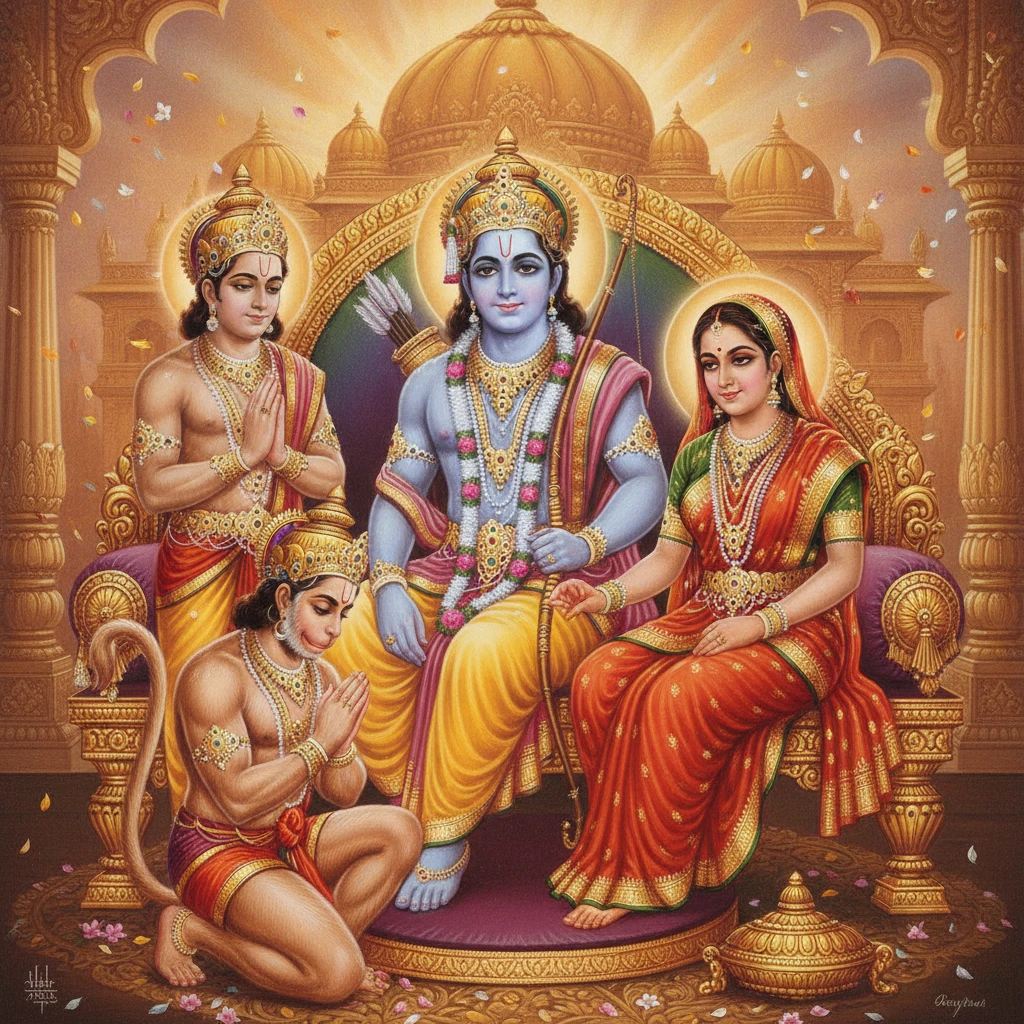
 Ramcharitmanas · Kand 1
About the Bal Kand
The first and longest book tells of the birth and youth of Shri Ram. After invocations to Ganesh, Shiva, Sita-Ram and the Guru, it recounts Ram’s birth in Ayodhya to King Dasharath, his upbringing with his brothers, the sage Vishwamitra taking Ram and Lakshman to guard his yajna, the breaking of Shiva’s mighty bow at Janakpur, and the marriage of Ram and Sita.
How it is read
The Bal Kand is read and recited in its original Awadhi (given below in Devanagari). Read unhurriedly, verse by verse; Sundar Kand in particular is chanted as a paath for courage and protection.
Original Text
Verses & Meaning
वर्णानामर्थसंघानां रसानां छन्दसामपि। मङ्गलानां च कर्त्तारौ वन्दे वाणीविनायकौ।।1।। भवानीशङ्करौ वन्दे श्रद्धाविश्वासरूपिणौ। याभ्यां विना न पश्यन्ति सिद्धाःस्वान्तःस्थमीश्वरम्।।2।। वन्दे बोधमयं नित्यं गुरुं शङ्कररूपिणम्। यमाश्रितो हि वक्रोऽपि चन्द्रः सर्वत्र वन्द्यते।।3।। सीतारामगुणग्रामपुण्यारण्यविहारिणौ। वन्दे विशुद्धविज्ञानौ कबीश्वरकपीश्वरौ।।4।। उद्भवस्थितिसंहारकारिणीं क्लेशहारिणीम्। सर्वश्रेयस्करीं सीतां नतोऽहं रामवल्लभाम्।।5।। यन्मायावशवर्तिं विश्वमखिलं ब्रह्मादिदेवासुरा यत्सत्वादमृषैव भाति सकलं रज्जौ यथाहेर्भ्रमः। यत्पादप्लवमेकमेव हि भवाम्भोधेस्तितीर्षावतां वन्देऽहं तमशेषकारणपरं रामाख्यमीशं हरिम्।।6।। नानापुराणनिगमागमसम्मतं यद् रामायणे निगदितं क्वचिदन्यतोऽपि। स्वान्तःसुखाय तुलसी रघुनाथगाथा- भाषानिबन्धमतिमञ्जुलमातनोति।।7।।
I bow to Vani (Saraswati) and Vinayaka (Ganesha), the makers of sounds and letters, their meanings, the poetic sentiments, the meters, and of all that is auspicious. I bow to Bhavani and Shankara, the very forms of faith and trust, without whom even accomplished sages cannot behold the Lord seated in their own hearts. I bow to the eternal Guru, embodiment of knowledge in the form of Shankara, taking shelter in whom even the crooked moon is honoured everywhere. I bow to Valmiki, king of poets, and Hanuman, king of monkeys, both of pure wisdom, who roam in the holy forest of Sita and Ram's virtues. I bow to Sita, beloved of Ram, who brings about creation, preservation and dissolution, removes afflictions and grants all good. I worship that Lord named Ram, Hari, supreme beyond all causes, by whose Maya the whole universe with Brahma, gods and demons is governed, whose reality makes everything appear real like a snake imagined in a rope, and whose feet alone are the boat for those wishing to cross the ocean of worldly existence. For the joy of his own heart, Tulsidas composes in the common tongue this most beautiful telling of Raghunath's story, approved by the Puranas, Vedas and Agamas and told in the Ramayana and elsewhere.
जो सुमिरत सिधि होइ गन नायक करिबर बदन। करउ अनुग्रह सोइ बुद्धि रासि सुभ गुन सदन।।1।। मूक होइ बाचाल पंगु चढइ गिरिबर गहन। जासु कृपाँ सो दयाल द्रवउ सकल कलि मल दहन।।2।। नील सरोरुह स्याम तरुन अरुन बारिज नयन। करउ सो मम उर धाम सदा छीरसागर सयन।।3।। कुंद इंदु सम देह उमा रमन करुना अयन। जाहि दीन पर नेह करउ कृपा मर्दन मयन।।4।। बंदउ गुरु पद कंज कृपा सिंधु नररूप हरि। महामोह तम पुंज जासु बचन रबि कर निकर।।5।।
May Ganesha, lord of the ganas with the noble elephant face, remembering whom brings success, treasure of wisdom and abode of good virtues, bestow his grace. By whose mercy the dumb speak eloquently and the lame cross great mountains, may that compassionate Lord, who burns away all the impurities of the Kali age, be moved to pity. May He who is dark like a blue lotus, with fresh red-lotus eyes, who ever reclines on the ocean of milk, make my heart His home. May Shiva, whose body is fair like jasmine and the moon, beloved of Uma, abode of compassion, who loves the humble and by his grace destroyed Kamadeva, be gracious. I bow to the lotus feet of the Guru, an ocean of mercy, Hari in human form, whose words are like the rays of the sun that scatter the dense darkness of great delusion.
बंदउ गुरु पद पदुम परागा। सुरुचि सुबास सरस अनुरागा।। अमिय मूरिमय चूरन चारू। समन सकल भव रुज परिवारू।। सुकृति संभु तन बिमल बिभूती। मंजुल मंगल मोद प्रसूती।। जन मन मंजु मुकुर मल हरनी। किएँ तिलक गुन गन बस करनी।। श्रीगुर पद नख मनि गन जोती। सुमिरत दिब्य द्रृष्टि हियँ होती।। दलन मोह तम सो सप्रकासू। बड़े भाग उर आवइ जासू।। उघरहिं बिमल बिलोचन ही के। मिटहिं दोष दुख भव रजनी के।। सूझहिं राम चरित मनि मानिक। गुपुत प्रगट जहँ जो जेहि खानिक।।
I bow to the pollen of the Guru's lotus feet, which is beautiful, fragrant and full of tender love. It is a lovely powder made of the root of nectar that cures the whole family of ailments of worldly existence. It is like the pure sacred ash on Shambhu's holy body, giver of charming welfare and joy. It removes the dirt from the fair mirror of the devotee's mind, and applied as a tilak it brings a host of virtues under one's control. The light from the gem-like nails of the Guru's feet, when remembered, gives divine sight in the heart. It is a radiance that destroys the darkness of delusion; blessed is he in whose heart it enters. The pure eyes of the heart open, and the faults and sorrows of the night of worldly life are removed, so that one sees the gems and rubies of Ram's deeds, hidden or manifest, in whatever mine they lie.
जथा सुअंजन अंजि दृग साधक सिद्ध सुजान। कौतुक देखत सैल बन भूतल भूरि निधान।।1।।
Just as skilled adepts and accomplished ones, applying the magic collyrium to their eyes, behold as sport the abundant hidden treasures in mountains, forests and the earth.
गुरु पद रज मृदु मंजुल अंजन। नयन अमिअ दृग दोष बिभंजन।। तेहिं करि बिमल बिबेक बिलोचन। बरनउँ राम चरित भव मोचन।। बंदउँ प्रथम महीसुर चरना। मोह जनित संसय सब हरना।। सुजन समाज सकल गुन खानी। करउँ प्रनाम सप्रेम सुबानी।। साधु चरित सुभ चरित कपासू। निरस बिसद गुनमय फल जासू।। जो सहि दुख परछिद्र दुरावा। बंदनीय जेहिं जग जस पावा।। मुद मंगलमय संत समाजू। जो जग जंगम तीरथराजू।। राम भक्ति जहँ सुरसरि धारा। सरसइ ब्रह्म बिचार प्रचारा।। बिधि निषेधमय कलि मल हरनी। करम कथा रबिनंदनि बरनी।। हरि हर कथा बिराजति बेनी। सुनत सकल मुद मंगल देनी।। बटु बिस्वास अचल निज धरमा। तीरथराज समाज सुकरमा।। सबहिं सुलभ सब दिन सब देसा। सेवत सादर समन कलेसा।। अकथ अलौकिक तीरथराऊ। देइ सद्य फल प्रगट प्रभाऊ।।
The dust of the Guru's feet is a soft, lovely collyrium, nectar to the eyes and remover of their defects. Making the eye of discernment pure with it, I describe Ram's deeds, which free one from worldly existence. First I bow to the feet of the Brahmins, removers of all doubt born of delusion, and with loving, sweet words I salute the assembly of the good, the mine of all virtues. The conduct of the saints is auspicious like the cotton plant, whose fruit, though tasteless, white and made of fibre, endures suffering and conceals others' faults, and so becomes worthy of praise and wins fame in the world. The joyful, auspicious assembly of saints is a moving Prayagraj in this world, where devotion to Ram is the stream of the Ganga and the discussion of Brahman is the Saraswati. The story of duties and prohibitions, remover of the Kali age's impurities, is described as the Yamuna, daughter of the Sun; and the tales of Vishnu and Shiva shine like the Triveni confluence, which on being heard grant all joy and blessing. Firm faith in one's own dharma is the immortal banyan, and good deeds are the pilgrims' assembly at this holy confluence. This king of pilgrimages is easily reached by all, on all days and in all lands; served with reverence, it removes afflictions, and this indescribable, supernatural Prayag gives its fruit at once, its power manifest.
सुनि समुझहिं जन मुदित मन मज्जहिं अति अनुराग। लहहिं चारि फल अछत तनु साधु समाज प्रयाग।।2।।
Those who hear and understand it and with joyful, deeply devoted mind bathe in this Prayag of saints obtain the four fruits of life in this very body — such is the saintly assembly, the Prayag.
मज्जन फल पेखिअ ततकाला। काक होहिं पिक बकउ मराला।। सुनि आचरज करै जनि कोई। सतसंगति महिमा नहिं गोई।। बालमीक नारद घटजोनी। निज निज मुखनि कही निज होनी।। जलचर थलचर नभचर नाना। जे जड़ चेतन जीव जहाना।। मति कीरति गति भूति भलाई। जब जेहिं जतन जहाँ जेहिं पाई।। सो जानब सतसंग प्रभाऊ। लोकहुँ बेद न आन उपाऊ।। बिनु सतसंग बिबेक न होई। राम कृपा बिनु सुलभ न सोई।। सतसंगत मुद मंगल मूला। सोइ फल सिधि सब साधन फूला।। सठ सुधरहिं सतसंगति पाई। पारस परस कुधात सुहाई।। बिधि बस सुजन कुसंगत परहीं। फनि मनि सम निज गुन अनुसरहीं।। बिधि हरि हर कबि कोबिद बानी। कहत साधु महिमा सकुचानी।। सो मो सन कहि जात न कैसें। साक बनिक मनि गुन गन जैसें।।
The fruit of this bathing is seen at once: crows turn into cuckoos and herons into swans. Let no one wonder on hearing this, for the glory of holy company is no secret; Valmiki, Narada and Agastya have each told with their own lips what became of them. Whatever intellect, fame, good state, prosperity or welfare any being of water, land or sky, inert or conscious, has ever gained, by whatever effort and wherever, know it to be the power of holy company; neither the world nor the Vedas know any other means. Without holy company there is no discernment, and such company is not easily had without Ram's grace. Holy company is the root of joy and blessing; it is itself the fruit and the success, while all other practices are but the flower. Fools are reformed on getting saintly company, as base metal is made lovely by the touch of the philosopher's stone; but if by fate good people fall into bad company, they keep their virtues like the jewel on a serpent's hood. The speech of Brahma, Vishnu, Shiva, poets and scholars shrinks back in describing the saints' glory — how then can I tell it, like a greengrocer describing the worth of gems?
बंदउँ संत समान चित हित अनहित नहिं कोइ। अंजलि गत सुभ सुमन जिमि सम सुगंध कर दोइ।।3(क)।। संत सरल चित जगत हित जानि सुभाउ सनेहु। बालबिनय सुनि करि कृपा राम चरन रति देहु।।3(ख)।।
I bow to the saints, who are equal-minded and to whom no one is friend or foe — just as flowers held in cupped palms give their fragrance equally to both hands. Knowing the saints to be simple-hearted and well-wishers of the world by their very nature and love, may they hear this child's prayer and graciously grant me devotion to Ram's feet.
बहुरि बंदि खल गन सतिभाएँ। जे बिनु काज दाहिनेहु बाएँ।। पर हित हानि लाभ जिन्ह केरें। उजरें हरष बिषाद बसेरें।। हरि हर जस राकेस राहु से। पर अकाज भट सहसबाहु से।। जे पर दोष लखहिं सहसाखी। पर हित घृत जिन्ह के मन माखी।। तेज कृसानु रोष महिषेसा। अघ अवगुन धन धनी धनेसा।। उदय केत सम हित सबही के। कुंभकरन सम सोवत नीके।। पर अकाजु लगि तनु परिहरहीं। जिमि हिम उपल कृषी दलि गरहीं।। बंदउँ खल जस सेष सरोषा। सहस बदन बरनइ पर दोषा।। पुनि प्रनवउँ पृथुराज समाना। पर अघ सुनइ सहस दस काना।। बहुरि सक्र सम बिनवउँ तेही। संतत सुरानीक हित जेही।। बचन बज्र जेहि सदा पिआरा। सहस नयन पर दोष निहारा।।
Next I sincerely bow to the wicked, who without any reason are hostile even when treated well, harmful either way. To them another's gain is a loss and another's harm a gain, and they rejoice in others' ruin and grieve at others' prosperity; they are like Rahu to the full-moon fame of Vishnu and Shiva, and like the thousand-armed Sahasrabahu in doing others harm. They see others' faults with a thousand eyes, and their minds cling to the ghee of others' welfare like flies; fierce as fire, wrathful as Mahishasura, rich in sin and vice as Kubera is in wealth. Their rise, like a comet's, is good for no one; they are best when asleep, like Kumbhakarna, and they give up their bodies to harm others, as hailstones melt away after ruining the crops. I bow to the wicked as to the furious thousand-mouthed Shesha, who describes others' faults; I salute them like King Prithu, who heard others' sins with ten thousand ears; and I entreat them like Indra, who is ever bent on his own party's welfare, to whom the thunderbolt-like harsh word is always dear, and who watches others' faults with a thousand eyes.
उदासीन अरि मीत हित सुनत जरहिं खल रीति। जानि पानि जुग जोरि जन बिनती करइ सप्रीति।।4।।
By their nature the wicked burn with envy on hearing of another's good, whether of a stranger, a foe, or a friend. Knowing them to be so, this humble servant joins his two hands and lovingly makes his entreaty to them.
मैं अपनी दिसि कीन्ह निहोरा। तिन्ह निज ओर न लाउब भोरा।। बायस पलिअहिं अति अनुरागा। होहिं निरामिष कबहुँ कि कागा।। बंदउँ संत असज्जन चरना। दुखप्रद उभय बीच कछु बरना।। बिछुरत एक प्रान हरि लेहीं। मिलत एक दुख दारुन देहीं।। उपजहिं एक संग जग माहीं। जलज जोंक जिमि गुन बिलगाहीं।। सुधा सुरा सम साधू असाधू। जनक एक जग जलधि अगाधू।। भल अनभल निज निज करतूती। लहत सुजस अपलोक बिभूती।। सुधा सुधाकर सुरसरि साधू। गरल अनल कलिमल सरि ब्याधू।। गुन अवगुन जानत सब कोई। जो जेहि भाव नीक तेहि सोई।।
I have made my humble plea from my side, but they on their side will not turn from their nature even by mistake — crows may be fed with great love, yet can a crow ever give up eating flesh? I bow to the feet of both saints and the wicked, describing them a little, since both cause pain: the saint's separation takes away one's very life, while meeting the wicked gives dreadful pain. They arise together in the world yet differ in their qualities, like the lotus and the leech; saint and sinner are like nectar and wine, born of the one fathomless ocean of the world. By their own deeds the good and the bad win fame and infamy respectively; the nectar, the moon, the heavenly Ganga and the saint are the good, while poison, fire, the river of Kali-impurity and the hunter are the bad, though sprung from the same source. Everyone knows virtue and vice; whatever suits a person's taste seems good to him.
भलो भलाइहि पै लहइ लहइ निचाइहि नीचु। सुधा सराहिअ अमरताँ गरल सराहिअ मीचु।।5।।
The good gains only good and the low gains only lowness — nectar is praised for granting immortality, while poison is praised for bringing death.
खल अघ अगुन साधू गुन गाहा। उभय अपार उदधि अवगाहा।। तेहि तें कछु गुन दोष बखाने। संग्रह त्याग न बिनु पहिचाने।। भलेउ पोच सब बिधि उपजाए। गनि गुन दोष बेद बिलगाए।। कहहिं बेद इतिहास पुराना। बिधि प्रपंचु गुन अवगुन साना।। दुख सुख पाप पुन्य दिन राती। साधु असाधु सुजाति कुजाती।। दानव देव ऊँच अरु नीचू। अमिअ सुजीवनु माहुरु मीचू।। माया ब्रह्म जीव जगदीसा। लच्छि अलच्छि रंक अवनीसा।। कासी मग सुरसरि क्रमनासा। मरु मारव महिदेव गवासा।। सरग नरक अनुराग बिरागा। निगमागम गुन दोष बिभागा।।
The tales of the wicked's sin and the saints' virtue are both boundless, unfathomable oceans, so I have described only a few merits and faults, since without recognition there can be no accepting or rejecting. The Creator has made both the good and the vile, and the Vedas, counting their virtues and faults, have separated them; the Vedas, histories and Puranas declare that the Creator's world is a mixture of good and bad. Sorrow and joy, sin and merit, day and night, saint and sinner, high-born and low-born, demon and god, high and low, life-giving nectar and deadly poison, Maya and Brahman, the soul and the Lord of the world, wealth and want, pauper and king, holy Kashi and Magadha, the heavenly Ganga and the Karmanasha which destroys good deeds, the barren desert and fertile Malwa, the Brahmin and the butcher, heaven and hell, attachment and detachment — the Vedas and Agamas have thus classified virtue and vice.
जड़ चेतन गुन दोषमय बिस्व कीन्ह करतार। संत हंस गुन गहहिं पय परिहरि बारि बिकार।।6।।
The Creator has made the world a blend of the inert and the conscious, of virtue and fault; but the saints, like the swan, take up the virtue and leave the fault behind, just as the swan takes the milk and leaves the water.
अस बिबेक जब देइ बिधाता। तब तजि दोष गुनहिं मनु राता।। काल सुभाउ करम बरिआई। भलेउ प्रकृति बस चुकइ भलाई।। सो सुधारि हरिजन जिमि लेहीं। दलि दुख दोष बिमल जसु देहीं।। खलउ करहिं भल पाइ सुसंगू। मिटइ न मलिन सुभाउ अभंगू।। लखि सुबेष जग बंचक जेऊ। बेष प्रताप पूजिअहिं तेऊ।। उधरहिं अंत न होइ निबाहू। कालनेमि जिमि रावन राहू।। किएहुँ कुबेष साधु सनमानू। जिमि जग जामवंत हनुमानू।। हानि कुसंग सुसंगति लाहू। लोकहुँ बेद बिदित सब काहू।। गगन चढ़इ रज पवन प्रसंगा। कीचहिं मिलइ नीच जल संगा।। साधु असाधु सदन सुक सारीं। सुमिरहिं राम देहिं गनि गारी।। धूम कुसंगति कारिख होई। लिखिअ पुरान मंजु मसि सोई।। सोइ जल अनल अनिल संघाता। होइ जलद जग जीवन दाता।।
When the Creator grants such discernment, then the mind, forsaking faults, becomes devoted to virtues. Under the force of time, destiny and past deeds even a good person by nature sometimes slips from goodness, but Hari's devotees set this right, destroying sorrow and fault and giving pure fame. Even the wicked do good on getting good company, yet their fixed impure nature is not erased; and worldly deceivers, seeing that a holy garb wins reverence, are honoured for the garb's sake — but they are exposed at last and cannot keep it up, like Kalanemi, Ravana and Rahu. Even in a lowly guise a saint is honoured, as Jambavan and Hanuman were in the world; loss comes from bad company and gain from good, as everyone knows from the world and the Vedas. Dust rises to the sky by joining the wind but sinks into mud by joining low water; the parrot and myna in the homes of saint and sinner learn to remember Ram or to hurl abuse accordingly. Smoke, by bad company, becomes soot, yet the same, made into ink, writes the lovely Puranas; and that same substance, joined with fire and wind, becomes the cloud that gives life to the world.
ग्रह भेषज जल पवन पट पाइ कुजोग सुजोग। होहि कुबस्तु सुबस्तु जग लखहिं सुलच्छन लोग।।7(क)।। सम प्रकास तम पाख दुहुँ नाम भेद बिधि कीन्ह। ससि सोषक पोषक समुझि जग जस अपजस दीन्ह।।7(ख)।। जड़ चेतन जग जीव जत सकल राममय जानि। बंदउँ सब के पद कमल सदा जोरि जुग पानि।।7(ग)।। देव दनुज नर नाग खग प्रेत पितर गंधर्ब। बंदउँ किंनर रजनिचर कृपा करहु अब सर्ब।।7(घ)।।
A planet, medicine, water, wind or cloth, meeting bad or good company, becomes a bad or good thing in the world, and discerning people perceive this. The Creator made the two fortnights of the month equal in light and darkness but with different names; understanding that one wanes and the other nourishes the moon, the world gave them infamy and fame. Knowing all beings of the world, inert and conscious, to be full of Ram, I bow to the lotus feet of all, ever joining my two hands. Gods, demons, men, Nagas, birds, ghosts, ancestors, Gandharvas, Kinnaras and night-rangers — I bow to all of you; now show me your grace, every one.
आकर चारि लाख चौरासी। जाति जीव जल थल नभ बासी।। सीय राममय सब जग जानी। करउँ प्रनाम जोरि जुग पानी।। जानि कृपाकर किंकर मोहू। सब मिलि करहु छाड़ि छल छोहू।। निज बुधि बल भरोस मोहि नाहीं। तातें बिनय करउँ सब पाही।। करन चहउँ रघुपति गुन गाहा। लघु मति मोरि चरित अवगाहा।। सूझ न एकउ अंग उपाऊ। मन मति रंक मनोरथ राऊ।। मति अति नीच ऊँचि रुचि आछी। चहिअ अमिअ जग जुरइ न छाछी।। छमिहहिं सज्जन मोरि ढिठाई। सुनिहहिं बालबचन मन लाई।। जौ बालक कह तोतरि बाता। सुनहिं मुदित मन पितु अरु माता।। हँसिहहि कूर कुटिल कुबिचारी। जे पर दूषन भूषनधारी।। निज कवित केहि लाग न नीका। सरस होउ अथवा अति फीका।। जे पर भनिति सुनत हरषाही। ते बर पुरुष बहुत जग नाहीं।। जग बहु नर सर सरि सम भाई। जे निज बाढ़ि बढ़हिं जल पाई।। सज्जन सकृत सिंधु सम कोई। देखि पूर बिधु बाढ़इ जोई।।
Knowing all the eighty-four lakh species of creatures born of the four sources and dwelling in water, land and sky, and the whole world, to be full of Sita and Ram, I salute them with joined hands. Recognising me as their servant, may the merciful ones all together shed their guile and show me kindness, for I have no trust in my own wit or strength and so beg protection of all. I wish to sing Raghupati's virtues, but my intellect is small and His deeds are unfathomable; I see not a single means to succeed, for my mind and wit are paupers while my longing is a king. My understanding is very low but my taste is high — I crave nectar when not even buttermilk is to be had in this world. The good will forgive my boldness and listen to a child's words attentively, for when a child lisps, its father and mother hear with delighted hearts. The cruel, crooked and evil-minded, who wear others' faults as ornaments, will laugh; but whose own poetry does not seem sweet to himself, whether it be charming or utterly flat? Those who rejoice on hearing others' compositions are noble men, and such are few in the world — most people are like ponds and rivers that swell only when the rains give them water, while only some rare saint is like the ocean that swells at the sight of the full moon.
भाग छोट अभिलाषु बड़ करउँ एक बिस्वास। पैहहिं सुख सुनि सुजन सब खल करहहिं उपहास।।8।।
My fortune is small but my longing is great; yet I hold one firm trust — that on hearing this all good people will be gladdened, while the wicked will only mock.
खल परिहास होइ हित मोरा। काक कहहिं कलकंठ कठोरा।। हंसहि बक दादुर चातकही। हँसहिं मलिन खल बिमल बतकही।। कबित रसिक न राम पद नेहू। तिन्ह कहँ सुखद हास रस एहू।। भाषा भनिति भोरि मति मोरी। हँसिबे जोग हँसें नहिं खोरी।। प्रभु पद प्रीति न सामुझि नीकी। तिन्हहि कथा सुनि लागहि फीकी।। हरि हर पद रति मति न कुतरकी। तिन्ह कहुँ मधुर कथा रघुवर की।। राम भगति भूषित जियँ जानी। सुनिहहिं सुजन सराहि सुबानी।। कबि न होउँ नहिं बचन प्रबीनू। सकल कला सब बिद्या हीनू।। आखर अरथ अलंकृति नाना। छंद प्रबंध अनेक बिधाना।। भाव भेद रस भेद अपारा। कबित दोष गुन बिबिध प्रकारा।। कबित बिबेक एक नहिं मोरें। सत्य कहउँ लिखि कागद कोरे।।
Even the wicked's mockery will do me good, for crows call the sweet-voiced cuckoo harsh, herons laugh at the swan and frogs at the chatak bird, and impure, wicked people laugh at pure speech. Those who relish poetry but have no love for Ram's feet — for them this affords the enjoyment of the comic sentiment; my language, composition and wit are simple, fit to be laughed at, and there is no blame in their laughing. To those who have no love for the Lord's feet and no good understanding, hearing the story will seem flat; but to those whose minds are free of false reasoning and who love the feet of Vishnu and Shiva, the sweet tale of Raghuvar is dear. Knowing it adorned in their hearts with devotion to Ram, the good will hear it and praise it with kind words. I am no poet nor skilled in speech, and I am devoid of all arts and learning: of letters, meanings, the many figures of speech, meters and the many forms of composition, of the endless kinds of emotion and sentiment, and of the various poetic faults and merits — of poetic discernment I have not a single one; this I say truly, as if writing on blank paper.
भनिति मोरि सब गुन रहित बिस्व बिदित गुन एक। सो बिचारि सुनिहहिं सुमति जिन्ह कें बिमल बिवेक।।9।।
My composition is devoid of all merits, yet it has one merit famous throughout the world — the name of Ram; considering that, the wise, who possess pure discernment, will listen to it.
एहि महँ रघुपति नाम उदारा। अति पावन पुरान श्रुति सारा।। मंगल भवन अमंगल हारी। उमा सहित जेहि जपत पुरारी।। भनिति बिचित्र सुकबि कृत जोऊ। राम नाम बिनु सोह न सोऊ।। बिधुबदनी सब भाँति सँवारी। सोन न बसन बिना बर नारी।। सब गुन रहित कुकबि कृत बानी। राम नाम जस अंकित जानी।। सादर कहहिं सुनहिं बुध ताही। मधुकर सरिस संत गुनग्राही।। जदपि कबित रस एकउ नाही। राम प्रताप प्रकट एहि माहीं।। सोइ भरोस मोरें मन आवा। केहिं न सुसंग बडप्पनु पावा।। धूमउ तजइ सहज करुआई। अगरु प्रसंग सुगंध बसाई।। भनिति भदेस बस्तु भलि बरनी। राम कथा जग मंगल करनी।।
In it is the noble name of Raghupati, most purifying and the very essence of the Vedas and Puranas — the abode of auspiciousness and remover of the inauspicious, which Shiva, the foe of Tripura, repeats along with Uma. Even a good poet's wondrous composition does not shine without Ram's name, just as a moon-faced woman, adorned in every way, does not look lovely without garments; and even a bad poet's verse, though devoid of all merit, is honoured when known to be stamped with the fame of Ram's name, so the wise recite and hear it reverently, gathering its worth like bees, as saints do. Though there is not a drop of poetic flavour in it, Ram's glory is manifest within it — that very trust came to my mind, for who has not gained greatness through good company? Even smoke gives up its natural pungency and becomes fragrant by the company of aloe-wood; so, though the composition is crude, the subject it describes is excellent — the story of Ram, doer of good to the whole world.
मंगल करनि कलि मल हरनि तुलसी कथा रघुनाथ की।। गति कूर कबिता सरित की ज्यों सरित पावन पाथ की।। प्रभु सुजस संगति भनिति भलि होइहि सुजन मन भावनी।। भव अंग भूति मसान की सुमिरत सुहावनि पावनी।।
The story of Raghunath told by Tulsidas is a doer of blessing and a remover of the Kali age's impurities. Though the current of my poor poetry is crude, it is like the holy water of a sacred river; by the company of the Lord's noble fame, my composition will become good and pleasing to the minds of the good — just as the ash of the cremation-ground, though base, becomes lovely and purifying when remembered, as on Shiva's body.
प्रिय लागिहि अति सबहि मम भनिति राम जस संग। दारु बिचारु कि करइ कोउ बंदिअ मलय प्रसंग।।10(क)।। स्याम सुरभि पय बिसद अति गुनद करहिं सब पान। गिरा ग्राम्य सिय राम जस गावहिं सुनहिं सुजान।।10(ख)।।
My composition, in the company of Ram's fame, will be very dear to all — for does anyone weigh the worth of ordinary wood? Yet it is honoured through its nearness to the sandal tree. A black cow gives very white and wholesome milk, which all drink; likewise, though the speech is rustic, since it sings the fame of Sita and Ram, the wise sing and hear it.
मनि मानिक मुकुता छबि जैसी। अहि गिरि गज सिर सोह न तैसी।। नृप किरीट तरुनी तनु पाई। लहहिं सकल सोभा अधिकाई।। तैसेहिं सुकबि कबित बुध कहहीं। उपजहिं अनत अनत छबि लहहीं।। भगति हेतु बिधि भवन बिहाई। सुमिरत सारद आवति धाई।। राम चरित सर बिनु अन्हवाएँ। सो श्रम जाइ न कोटि उपाएँ।। कबि कोबिद अस हृदयँ बिचारी। गावहिं हरि जस कलि मल हारी।। कीन्हें प्राकृत जन गुन गाना। सिर धुनि गिरा लगत पछिताना।। हृदय सिंधु मति सीप समाना। स्वाति सारदा कहहिं सुजाना।। जौं बरषइ बर बारि बिचारू। होहिं कबित मुकुतामनि चारू।।
The beauty of a gem, ruby or pearl is not the same on the head of a serpent, mountain or elephant where it is found; but set in a king's crown or on a young woman's body, they attain full and greater splendour. In the same way, the wise say, a good poet's verses arise in one place and gain their beauty elsewhere when others recite them. For devotion's sake, Sharada leaves Brahma's abode and comes running when remembered; but without bathing that composition in the lake of Ram's deeds, its toil cannot be removed by a million means. Knowing this in their hearts, poets and scholars sing Hari's fame, remover of Kali's impurities; but singing the praises of ordinary men, the goddess of speech beats her head and repents. The wise say the heart is like the ocean, the intellect like the oyster-shell, and Sharada like the Swati star: if she rains down the excellent water of good thought, then verses form, lovely as pearl-gems.
जुगुति बेधि पुनि पोहिअहिं रामचरित बर ताग। पहिरहिं सज्जन बिमल उर सोभा अति अनुराग।।11।।
Then, pierced by skill, these pearls are strung on the fine thread of Ram's story, and the good wear them upon their pure hearts with great love, like a beautiful necklace.
जे जनमे कलिकाल कराला। करतब बायस बेष मराला।। चलत कुपंथ बेद मग छाँड़े। कपट कलेवर कलि मल भाँड़ें।। बंचक भगत कहाइ राम के। किंकर कंचन कोह काम के।। तिन्ह महँ प्रथम रेख जग मोरी। धींग धरमध्वज धंधक धोरी।। जौं अपने अवगुन सब कहऊँ। बाढ़इ कथा पार नहिं लहऊँ।। ताते मैं अति अलप बखाने। थोरे महुँ जानिहहिं सयाने।। समुझि बिबिधि बिधि बिनती मोरी। कोउ न कथा सुनि देइहि खोरी।। एतेहु पर करिहहिं जे असंका। मोहि ते अधिक ते जड़ मति रंका।। कबि न होउँ नहिं चतुर कहावउँ। मति अनुरूप राम गुन गावउँ।। कहँ रघुपति के चरित अपारा। कहँ मति मोरि निरत संसारा।। जेहिं मारुत गिरि मेरु उड़ाहीं। कहहु तूल केहि लेखे माहीं।। समुझत अमित राम प्रभुताई। करत कथा मन अति कदराई।।
Those born in the terrible Kali age, whose deeds are crow-like though their garb is swan-like, who walk the wrong path having left the Vedic way, deceitful in body and storehouses of Kali's impurity, who get themselves called devotees of Ram while serving gold, anger and lust — among all such, mine is the first mark in the world, an impudent bearer of the banner of false righteousness and a leader of intrigues. If I told all my own faults the tale would grow endless, so I have described very few, from which the wise will understand; considering my prayer of many kinds, no one will find fault on hearing the story, and those who still doubt after this are even more dull-witted and pauper-minded than I. I am no poet nor claim to be clever; according to my wit I sing Ram's virtues. Where are Raghupati's boundless deeds and where my mind, sunk in worldliness? By the wind that can blow away even Mount Meru, of what account is a mere wisp of cotton? Realising Ram's immeasurable greatness, my mind grows very timid in telling the story.
सारद सेस महेस बिधि आगम निगम पुरान। नेति नेति कहि जासु गुन करहिं निरंतर गान।।12।।
Sharada, Shesha, Mahesh, Brahma, the Agamas, the Vedas and the Puranas ceaselessly sing His virtues, saying only 'not this, not this' (neti neti).
सब जानत प्रभु प्रभुता सोई। तदपि कहें बिनु रहा न कोई।। तहाँ बेद अस कारन राखा। भजन प्रभाउ भाँति बहु भाषा।। एक अनीह अरूप अनामा। अज सच्चिदानंद पर धामा।। ब्यापक बिस्वरूप भगवाना। तेहिं धरि देह चरित कृत नाना।। सो केवल भगतन हित लागी। परम कृपाल प्रनत अनुरागी।। जेहि जन पर ममता अति छोहू। जेहिं करुना करि कीन्ह न कोहू।। गई बहोर गरीब नेवाजू। सरल सबल साहिब रघुराजू।। बुध बरनहिं हरि जस अस जानी। करहि पुनीत सुफल निज बानी।। तेहिं बल मैं रघुपति गुन गाथा। कहिहउँ नाइ राम पद माथा।। मुनिन्ह प्रथम हरि कीरति गाई। तेहिं मग चलत सुगम मोहि भाई।।
Though everyone knows the Lord's greatness to be such, still no one has kept silent about it — the Vedas give this reason: the power of devotion is described in many ways. He is one, desireless, formless, nameless, unborn, existence-consciousness-bliss and the supreme abode; the all-pervading Lord, universal in form, yet He took a body and performed many deeds, solely for the sake of His devotees — the supremely merciful one, loving to those who surrender, who has deep affection for His devotee, who shows compassion and never wrath. Restorer of the lost, cherisher of the poor, the simple yet mighty master Raghuraj — knowing this, the wise describe Hari's fame and make their own speech holy and fruitful. By that strength I too shall tell the story of Raghupati's virtues, bowing my head at Ram's feet; the sages sang Hari's glory first, and walking that path is easy for me, brother.
अति अपार जे सरित बर जौं नृप सेतु कराहिं। चढि पिपीलिकउ परम लघु बिनु श्रम पारहि जाहिं।।13।।
If a king builds a bridge over even the widest and greatest of rivers, then even a tiny ant climbs upon it and crosses over without any effort.
एहि प्रकार बल मनहि देखाई। करिहउँ रघुपति कथा सुहाई।। ब्यास आदि कबि पुंगव नाना। जिन्ह सादर हरि सुजस बखाना।। चरन कमल बंदउँ तिन्ह केरे। पुरवहुँ सकल मनोरथ मेरे।। कलि के कबिन्ह करउँ परनामा। जिन्ह बरने रघुपति गुन ग्रामा।। जे प्राकृत कबि परम सयाने। भाषाँ जिन्ह हरि चरित बखाने।। भए जे अहहिं जे होइहहिं आगें। प्रनवउँ सबहिं कपट सब त्यागें।। होहु प्रसन्न देहु बरदानू। साधु समाज भनिति सनमानू।। जो प्रबंध बुध नहिं आदरहीं। सो श्रम बादि बाल कबि करहीं।। कीरति भनिति भूति भलि सोई। सुरसरि सम सब कहँ हित होई।। राम सुकीरति भनिति भदेसा। असमंजस अस मोहि अँदेसा।। तुम्हरी कृपा सुलभ सोउ मोरे। सिअनि सुहावनि टाट पटोरे।।
In this way, showing courage to my mind, I shall tell the delightful story of Raghupati. I bow to the lotus feet of Vyasa and the other great poets who reverently praised Hari's fair fame — may they fulfil all my desires; and I salute the poets of the Kali age who have described Raghupati's host of virtues. Those very wise vernacular poets who told Hari's deeds in the common tongue — those who have been, those who are, and those who will come — I bow to them all, casting off all guile: be pleased and grant me the boon that the saintly assembly may honour my composition. The composition that the wise do not respect is a labour done in vain by childish poets; that fame, composition and prosperity is truly good which, like the heavenly Ganga, benefits everyone. Ram's fame is excellent but my composition is crude — this discrepancy is my worry; yet by your grace even that harmony is easy for me, for coarse seams look lovely even upon fine silk.
सरल कबित कीरति बिमल सोइ आदरहिं सुजान। सहज बयर बिसराइ रिपु जो सुनि करहिं बखान।।14(क)।। सो न होइ बिनु बिमल मति मोहि मति बल अति थोर। करहु कृपा हरि जस कहउँ पुनि पुनि करउँ निहोर।।14(ख)।। कबि कोबिद रघुबर चरित मानस मंजु मराल। बाल बिनय सुनि सुरुचि लखि मोपर होहु कृपाल।।14(ग)।। बंदउँ मुनि पद कंजु रामायन जेहिं निरमयउ। सखर सुकोमल मंजु दोष रहित दूषन सहित।।14(घ)।। बंदउँ चारिउ बेद भव बारिधि बोहित सरिस। जिन्हहि न सपनेहुँ खेद बरनत रघुबर बिसद जसु।।14(ङ)।। बंदउँ बिधि पद रेनु भव सागर जेहि कीन्ह जहँ। संत सुधा ससि धेनु प्रगटे खल बिष बारुनी।।14(च)।। बिबुध बिप्र बुध ग्रह चरन बंदि कहउँ कर जोरि। होइ प्रसन्न पुरवहु सकल मंजु मनोरथ मोरि।।14(छ)।।
The wise honour that poetry which is simple and of pure fame — on hearing which even a foe forgets his natural enmity and praises it. But that cannot happen without pure intellect, and my intellect and strength are very slight; show grace, so that I may tell Hari's fame — again and again I entreat you. The poets and scholars are the lovely swans of the Manas-lake of Raghubar's deeds; hearing this child's plea and seeing my good taste, be gracious to me. I bow to the lotus feet of the sage Valmiki, who composed the Ramayana, which is sharp yet very tender, lovely, faultless yet full of 'faults' whose words pierce the wicked. I bow to the four Vedas, which are like a boat over the ocean of existence, and never even in dream feel weariness in describing Raghubar's pure fame. I bow to the dust of Brahma's feet, who made the world in which saints emerged like nectar, the moon and the wish-cow, and the wicked like poison and wine. Bowing to the feet of the gods, Brahmins, the wise and the planets, I speak with joined hands: be pleased and fulfil all my fair desires.
पुनि बंदउँ सारद सुरसरिता। जुगल पुनीत मनोहर चरिता।। मज्जन पान पाप हर एका। कहत सुनत एक हर अबिबेका।। गुर पितु मातु महेस भवानी। प्रनवउँ दीनबंधु दिन दानी।। सेवक स्वामि सखा सिय पी के। हित निरुपधि सब बिधि तुलसीके।। कलि बिलोकि जग हित हर गिरिजा। साबर मंत्र जाल जिन्ह सिरिजा।। अनमिल आखर अरथ न जापू। प्रगट प्रभाउ महेस प्रतापू।। सो उमेस मोहि पर अनुकूला। करिहिं कथा मुद मंगल मूला।। सुमिरि सिवा सिव पाइ पसाऊ। बरनउँ रामचरित चित चाऊ।। भनिति मोरि सिव कृपाँ बिभाती। ससि समाज मिलि मनहुँ सुराती।। जे एहि कथहि सनेह समेता। कहिहहिं सुनिहहिं समुझि सचेता।। होइहहिं राम चरन अनुरागी। कलि मल रहित सुमंगल भागी।।
Again I bow to Sharada and the heavenly Ganga, both holy and of enchanting character — bathing in the one and drinking of it removes sin, and telling and hearing of the other, knowledge, removes ignorance. I bow to Guru, father, mother, Mahesh and Bhavani, and to Ram, the friend of the humble and the ever-giving, who is to Tulsidas the servant, master, friend and beloved of Sita, truly and in every way. Seeing the Kali age, for the world's good Shiva and Girija created the web of Shabar mantras, whose letters are ill-matched and whose meaning is obscure, yet whose power is manifest — such is the majesty of Mahesh. May that Lord of Uma be gracious to me and make this story a root of joy and blessing; remembering Shiva and gaining Parvati's and Shiva's grace, I describe Ram's deeds with an eager heart. By Shiva's grace my composition shines forth, as if a lovely night is graced by the company of the moon. Those who with love tell, hear and understand this story with an alert mind will become devoted to Ram's feet, freed of Kali's impurities and blessed with good fortune.
सपनेहुँ साचेहुँ मोहि पर जौं हर गौरि पसाउ। तौ फुर होउ जो कहेउँ सब भाषा भनिति प्रभाउ।।15।।
If in dream or in truth Shiva and Gauri have grace upon me, then may all that I have said come true — such is the power of this composition in the common tongue.
बंदउँ अवध पुरी अति पावनि। सरजू सरि कलि कलुष नसावनि।। प्रनवउँ पुर नर नारि बहोरी। ममता जिन्ह पर प्रभुहि न थोरी।। सिय निंदक अघ ओघ नसाए। लोक बिसोक बनाइ बसाए।। बंदउँ कौसल्या दिसि प्राची। कीरति जासु सकल जग माची।। प्रगटेउ जहँ रघुपति ससि चारू। बिस्व सुखद खल कमल तुसारू।। दसरथ राउ सहित सब रानी। सुकृत सुमंगल मूरति मानी।। करउँ प्रनाम करम मन बानी। करहु कृपा सुत सेवक जानी।। जिन्हहि बिरचि बड़ भयउ बिधाता। महिमा अवधि राम पितु माता।।
I bow to the most holy city of Ayodhya and the river Sarayu, which destroys the impurities of the Kali age; I salute too the men and women of the city, on whom the Lord's affection is not small. Those who slandered Sita had their masses of sin destroyed and were settled, free of sorrow, in the higher world. I bow to Kausalya, like the eastern horizon, whose fame has spread through all the world, where the lovely moon Raghupati arose, giver of joy to the world and frost to the lotus of the wicked. King Dasharath together with all the queens I regard as very images of good deeds and good fortune; I salute them by deed, mind and word — show me grace, knowing me the servant of your son. Making whom, the Creator himself became great — Ram's father and mother, the very limit of glory.
बंदउँ अवध भुआल सत्य प्रेम जेहि राम पद। बिछुरत दीनदयाल प्रिय तनु तृन इव परिहरेउ।।16।।
I bow to the king of Ayodhya, Dasharath, whose true love was fixed on Ram's feet — on being parted from the dear and compassionate Lord, he cast off his beloved body like a mere blade of grass.
प्रनवउँ परिजन सहित बिदेहू। जाहि राम पद गूढ़ सनेहू।। जोग भोग महँ राखेउ गोई। राम बिलोकत प्रगटेउ सोई।। प्रनवउँ प्रथम भरत के चरना। जासु नेम ब्रत जाइ न बरना।। राम चरन पंकज मन जासू। लुबुध मधुप इव तजइ न पासू।। बंदउँ लछिमन पद जलजाता। सीतल सुभग भगत सुख दाता।। रघुपति कीरति बिमल पताका। दंड समान भयउ जस जाका।। सेष सहस्त्रसीस जग कारन। जो अवतरेउ भूमि भय टारन।। सदा सो सानुकूल रह मो पर। कृपासिंधु सौमित्रि गुनाकर।। रिपुसूदन पद कमल नमामी। सूर सुसील भरत अनुगामी।। महावीर बिनवउँ हनुमाना। राम जासु जस आप बखाना।।
I salute Videha (King Janaka) with his family, who had deep, hidden love for Ram's feet, which he kept concealed amid yoga and royal enjoyment but which became manifest on beholding Ram. First I bow to the feet of Bharata, whose observances and vows cannot be described, whose mind clings to Ram's lotus feet like a bee that will not leave them. I bow to the lotus feet of Lakshmana, cool, lovely and giver of joy to devotees, who became like the staff of the pure banner of Raghupati's fame; he is the thousand-headed Shesha, cause of the world, who descended to earth to remove its fear — may that Sumitra's son, ocean of mercy and mine of virtues, ever be favourable to me. I bow to the lotus feet of Shatrughna, valiant and gentle, who follows Bharata; and I entreat the great hero Hanuman, whose fame Ram himself has extolled.
प्रनवउँ पवनकुमार खल बन पावक ग्यानधन। जासु हृदय आगार बसहिं राम सर चाप धर।।17।।
I bow to Hanuman, son of the Wind, who is a fire to the forest of the wicked and a storehouse of wisdom, in the chamber of whose heart dwell Ram, bearing his arrows and bow.
कपिपति रीछ निसाचर राजा। अंगदादि जे कीस समाजा।। बंदउँ सब के चरन सुहाए। अधम सरीर राम जिन्ह पाए।। रघुपति चरन उपासक जेते। खग मृग सुर नर असुर समेते।। बंदउँ पद सरोज सब केरे। जे बिनु काम राम के चेरे।। सुक सनकादि भगत मुनि नारद। जे मुनिबर बिग्यान बिसारद।। प्रनवउँ सबहिं धरनि धरि सीसा। करहु कृपा जन जानि मुनीसा।। जनकसुता जग जननि जानकी। अतिसय प्रिय करुना निधान की।। ताके जुग पद कमल मनावउँ। जासु कृपाँ निरमल मति पावउँ।। पुनि मन बचन कर्म रघुनायक। चरन कमल बंदउँ सब लायक।। राजिवनयन धरें धनु सायक। भगत बिपति भंजन सुख दायक।।
Sugriva the monkey-king, the bear Jambavan, Vibhishana the demon-king, Angada and the whole company of monkeys — I bow to all their fair feet, who, though in lowly bodies, attained Ram. All the worshippers of Raghupati's feet, birds, beasts, gods, men and demons alike — I bow to the lotus feet of all who are Ram's servants without any selfish desire. Shuka, Sanaka and the other devotees, the sage Narada, and those great sages skilled in spiritual wisdom — I bow to them all, laying my head on the ground; show grace, knowing me your servant, O lords of sages. I propitiate the two lotus feet of Janaka's daughter Janaki, mother of the world, exceedingly dear to the abode of compassion, by whose grace I may gain pure understanding. Then by mind, word and deed I bow to the all-capable lotus feet of Raghunayak, the lotus-eyed one bearing bow and arrows, destroyer of devotees' calamities and giver of joy.
गिरा अरथ जल बीचि सम कहिअत भिन्न न भिन्न। बदउँ सीता राम पद जिन्हहि परम प्रिय खिन्न।।18।।
Like word and its meaning, or water and its wave, Sita and Ram are spoken of as distinct yet not distinct — I bow to the feet of Sita and Ram, to whom the afflicted are supremely dear.
बंदउँ नाम राम रघुवर को। हेतु कृसानु भानु हिमकर को।। बिधि हरि हरमय बेद प्रान सो। अगुन अनूपम गुन निधान सो।। महामंत्र जोइ जपत महेसू। कासीं मुकुति हेतु उपदेसू।। महिमा जासु जान गनराउ। प्रथम पूजिअत नाम प्रभाऊ।। जान आदिकबि नाम प्रतापू। भयउ सुद्ध करि उलटा जापू।। सहस नाम सम सुनि सिव बानी। जपि जेई पिय संग भवानी।। हरषे हेतु हेरि हर ही को। किय भूषन तिय भूषन ती को।। नाम प्रभाउ जान सिव नीको। कालकूट फलु दीन्ह अमी को।।
I bow to the name 'Ram' of Raghuvar, which is the source of fire, sun and moon in its very syllables; it is Brahma, Vishnu and Shiva together, the life of the Vedas, attributeless and incomparable, yet the storehouse of all virtues. It is the great mantra that Shiva repeats and the teaching that grants liberation at Kashi; its glory Ganesha knows, and by the power of the name he is worshipped first. The first poet Valmiki knew the might of the name and became pure by repeating it in reverse. Hearing from Shiva's mouth that the name equals a thousand names, Bhavani repeats it with her beloved Shiva; and Shiva, beholding it in his heart, was delighted and made the name — itself the ornament of the noblest of women, Parvati — her very adornment. Shiva knows well the power of the name, by which the deadly Kalakuta poison yielded to him the fruit of nectar.
बरषा रितु रघुपति भगति तुलसी सालि सुदास।। राम नाम बर बरन जुग सावन भादव मास।।19।।
Tulsidas says: devotion to Shri Ram (Raghupati) is like the rainy season, and the good devotees are like the paddy crop that thrives in it; and the two lovely syllables of Ram's name are like the fertile months of Sawan and Bhadon.
आखर मधुर मनोहर दोऊ। बरन बिलोचन जन जिय जोऊ।। सुमिरत सुलभ सुखद सब काहू। लोक लाहु परलोक निबाहू।। कहत सुनत सुमिरत सुठि नीके। राम लखन सम प्रिय तुलसी के।। बरनत बरन प्रीति बिलगाती। ब्रह्म जीव सम सहज सँघाती।। नर नारायन सरिस सुभ्राता। जग पालक बिसेषि जन त्राता।। भगति सुतिय कल करन बिभूषन। जग हित हेतु बिमल बिधु पूषन । स्वाद तोष सम सुगति सुधा के। कमठ सेष सम धर बसुधा के।। जन मन मंजु कंज मधुकर से। जीह जसोमति हरि हलधर से।।
The two letters of Ram's name are sweet and captivating, like the eyes on the devotees' face and their very life. Easy to remember and joy-giving to all, they bring gain in this world and support in the next; sweet to speak, hear and remember, they are as dear to Tulsi as Ram and Lakshman. Though naming them separately shows a distinction, they are natural companions like Brahman and the soul, and like Nara and Narayana they are good brothers who protect the world and especially save the devotees. They are lovely ear-ornaments for the good lady Devotion, and for the world's welfare they are like the spotless moon and sun; like taste and contentment they are the nectar of salvation, and like the tortoise and Shesha they uphold the earth. They are like bees on the lovely lotus of devotees' minds, and on the tongue, which is like mother Yashoda, they play like Krishna and Balaram.
एकु छत्रु एकु मुकुटमनि सब बरननि पर जोउ। तुलसी रघुबर नाम के बरन बिराजत दोउ।।20।।
One letter of Raghubar's name is like a royal umbrella and the other like the crest-jewel of the crown, held above all other letters. Tulsi says both letters of Shri Ram's name shine in supreme glory.
समुझत सरिस नाम अरु नामी। प्रीति परसपर प्रभु अनुगामी।। नाम रूप दुइ ईस उपाधी। अकथ अनादि सुसामुझि साधी।। को बड़ छोट कहत अपराधू। सुनि गुन भेद समुझिहहिं साधू।। देखिअहिं रूप नाम आधीना। रूप ग्यान नहिं नाम बिहीना।। रूप बिसेष नाम बिनु जानें। करतल गत न परहिं पहिचानें।। सुमिरिअ नाम रूप बिनु देखें। आवत हृदयँ सनेह बिसेषें।। नाम रूप गति अकथ कहानी। समुझत सुखद न परति बखानी।। अगुन सगुन बिच नाम सुसाखी। उभय प्रबोधक चतुर दुभाषी।।
On reflection the Name and the Named (God) are alike, with mutual love between them, though the Lord follows His Name. Name and Form are the two attributes of God, both indescribable, beginningless, and grasped only by deep discernment; to declare which is greater or smaller is an offense, yet on hearing the distinction of their qualities the saints will understand. Form is seen to depend on the Name, for there is no knowledge of Form without the Name, and even a familiar form, if unknown by name, cannot be recognized though it lies in one's own palm. But the Name can be remembered without seeing the form, bringing special love into the heart. The nature of Name and Form is an untellable tale, delightful to grasp but impossible to describe. The Name is a good witness between the formless and the formed Brahman, a clever interpreter that reveals both.
राम नाम मनिदीप धरु जीह देहरी द्वार। तुलसी भीतर बाहेरहुँ जौं चाहसि उजिआर।।21।।
O Tulsi, place the jewel-lamp of Ram's name upon the tongue, which is like the threshold of the doorway, if you wish for light both within (the soul) and without (in the world).
नाम जीहँ जपि जागहिं जोगी। बिरति बिरंचि प्रपंच बियोगी।। ब्रह्मसुखहि अनुभवहिं अनूपा। अकथ अनामय नाम न रूपा।। जाना चहहिं गूढ़ गति जेऊ। नाम जीहँ जपि जानहिं तेऊ।। साधक नाम जपहिं लय लाएँ। होहिं सिद्ध अनिमादिक पाएँ।। जपहिं नामु जन आरत भारी। मिटहिं कुसंकट होहिं सुखारी।। राम भगत जग चारि प्रकारा। सुकृती चारिउ अनघ उदारा।। चहू चतुर कहुँ नाम अधारा। ग्यानी प्रभुहि बिसेषि पिआरा।। चहुँ जुग चहुँ श्रुति ना प्रभाऊ। कलि बिसेषि नहिं आन उपाऊ।।
Chanting the Name on their tongue, yogis remain spiritually awake, detached and free from the Creator's illusion, experiencing the incomparable bliss of Brahman, which is indescribable, free from all ill, and beyond name and form. Those who wish to know that hidden state come to know it too by chanting the Name. Aspirants who chant the Name with concentration become perfected, attaining powers like anima; and devotees in deep distress who chant it see their dire troubles vanish and become happy. In the world there are four kinds of Ram's devotees, all virtuous, sinless and generous, and the Name is the support of all four wise types, though the wise knower is especially dear to the Lord. The Name's glory shines through all four ages and the four Vedas; in Kali Yuga especially there is no other means of salvation.
सकल कामना हीन जे राम भगति रस लीन। नाम सुप्रेम पियूष हद तिन्हहुँ किए मन मीन।।22।।
Those who are free of all desires and absorbed in the sweet essence of devotion to Ram have made their minds like fish in the boundless lake of the nectar of pure loving devotion to the Name.
अगुन सगुन दुइ ब्रह्म सरूपा। अकथ अगाध अनादि अनूपा।। मोरें मत बड़ नामु दुहू तें। किए जेहिं जुग निज बस निज बूतें।। प्रोढ़ि सुजन जनि जानहिं जन की। कहउँ प्रतीति प्रीति रुचि मन की।। एकु दारुगत देखिअ एकू। पावक सम जुग ब्रह्म बिबेकू।। उभय अगम जुग सुगम नाम तें। कहेउँ नामु बड़ ब्रह्म राम तें।। ब्यापकु एकु ब्रह्म अबिनासी। सत चेतन धन आनँद रासी।। अस प्रभु हृदयँ अछत अबिकारी। सकल जीव जग दीन दुखारी।। नाम निरूपन नाम जतन तें। सोउ प्रगटत जिमि मोल रतन तें।।
Brahman has two forms, the formless (nirguna) and the formed (saguna), both indescribable, unfathomable, beginningless and incomparable; but in my view the Name is greater than both, for by its own power it has brought both under its control. Let good people not take this as mere exaggeration by a servant; I speak the conviction, love and inclination of my heart. One (the nirguna) is like fire hidden in wood, the other (the saguna) like manifest fire, this is the discernment of the two Brahmans; both are hard to know, but through the Name both become easy, and so I have called the Name greater than the formless Brahman and than Ram. Brahman is one, all-pervading, imperishable, pure existence-consciousness and a mass of bliss; yet though such an unchanging Lord dwells in the heart, all creatures of the world remain wretched and miserable. But through the Name and the effort of the Name, that Brahman becomes manifest, just as a gem's worth is revealed by knowing its price.
निरगुन तें एहि भाँति बड़ नाम प्रभाउ अपार। कहउँ नामु बड़ राम तें निज बिचार अनुसार।।23।।
In this way the boundless power of the Name is greater than the formless Brahman; and according to my own understanding I declare the Name to be greater even than Ram (the personal form).
राम भगत हित नर तनु धारी। सहि संकट किए साधु सुखारी।। नामु सप्रेम जपत अनयासा। भगत होहिं मुद मंगल बासा।। राम एक तापस तिय तारी। नाम कोटि खल कुमति सुधारी।। रिषि हित राम सुकेतुसुता की। सहित सेन सुत कीन्ह बिबाकी।। सहित दोष दुख दास दुरासा। दलइ नामु जिमि रबि निसि नासा।। भंजेउ राम आपु भव चापू। भव भय भंजन नाम प्रतापू।। दंडक बनु प्रभु कीन्ह सुहावन। जन मन अमित नाम किए पावन।।। निसिचर निकर दले रघुनंदन। नामु सकल कलि कलुष निकंदन।।
For His devotees' sake Ram took a human body and, enduring hardships, made the saints happy; but by lovingly chanting the Name devotees effortlessly become an abode of joy and blessings. Ram redeemed one ascetic's wife (Ahalya), while the Name has reformed the corrupt minds of millions of the wicked; for the sage's sake Ram made an end of Suketu's daughter (Tadaka) along with her army and sons, but the Name destroys a devotee's faults, sorrows and evil despair as the sun ends the night. Ram Himself broke Shiva's bow, but the Name's glory shatters the fear of worldly existence; Ram made the Dandaka forest lovely, but the Name has purified countless devotees' minds. Raghunandan destroyed the hosts of demons, but the Name uproots all the sins of the Kali age.
सबरी गीध सुसेवकनि सुगति दीन्हि रघुनाथ। नाम उधारे अमित खल बेद बिदित गुन गाथ।।24।।
Raghunath granted salvation to good servants like Shabari and the vulture Jatayu; but the Name has delivered countless wicked ones, a glory well known in the Vedas.
राम सुकंठ बिभीषन दोऊ। राखे सरन जान सबु कोऊ।। नाम गरीब अनेक नेवाजे। लोक बेद बर बिरिद बिराजे।। राम भालु कपि कटकु बटोरा। सेतु हेतु श्रमु कीन्ह न थोरा।। नामु लेत भवसिंधु सुखाहीं। करहु बिचारु सुजन मन माहीं।। राम सकुल रन रावनु मारा। सीय सहित निज पुर पगु धारा।। राजा रामु अवध रजधानी। गावत गुन सुर मुनि बर बानी।। सेवक सुमिरत नामु सप्रीती। बिनु श्रम प्रबल मोह दलु जीती।। फिरत सनेहँ मगन सुख अपनें। नाम प्रसाद सोच नहिं सपनें।।
Ram gave refuge to both Sugriva and Vibhishana, as everyone knows; but the Name has favored many lowly ones, its noble reputation shining in the world and the Vedas. Ram gathered an army of bears and monkeys and took no small toil to build the bridge, yet merely by taking the Name the ocean of worldly existence dries up, as good people may consider in their minds. Ram killed Ravana with his whole clan in battle and returned with Sita to His own city, becoming king with Ayodhya as His capital, His virtues sung by gods and sages in choice words; but the servant who remembers the Name with love conquers the mighty army of delusion without effort, and wanders immersed in love and his own bliss, so that by the Name's grace he has not a trace of worry even in dreams.
ब्रह्म राम तें नामु बड़ बर दायक बर दानि। रामचरित सत कोटि महँ लिय महेस जियँ जानि।।25।।
The Name is greater than Brahman and than Ram, and is the bestower of boons and giver of blessings; knowing this in his heart, Mahesh (Shiva) chose the Name out of the hundred crore verses of Ram's story.
नाम प्रसाद संभु अबिनासी। साजु अमंगल मंगल रासी।। सुक सनकादि सिद्ध मुनि जोगी। नाम प्रसाद ब्रह्मसुख भोगी।। नारद जानेउ नाम प्रतापू। जग प्रिय हरि हरि हर प्रिय आपू।। नामु जपत प्रभु कीन्ह प्रसादू। भगत सिरोमनि भे प्रहलादू।। ध्रुवँ सगलानि जपेउ हरि नाऊँ। पायउ अचल अनूपम ठाऊँ।। सुमिरि पवनसुत पावन नामू। अपने बस करि राखे रामू।। अपतु अजामिलु गजु गनिकाऊ। भए मुकुत हरि नाम प्रभाऊ।। कहौं कहाँ लगि नाम बड़ाई। रामु न सकहिं नाम गुन गाई।।
By the Name's grace Shambhu (Shiva) is imperishable, and though bearing inauspicious things he is the abode of all auspiciousness; by the Name's grace Shuka, Sanaka and the other sages, siddhas, munis and yogis enjoy the bliss of Brahman. Narada knew the Name's glory: Hari is dear to the world, and both Hari and Har (Shiva) are dear to Narada. By chanting the Name Prahlada won the Lord's grace and became the crest-jewel of devotees; Dhruva, out of vexation with the world, chanted Hari's name and attained an unmoving, incomparable place. Remembering the purifying Name, Hanuman (the Wind's son) kept Ram bound in his own heart; and the unworthy Ajamila, the elephant Gajendra and the courtesan all attained liberation by the power of Hari's name. How far can I describe the greatness of the Name? Even Ram cannot fully sing the Name's virtues.
नामु राम को कलपतरु कलि कल्यान निवासु। जो सुमिरत भयो भाँग तें तुलसी तुलसीदासु।।26।।
Ram's name is a wish-fulfilling tree and the very abode of welfare in the Kali age; by remembering it Tulsi was transformed from worthless hemp into sacred tulsi, becoming Tulsidas.
चहुँ जुग तीनि काल तिहुँ लोका। भए नाम जपि जीव बिसोका।। बेद पुरान संत मत एहू। सकल सुकृत फल राम सनेहू।। ध्यानु प्रथम जुग मखबिधि दूजें। द्वापर परितोषत प्रभु पूजें।। कलि केवल मल मूल मलीना। पाप पयोनिधि जन मन मीना।। नाम कामतरु काल कराला। सुमिरत समन सकल जग जाला।। राम नाम कलि अभिमत दाता। हित परलोक लोक पितु माता।। नहिं कलि करम न भगति बिबेकू। राम नाम अवलंबन एकू।। कालनेमि कलि कपट निधानू। नाम सुमति समरथ हनुमानू।।
Through all four ages, all three times and all three worlds, beings have become free of sorrow by chanting the Name; this is the view of the Vedas, Puranas and saints, that love for Ram is the fruit of all good deeds. Meditation was the way in the first age, sacrifice in the second, and in Dwapara the Lord is pleased by worship, but Kali is only the impure root of filth, an ocean of sin in which people's minds are like fish. The Name is a wish-yielding tree in dreadful Kali, and remembering it destroys all the world's snares; Ram's name in Kali grants all desires and is the benefactor of this world and the next, like father and mother. In Kali neither ritual nor devotion nor discernment avails; the one support is Ram's name. Kali is like Kalanemi, a store of deceit, and the Name is the wise and mighty Hanuman who overcame him.
राम नाम नरकेसरी कनककसिपु कलिकाल। जापक जन प्रहलाद जिमि पालिहि दलि सुरसाल।।27।।
Ram's name is the man-lion Narasimha and the age of Kali is Hiranyakashipu; just as Narasimha saved Prahlada, the Name will protect the devotees who chant it and destroy the tormentor of the gods.
भायँ कुभायँ अनख आलसहूँ। नाम जपत मंगल दिसि दसहूँ।। सुमिरि सो नाम राम गुन गाथा। करउँ नाइ रघुनाथहि माथा।। मोरि सुधारिहि सो सब भाँती। जासु कृपा नहिं कृपाँ अघाती।। राम सुस्वामि कुसेवकु मोसो। निज दिसि दैखि दयानिधि पोसो।। लोकहुँ बेद सुसाहिब रीतीं। बिनय सुनत पहिचानत प्रीती।। गनी गरीब ग्रामनर नागर। पंडित मूढ़ मलीन उजागर।। सुकबि कुकबि निज मति अनुहारी। नृपहि सराहत सब नर नारी।। साधु सुजान सुसील नृपाला। ईस अंस भव परम कृपाला।। सुनि सनमानहिं सबहि सुबानी। भनिति भगति नति गति पहिचानी।। यह प्राकृत महिपाल सुभाऊ। जान सिरोमनि कोसलराऊ।। रीझत राम सनेह निसोतें। को जग मंद मलिनमति मोतें।।
Whether chanted with good feeling, ill feeling, spite or laziness, the Name brings auspiciousness in all ten directions. Remembering that Name and the tales of Ram's virtues, I bow my head to Raghunath, who will improve me in every way, He whose mercy never tires of being merciful. Ram is such a good master and I such a bad servant, yet seeing me as His own, the ocean of mercy sustains me; for it is the way of good masters, in the world and the Vedas, to recognize a servant's love on hearing his humble prayer. Rich and poor, villagers and townsfolk, learned and foolish, dull and distinguished, good poets and bad poets, all men and women praise the king, each according to his own wit; and the king, being good, wise, well-mannered, a portion of God and greatly compassionate, hears them and honors everyone with kind words, recognizing their expression, devotion, humility and manner. This is the nature of ordinary kings, but Ram, the crest-jewel of the wise and King of Kosala, is pleased by pure love alone; and who in the world is as dull and dark-minded as I?
सठ सेवक की प्रीति रुचि रखिहहिं राम कृपालु। उपल किए जलजान जेहिं सचिव सुमति कपि भालु।।28(क)।। हौहु कहावत सबु कहत राम सहत उपहास। साहिब सीतानाथ सो सेवक तुलसीदास।।28(ख)।।
The merciful Ram will cherish the love and inclination of even a foolish servant, He who made stones float on water as ships and made monkeys and bears His wise ministers. Everyone calls himself Ram's servant and says so, and Ram bears the mockery of it; the master is Sitanath, and such an unworthy servant is Tulsidas.
अति बड़ि मोरि ढिठाई खोरी। सुनि अघ नरकहुँ नाक सकोरी।। समुझि सहम मोहि अपडर अपनें। सो सुधि राम कीन्हि नहिं सपनें।। सुनि अवलोकि सुचित चख चाही। भगति मोरि मति स्वामि सराही।। कहत नसाइ होइ हियँ नीकी। रीझत राम जानि जन जी की।। रहति न प्रभु चित चूक किए की। करत सुरति सय बार हिए की।। जेहिं अघ बधेउ ब्याध जिमि बाली। फिरि सुकंठ सोइ कीन्ह कुचाली।। सोइ करतूति बिभीषन केरी। सपनेहुँ सो न राम हियँ हेरी।। ते भरतहि भेंटत सनमाने। राजसभाँ रघुबीर बखाने।।
My audacity and fault are very great; hearing of my sins even hell shrinks in disgust, and terrified by my own imagined fear I dwell on them, yet Ram never brought such faults to mind even in a dream. Hearing and beholding my devotion with pleased, attentive eyes, my master praised my devotion and understanding, for it is good for the heart to confess a fault to destroy it, and Ram is pleased knowing a devotee's true inner feeling. The Lord does not hold in mind a fault once committed, but recalls a hundred times the good in one's heart: the sin for which He slew Bali stealthily like a hunter, Sugriva later committed that same wrong, and Vibhishana too did the like (deserting his brother), yet Ram never held it against them even in a dream, but honored them like Bharata when they met Him and praised them in the royal assembly.
प्रभु तरु तर कपि डार पर ते किए आपु समान।। तुलसी कहूँ न राम से साहिब सीलनिधान।।29(क)।। राम निकाईं रावरी है सबही को नीक। जों यह साँची है सदा तौ नीको तुलसीक।।29(ख)।। एहि बिधि निज गुन दोष कहि सबहि बहुरि सिरु नाइ। बरनउँ रघुबर बिसद जसु सुनि कलि कलुष नसाइ।।29(ग)।।
The Lord stood humbly beneath the tree while the monkeys sat up on its branches, yet He made them equal to Himself; Tulsi says there is nowhere a master like Ram, an ocean of gracious nature. O Ram, Your goodness is good for everyone; if this is ever true, then it will be good for Tulsi too. Having thus told my own merits and faults and again bowed my head to all, I now describe the spotless glory of Raghubar (Ram), by hearing which the sins of the Kali age are destroyed.
जागबलिक जो कथा सुहाई। भरद्वाज मुनिबरहि सुनाई।। कहिहउँ सोइ संबाद बखानी। सुनहुँ सकल सज्जन सुखु मानी।। संभु कीन्ह यह चरित सुहावा। बहुरि कृपा करि उमहि सुनावा।। सोइ सिव कागभुसुंडिहि दीन्हा। राम भगत अधिकारी चीन्हा।। तेहि सन जागबलिक पुनि पावा। तिन्ह पुनि भरद्वाज प्रति गावा।। ते श्रोता बकता समसीला। सवँदरसी जानहिं हरिलीला।। जानहिं तीनि काल निज ग्याना। करतल गत आमलक समाना।। औरउ जे हरिभगत सुजाना। कहहिं सुनहिं समुझहिं बिधि नाना।।
The beautiful story that Yajnavalkya told to the great sage Bharadwaja, that very dialogue I shall relate; listen, all good people, with delight. Shambhu (Shiva) composed this lovely story and, showing grace, told it to Uma (Parvati); Shiva then gave it to Kakabhushundi, recognizing him as a worthy devotee of Ram, and from him Yajnavalkya received it and in turn sang it to Bharadwaja. The listener and the speaker are of equal disposition, both equal-visioned and knowers of Hari's play, who know the three times by their own insight as clearly as a myrobalan fruit held in the palm; and other wise devotees of Hari too tell, hear and understand it in many ways.
मै पुनि निज गुर सन सुनी कथा सो सूकरखेत। समुझी नहि तसि बालपन तब अति रहेउँ अचेत।।30(क)।। श्रोता बकता ग्याननिधि कथा राम कै गूढ़। किमि समुझौं मै जीव जड़ कलि मल ग्रसित बिमूढ़।।30(ख)।।
I too heard that story from my own guru at Sukarkhet (Soron), but I did not understand it properly, for then in childhood I was quite unaware. The listener and speaker were treasuries of wisdom and the story of Ram is profound; how could I understand it, a dull creature seized by the filth of Kali and utterly deluded?
तदपि कही गुर बारहिं बारा। समुझि परी कछु मति अनुसारा।। भाषाबद्ध करबि मैं सोई। मोरें मन प्रबोध जेहिं होई।। जस कछु बुधि बिबेक बल मेरें। तस कहिहउँ हियँ हरि के प्रेरें।। निज संदेह मोह भ्रम हरनी। करउँ कथा भव सरिता तरनी।। बुध बिश्राम सकल जन रंजनि। रामकथा कलि कलुष बिभंजनि।। रामकथा कलि पंनग भरनी। पुनि बिबेक पावक कहुँ अरनी।। रामकथा कलि कामद गाई। सुजन सजीवनि मूरि सुहाई।। सोइ बसुधातल सुधा तरंगिनि। भय भंजनि भ्रम भेक भुअंगिनि।। असुर सेन सम नरक निकंदिनि। साधु बिबुध कुल हित गिरिनंदिनि।। संत समाज पयोधि रमा सी। बिस्व भार भर अचल छमा सी।। जम गन मुहँ मसि जग जमुना सी। जीवन मुकुति हेतु जनु कासी।। रामहि प्रिय पावनि तुलसी सी। तुलसिदास हित हियँ हुलसी सी।। सिवप्रय मेकल सैल सुता सी। सकल सिद्धि सुख संपति रासी।। सदगुन सुरगन अंब अदिति सी। रघुबर भगति प्रेम परमिति सी।।
Even so, since my guru told it again and again, I understood something according to my intellect, and I shall render it in the common tongue so that my own mind may be enlightened; whatever strength of wit and discernment I have, I shall tell it accordingly, prompted by Hari in my heart, making the story a boat to cross the river of existence that removes my doubt, delusion and confusion. Ram's story is the repose of the wise and the delight of all, destroying the sins of Kali; it is like the bird that kills the serpent of Kali, and the fire-drill wood for the fire of discernment; it is the wish-yielding cow of Kali and a lovely life-giving herb for the good. It is a nectar-stream on the earth that ends fear and is like a serpent to the frog of delusion; it destroys hell as an army destroys foes and is like the mountain-daughter for the welfare of saints and gods. It is like Lakshmi born from the ocean that is the saints' assembly, like the forbearing Earth that bears the world's burden unmoved, like the dark Yamuna that blackens the faces of death's messengers, and like Kashi that grants liberation to the living. It is dear and purifying to Ram like the tulsi plant, like Hulasi (Tulsidas's mother) for his heart's welfare, like the Narmada dear to Shiva, a treasure-store of all attainments, happiness and prosperity; and like Mother Aditi for the good qualities that are the gods, and like the very limit of loving devotion to Raghubar.
राम कथा मंदाकिनी चित्रकूट चित चारु। तुलसी सुभग सनेह बन सिय रघुबीर बिहारु।।31।।
Tulsi says: Ram's story is the Mandakini river, the pure mind is Chitrakoot, and love is the lovely forest where Sita and Raghubir (Ram) sport.
राम चरित चिंतामनि चारू। संत सुमति तिय सुभग सिंगारू।। जग मंगल गुन ग्राम राम के। दानि मुकुति धन धरम धाम के।। सदगुर ग्यान बिराग जोग के। बिबुध बैद भव भीम रोग के।। जननि जनक सिय राम प्रेम के। बीज सकल ब्रत धरम नेम के।। समन पाप संताप सोक के। प्रिय पालक परलोक लोक के।। सचिव सुभट भूपति बिचार के। कुंभज लोभ उदधि अपार के।। काम कोह कलिमल करिगन के। केहरि सावक जन मन बन के।। अतिथि पूज्य प्रियतम पुरारि के। कामद घन दारिद दवारि के।। मंत्र महामनि बिषय ब्याल के। मेटत कठिन कुअंक भाल के।। हरन मोह तम दिनकर कर से। सेवक सालि पाल जलधर से।। अभिमत दानि देवतरु बर से। सेवत सुलभ सुखद हरि हर से।। सुकबि सरद नभ मन उडगन से। रामभगत जन जीवन धन से।। सकल सुकृत फल भूरि भोग से। जग हित निरुपधि साधु लोग से।। सेवक मन मानस मराल से। पावक गंग तंरग माल से।।
Ram's deeds are a lovely wish-fulfilling gem and a fair adornment for the good lady that is right understanding; His virtues are the storehouse of all worldly welfare, bestowing liberation, wealth, dharma and every abode of good. They are the true guru of knowledge, detachment and yoga, and the divine physician for the dread disease of existence; they are the mother and father of Sita-Ram's love, and the seed of all vows, dharma and observances. They destroy sin, affliction and sorrow, and are dear protectors here and hereafter; they are the wise minister and brave warrior for a king's counsel, and like the sage Agastya for the boundless ocean of greed. Lust, anger and Kali's filth are like elephants, and Ram's deeds a lion-cub in the forest of the devotee's mind; they are an honored guest most dear to Shiva, and a rain-cloud for the wildfire of poverty. They are a great mantra-gem against the serpent of sense-objects and wipe away the cruel marks of fate on the forehead; like the sun's rays they dispel the darkness of delusion, and like a rain-cloud they nourish the crop that is the devotees. They are the best wish-yielding tree that grants desires, easy to serve and joy-giving like Vishnu and Shiva; like autumn stars for the minds of good poets, and the very life and wealth of Ram's devotees; like the abundant enjoyment that is the fruit of all good deeds, like guileless saintly folk for the world's welfare, like swans in the Manas-lake of the servant's mind, and like the pure waves of the Ganga.
कुपथ कुतरक कुचालि कलि कपट दंभ पाषंड। दहन राम गुन ग्राम जिमि इंधन अनल प्रचंड।।32(क)।। रामचरित राकेस कर सरिस सुखद सब काहु। सज्जन कुमुद चकोर चित हित बिसेषि बड़ लाहु।।32(ख)।।
The host of Ram's virtues burns up wrong paths, false arguments, evil ways, and the deceit, hypocrisy and false religion of Kali, just as a blazing fire burns up fuel. Ram's deeds, like the rays of the full moon, give joy to all, and are of especially great benefit to the hearts of good people, who are like the night-lily and the chakor bird that delight in the moon.
कीन्हि प्रस्न जेहि भाँति भवानी। जेहि बिधि संकर कहा बखानी।। सो सब हेतु कहब मैं गाई। कथाप्रबंध बिचित्र बनाई।। जेहि यह कथा सुनी नहिं होई। जनि आचरजु करैं सुनि सोई।। कथा अलौकिक सुनहिं जे ग्यानी। नहिं आचरजु करहिं अस जानी।। रामकथा कै मिति जग नाहीं। असि प्रतीति तिन्ह के मन माहीं।। नाना भाँति राम अवतारा। रामायन सत कोटि अपारा।। कलपभेद हरिचरित सुहाए। भाँति अनेक मुनीसन्ह गाए।। करिअ न संसय अस उर आनी। सुनिअ कथा सारद रति मानी।।
The manner in which Bhavani (Parvati) asked her question and the way Shankar (Shiva) explained and answered it, all that occasion I shall relate, composing a wondrous narrative. Let anyone who has never heard this story not be astonished on hearing it, for the wise who hear this supernatural tale feel no wonder, knowing it to be true; in their minds there is the conviction that there is no limit to the tales of Ram in the world. Ram incarnates in many ways, and the Ramayanas are countless and boundless; according to the difference of aeons the great sages have sung Hari's lovely deeds in many ways. So bring this into your heart and do not doubt, but listen to the story with the loving delight of Sharada (the goddess of speech).
राम अनंत अनंत गुन अमित कथा बिस्तार। सुनि आचरजु न मानिहहिं जिन्ह कें बिमल बिचार।।33।।
Ram is infinite, His virtues are infinite, and the expanse of His story is boundless; those whose thoughts are pure will feel no astonishment on hearing this.
एहि बिधि सब संसय करि दूरी। सिर धरि गुर पद पंकज धूरी।। पुनि सबही बिनवउँ कर जोरी। करत कथा जेहिं लाग न खोरी।। सादर सिवहि नाइ अब माथा। बरनउँ बिसद राम गुन गाथा।। संबत सोरह सै एकतीसा। करउँ कथा हरि पद धरि सीसा।। नौमी भौम बार मधु मासा। अवधपुरीं यह चरित प्रकासा।। जेहि दिन राम जनम श्रुति गावहिं। तीरथ सकल तहाँ चलि आवहिं।। असुर नाग खग नर मुनि देवा। आइ करहिं रघुनायक सेवा।। जन्म महोत्सव रचहिं सुजाना। करहिं राम कल कीरति गाना।।
In this way, having removed all doubts and placed the dust of the guru's lotus-feet on my head, I then entreat everyone with folded hands so that no fault may attach to my telling of the story; reverently bowing to Shiva, I describe the spotless glory of Ram's virtues. In the (Vikram) year sixteen hundred thirty-one I begin the story, placing my head at Hari's feet; on the ninth day, a Tuesday, in the month of Chaitra, this story was revealed in Ayodhya. On the day the Vedas declare Ram was born, all the holy places come there, and demons, nagas, birds, men, sages and gods come to render service to Raghunayak (Ram); the wise arrange a great birth-festival and sing the sweet glory of Ram.
मज्जहि सज्जन बृंद बहु पावन सरजू नीर। जपहिं राम धरि ध्यान उर सुंदर स्याम सरीर।।34।।
Hosts of good people bathe in the holy waters of the Sarayu and chant Ram's name, holding in their hearts the meditation of His beautiful dark-hued form.
दरस परस मज्जन अरु पाना। हरइ पाप कह बेद पुराना।। नदी पुनीत अमित महिमा अति। कहि न सकइ सारद बिमलमति।। राम धामदा पुरी सुहावनि। लोक समस्त बिदित अति पावनि।। चारि खानि जग जीव अपारा। अवध तजे तनु नहि संसारा।। सब बिधि पुरी मनोहर जानी। सकल सिद्धिप्रद मंगल खानी।। बिमल कथा कर कीन्ह अरंभा। सुनत नसाहिं काम मद दंभा।। रामचरितमानस एहि नामा। सुनत श्रवन पाइअ बिश्रामा।। मन करि विषय अनल बन जरई। होइ सुखी जौ एहिं सर परई।। रामचरितमानस मुनि भावन। बिरचेउ संभु सुहावन पावन।। त्रिबिध दोष दुख दारिद दावन। कलि कुचालि कुलि कलुष नसावन।। रचि महेस निज मानस राखा। पाइ सुसमउ सिवा सन भाषा।। तातें रामचरितमानस बर। धरेउ नाम हियँ हेरि हरषि हर।। कहउँ कथा सोइ सुखद सुहाई। सादर सुनहु सुजन मन लाई।।
The Vedas and Puranas say that seeing, touching, bathing in and drinking the Sarayu's water removes sin; the river is holy, its glory immeasurable, so that even Sharada of pure intellect cannot describe it. The lovely city of Ayodhya bestows Ram's abode and is renowned in all worlds as exceedingly holy, so that the world's countless beings of the four kinds of birth, if they give up their bodies in Ayodhya, are not reborn into the world. Knowing the city to be captivating in every way, the giver of all attainments and a mine of blessings, I have begun this pure story, on hearing which lust, pride and hypocrisy are destroyed. Its name is Ramcharitmanas, and hearing it with the ears one gains repose; the mind that burns like an elephant in the forest-fire of sense-objects becomes happy if it plunges into this lake. The Ramcharitmanas is dear to the sages; Shambhu (Shiva) composed this lovely and holy work, which puts out the three kinds of faults, sorrow and poverty and destroys the evil ways and sins of Kali. Mahesh composed it and kept it in his own mind, and finding a good occasion told it to his consort Parvati; therefore, seeing and joyfully considering this excellent work in his heart, Har (Shiva) gave it the name Ramcharitmanas. I tell that same delightful, beautiful story; listen reverently, O good people, with attentive minds.
जस मानस जेहि बिधि भयउ जग प्रचार जेहि हेतु। अब सोइ कहउँ प्रसंग सब सुमिरि उमा बृषकेतु।।35।।
How the Manas came into being, in what manner, and for what reason it spread in the world, all that account I now tell, remembering Uma (Parvati) and Vrishaketu (Shiva, whose banner bears the bull).
संभु प्रसाद सुमति हियँ हुलसी। रामचरितमानस कबि तुलसी।। करइ मनोहर मति अनुहारी। सुजन सुचित सुनि लेहु सुधारी।। सुमति भूमि थल हृदय अगाधू। बेद पुरान उदधि घन साधू।। बरषहिं राम सुजस बर बारी। मधुर मनोहर मंगलकारी।। लीला सगुन जो कहहिं बखानी। सोइ स्वच्छता करइ मल हानी।। प्रेम भगति जो बरनि न जाई। सोइ मधुरता सुसीतलताई।। सो जल सुकृत सालि हित होई। राम भगत जन जीवन सोई।। मेधा महि गत सो जल पावन। सकिलि श्रवन मग चलेउ सुहावन।। भरेउ सुमानस सुथल थिराना। सुखद सीत रुचि चारु चिराना।।
By Shambhu's grace good understanding welled up joyfully in Tulsi's heart, and so Tulsi became the poet of the Ramcharitmanas; he composes it according to his charming intellect, so, good people, listen attentively and correct its faults. The good intellect is the ground and the deep heart the site; the Vedas, Puranas and saints are like the ocean and the rain-clouds that pour down the excellent water of Ram's fair glory, sweet, captivating and blessing-giving. The saguna deeds of the Lord that they describe do the work of cleansing away the mind's filth, and the loving devotion that cannot be fully described is its sweetness and cooling refreshment. That water is good for the crop of good deeds and is the very life of Ram's devotees; falling upon the earth of the intellect, it gathered and flowed along the lovely channel of the ears, filling the good Manas-lake and settling in a fine spot, pleasant, cool, lovely and matured.
सुठि सुंदर संबाद बर बिरचे बुद्धि बिचारि। तेइ एहि पावन सुभग सर घाट मनोहर चारि।।36।।
The exceedingly beautiful, excellent dialogues that Tulsi composed with thoughtful intellect are the four lovely, charming bathing-ghats of this holy, fair lake.
सप्त प्रबन्ध सुभग सोपाना। ग्यान नयन निरखत मन माना।। रघुपति महिमा अगुन अबाधा। बरनब सोइ बर बारि अगाधा।। राम सीय जस सलिल सुधासम। उपमा बीचि बिलास मनोरम।। पुरइनि सघन चारु चौपाई। जुगुति मंजु मनि सीप सुहाई।। छंद सोरठा सुंदर दोहा। सोइ बहुरंग कमल कुल सोहा।। अरथ अनूप सुमाव सुभासा। सोइ पराग मकरंद सुबासा।। सुकृत पुंज मंजुल अलि माला। ग्यान बिराग बिचार मराला।। धुनि अवरेब कबित गुन जाती। मीन मनोहर ते बहुभाँती।। अरथ धरम कामादिक चारी। कहब ग्यान बिग्यान बिचारी।। नव रस जप तप जोग बिरागा। ते सब जलचर चारु तड़ागा।। सुकृती साधु नाम गुन गाना। ते बिचित्र जल बिहग समाना।। संतसभा चहुँ दिसि अवँराई। श्रद्धा रितु बसंत सम गाई।। भगति निरुपन बिबिध बिधाना। छमा दया दम लता बिताना।। सम जम नियम फूल फल ग्याना। हरि पत रति रस बेद बखाना।। औरउ कथा अनेक प्रसंगा। तेइ सुक पिक बहुबरन बिहंगा।।
The seven books (kandas) are the lovely steps of the lake, at which the mind rejoices when beheld with the eye of knowledge; the formless, unobstructed glory of Raghupati that is described is the excellent unfathomable water, and the nectar-like fame of Ram and Sita is like the charming play of the waves. The lovely chaupais are the dense lotus-plants and the clever devices the beautiful gem-bearing shells; the chhandas, sorathas and dohas are the many-colored lotus families that adorn it, and the peerless meanings, fine ideas and language are the pollen, honey and fragrance. The mass of good deeds is a lovely swarm of bees, and knowledge, detachment and reflection are the swans; the melody, intricacy and poetic qualities are the charming fish of many kinds. The four aims (wealth, dharma, desire and liberation), told with reflection on knowledge and realization, and the nine sentiments, japa, austerity, yoga and detachment, are all the beautiful water-creatures of the lake; the singing of the Name and virtues by the virtuous and saints are the wondrous water-birds of many colors. The assembly of saints is the grove of trees on all sides, and faith is the spring season; the exposition of devotion in various ways, with forbearance, compassion and self-control, is the canopy of creepers, while equanimity, restraint and observances are the flowers, knowledge is the fruit, and love and delight in Hari's feet are declared by the Vedas to be its essence; and the many other tales and episodes are the parrots, cuckoos and many-colored birds.
पुलक बाटिका बाग बन सुख सुबिहंग बिहारु। माली सुमन सनेह जल सींचत लोचन चारु।।37।।
The thrills of joy are the flower-gardens, orchards and groves where the sweet birds of happiness sport; love is the gardener who waters the flowers of good feeling, and the beautiful eyes, shedding tears of love, are the water with which they are watered.
जे गावहिं यह चरित सँभारे। तेइ एहि ताल चतुर रखवारे।। सदा सुनहिं सादर नर नारी। तेइ सुरबर मानस अधिकारी।। अति खल जे बिषई बग कागा। एहिं सर निकट न जाहिं अभागा।। संबुक भेक सेवार समाना। इहाँ न बिषय कथा रस नाना।। तेहि कारन आवत हियँ हारे। कामी काक बलाक बिचारे।। आवत एहिं सर अति कठिनाई। राम कृपा बिनु आइ न जाई।। कठिन कुसंग कुपंथ कराला। तिन्ह के बचन बाघ हरि ब्याला।। गृह कारज नाना जंजाला। ते अति दुर्गम सैल बिसाला।। बन बहु बिषम मोह मद माना। नदीं कुतर्क भयंकर नाना।।
Those who sing this story carefully are the clever guardians of this lake, and the men and women who always listen to it reverently are the great gods entitled to dwell by this Manas-lake. The very wicked sensualists, who are like herons and crows, do not go near this lake, for here, as with snails, frogs and moss, there are no varied tales of sensual pleasure; and for that reason the lustful, like poor crows and cranes, turn back disheartened. To reach this lake is very hard, and without Ram's grace one cannot come and go: cruel bad company and dreadful wrong paths, whose words are like tigers, lions and serpents; the many entanglements of household affairs, which are like huge impassable mountains; and the dangerous forest of delusion, pride and arrogance, with false arguments like many fearful rivers.
जे श्रद्धा संबल रहित नहि संतन्ह कर साथ। तिन्ह कहुँ मानस अगम अति जिन्हहि न प्रिय रघुनाथ।।38।।
For those who lack the provision of faith and have no company of saints, and to whom Raghunath is not dear, this Manas-lake is utterly inaccessible.
जौं करि कष्ट जाइ पुनि कोई। जातहिं नींद जुड़ाई होई।। जड़ता जाड़ बिषम उर लागा। गएहुँ न मज्जन पाव अभागा।। करि न जाइ सर मज्जन पाना। फिरि आवइ समेत अभिमाना।। जौं बहोरि कोउ पूछन आवा। सर निंदा करि ताहि बुझावा।। सकल बिघ्न ब्यापहि नहिं तेही। राम सुकृपाँ बिलोकहिं जेही।। सोइ सादर सर मज्जनु करई। महा घोर त्रयताप न जरई।। ते नर यह सर तजहिं न काऊ। जिन्ह के राम चरन भल भाऊ।। जो नहाइ चह एहिं सर भाई। सो सतसंग करउ मन लाई।। अस मानस मानस चख चाही। भइ कबि बुद्धि बिमल अवगाही।। भयउ हृदयँ आनंद उछाहू। उमगेउ प्रेम प्रमोद प्रबाहू।। चली सुभग कबिता सरिता सो। राम बिमल जस जल भरिता सो।। सरजू नाम सुमंगल मूला। लोक बेद मत मंजुल कूला।। नदी पुनीत सुमानस नंदिनि। कलिमल तृन तरु मूल निकंदिनि।।
If, taking great trouble, someone does reach the lake, sleep and numbness overtake him at once, and the cold fever of dullness grips his heart so badly that the unfortunate one cannot manage to bathe even after arriving; unable to bathe or drink, he returns full of pride, and if anyone then comes to ask him about it, he dismisses that person by slandering the lake. But no obstacles afflict the one whom Ram looks upon with true grace: he alone reverently bathes in the lake and is not scorched by the three terrible torments, and such people, who have true love for Ram's feet, never abandon this lake. Whoever wishes to bathe here, O brother, let him keep the company of the good with a devoted mind. Beholding this Manas with the eye of the mind, the poet's intellect became pure by immersing in it; joy and enthusiasm arose in his heart and a flood of love and delight welled up, and from it flowed a beautiful river of poetry filled with the pure water of Ram's glory. Its name is Saraju (Sarayu), the source of good blessings, its lovely banks the approving opinions of the world and the Vedas; the holy river, daughter of the good Manas-lake, uproots the sins of Kali as a river uproots grass, trees and their roots.
श्रोता त्रिबिध समाज पुर ग्राम नगर दुहुँ कूल। संतसभा अनुपम अवध सकल सुमंगल मूल।।39।।
The three kinds of listeners are like the towns, villages and cities settled on both banks of this river, and the peerless assembly of saints is like Ayodhya itself, the root of all that is auspicious.
रामभगति सुरसरितहि जाई। मिली सुकीरति सरजु सुहाई।। सानुज राम समर जसु पावन। मिलेउ महानदु सोन सुहावन।। जुग बिच भगति देवधुनि धारा। सोहति सहित सुबिरति बिचारा।। त्रिबिध ताप त्रासक तिमुहानी। राम सरुप सिंधु समुहानी।। मानस मूल मिली सुरसरिही। सुनत सुजन मन पावन करिही।। बिच बिच कथा बिचित्र बिभागा। जनु सरि तीर तीर बन बागा।। उमा महेस बिबाह बराती। ते जलचर अगनित बहुभाँती।। रघुबर जनम अनंद बधाई। भवँर तरंग मनोहरताई।।
Devotion to Shri Ram is like the celestial Ganga which met the lovely Sarayu of Ram's good fame, and his pure glory in battle with his brothers is the fair river Son that joins them; between the two flows the stream of devotion together with pure dispassion. This confluence, which frightens away the three afflictions, faces the ocean that is Ram's own form; rising from its source, this Manas merges with the Ganga and purifies the minds of the good who hear it. The wondrous tales set here and there are like the woods and gardens along the banks; the wedding-guests at Shiva and Parvati's marriage are the countless water-creatures, and the joyful congratulations at Shri Ram's birth are the charming whirlpools and waves.
बालचरित चहु बंधु के बनज बिपुल बहुरंग। नृप रानी परिजन सुकृत मधुकर बारिबिहंग।।40।।
The childhood exploits of the four brothers are like the many-hued, abundant lotuses on this river, and the good deeds of King Dasharath, the queens and the whole household are like the bees and water-birds that hover over it.
सीय स्वयंबर कथा सुहाई। सरित सुहावनि सो छबि छाई।। नदी नाव पटु प्रस्न अनेका। केवट कुसल उतर सबिबेका।। सुनि अनुकथन परस्पर होई। पथिक समाज सोह सरि सोई।। घोर धार भृगुनाथ रिसानी। घाट सुबद्ध राम बर बानी।। सानुज राम बिबाह उछाहू। सो सुभ उमग सुखद सब काहू।। कहत सुनत हरषहिं पुलकाहीं। ते सुकृती मन मुदित नहाहीं।। राम तिलक हित मंगल साजा। परब जोग जनु जुरे समाजा।। काई कुमति केकई केरी। परी जासु फल बिपति घनेरी।।
The lovely tale of Sita's swayamvar is the beautiful river whose radiance spreads over it; the many clever questions are its boats, and the skilled boatmen are the discerning answers. As people repeat these tales to one another, they are like the crowd of travellers that adorns that river; the fierce current is Parashuram's wrath and the well-built ghat is Shri Ram's gracious speech. The joyous celebration of Ram's marriage with his brothers is an auspicious flood that delights everyone; those who tell and hear it rejoice and thrill, and such virtuous souls bathe in it with glad hearts. The auspicious preparations for Ram's coronation are like an assembly gathered for a festive confluence, while Kaikeyi's wicked intention is the moss whose fruit brought a flood of calamity.
समन अमित उतपात सब भरतचरित जपजाग। कलि अघ खल अवगुन कथन ते जलमल बग काग।।41।।
Bharat's deeds, which quell countless calamities, are like sacred recitations and sacrifices, while the descriptions of the sins of Kali-yuga and the vices of the wicked are like the filth in the water and the cranes and crows about it.
कीरति सरित छहूँ रितु रूरी। समय सुहावनि पावनि भूरी।। हिम हिमसैलसुता सिव ब्याहू। सिसिर सुखद प्रभु जनम उछाहू।। बरनब राम बिबाह समाजू। सो मुद मंगलमय रितुराजू।। ग्रीषम दुसह राम बनगवनू। पंथकथा खर आतप पवनू।। बरषा घोर निसाचर रारी। सुरकुल सालि सुमंगलकारी।। राम राज सुख बिनय बड़ाई। बिसद सुखद सोइ सरद सुहाई।। सती सिरोमनि सिय गुनगाथा। सोइ गुन अमल अनूपम पाथा।। भरत सुभाउ सुसीतलताई। सदा एकरस बरनि न जाई।।
This river of glory is beautiful in all six seasons, each season lovely and greatly purifying: winter is the marriage of Shiva with Parvati, and the cool season is the joyful festival of the Lord's birth. The account of Ram's wedding is the blissful, auspicious spring; the unbearable summer is Ram's going to the forest, and the tales of the journey are its fierce heat and hot winds. The dread rainy season is the war with the demons, auspicious like rain nourishing the rice-crop of the gods; the joy and glory of Ram's reign is the bright, delightful autumn. The tale of Sita's virtues, crown-jewel of chaste women, is that pure and matchless water, and Bharat's cool, ever-constant nature is beyond describing.
अवलोकनि बोलनि मिलनि प्रीति परसपर हास। भायप भलि चहु बंधु की जल माधुरी सुबास।।42।।
The loving glances, speech, meetings, mutual affection and laughter of the four brothers, and their fine brotherliness, are the sweetness and fragrance of the water of this river.
आरति बिनय दीनता मोरी। लघुता ललित सुबारि न थोरी।। अदभुत सलिल सुनत गुनकारी। आस पिआस मनोमल हारी।। राम सुप्रेमहि पोषत पानी। हरत सकल कलि कलुष गलानी।। भव श्रम सोषक तोषक तोषा। समन दुरित दुख दारिद दोषा।। काम कोह मद मोह नसावन। बिमल बिबेक बिराग बढ़ावन।। सादर मज्जन पान किए तें। मिटहिं पाप परिताप हिए तें।। जिन्ह एहि बारि न मानस धोए। ते कायर कलिकाल बिगोए।। तृषित निरखि रबि कर भव बारी। फिरिहहि मृग जिमि जीव दुखारी।।
My anguish, humility and lowliness are the ample, delicate, pure water of this river; this wondrous water, beneficial even to hear, removes the thirst of craving and the mind's impurities. It nourishes true love for Shri Ram and washes away all the sins and self-disgust of the Kali age; it dries up the toil of worldly life, gives contentment, and destroys sin, sorrow, poverty and fault. It ends lust, anger, pride and delusion and increases pure discernment and dispassion; by reverently bathing in it and drinking it, sins and torments are erased from the heart. Those who do not wash their minds in this water are cowards ruined by the Kali age, and like thirsty deer that mistake the sun's rays for water, such suffering souls turn back deceived.
मति अनुहारि सुबारि गुन गनि मन अन्हवाइ। सुमिरि भवानी संकरहि कह कबि कथा सुहाइ।।43(क)।। अब रघुपति पद पंकरुह हियँ धरि पाइ प्रसाद । कहउँ जुगल मुनिबर्ज कर मिलन सुभग संबाद।।43(ख)।।
According to his own understanding, having reckoned the virtues of this holy water and bathed his mind in it, the poet, calling to mind Bhavani and Shankar, tells this lovely story. Now, placing the lotus-feet of Raghupati in my heart and obtaining their grace, I narrate the auspicious dialogue of the meeting of the two great sages (Yajnavalkya and Bharadwaj).
भरद्वाज मुनि बसहिं प्रयागा। तिन्हहि राम पद अति अनुरागा।। तापस सम दम दया निधाना। परमारथ पथ परम सुजाना।। माघ मकरगत रबि जब होई। तीरथपतिहिं आव सब कोई।। देव दनुज किंनर नर श्रेनी। सादर मज्जहिं सकल त्रिबेनीं।। पूजहि माधव पद जलजाता। परसि अखय बटु हरषहिं गाता।। भरद्वाज आश्रम अति पावन। परम रम्य मुनिबर मन भावन।। तहाँ होइ मुनि रिषय समाजा। जाहिं जे मज्जन तीरथराजा।। मज्जहिं प्रात समेत उछाहा। कहहिं परसपर हरि गुन गाहा।।
Sage Bharadwaj dwells at Prayag, deeply devoted to Shri Ram's feet; he is a treasury of penance, self-control and compassion, and supremely wise in the path of the highest truth. When in the month of Magh the sun enters Capricorn, everyone comes to Prayag, lord of holy places; hosts of gods, demons, kinnaras and men all reverently bathe at the Triveni. They worship Madhav's lotus-feet and thrill with joy at the touch of the immortal banyan tree (Akshayavat). Bharadwaj's hermitage is very holy, most delightful and dear to the great sages; there the sages and seers who come to bathe at Prayag gather, bathe at dawn with great zeal, and recount to one another the tales of Shri Hari's virtues.
ब्रह्म निरूपम धरम बिधि बरनहिं तत्त्व बिभाग। कहहिं भगति भगवंत कै संजुत ग्यान बिराग।।44।।
They expound the incomparable Brahma, the ways of dharma and the divisions of the categories of truth, and they discourse on devotion to the Lord together with knowledge and dispassion.
एहि प्रकार भरि माघ नहाहीं। पुनि सब निज निज आश्रम जाहीं।। प्रति संबत अति होइ अनंदा। मकर मज्जि गवनहिं मुनिबृंदा।। एक बार भरि मकर नहाए। सब मुनीस आश्रमन्ह सिधाए।। जगबालिक मुनि परम बिबेकी। भरव्दाज राखे पद टेकी।। सादर चरन सरोज पखारे। अति पुनीत आसन बैठारे।। करि पूजा मुनि सुजस बखानी। बोले अति पुनीत मृदु बानी।। नाथ एक संसउ बड़ मोरें। करगत बेदतत्व सबु तोरें।। कहत सो मोहि लागत भय लाजा। जौ न कहउँ बड़ होइ अकाजा।।
In this way they bathe throughout Magh and then return each to his own hermitage; every year there is great joy, and after bathing during the sun's stay in Capricorn the hosts of sages depart. Once, when all the great sages had bathed the full Makar period and gone to their hermitages, sage Yajnavalkya, supremely wise, was detained by Bharadwaj, who clasped his feet. He reverently washed the sage's lotus-feet, seated him on a most sacred seat, worshipped him and praised his fair renown, then spoke in most holy, gentle words: "O lord, I have one great doubt; the whole essence of the Vedas rests in your grasp. To voice it I feel fear and shame, yet if I do not speak, great harm will follow."
संत कहहि असि नीति प्रभु श्रुति पुरान मुनि गाव। होइ न बिमल बिबेक उर गुर सन किएँ दुराव।।45।।
"The saints teach this maxim, O lord, and the Vedas, Puranas and sages proclaim it: pure discernment does not arise in the heart if one keeps concealment from one's guru."
अस बिचारि प्रगटउँ निज मोहू। हरहु नाथ करि जन पर छोहू।। राम नाम कर अमित प्रभावा। संत पुरान उपनिषद गावा।। संतत जपत संभु अबिनासी। सिव भगवान ग्यान गुन रासी।। आकर चारि जीव जग अहहीं। कासीं मरत परम पद लहहीं।। सोपि राम महिमा मुनिराया। सिव उपदेसु करत करि दाया।। रामु कवन प्रभु पूछउँ तोही। कहिअ बुझाइ कृपानिधि मोही।। एक राम अवधेस कुमारा। तिन्ह कर चरित बिदित संसारा।। नारि बिरहँ दुखु लहेउ अपारा। भयहु रोषु रन रावनु मारा।।
"Considering this, I lay bare my own delusion; remove it, O lord, showing grace upon your servant. The boundless power of Ram's name is sung by saints, the Puranas and the Upanishads, and the imperishable Shiva, treasury of knowledge and virtue, ever repeats it. There are four classes of living beings in the world, and those who die in Kashi attain the supreme state; that too is Ram's glory, O king of sages, for Shiva graciously gives them the teaching of Ram's name there. Who is this Ram, my lord? I ask you; kindly explain and make me understand, O ocean of mercy. One Ram is the prince, son of the king of Avadh, whose deeds are known throughout the world, who suffered boundless grief in separation from his wife and, growing wrathful, slew Ravana in battle."
प्रभु सोइ राम कि अपर कोउ जाहि जपत त्रिपुरारि। सत्यधाम सर्बग्य तुम्ह कहहु बिबेकु बिचारि।।46।।
"My lord, is that Ram the very one whom Shiva (Tripurari) ever repeats, or is he someone else? You are the abode of truth and all-knowing; consider it with discernment and tell me."
जैसे मिटै मोर भ्रम भारी। कहहु सो कथा नाथ बिस्तारी।। जागबलिक बोले मुसुकाई। तुम्हहि बिदित रघुपति प्रभुताई।। राममगत तुम्ह मन क्रम बानी। चतुराई तुम्हारी मैं जानी।। चाहहु सुनै राम गुन गूढ़ा। कीन्हिहु प्रस्न मनहुँ अति मूढ़ा।। तात सुनहु सादर मनु लाई। कहउँ राम कै कथा सुहाई।। महामोहु महिषेसु बिसाला। रामकथा कालिका कराला।। रामकथा ससि किरन समाना। संत चकोर करहिं जेहि पाना।। ऐसेइ संसय कीन्ह भवानी। महादेव तब कहा बखानी।।
"Tell me the story in full, O lord, in such a way that my great delusion is dispelled." Yajnavalkya spoke with a smile: "You already know the majesty of Raghupati. You are a devotee of Ram in thought, word and deed, and I know your cleverness: you wish to hear the hidden virtues of Ram, and so you have asked as though you were quite ignorant. Listen, dear one, with reverence and attention; I shall tell the lovely story of Ram. Great delusion is the mighty buffalo-demon (Mahishasura), and the story of Ram is the terrible Kali who slays it. Ram's story is like the rays of the moon, which the saints, like chakor birds, drink. Bhavani (Parvati) herself once raised just such a doubt, and Mahadev then explained it to her."
कहउँ सो मति अनुहारि अब उमा संभु संबाद। भयउ समय जेहि हेतु जेहि सुनु मुनि मिटिहि बिषाद।।47।।
"I now tell, according to my understanding, that dialogue of Uma and Shambhu, at what time and for what cause it occurred; listen, O sage, and your sorrow will be removed."
एक बार त्रेता जुग माहीं। संभु गए कुंभज रिषि पाहीं।। संग सती जगजननि भवानी। पूजे रिषि अखिलेस्वर जानी।। रामकथा मुनीबर्ज बखानी। सुनी महेस परम सुखु मानी।। रिषि पूछी हरिभगति सुहाई। कही संभु अधिकारी पाई।। कहत सुनत रघुपति गुन गाथा। कछु दिन तहाँ रहे गिरिनाथा।। मुनि सन बिदा मागि त्रिपुरारी। चले भवन सँग दच्छकुमारी।। तेहि अवसर भंजन महिभारा। हरि रघुबंस लीन्ह अवतारा।। पिता बचन तजि राजु उदासी। दंडक बन बिचरत अबिनासी।।
Once, in the Treta age, Shambhu (Shiva) went to sage Kumbhaja (Agastya), with Sati, Bhavani the world-mother, beside him; the sage worshipped him, knowing him as the Lord of all. The great sage narrated the story of Ram, which Mahesh heard with supreme joy; and when the sage asked about pure devotion to Hari, Shambhu, finding him a worthy recipient, expounded it. Telling and hearing the tales of Raghupati's virtues, the Lord of mountains stayed there some days, then took leave of the sage and set out for home with Daksha's daughter. At that very time, to relieve the earth's burden, Shri Hari incarnated in the Raghu line, and renouncing the kingdom at his father's word, the imperishable Lord wandered detached in the Dandaka forest.
ह्दयँ बिचारत जात हर केहि बिधि दरसनु होइ। गुप्त रुप अवतरेउ प्रभु गएँ जान सबु कोइ।।48(क)।। संकर उर अति छोभु सती न जानहिं मरमु सोइ।। तुलसी दरसन लोभु मन डरु लोचन लालची।।48(ख)।।
Shiva went along pondering in his heart: "How may I have his darshan? The Lord has incarnated in a hidden form; if I go openly, everyone will come to know." There was great agitation in Shankar's heart, but Sati did not know that secret. Tulsidas says that in Shiva's mind was longing for the darshan yet also fear, and his eyes were eager and greedy for the sight.
रावन मरन मनुज कर जाचा। प्रभु बिधि बचनु कीन्ह चह साचा।। जौं नहिं जाउँ रहइ पछितावा। करत बिचारु न बनत बनावा।। एहि बिधि भए सोचबस ईसा। तेहि समय जाइ दससीसा।। लीन्ह नीच मारीचहि संगा। भयउ तुरत सोइ कपट कुरंगा।। करि छलु मूढ़ हरी बैदेही। प्रभु प्रभाउ तस बिदित न तेही।। मृग बधि बन्धु सहित हरि आए। आश्रमु देखि नयन जल छाए।। बिरह बिकल नर इव रघुराई। खोजत बिपिन फिरत दोउ भाई।। कबहूँ जोग बियोग न जाकें। देखा प्रगट बिरह दुख ताकें।।
Ravana had obtained the boon that his death should come only at the hand of a man, and the Lord wished to make Brahma's word come true. (Meanwhile Shiva thought,) "If I do not go, regret will remain"; deliberating, no plan would take shape, and so the Lord Shiva was overcome with worry. At that time the ten-headed Ravana went out, taking the wretch Maricha with him, who at once became the deceitful golden deer; by trickery the fool carried off Sita, unaware of the Lord's true power. Having slain the deer, Shri Ram returned with his brother, and seeing the empty hermitage his eyes filled with tears; distraught with separation like an ordinary man, the two brothers roamed the forest searching. He who never knows union or separation was seen showing manifest grief of separation.
Quick guide
Before you begin
Bhav
Benefits devotees pray for
FAQ
Common questions
What is the Bal Kand of the Ramcharitmanas about?
The first and longest book tells of the birth and youth of Shri Ram. After invocations to Ganesh, Shiva, Sita-Ram and the Guru, it recounts Ram’s birth in Ayodhya to King Dasharath, his upbringing with his brothers, the sage Vishwamitra taking Ram and Lakshman to guard his yajna, the breaking of Shiva’s mighty bow at Janakpur, and the marriage of Ram and Sita.
What is the Ramcharitmanas?
The Ramcharitmanas is the Awadhi retelling of the Ramayana by the saint-poet Goswami Tulsidas (16th century), one of the most beloved and widely recited scriptures in North India. It is arranged in seven kands (books): Bal, Ayodhya, Aranya, Kishkindha, Sundar, Lanka and Uttar.
Offer a Ram or Sunderkand path in your name
Have a Ramcharitmanas or Sunderkand path performed in your naam-gotra for protection and peace. Book a seva, or read on in Sanatan Sahitya.