



 Bhagavad Gita · Chapter 17
What Chapter 17 teaches
The seventeenth chapter of the Bhagavad Gita is Sraddhatraya Vibhaga Yoga. In this chapter, Krishna describes the three types of faith corresponding to the three modes of the material nature. Lord Krishna further reveals that it is the nature of faith that determines the quality of life and the character of living entities. Those who have faith in passion and ignorance perform actions that yield temporary, material results while those who have faith in goodness perform actions in accordance with scriptural instructions and hence their hearts get further purified.
Original Text
Verses & Meaning
अर्जुन उवाच। ये शास्त्रविधिमुत्सृज्य यजन्ते श्रद्धयान्विताः। तेषां निष्ठा तु का कृष्ण सत्त्वमाहो रजस्तमः॥
arjuna uvāca ye śāstravidhimutsṛjya yajante śraddhayānvitāḥ teṣāṃ niṣṭhā tu kā kṛṣṇa sattvamāho rajastamaḥ
Arjuna said Those who, setting aside the ordinances of the scriptures, perform sacrifice with faith, what is their condition, O Krishna? Is is Sattva, Rajas or Tamas?
श्रीभगवानुवाच। त्रिविधा भवति श्रद्धा देहिनां सा स्वभावजा। सात्त्विकी राजसी चैव तामसी चेति तां शृणु॥
śrībhagavānuvāca trividhā bhavati śraddhā dehināṃ sā svabhāvajā sāttvikī rājasī caiva tāmasī ceti tāṃ śṛṇu
The Blessed Lord said Threefold is the faith of the embodied, which is inherent in their nature the Sattvic (pure), the Rajasic (passionate) and the Tamasic (dark). Do thou hear of it.
सत्त्वानुरूपा सर्वस्य श्रद्धा भवति भारत। श्रद्धामयोऽयं पुरुषो यो यच्छ्रद्धः स एव सः॥
sattvānurūpā sarvasya śraddhā bhavati bhārata śraddhāmayo.ayaṃ puruṣo yo yacchraddhaḥ sa eva saḥ
The faith of each is in accordance with his nature, O Arjuna. The man consists of his faith; as a man's faith is, so is he.
यजन्ते सात्त्विका देवान्यक्षरक्षांसि राजसाः। प्रेतान्भूतगणांश्चान्ये यजन्ते तामसा जनाः॥
yajante sāttvikā devānyakṣarakṣāṃsi rājasāḥ pretānbhūtagaṇāṃścānye yajante tāmasā janāḥ
The Sattvic or the pure men worship the gods; the Rajasic or the passionate worship the Yakshas and the Rakshasas; the others (the Tamasic or the deluded people) worship the ghosts and the hosts of the nature-spirits.
अशास्त्रविहितं घोरं तप्यन्ते ये तपो जनाः। दम्भाहंकारसंयुक्ताः कामरागबलान्विताः॥
aśāstravihitaṃ ghoraṃ tapyante ye tapo janāḥ dambhāhaṃkārasaṃyuktāḥ kāmarāgabalānvitāḥ
Those men who practise terrific austerities not enjoined by the scriptures, given to hypocrisy and egoism, impelled by the force of lust and attachment.
कर्षयन्तः शरीरस्थं भूतग्राममचेतसः। मां चैवान्तःशरीरस्थं तान्विद्ध्यासुरनिश्चयान्॥
karṣayantaḥ śarīrasthaṃ bhūtagrāmamacetasaḥ māṃ caivāntaḥśarīrasthaṃ tānviddhyāsuraniścayān
Senseless, torturing all the elements in the body and Me also, Who dwell in the body, know thou these to be of demonical resolves.
आहारस्त्वपि सर्वस्य त्रिविधो भवति प्रियः। यज्ञस्तपस्तथा दानं तेषां भेदमिमं शृणु॥
āhārastvapi sarvasya trividho bhavati priyaḥ yajñastapastathā dānaṃ teṣāṃ bhedamimaṃ śṛṇu
The food also which is dear to each is threefold, as also sacrifice, austerity and almsgiving. Hear thou the distinction of these.
आयुःसत्त्वबलारोग्यसुखप्रीतिविवर्धनाः। रस्याः स्निग्धाः स्थिरा हृद्या आहाराः सात्त्विकप्रियाः॥
āyuḥsattvabalārogyasukhaprītivivardhanāḥ rasyāḥ snigdhāḥ sthirā hṛdyā āhārāḥ sāttvikapriyāḥ
The foods which increase life, purity, strength, health, joy and cheerfulness (good appetite), which are savoury and oleaginous, substantial and agreeable, are dear to the Sattvic (pure) people.
कट्वम्ललवणात्युष्णतीक्ष्णरूक्षविदाहिनः। आहारा राजसस्येष्टा दुःखशोकामयप्रदाः॥
kaṭvamlalavaṇātyuṣṇatīkṣṇarūkṣavidāhinaḥ āhārā rājasasyeṣṭā duḥkhaśokāmayapradāḥ
The foods that are bitter, sour, saline, excessively hot, pungent, dry and burning, are liked by the Rajasic and are productive of pain, grief and disease.
यातयामं गतरसं पूति पर्युषितं च यत्। उच्छिष्टमपि चामेध्यं भोजनं तामसप्रियम्॥
yātayāmaṃ gatarasaṃ pūti paryuṣitaṃ ca yat ucchiṣṭamapi cāmedhyaṃ bhojanaṃ tāmasapriyam
That which is state, tasteless, putrid, rotten, refuse and impure, is the food liked by the Tamasic.
अफलाङ्क्षिभिर्यज्ञो विधिदृष्टो य इज्यते। यष्टव्यमेवेति मनः समाधाय स सात्त्विकः॥
aphalāṅkṣibhiryajño vidhidṛṣṭo ya ijyate yaṣṭavyameveti manaḥ samādhāya sa sāttvikaḥ
That sacrifice which is offered by men without desire for reward as enjoined by the ordinance (scripture), with a firm faith that to do so is a duty, is Sattvic or pure.
अभिसन्धाय तु फलं दम्भार्थमपि चैव यत्। इज्यते भरतश्रेष्ठ तं यज्ञं विद्धि राजसम्॥
abhisandhāya tu phalaṃ dambhārthamapi caiva yat ijyate bharataśreṣṭha taṃ yajñaṃ viddhi rājasam
The sacrifice which is offered, O Arjuna, seeking a reward and for ostentation, know thou that to be a Rajasic Yajna.
विधिहीनमसृष्टान्नं मन्त्रहीनमदक्षिणम्। श्रद्धाविरहितं यज्ञं तामसं परिचक्षते॥
vidhihīnamasṛṣṭānnaṃ mantrahīnamadakṣiṇam śraddhāvirahitaṃ yajñaṃ tāmasaṃ paricakṣate
They declare that sacrifice to be Tamasic which is contrary to the ordinances of the scriptures, in which no food is distributed, which is devoid of Mantras, gifts and faith.
देवद्विजगुरुप्राज्ञपूजनं शौचमार्जवम्। ब्रह्मचर्यमहिंसा च शारीरं तप उच्यते॥
devadvijaguruprājñapūjanaṃ śaucamārjavam brahmacaryamahiṃsā ca śārīraṃ tapa ucyate
Worship of the gods, the twice-born, the teachers and the wise, purity, straightforwardness, celibacy and non-injury are called the austerities of the body.
अनुद्वेगकरं वाक्यं सत्यं प्रियहितं च यत्। स्वाध्यायाभ्यसनं चैव वाङ्मयं तप उच्यते॥
anudvegakaraṃ vākyaṃ satyaṃ priyahitaṃ ca yat svādhyāyābhyasanaṃ caiva vāṅmayaṃ tapa ucyate
Speech which causes no excitement, truthful, pleasant and beneficial, the practice of the study of the Vedas, are called austerity of speech.
मनः प्रसादः सौम्यत्वं मौनमात्मविनिग्रहः। भावसंशुद्धिरित्येतत्तपो मानसमुच्यते॥
manaḥ prasādaḥ saumyatvaṃ maunamātmavinigrahaḥ bhāvasaṃśuddhirityetattapo mānasamucyate
Serenity of mind, good-heartedness, self-control, purity of nature this is called mental austerity.
श्रद्धया परया तप्तं तपस्तत्त्रिविधं नरैः। अफलाकाङ्क्षिभिर्युक्तैः सात्त्विकं परिचक्षते॥
śraddhayā parayā taptaṃ tapastattrividhaṃ naraiḥ aphalākāṅkṣibhiryuktaiḥ sāttvikaṃ paricakṣate
This threefold austerity, practised by steadfast men, with the utmost faith, desiring no reward, they call Sattvic.
सत्कारमानपूजार्थं तपो दम्भेन चैव यत्। क्रियते तदिह प्रोक्तं राजसं चलमध्रुवम्॥
satkāramānapūjārthaṃ tapo dambhena caiva yat kriyate tadiha proktaṃ rājasaṃ calamadhruvam
The austerity which is practised with the object of gaining good reception, honour and worship, and with hypocrisy, is here said to be Rajasic, unstable and transitory.
मूढग्राहेणात्मनो यत्पीडया क्रियते तपः। परस्योत्सादनार्थं वा तत्तामसमुदाहृतम्॥
mūḍhagrāheṇātmano yatpīḍayā kriyate tapaḥ parasyotsādanārthaṃ vā tattāmasamudāhṛtam
That austerity which is practised out of a foolish notion, with self-torture, or for the purpose of destroying another, is declared to be Tamasic.
दातव्यमिति यद्दानं दीयतेऽनुपकारिणे। देशे काले च पात्रे च तद्दानं सात्त्विकं स्मृतम्॥
dātavyamiti yaddānaṃ dīyate.anupakāriṇe deśe kāle ca pātre ca taddānaṃ sāttvikaṃ smṛtam
That gift which is given to one who does nothing in return, knowing it to be a duty to give in a fit place and time to a worthy person, that gift is held to be Sattvic.
यत्तु प्रत्युपकारार्थं फलमुद्दिश्य वा पुनः। दीयते च परिक्लिष्टं तद्दानं राजसं स्मृतम्॥
yattu pratyupakārārthaṃ phalamuddiśya vā punaḥ dīyate ca parikliṣṭaṃ taddānaṃ rājasaṃ smṛtam
And, that gift which is given with a view to receive something in return, or looking for a reward, or reluctantly, is held to be Rajasic.
अदेशकाले यद्दानमपात्रेभ्यश्च दीयते। असत्कृतमवज्ञातं तत्तामसमुदाहृतम्॥
adeśakāle yaddānamapātrebhyaśca dīyate asatkṛtamavajñātaṃ tattāmasamudāhṛtam
The gift that is given at a wrong place and time, to unworthy persons, without respect or with insult is declared to be Tamasic.
ॐतत्सदिति निर्देशो ब्रह्मणस्त्रिविधः स्मृतः। ब्राह्मणास्तेन वेदाश्च यज्ञाश्च विहिताः पुरा॥
OMtatsaditi nirdeśo brahmaṇastrividhaḥ smṛtaḥ brāhmaṇāstena vedāśca yajñāśca vihitāḥ purā
"Om Tat Sat": This has been declared to be the triple designation of Brahman. By that were created formerly, the Brahmanas, the Vedas and the sacrifices.
तस्मादोमित्युदाहृत्य यज्ञदानतपःक्रियाः। प्रवर्तन्ते विधानोक्ताः सततं ब्रह्मवादिनाम्॥
tasmādomityudāhṛtya yajñadānatapaḥkriyāḥ pravartante vidhānoktāḥ satataṃ brahmavādinām
Therefore, with the utterance of "Om" are the acts of sacrifice, gift and austerity as enjoined in the scriptures, always begun by the students of Brahman.
तदित्यनभिसन्धाय फलं यज्ञतपःक्रियाः। दानक्रियाश्च विविधाः क्रियन्ते मोक्षकाङ्क्षिभिः॥
tadityanabhisandhāya phalaṃ yajñatapaḥkriyāḥ dānakriyāśca vividhāḥ kriyante mokṣakāṅkṣibhiḥ
Uttering ï1Tatï1, without aiming at the fruits, are the acts of sacrifice and austerity and the various acts of gifts performed by the seekers of liberation.
सद्भावे साधुभावे च सदित्येतत्प्रयुज्यते। प्रशस्ते कर्मणि तथा सच्छब्दः पार्थ युज्यते॥
sadbhāve sādhubhāve ca sadityetatprayujyate praśaste karmaṇi tathā sacchabdaḥ pārtha yujyate
The word ï1Satï1 is used in the sense of reality and of goodness; and so also, O Arjuna, the word ï1Satï1 is used in the sense of an auspicious act.
यज्ञे तपसि दाने च स्थितिः सदिति चोच्यते। कर्म चैव तदर्थीयं सदित्येवाभिधीयते॥
yajñe tapasi dāne ca sthitiḥ saditi cocyate karma caiva tadarthīyaṃ sadityevābhidhīyate
Steadfastness in sacrifice, austerity and gift, is also called 'Sat' and also action in connection with these (or for the sake of the Supreme) is called 'Sat'.
अश्रद्धया हुतं दत्तं तपस्तप्तं कृतं च यत्। असदित्युच्यते पार्थ न च तत्प्रेत्य नो इह॥
aśraddhayā hutaṃ dattaṃ tapastaptaṃ kṛtaṃ ca yat asadityucyate pārtha na ca tatprepya no iha
Whatever is sacrificed, given or performed, and whatever austerity is practised without faith, it is called 'Asat', O Arjuna; it is naught here or hereafter (after death).
Quick guide
Before you begin
Bhav
Benefits devotees pray for
FAQ
Common questions
What is Bhagavad Gita Chapter 17 (Shraddhatraya Vibhaga Yoga) about?
The seventeenth chapter of the Bhagavad Gita is Sraddhatraya Vibhaga Yoga. In this chapter, Krishna describes the three types of faith corresponding to the three modes of the material nature. Lord Krishna further reveals that it is the nature of faith that determines the quality of life and the character of living entities. Those who have faith in passion and ignorance perform actions that yield temporary, material results while those who have faith in goodness perform actions in accordance with scriptural instructions and hence their hearts get further purified.
How many verses are in Bhagavad Gita Chapter 17?
Chapter 17 (Shraddhatraya Vibhaga Yoga) has 28 verses. You can read every one above in Sanskrit, with IAST transliteration and its meaning in Hindi and English.
What does "Shraddhatraya Vibhaga Yoga" mean?
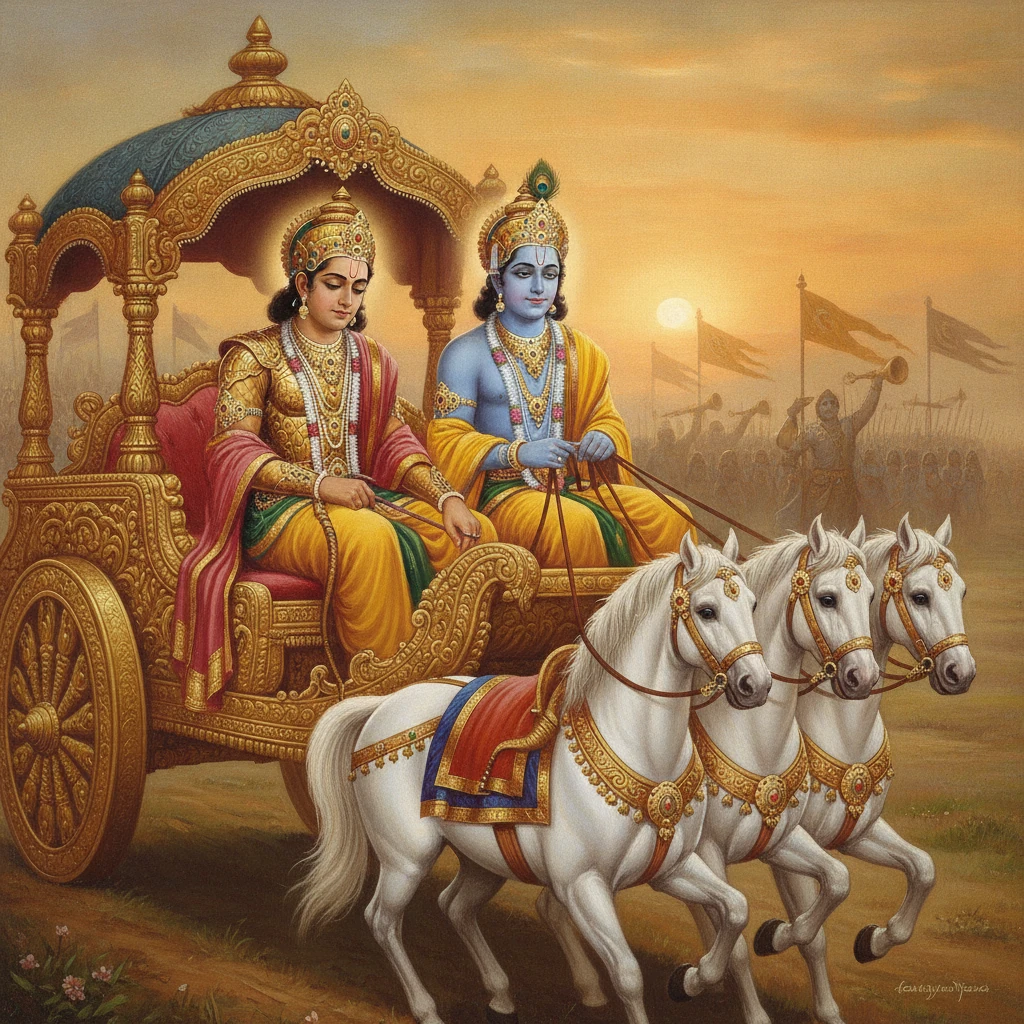
"Shraddhatraya Vibhaga Yoga" is the name of Chapter 17 of the Bhagavad Gita; it means "Yoga through Discerning the Three Divisions of Faith". Its 28 verses form part of Bhagwan Krishna's teaching to Arjuna on the field of Kurukshetra.
Bring the Gita's wisdom into your life
On Gita Jayanti at Shri Vishnupad Mandir, Gaya, a sankalp is offered in your naam-gotra for clarity of mind and right decision. Book the seva, or continue reading the Bhagavad Gita.