

 Bhagavad Gita · Chapter 12
What Chapter 12 teaches
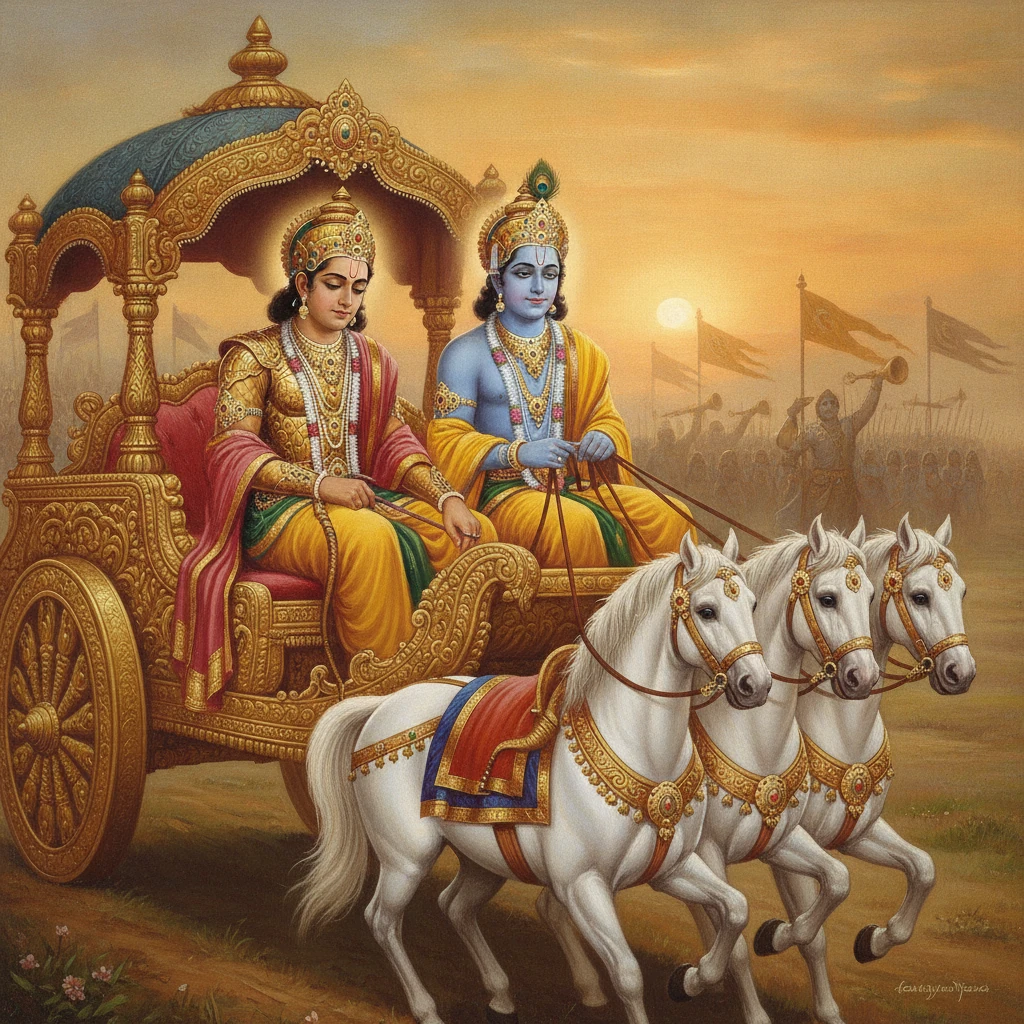
The twelfth chapter of the Bhagavad Gita is Bhakti Yoga. In this chapter, Krishna emphasizes the superiority of Bhakti Yoga (the path of devotion) over all other types of spiritual disciplines and reveals various aspects of devotion. He further explains that the devotees who perform pure devotional service to Him, with their consciousness, merged in Him and all their actions dedicated to Him, are quickly liberated from the cycle of life and death. He also describes the various qualities of the devotees who are very dear to Him.
Original Text
Verses & Meaning
अर्जुन उवाच। एवं सततयुक्ता ये भक्तास्त्वां पर्युपासते। ये चाप्यक्षरमव्यक्तं तेषां के योगवित्तमाः॥
arjuna uvāca evaṃ satatayuktā ye bhaktāstvāṃ paryupāsate ye cāpyakṣaramavyaktaṃ teṣāṃ ke yogavittamāḥ
Arjuna said Those devotees who, ever steadfast, thus worship Thee and those also who worship the imperishable and the unmanifested which of them are better versed in Yoga?
श्रीभगवानुवाच। मय्यावेश्य मनो ये मां नित्ययुक्ता उपासते। श्रद्धया परयोपेताः ते मे युक्ततमा मताः॥
śrībhagavānuvāca mayyāveśya mano ye māṃ nityayuktā upāsate śraddhayā parayopetāḥ te me yuktatamā matāḥ
The Blessed Lord said Those who, fixing their mind on Me, worship Me, ever steadfast and endowed with supreme faith, are the best in Yoga in My opinion.
ये त्वक्षरमनिर्देश्यमव्यक्तं पर्युपासते। सर्वत्रगमचिन्त्यञ्च कूटस्थमचलन्ध्रुवम्॥
ye tvakṣaramanirdeśyamavyaktaṃ paryupāsate sarvatragamacintyañca kūṭasthamacalandhruvam
Swami Sivananda did not comment on this sloka
सन्नियम्येन्द्रियग्रामं सर्वत्र समबुद्धयः। ते प्राप्नुवन्ति मामेव सर्वभूतहिते रताः॥
sanniyamyendriyagrāmaṃ sarvatra samabuddhayaḥ te prāpnuvanti māmeva sarvabhūtahite ratāḥ
Having restrained all the senses, even-minded everywhere, intent on the welfare of all beings verily they also come unto Me.
क्लेशोऽधिकतरस्तेषामव्यक्तासक्तचेतसाम्। अव्यक्ता हि गतिर्दुःखं देहवद्भिरवाप्यते॥
kleśo.adhikatarasteṣāmavyaktāsaktacetasām || avyaktā hi gatirduḥkhaṃ dehavadbhiravāpyate
Greater is their trouble whose minds are set on the unmanifested; for the goal; the unmanifested, is very hard for the embodied to reach.
ये तु सर्वाणि कर्माणि मयि संन्यस्य मत्परः। अनन्येनैव योगेन मां ध्यायन्त उपासते॥
ye tu sarvāṇi karmāṇi mayi saṃnyasya matparaḥ ananyenaiva yogena māṃ dhyāyanta upāsate
But to those who worship Me, renouncing all actions in Me, regarding Me as the supreme gaol, meditating on Me with single-minded Yoga.
तेषामहं समुद्धर्ता मृत्युसंसारसागरात्। भवामि नचिरात्पार्थ मय्यावेशितचेतसाम्॥
teṣāmahaṃ samuddhartā mṛtyusaṃsārasāgarāt bhavāmi nacirātpārtha mayyāveśitacetasām
To those whose minds are set on Me, O Arjuna, verily I become ere long the saviour out of the ocean of Samsara.
मय्येव मन आधत्स्व मयि बुद्धिं निवेशय। निवसिष्यसि मय्येव अत ऊर्ध्वं न संशयः॥
mayyeva mana ādhatsva mayi buddhiṃ niveśaya nivasiṣyasi mayyeva ata ūrdhvaṃ na saṃśayaḥ
Fix thy mind in Me only, thy intellect in Me, (then) thou shalt no doubt live in Me alone hereafter.
अथ चित्तं समाधातुं न शक्नोषि मयि स्थिरम्। अभ्यासयोगेन ततो मामिच्छाप्तुं धनञ्जय॥
atha cittaṃ samādhātuṃ na śaknoṣi mayi sthiram abhyāsayogena tato māmicchāptuṃ dhanañjaya
If thou art unable to fix thy mind steadily on Me, then by the Yoga of constant practice do thou seek to reach Me, O Arjuna.
अभ्यासेऽप्यसमर्थोऽसि मत्कर्मपरमो भव। मदर्थमपि कर्माणि कुर्वन्सिद्धिमवाप्स्यसि॥
abhyāse.apyasamartho.asi matkarmaparamo bhava madarthamapi karmāṇi kurvansiddhimavāpsyasi
If thou art unable to practise even this Abhyasa Yoga, be thou intent on doing actions for My sake; even by doing actions for My sake, thou shalt attain perfection.
अथैतदप्यशक्तोऽसि कर्तुं मद्योगमाश्रितः। सर्वकर्मफलत्यागं ततः कुरु यतात्मवान्॥
athaitadapyaśakto.asi kartuṃ madyogamāśritaḥ sarvakarmaphalatyāgaṃ tataḥ kuru yatātmavān
If thou art unable to do even this, then, resorting to union with Me, renounce the fruits of all actions with the self controlled.
श्रेयो हि ज्ञानमभ्यासाज्ज्ञानाद्ध्यानं विशिष्यते। ध्यानात्कर्मफलत्यागस्त्यागाच्छान्तिरनन्तरम्॥
śreyo hi jñānamabhyāsājjñānāddhyānaṃ viśiṣyate dhyānātkarmaphalatyāgastyāgācchāntiranantaram
Better indeed is knowledge than practice; than knowledge meditation is better; than meditation the renunciation of the fruits of actions: peace immediately follows renunciation.
अद्वेष्टा सर्वभूतानां मैत्रः करुण एव च। निर्ममो निरहङ्कारः समदुःखसुखः क्षमी॥
adveṣṭā sarvabhūtānāṃ maitraḥ karuṇa eva ca nirmamo nirahaṅkāraḥ samaduḥkhasukhaḥ kṣamī
He who hates no creature, who is friendly and compassionate to all, who is free from attachment and egoism, balanced in pleasure and pain, and forgiving.
सन्तुष्टः सततं योगी यतात्मा दृढनिश्चयः। मय्यर्पितमनोबुद्धिर्यो मद्भक्तः स मे प्रियः॥
santuṣṭaḥ satataṃ yogī yatātmā dṛḍhaniścayaḥ mayyarpitamanobuddhiryo madbhaktaḥ sa me priyaḥ
Ever content, steady in meditation, self-controlled, possessed of firm conviction, with the mind and intellect dedicated to Me, he, My devtoee, is dear to Me.
यस्मान्नोद्विजते लोको लोकान्नोद्विजते च यः। हर्षामर्षभयोद्वेगैर्मुक्तो यः स च मे प्रियः॥
yasmānnodvijate loko lokānnodvijate ca yaḥ harṣāmarṣabhayodvegairmukto yaḥ sa ca me priyaḥ
He by whom the world is not agitated and who cannot be agitated by the world, and who is freed from joy, anger, fear and anxiety he is dear to Me.
अनपेक्षः शुचिर्दक्ष उदासीनो गतव्यथः। सर्वारम्भपरित्यागी यो मद्भक्तः स मे प्रियः॥
anapekṣaḥ śucirdakṣa udāsīno gatavyathaḥ sarvārambhaparityāgī yo madbhaktaḥ sa me priyaḥ
He who is free from wants, pure, expert, unconcerned, and free from pain, renouncing all undertakings or commencements he who is (thus) devoted to Me, is dear to Me.
यो न हृष्यति न द्वेष्टि न शोचति न काङ्क्षति। शुभाशुभपरित्यागी भक्तिमान्यः स मे प्रियः॥
yo na hṛṣyati na dveṣṭi na śocati na kāṅkṣati śubhāśubhaparityāgī bhaktimānyaḥ sa me priyaḥ
He who neither rejoices, nor hates, nor grieves, nor desires, renouncing good and evil, and who is full of devotion, is dear to Me.
समः शत्रौ च मित्रे च तथा मानापमानयोः। शीतोष्णसुखदुःखेषु समः सङ्गविवर्जितः॥
samaḥ śatrau ca mitre ca tathā mānāpamānayoḥ śītoṣṇasukhaduḥkheṣu samaḥ saṅgavivarjitaḥ
Swami Sivananda did not comment on this sloka
तुल्यनिन्दास्तुतिर्मौनी सन्तुष्टो येन केनचित्। अनिकेतः स्थिरमतिर्भक्तिमान्मे प्रियो नरः॥
tulyanindāstutirmaunī santuṣṭo yena kenacit aniketaḥ sthiramatirbhaktimānme priyo naraḥ
He to whom censure and praise are eal, who is silent, content with anything, homeless, of a steady mind, and full of devotion that man is dear to Me.
ये तु धर्म्यामृतमिदं यथोक्तं पर्युपासते। श्रद्दधाना मत्परमा भक्तास्तेऽतीव मे प्रियाः॥
ye tu dharmyāmṛtamidaṃ yathoktaṃ paryupāsate śraddadhānā matparamā bhaktāste.atīva me priyāḥ
They verily who follow this immortal Dharma (law or doctrine) as described above, endowed with faith, regarding Me as their supreme goal, they, the devotees, are exceedingly dear to Me.
Quick guide
Before you begin
Bhav
Benefits devotees pray for
FAQ
Common questions
What is Bhagavad Gita Chapter 12 (Bhakti Yoga) about?
The twelfth chapter of the Bhagavad Gita is Bhakti Yoga. In this chapter, Krishna emphasizes the superiority of Bhakti Yoga (the path of devotion) over all other types of spiritual disciplines and reveals various aspects of devotion. He further explains that the devotees who perform pure devotional service to Him, with their consciousness, merged in Him and all their actions dedicated to Him, are quickly liberated from the cycle of life and death. He also describes the various qualities of the devotees who are very dear to Him.
How many verses are in Bhagavad Gita Chapter 12?
Chapter 12 (Bhakti Yoga) has 20 verses. You can read every one above in Sanskrit, with IAST transliteration and its meaning in Hindi and English.
What does "Bhakti Yoga" mean?
"Bhakti Yoga" is the name of Chapter 12 of the Bhagavad Gita; it means "The Yoga of Devotion". Its 20 verses form part of Bhagwan Krishna's teaching to Arjuna on the field of Kurukshetra.
Bring the Gita's wisdom into your life
On Gita Jayanti at Shri Vishnupad Mandir, Gaya, a sankalp is offered in your naam-gotra for clarity of mind and right decision. Book the seva, or continue reading the Bhagavad Gita.